Richard Ekins

Richard Ekins KC (Hon) is Head of Policy Exchange’s Judicial Power Project and Professor of Law and Constitutional Government, University of Oxford.

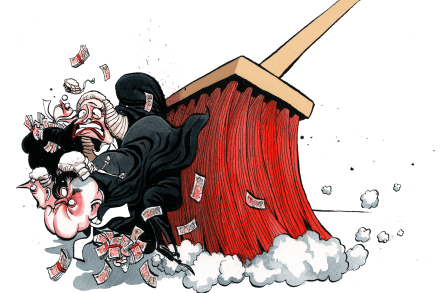
It’s time to take back control from our judges

The Judicial Review and Courts Bill has its second reading today. Writing for the Guardian yesterday, David Davis MP denounced the government’s plans as ‘an obvious attempt to avoid accountability [and] to consolidate power’ which is ‘profoundly un-conservative’. He could not be more wrong. The Bill is a welcome first step in restoring the balance

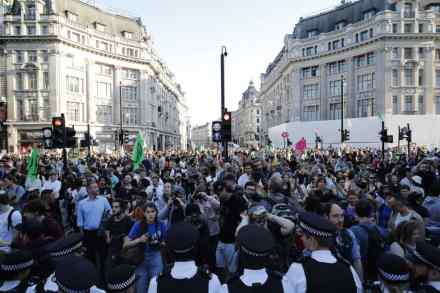
The law is not fit to stop Extinction Rebellion’s street protests

Extinction Rebellion (XR) are once again blocking London’s streets, reportedly emboldened by the Supreme Court’s recent Ziegler decision – which found that deliberately blocking roads can be lawful protest. The police maintain that the judgment does not substantially change the law and that XR, like everyone else, has a right to assemble and protest but

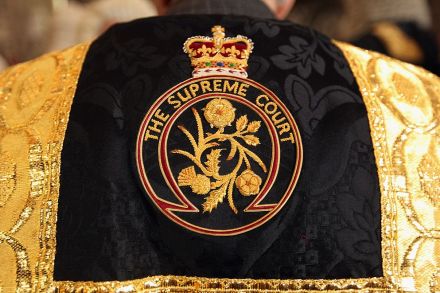
It’s time to rein in the Supreme Court

The return of lockdown measures across parts of northern England, as well as the announcement of dozens of new peerages, almost entirely overshadowed the Lord Chancellor’s launch on Friday of an independent review of administrative law. Lord Faulks QC, former minister of state for justice, is to lead five other barristers and academic lawyers in examining

Why Shamima Begum should not have been allowed to return

It is startling to see the Court of Appeal take over the Home Secretary’s responsibility in deciding who should be allowed to enter the UK – judging for itself the relative importance of national security considerations. But this is what the Court did in its judgment today, by opening the door for Shamima Begum to return

How the crackdown on terrorists can avoid the Human Rights Act trap

Some human rights lawyers have warned that emergency legislation to prevent automatic early release of convicted terrorists – confirmed by Boris Johnson at Prime Minister’s Questions today – may be unlawful and will be challenged in the courts. But the warning should not deter Parliament from enacting this legislation. It is for Parliament, not the

Judgment day: the danger of courts taking over politics

Who runs Britain? When Boris Johnson’s lawyers made their case in front of the Supreme Court this week, defending his right to prorogue parliament, they in effect brought it back to this simple question. This was a controversy for politicians to settle, not courts. Judges, they said, should think twice about ‘entering the political arena’

Do our Supreme Court judges have too much power?

In our tradition, courts do not and should not stand in judgment over parliament. It is for parliament, in conversation with the people, to choose what the law should be and the duty of courts is to uphold those choices. In the years before the UK decided to leave the EU, some judges reasoned that

The High Court’s ‘right to rent’ decision is a travesty

The political campaign against the UK’s immigration laws secured an important victory yesterday, with the High Court denouncing sections 20-37 of the Immigration Act 2014 as racially discriminatory – not by discriminatory intent or design but “indirectly”, by side effect. Those “right to rent” provisions make it unlawful for private landlords to rent property to

Why Brexit won’t lead to a bonfire of human rights

Faced with the prospect of the UK’s departure from the EU, some Britons are contemplating urgent measures, whether applying for an Irish passport or migrating to New Zealand. Nothing wrong with either, of course, but the latter is an odd reaction. After all, one of the implications of Brexit is that it restores the fundamental

The panic about a Brexit legal limbo isn’t justified

In widely reported remarks earlier this week, Lord Neuberger, the outgoing President of the Supreme Court, called for Parliament to tell our judges very clearly how rulings of the Court of Justice of the European Union (CJEU) are to be dealt with after Brexit. Lord Neuberger’s concern is to avoid judges being left without guidance,

Only Parliament can decide the law on assisted dying

The question of whether assisted suicide should be legalised is back before the courts. The High Court this week is being invited to declare that the Suicide Act 1961, which prohibits assisted suicide, is incompatible with Article 8 of the European Convention on Human Rights (ECHR), which protects the right to respect for private life.  Whatever

What the Supreme Court got right and wrong in today’s judgment

The Supreme Court has today rejected the Government’s appeal from the High Court judgment by a majority of eight justices to three.  The decision means that a new Act of Parliament will now be required before the Government may lawfully trigger Article 50.  However, the Court has also unanimously dismissed the devolution challenges, which argued

Who’s on the Supreme Court

Ordinarily, the Supreme Court sits in panels of no more than nine. All 11 justices will hear the government’s appeal, to avoid any suggestion that the composition of the panel might make a difference to the outcome. Caution is understandable: judges differ in philosophy, temperament and in how they understand their role. Lord Neuberger has been