Richard Dawkins

Will the Supreme Court gender case victors get the apologies they deserve?

Those who have won a great victory after years of struggle are entitled to enjoy a modest triumph, a single victory lap. But to crow too loudly is unseemly, and it is the mark of a small victor to pursue former opponents vindictively, taking vengeful advantage of new-found power to do so. An ugly object lesson is the small-minded man gleefully dominating American headlines today: a walking, talking, strutting, preening definition of how not to behave in victory.

The myth of the God-shaped hole

In a recent interview, I imprudently said I was a “cultural Christian”, and I haven’t heard the end of it. I find myself unwillingly counted in the Great Christian Revival (translation, “We don’t actually believe that stuff ourselves, but we like it when other people do”) which is the subject of so much wishful thinking these days. The trans-sexual bandwagon is a form of quasi-religious cult Of course I’m a cultural Christian. Always have been. Packed off to Anglican schools, I was confirmed when too young to know better. Large chunks of the English Hymnal were imprinted in my long-term memory, and duly pop out when I’m fooling around with my electronic clarinet. I know my way around the Bible, at least well enough to take an allusion when I encounter one.

Richard Dawkins, Nicholas Farrell, Mary Wakefield, Lisa Hilton and Philip Hensher

33 min listen

On this week’s Spectator Out Loud: Richard Dawkins reads his diary for the week (1:21); Nicholas Farrell argues that Italy is showing the EU the way on migration (6:33); Mary Wakefield reflects on the horrors, and teaching, of the Second World War (13:54); Lisa Hilton examines what made George Villiers a favourite of King James I (19:10); and a local heroin addict makes Philip Hensher contemplate his weight (27:10).  Produced and presented by Patrick Gibbons.

My problem with the American election

In an ideal world, I wouldn’t have chosen an election year for my American book tour. It’s not that I dislike elections generally. And – praise be – a population of 300 million Americans has managed to raise one presidential candidate who is not a convicted felon awaiting sentence. No, my problem with American elections – and it viscerally distresses me every four years – is the affront to democracy called the electoral college. I’ve done the maths. The electoral college can hand you the presidency even if your opponent receives three-quarters of the popular vote. Of course that’s a hypothetical extreme. The familiar reality is that campaigns ignore all but a handful of ‘swing’ states. A genuine electoral college, however, could work rather well.

Richard Dawkins, Douglas Murray and Cindy Yu

31 min listen

On this episode, Richard Dawkins explains how to convert an atheist like him to a Christian (00:37), Lisa Haseldine says the German army is in a dire state (05:53), Douglas Murray looks at the return of the Trump show (12:44), Cindy Yu reviews a Chinese intelligence officers account of life under the CCP (20:14), and Mary Wakefield wonders if it’s wrong to track her child (25:14).

This week’s diary

Monday and Tuesday I gave over to two long conversations with Arvid Ågren, a Swedish biologist who wants to write a scientific biography of me. As the author of The Gene’s-Eye View of Evolution, he knows the subject inside out. Disconcertingly, he seems to have read every word I’ve ever written, and has an almost telepathic familiarity with my entire stock of humorous anecdotes. I wouldn’t put it past him to divine what my mother, who died at 102, would certainly have said: ‘But I don’t understand. Why would anyone want to write a biography of you?’ He’s now going to start looking for a publisher, and she would no doubt want to wish him luck. I’m reminded of a nice publicity campaign for one of Douglas Adams’s books.

Christmas Special 2023

70 min listen

Welcome to this festive episode of the Edition podcast, where we will be taking you through the pages of The Spectator’s special Christmas triple issue.  Up first: What a year in politics it has been. 2023 has seen scandals, sackings, arrests and the return of some familiar faces. It’s easy to forget that at the start of the year Nicola Sturgeon was still leader of the SNP! To make sense of it all is editor of The Spectator, Fraser Nelson, The Spectator’s political editor Katy Balls, and Quentin Letts, sketch writer for the Daily Mail. (01:06) Next: The story that has dominated the pages of The Spectator in the latter half of this year is of course the conflict in Gaza.

Why I’m sticking up for science

I’m in New Zealand, climax to my antipodean speaking tour, where I walked headlong into a raging controversy. Jacinda Ardern’s government implemented a ludicrous policy, spawned by Chris Hipkins’s Ministry of Education before he became prime minister. Science classes are to be taught that Māori ‘Ways of Knowing’ (Mātauranga Māori) have equal standing with ‘western’ science. Not surprisingly, this adolescent virtue-signalling horrified New Zealand’s grown-up scientists and scholars. Seven of them wrote to the Listener magazine. Three who were fellows of the NZ Royal Society were threatened with an inquisitorial investigation. Two of these, including the distinguished medical scientist Garth Cooper, himself of Māori descent, resigned (the third unfortunately died).

Richard Dawkins: Books Do Furnish A Life

44 min listen

In this week's Book Club podcast, I'm joined by Richard Dawkins to talk about his new book Books Do Furnish A Life: Reading and Writing Science. Richard tells me - among much else - what makes science writing (and science fiction) exciting; the questions science can (and can't) answer; why he felt it necessary to invest so much of his time arguing against religion; and why the left recurrent laryngeal nerve of the giraffe is such an odd shape.

Science is not an instrument of patriarchal oppression

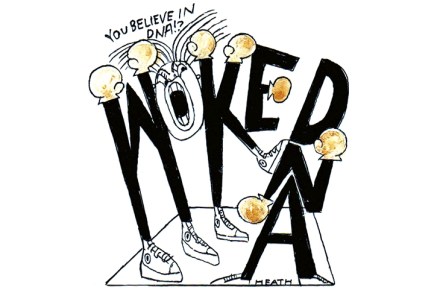
Safe spaces, diversity quotas, gender-neutral pronouns, culturally relative facts, heteronormative hegemony. Are my right-on credentials right on enough? Am I sufficiently penitent for being white, cis and male? Will I be cancelled or de-platformed by the Pronoun Police? What is my woke-quotient? At least as far as science is concerned, it’s a satisfactory zero. Science is not a patriarchal instrument of colonial oppression. Nor is it a social construct. It’s simply true. Or at least truth is real and science is the best way we have of finding it. ‘Alternative ways of knowing’ may be consoling, they may be sincere, they may be quaint, they may have a poetic or mythic beauty, but the one thing they are not is true.

The insidious attacks on scientific truth

What is truth? You can speak of moral truths and aesthetic truths but I’m not concerned with those here, important as they may be. By truth I shall mean the kind of truth that a commission of inquiry or a jury trial is designed to establish. I hold the view that scientific truth is of this commonsense kind, although the methods of science may depart from common sense and its truths may even offend it. Commissions of inquiry may fail, but we assume a truth lurking there even if we don’t have enough evidence. Juries sometimes get it wrong and falsehoods are often sincerely believed. Scientists too can make mistakes and publish erroneous conclusions. That’s all regrettable but not deeply sinister.

Richard Dawkins: It’s hard to imagine that Leave would win a second referendum

On a book tour to promote Outgrowing God, travelling from London’s Festival Hall to Birmingham and then Manchester, I have plenty of time to listen to audio books, my new enthusiasm. This week it’s Douglas Murray’s The Madness of Crowds. The title is a well-chosen echo from Charles Mackay’s 1852 classic. Well chosen because our present epidemic of bullying ‘wokeness’ is disturbingly reminiscent of the witch-hunts of past centuries. I’ve had mixed feelings about Murray since he traduced me as a cowardly Islamophile (I’m accustomed to the opposite, equally unjust accusation). But his latest book is beyond brilliant and should be read, must be read, by everyone.