Richard Bradford

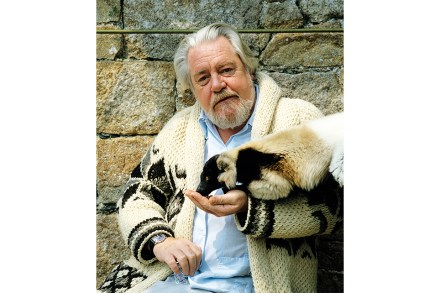
Four legs good, two legs bad – the philosophy of Gerald Durrell

We know of the Durrells mainly through their own writings, outstandingly My Family and Other Animals, about their years in Corfu in the 1930s, and from the image of them created by TV and film adaptations of this work. Gerald and Lawrence were the best known members of the family, the first as a zoologist and conservationist, the second as an experimental writer. Their siblings, Margaret (Margo) and Leslie, will always be perceived through the lens Gerald turned on them in My Family – the former as a flighty eccentric, something like an extra from a Carry On film, the latter as a pantomime villain. Their mother, Louisa, was loved unreservedly by her children and comes across in My Family as a kindly eccentric.
Richard Bradford: Tough Guy

37 min listen

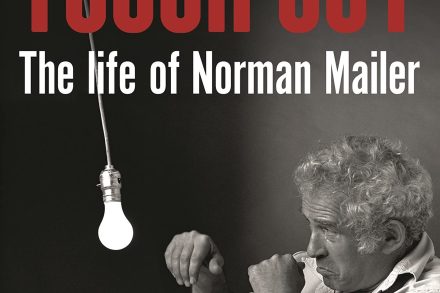
My guest on this week’s Book Club podcast is the scholar and biographer Richard Bradford, whose new book Tough Guy: The Life of Norman Mailer looks at the rackety life and uneven oeuvre of one of the big beasts of 20th-century American letters. Mailer, as Richard argues, thought his self-identified genius as a writer licensed any amount of personal bad behaviour – up to and including stabbing one of his wives. As the book makes clear Mailer was a racist, misogynist, homophobe, thug and a boor. But was he also, actually, any good? And will he last?

Telling tales | 29 November 2018

Germaine Greer described biographers as ‘vultures’. I prefer to think of myself as a version of Philip Marlowe or Sam Spade: vultures hunt by instinct but the two private investigators went after secrets with deliberate foolhardy masochism. It’s human nature to want to know more about the writers we admire — but what you discover isn’t always pleasant. Most recently, I completed a life of Ernest Hemingway. It was a joy to write mainly because after reading thousands of unpublished letters I felt relieved at having been spared an encounter with the living ‘Papa’. I knew of his reputation as a fibber but I was astonished to find that from his teens onwards he was pathologically incapable of distinguishing fantasy from truth.

The legacies of Jennifer Johnston

Cross the soaring Foyle Bridge from the East and take the route to Donegal. Shortly before you cross the border — now completely imperceptible — you will find the grand, imposing gates to a country house. As you descend the drive, the hum of traffic subsides and the years, centuries, roll back. Had it been built a few miles to the west it might, like many others, have been consumed in the vengeful aftermath of 1916. Partition protected it from that, but half a century later its Georgian windows shook to bomb blasts from the city. That Jennifer Johnston has spent most of her writing career in this place is magnificently, eerily appropriate. She is a daughter of the Anglo-Irish Ascendancy. Yeats was a friend of the family.

It happened one summer

For those unfamiliar with Martin Amis’s short story, ‘What Happened to Me on My Holiday’, written for The New Yorker in 1997, it was a purist exercise in autobiographical fiction; not even the names were changed. For those unfamiliar with Martin Amis’s short story, ‘What Happened to Me on My Holiday’, written for The New Yorker in 1997, it was a purist exercise in autobiographical fiction; not even the names were changed. The Pregnant Widow is a far more complex, troubling piece of work. Amis did indeed spend much of the summer after his second year at Oxford in a castle near the Mediterranean, though not in Tuscany; that would come later.

Brave new writing

Fifty years ago, Alan Sillitoe’s first novel, Saturday Night and Sunday Morning, changed the history of English fiction. Richard Bradford explains how. Alan Sillitoe is 80 this year and his debut novel Saturday Night and Sunday Morning was published in October 1958, almost exactly half a century ago. The novel evolved from a set of stories written between 1952 and 1958 when he lived in France, Majorca and mainland Spain, but it draws its energy and raw material from his previous experiences in Nottingham: a childhood that would have appalled Orwell and been improved upon by Dickens, followed by semi-skilled work in local factories. It was like nothing written before and it changed the history of the English novel. Before reaching Jeffrey Simmons, chief commissioning editor of W. H.

On the road with George

Stories abound of figures for whom the allure of the Left is eroded by cynicism and honest self-interest. Most treat their previous affiliation as a species of deluded immaturity; going Right is a natural consequence of growing up, albeit in early middle age. Alan Sillitoe is different. He too in the early Sixties was a radical leftist but his views changed incrementally and, most significantly, as the result of his private ordinance that opinions must be based on personal experience. His first visit to the Soviet Union is documented in Road to Volgograd (1964), and in his latest book he tells of trips he made at the end of the Sixties and his involvement in the defection, in London, of the Soviet writer Anatoly Kuznetsov.