Raymond Keene

Beneath the surface

From our UK edition

After 12 games of classical chess, the world championship between the incumbent, Magnus Carlsen of Norway, and his American challenger, Fabiano Caruana, ended in a record-breaking twelve draws. My initial impression was that both contestants were willing to wound, yet somehow afraid to strike at the climactic moment. The more Machiavellian explanation for such overt lack of ambition was that Carlsen was so confident of his superiority at speed chess that he was content to keep things level and just wait for the speed chess tie-breaks. In fact, this turned out to be the case. Carlsen was lying in wait like a crocodile.

Chess Puzzle | 6 December 2018

From our UK edition

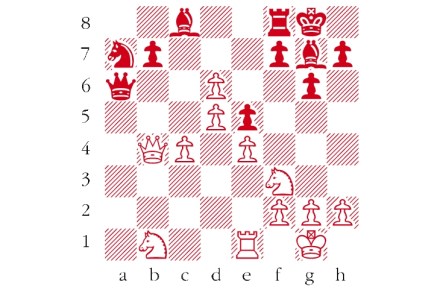
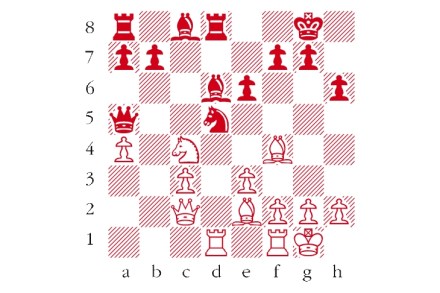
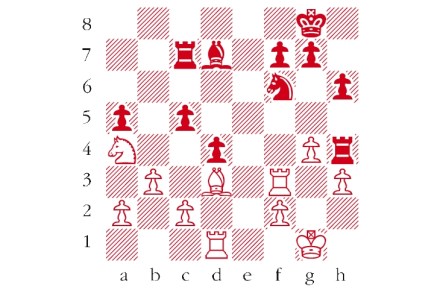
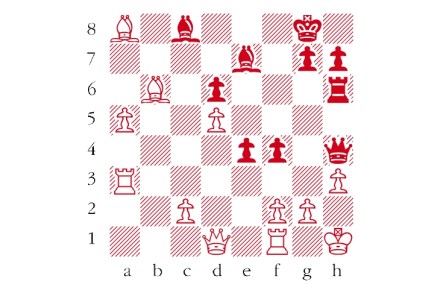
Black to play. This is a variation from Caruana-Carlsen, World Championship (Game 10), London 2018. Black is a rook down. What is the best way to continue the attack? Apologies that there is not a prize puzzle this week. This is because of the Christmas production schedule.

Atticus

From our UK edition

The Epistle to Dr Arbuthnot by Alexander Pope contains a memorable excoriation of his fellow wit and former friend Joseph Addison. When they fell out, Pope lampooned Addison as Atticus (Cicero’s Athenian correspondent) in The Epistle, the most telling phrase of which runs, ‘Willing to wound and yet afraid to strike.’ There could not be a better epithet to encapsulate the London World Championship, which finished this week. In previous articles I focused on missed wins in Game 1 (Magnus Carlsen) and Game 6 (Fabiano Caruana). This week: Caruana’s failures to strike in Game 8.

Dante’s millions

From our UK edition

As I write, the London world championship is tied at 3½-3½, after seven games. In striving to move ahead, the challenger, Fabiano Caruana, has been the victim of the awesome mathematics of chess. According to the statisticians there are more possible moves in chess games than there are atoms in the observable universe. Ten to the power of 70 is the official estimate. As someone with a good Italian name and ancestry, Fabiano may be familiar with Dante’s Paradiso. In Canto 28 the poet writes: ‘Ed eran tante, che ‘l numero loro, Piu che ‘l doppiar de li scacchi s’inmilla.

no. 533

From our UK edition

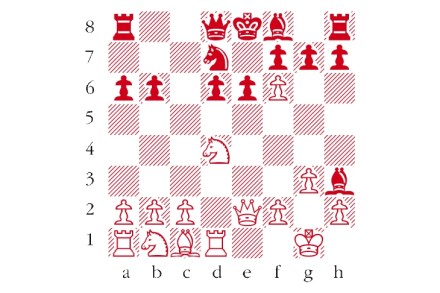
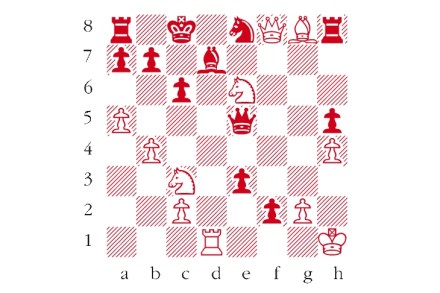
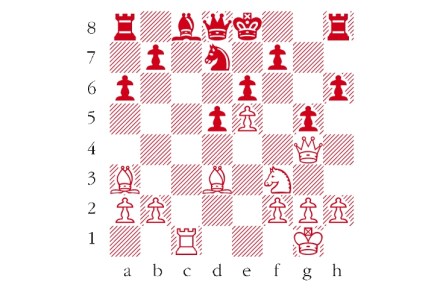
White to play. This is a variation from Caruana-Carlsen, World Championship, London 2018. White has sacrificed a piece in order to obtain a powerful central phalanx. What is the most effective way for him to continue? Answers to me at The Spectator by Tuesday 27 November or via email to victoria@spectator.co.uk. There is a prize of £20 for the first correct answer out of a hat. Please include a postal address and allow six weeks for prize delivery. Last week’s solution 1 ...

Paradise mislaid

From our UK edition

World champion Magnus Carlsen missed several chances to win with black in the first game of his title defence, currently continuing in London.   A black win right at the start is by no means ultimately a match winner, but is rather like breaking serve in the first set of the Wimbledon final.   Alexander Alekhine, in 1927 against José Capablanca and again Vassily Smyslov in 1957 against Mikhail Botvinnik, both went on to seize the supreme title after black wins in game one.   In this case, Carlsen built up a dominating position after some highly original opening strategy and an inspired temporary pawn sacrifice and now came the time to reap the harvest.

no. 532

From our UK edition

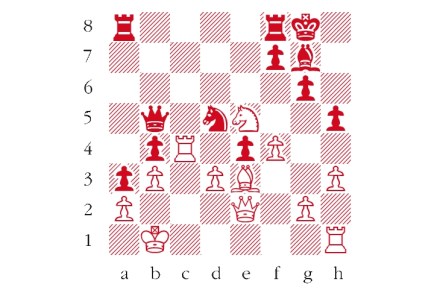
Black to play. This is a variation from Carlsen--Caruana (Game 2), London 2018. White has forked the black bishop and queen. How should Black react? Answers to me at The Spectator by Tuesday 20 November or via email to victoria@spectator.co.uk. There is a prize of £20 for the first correct answer out of a hat. Please include a postal address and allow six weeks for prize delivery.

Nos morituri

From our UK edition

Magnus Carlsen and Fabiano Caruana, those two gladiators of the mind, will duel in London during the remainder of this month for the title of world chess champion.   Twelve games will be played, and if no clear victor emerges there will be a rapidplay tie break on November 28. It is my prediction that in spite of the fact that their ratings are very close (Carlsen 2835, Caruana 2832), the more artistic Caruana will succumb to the extreme pragmatist Carlsen, by the score of 6½ to 4½.   Should Caruana somehow escape to a level score after the stipulated dozen games, then I hold out little hope for him in the speed chess tiebreak on 28 November. Carlsen has hitherto dominated Caruana in quick games and I foresee no miraculous reversal of this trend.

no. 531

From our UK edition

White to play. This is from Carlsen-Caruana, Bilbao 2012. Black has blundered right out of the opening. How did Carlsen gain a decisive advantage? Answers to me at The Spectator by Tuesday 13 November or via email to victoria@spectator.co.uk. There is a prize of £20 for the first correct answer out of a hat. Please include a postal address and allow six weeks for prize delivery.   Last week’s solution 1 ...

Man made

From our UK edition

This year’s Isle of Man Masters, sponsored by Chess.com, could claim to be the strongest ever open chess competition. The line-up was formidable, with most of the English Olympiad squad participating, as well as former world champions Vladimir Kramnik and Viswanathan Anand.   As it was, the championship titans failed in their bid to capture the £50,000 first prize. Leading scores were as follows, with Radoslaw Wojtaszek emerging as the title holder after the obligatory playoff: Wojtaszek and Naiditsch Arkadij both scored 7/9 in the main event, ahead of Vladimir Kramnik, Alexander Grischuk, Hikaru Nakamura, Wang Hao, Gawain Jones, B. Adhiban and Jeffery Xiong, who all scored 6½.

no. 530

From our UK edition

Black to play. This is from Cornette-Jumabayev, Isle of Man 2018. Black’s next move led to an overwhelming material advantage. What was it? Answers to me at The Spectator by Tuesday 6 November or via email to victoria@spectator.co.uk. There is a prize of £20 for the first correct answer out of a hat. Please include a postal address and allow six weeks for prize delivery.   Last week’s solution 1 ...

Condottieri

From our UK edition

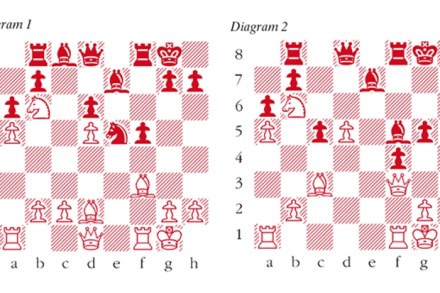
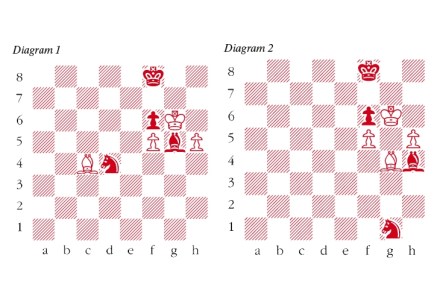
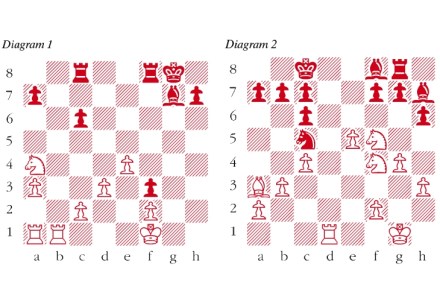
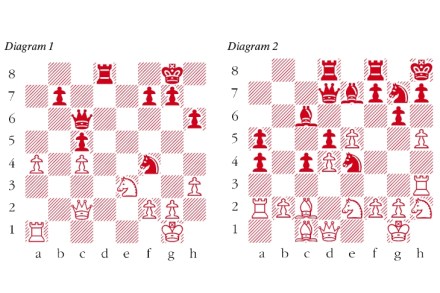
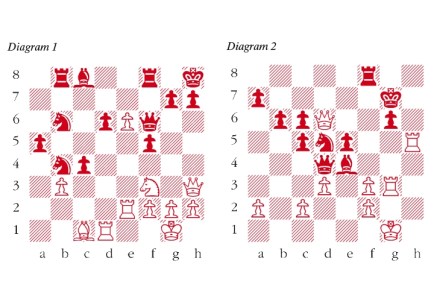
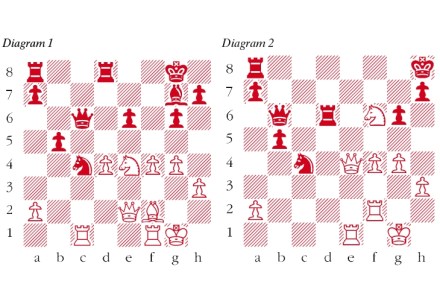
The recently concluded European Club Cup, held at Porto Carras in Greece, resembled late medieval Italian warfare — populated by armies of mercenaries who seemed to have no allegiance to the geographical area of the clubs they were representing. Thus the British grandmaster David Howell was on the same Norwegian team as the world champion Magnus Carlsen, while the Chinese grandmaster Ding Liren was playing on top board for the Alkaloid team from Macedonia. The eventual winners were Mednyi Vsadnik from St Petersburg. This week a selection of play from this remarkably powerful event.   Carlsen-Potkin: European Club Cup, Porto Carras 2018 (see diagram 1)   World champion Magnus Carlsen only achieved victory in one game. This game was, however, vintage Carlsen.

no. 529

From our UK edition

Black to play. This position is from Carlsen-Ding Liren, Porto Carras 2018. Black tried 1 ... Nxg4 here but Carlsen eventually held on for a draw. What would have been a better way to try for an advantage? Answers to me at The Spectator by Tuesday 30 October or via email to victoria@spectator.co.uk. There is a prize of £20 for the first correct answer out of a hat. Please include a postal address and allow six weeks for prize delivery.   Last week’s solution 1 Nd6 Last week’s winner John McAleenan, Newry, Co.

Ship ahoy

From our UK edition

The Evans Gambit was invented by a British naval officer of the early part of the 19th century, Captain W.D. Evans, who invented a form of ship’s lighting which was given an award by the Tsar of Russia. Captain Evans’s gambit is highly suitable at club and county level and in the 19th century it captured the scalps of many great masters, including Johannes Zukertort and Adolf Anderssen. For the latter, see this week’s game. In modern chess it has been employed by Garry Kasparov, and even Viswanathan Anand and world champion Magnus Carlsen have fallen victim to its intricacies.

no. 528

From our UK edition

White to play. This position is from Khmelniker-Harari, Isle of Man 2017. How did White make the most of his passed c-pawn? Answers to me at The Spectator by Tuesday 23 October or via email to victoria@spectator.co.uk. There is a prize of £20 for the first correct answer out of a hat. Please include a postal address and allow six weeks for prize delivery.

Eastern promise | 11 October 2018

From our UK edition

The Batumi Olympiad ended as a great success for the teams from China, which captured the gold medals in both the open and women’s sections. England finished a most creditable fifth in the open, behind USA (silver) Russia (bronze) and Poland, our best result for decades. Meanwhile the bitter contest for the Fidé (World Chess Federation) presidential election concluded in victory for the Russian candidate, Arkady Dvorkovich.   Mr Dvorkovich evidently appreciated the value of the English candidate for president, grandmaster Nigel Short, since he promptly appointed him vice president after Short stepped down at the last minute.

no. 527

From our UK edition

White to play. This is from Pace-Aguilar, Batumi Olympiad 2018. How did White finish off crisply? Answers to me at The Spectator by Tuesday 16 October or via email to victoria@spectator.co.uk. There is a prize of £20 for the first correct answer out of a hat. Please include a postal address and allow six weeks for prize delivery.

Role model

From our UK edition

World champion Magnus Carlsen is not competing in the Batumi Olympiad (of which more next week). Doubtless he is conserving his strength for his title struggle against Fabiano Caruana in London in November.   This lull gives me the opportunity to mention a new book about the great Emanuel Lasker, champion from 1894–1921, a role model of Carlsen’s. Lasker’s forte was to keep the ball in play through thick and thin in order to avoid draws. The same trait is evident in many of Carlsen’s victories, often achieved from risky situations.

no. 526

From our UK edition

White to play. This position is from Giron-Altaya, Batumi Olympiad 2018. Can you spot White’s classic winning combination? Answers to me at The Spectator by Tuesday 9 October or via email to victoria@spectator.co.uk. There is a prize of £20 for the first correct answer out of a hat. Please include a postal address and allow six weeks for prize delivery.

Batumi Olympiad

From our UK edition

The Chess Olympiad for national teams is now underway in Batumi, Georgia. Over 200 teams are competing and the lavish opening ceremony was attended by 5,000 spectators. This is certainly an indication of the increasing popularity of chess, paradoxically fuelled by the advent of computer technology. There are now 11 million online chess games played worldwide every day, and 600 million active chess players. Probably the most celebrated game ever played in a Chess Olympiad was the following clash between Boris Spassky and Bobby Fischer.