Raymond Keene

Revolutionary

From our UK edition

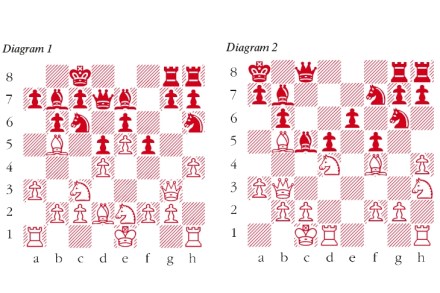
The French Defence appears to be somewhat cautious in nature but can in fact lead to disruptive middlegame clashes. It was a favourite of such aficionados of counterattack as Aron Nimzowitsch, Mikhail Botvinnik and Viktor Korchnoi. One of my favourite lines was espoused by world champion Tigran Petrosian, for example in the following win against a world championship candidate. Notes to the following game are based on those in Opening Repertoire: The French Defence by Cyrus Lakdawala (published by Everyman Chess).   Olafsson-Petrosian: Bled 1961; French Defence   1 e4 e6 2 d4 d5 3 Nc3 Bb4 4 e5 Qd7 5 Qg4 White engages his queen, going for the soft spot on g7. 5 ... f5 6 Qg3 b6 7 h4 Bb7 8 Bd3 This is logical now that Black has committed his bishop to b7. If Black now plays ...
no. 553

From our UK edition

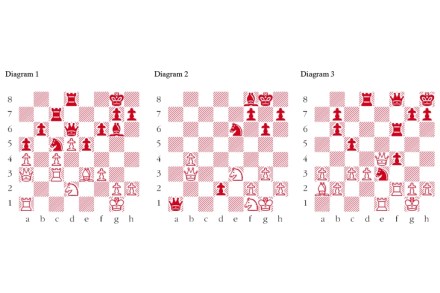
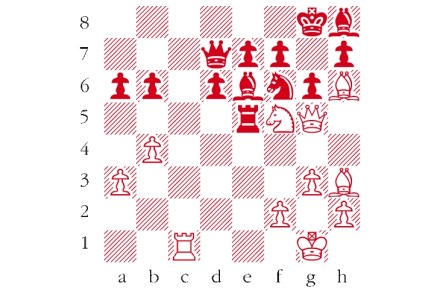
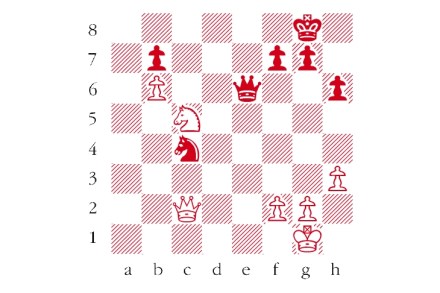
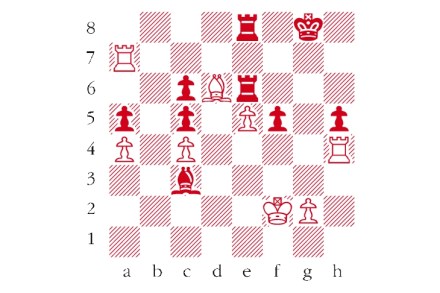
Black to play. This is from Carlo-Haast, Grenke Chess Open 2019. There is a saying in chess that when you see a good move, you should look for a better one. 1 ... Bxe5 is fine for Black but he can do a lot better. How? Answers to me at The Spectator by Tuesday 14 May or via email to victoria@spectator.co.uk. There is a prize of £20 for the first correct answer out of a hat. Please include a postal address and allow six weeks for prize delivery.   Last week’s solution 1 ...

Déjà vu | 2 May 2019

From our UK edition

In my column of 20 April I reported on the overwhelming victory by world champion Magnus Carlsen in the elite Gashimov Memorial tournament at Shamkir, Azerbaijan. Almost immediately he went on to repeat his annihilation of the world’s best by taking first prize at the Grenke tournament in Baden Baden and Karlsruhe, in Germany.   After struggling in his World Championship contest against Fabiano Caruana in London, Carlsen appears rejuvenated, and is treating the world’s elite rather as Alexander Alekhine dealt with the illuminati of his day at the great tournaments of San Remo 1930 and Bled 1931. My theory is that Carlsen, a quick learner, has absorbed lessons from the astounding games of AlphaZero, the brainchild of Demis Hassabis CBE and his DeepMind group.

no. 552

From our UK edition

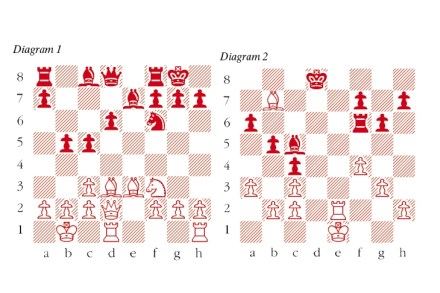
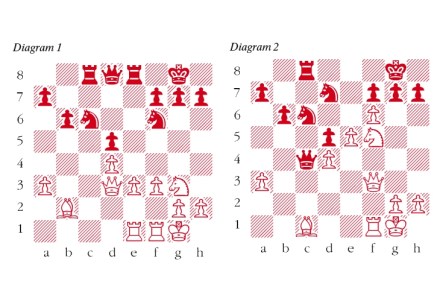
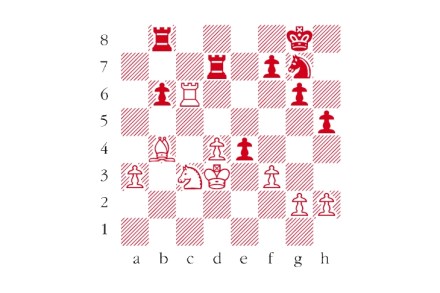
Black to play. This position is a variation from Keymer-Carlsen, Grenke 2019. Black is a piece down. What is the only move to stay in the game? Answers to me at The Spectator by Tuesday 7 May or via email to victoria@spectator.co.uk. There is a prize of £20 for the first correct answer out of a hat. Please include a postal address and allow six weeks for prize delivery.

Venit, vidit, vicit

From our UK edition

India is quite possibly the birthplace of chess, with the four branches of the ancient Indian army, infantry, cavalry, chariots and war elephants, morphing into the pawns, knights, rooks and bishops of the modern game. The most celebrated protagonist of Indian chess is former world champion, Viswanathan Anand. Nevertheless, behind him are surging younger generations of Indian grandmasters, some of whom (e.g. Dommaraju Gukesh and Rameshbabu Praggnanandhaa) are still barely into their teens.

no. 551

From our UK edition

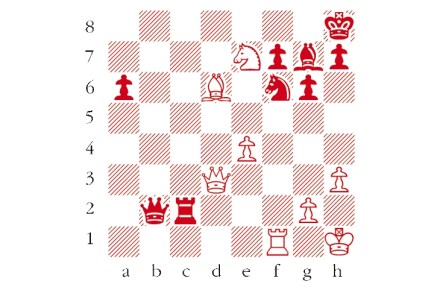
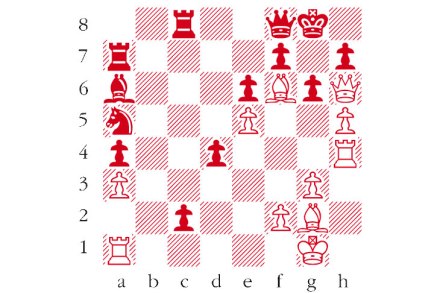
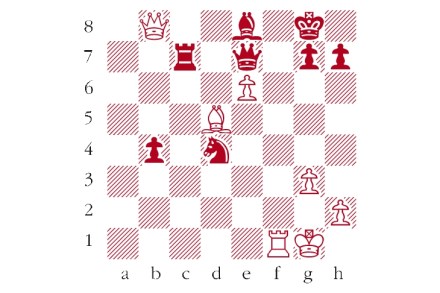
White to play. This position is a variation from Vitiugov-Duda, Prague 2019. How does White exploit the greater activity of his pieces? Answers to me at The Spectator by Tuesday 30 April or via email to victoria@spectator.co.uk. There is a prize of £20 for the first correct answer out of a hat. Please include a postal address and allow six weeks for prize delivery. Last week’s solution 1 ... Kg5 Last week’s winner Tony Davies, East Morton, W.

Carlsen the Great

From our UK edition

I cannot conceal the feeling over the years of Magnus Carlsen’s leading position at the head of world chess, that his victories were to be ascribed to his powers of Sitzfleisch (endurance at the board) or opposing errors, rather than his own enterprise, dynamism and genius. The result of the London world championship last year tended, if anything, to reinforce this belief, with all the games in the classical section being drawn.   The Gashimov Memorial tournament, which ended earlier this month at Shamkir in Azerbaijan, has forced me to revise that opinion. Carlsen dominated the event, displaying huge energy, aggression and versatility.

no. 550

From our UK edition

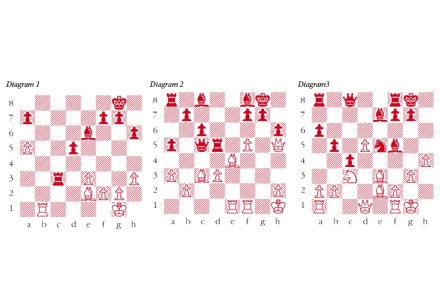
Black to play. This position is a variation from Navara-Carlsen, Shamkir 2019. What is Black’s only winning move? Answers to me at The Spectator by Tuesday 23 April or via email to victoria@spectator.co.uk. There is a prize of £20 for the first correct answer out of a hat. Please include a postal address and allow six weeks for prize delivery.

Be prepared

From our UK edition

Last week I wrote about Cyrus Lakdawala’s new book, which provides an aggressive repertoire based on the solid move 1 d4. This week I focus on what might be termed a companion volume by the experienced chess coach grandmaster Neil McDonald, Coach Yourself (Everyman Chess), which aims to provide a training programme for those who wish to seriously improve their results. McDonald’s book is packed with essential tips on teaching yourself to calculate, honing your feel for the initiative, and practising planning. It is thoroughly recommended for club players or anyone who has decided that it is time to put up a fight against the chess app on their phone. The following game is an excellent illustration of how to seize the initiative by opening lines of attack.

no. 549

From our UK edition

White to play. This is from Gukesh-Paramzina, Sharjah 2019. Twelve-year-old Gukesh is the second youngest grandmaster of all time (behind Sergei Karjakin). How did he finish off here? Answers to me at The Spectator by Tuesday 16 April or via email to victoria@spectator.co.uk. There is a prize of £20 for the first correct answer out of a hat. Please include a postal address and allow six weeks for prize delivery.

Advance planning

From our UK edition

One way to improve your results is to develop a specific opening repertoire and learn it thoroughly so as to be prepared for most eventualities. This might seem like common sense but it is a lesson which many amateurs neglect to observe. A new book by the prolific author Cyrus Lakdawala (Opening Repertoire 1 d4 with 2 c4, published by Everyman Chess) seeks to plug this lacuna in the chess aficionado’s arsenal of openings by providing an aggressive repertoire based on the solid 1 d4.   Le Quang Liem-Nguyen Van Huy: Ho Chi Minh City 2014; Nimzo-Indian Defence   1 d4 Nf6 2 c4 e6 3 Nc3 Bb4 4 f3 This is Lakdawala’s recommendation against the solid Nimzo-Indian Defence. White aims to create a strong centre as soon as possible and challenges Black to break it down.

no. 548

From our UK edition

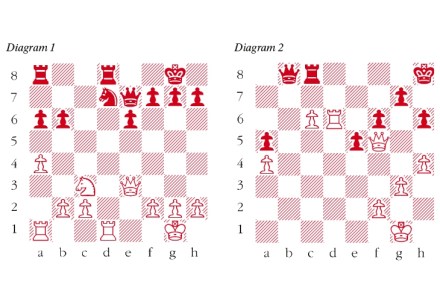
White to play. This position is a variation from Mamedyarov-Li Reufeng, PRO League 2017. This game also started with White playing f3 against the Nimzo-Indian Defence. Can you spot the immediate kill? Answers to me at The Spectator by Tuesday 9 April or via email to victoria@spectator.-co.uk. There is a prize of £20 for the first correct answer out of a hat. Please include a postal address and allow six weeks for prize delivery.

Fischer favourite

From our UK edition

A favoured line of the great Bobby Fischer was to meet both the French Defence (1 e4 e6) and the Caro-Kann Defence (1 e4 c6) with 2 d3, introducing what is known as the King’s Indian Attack. Fischer won celebrated games with this line against such powerful opponents as the Argentine grandmaster Oscar Panno and World Championship candidate Boris Ivkov. This week’s puzzle shows a further coruscating finish by Fischer with the King’s Indian Attack from the Interzonal stage of the World Championship cycle which brought Fischer the supreme title. Ever a good learner, the three-times British champion grandmaster Julian Hodgson put the King’s Indian Attack to good use in this week’s win against an illustrious opponent.

no. 547

From our UK edition

White to play. This position is from Fischer--Myagmarsuren, Sousse Interzonal 1967. How did Fischer conclude his attack in fine style? Answers to me at The Spectator by Tuesday 2 April or via email to victoria@spectator.co.uk. There is a prize of £20 for the first correct answer out of a hat. Please include a postal address and allow six weeks for prize delivery.   Last week’s solution 1 ...

Family silver

From our UK edition

The World Team Championship in Astana, Kazakhstan, finished last week with a victory for Russia but with an outstanding team silver medal for England — our best result for decades.   The final scores at the top (out of 18) were as follows: Russia 16, England 13, China 12, India and USA 11, Iran and Azerbaijan 8, Kazakhstan and Sweden 4, Egypt 3. The individual English scores were as follows: Michael Adams 3½/9, Luke McShane (individual gold medal) 6/9, David Howell (individual bronze medal) 6/9, Gawain Jones (individual silver medal) 5½/8 and Jon Speelman 0/1.   The hero of the English squad was the individual gold medallist Luke McShane, who was the only team member to go through this powerful event without losing a single game.

no. 546

From our UK edition

Black to play. This position is from Sasikiran-McShane, Astana 2019. Black’s queen is attacked, his knight is vulnerable and b7 is also under pressure. How did Black solve his problems? Answers to me at The Spectator by Tuesday 26 March or via email to victoria@spectator.co.uk. There is a prize of £20 for the first correct answer out of a hat. Please include a postal address and allow six weeks for prize delivery.

Oxford win

From our UK edition

The annual Varsity Match between Oxford and Cambridge ended in a surprisingly narrow victory for the dark blues. Their team was led by the former women’s world champion Hou Yifan from China, and the rating difference on virtually every board was massively in favour of Oxford. Cambridge put up a stout fight and it was only a series of misjudgments by Cambridge board six, Peter Finn, in the tense last game to finish, which converted a drawn match (or even a win for Cambridge) into a loss. This was one of those times when defeat is snatched from the jaws of victory.

no. 545

From our UK edition

White to play. This is from Finn-Abbas, Varsity Match 2019. A strategic puzzle rather than a tactical one. White has three ways to recapture on e4. Only one gives him the advantage. Which is the best move? Answers via email to victoria@spectator.-co.uk by Tuesday 19 March. There is a prize of £20 for the first correct answer out of a hat. Please include a postal address and allow six weeks for prize delivery.

Bunratty | 7 March 2019

From our UK edition

The Bunratty tournament in Ireland is one of the highlights of the chess year and always attracts an impressive field. This year grandmasters Luke McShane and Mark Hebden shared first prize on 5/6 in the main event. It is traditional in Bunratty that, although prize money can be shared, the title must go to a sole victor. McShane, accordingly, demolished Hebden 2-0 in a play-off. Places 3-8 were shared by Nigel Short, David Howell, Matthew Turner, Adam Hunt, Bogdan Lalic and David Fitzsimons.   McShane’s play was characterised by a fierce will to win. During the game which preceded the following extract he had already declined a draw in a slightly worse position. His determination paid off and was rewarded with the full point.

no. 544

From our UK edition

White to play. This position is from Hebden-Williams, Bunratty 2019. How did White finish in fine style? Answers to me at The Spectator by Tuesday 12 March or via email to victoria@spectator.co.uk. There is a prize of £20 for the first correct answer out of a hat. Please include a postal address and allow six weeks for prize delivery.   Last week’s solution 1 ...