Raymond Keene

no. 525

From our UK edition

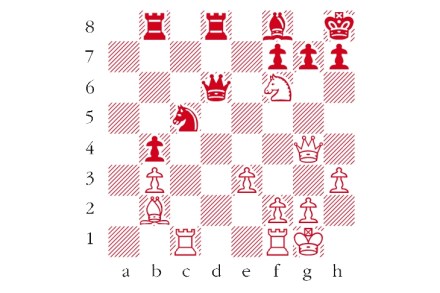
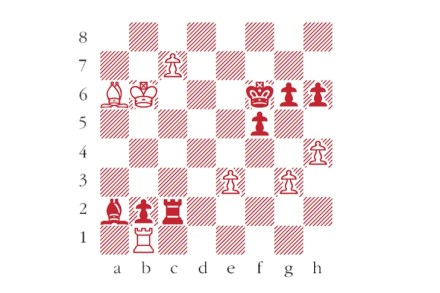
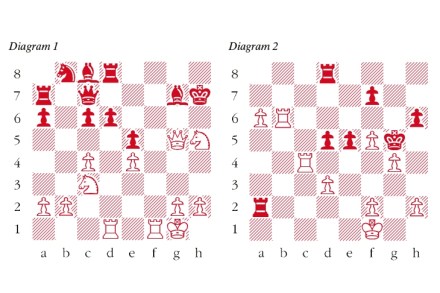
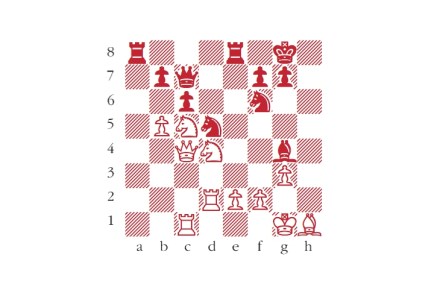
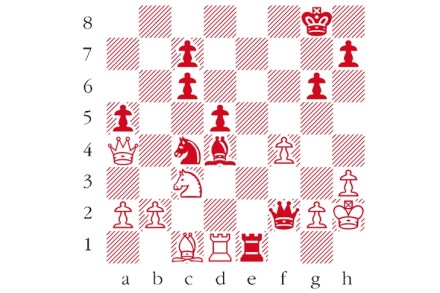
White to play. This position is from Rogers-Milos, Manila Olympiad 1992. How can White do better than recapturing on c3? Answers to me at the Spectator by Tuesday 2 October or via email to victoria@spectator.co.uk. There is a prize of £20 for the first correct answer out of a hat. Please include a postal address and allow six weeks for prize delivery.   Last week’s solution 1 ...

Interregnum

From our UK edition

The only official interregnum in the reigns of the world chess champions was that between the death of Alekhine in 1946 and the accession of Botvinnik in 1948. There is, however, an unofficial interregnum which occurred when Bobby Fischer won the world title in 1972 but did not play a serious game of chess as champion and forfeited the title without play to Karpov in 1975. At this point, step forward Mikhail Tal. According to statistician John Ellis in the August issue of the British Chess Magazine, it was Tal who filled the void created by Fischer’s disappearance. From July 1972 to April 1973, according to the BCM, Tal played a record 86 consecutive games without a loss, comprising 47 wins and 39 draws.

no. 524

From our UK edition

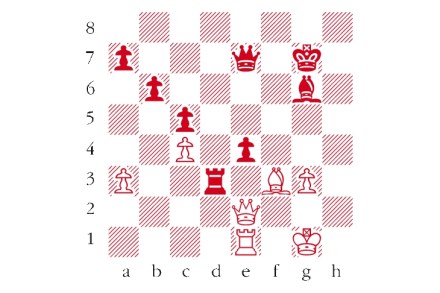
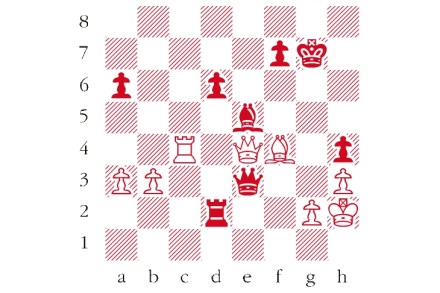
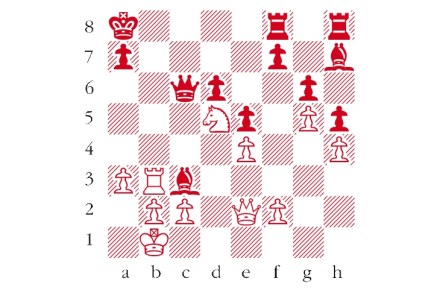
Black to play. This position is from Gurgenidze-Tal, Moscow 1957. What is the most direct way to break into the white position? Answers to me at The Spectator by Tuesday 25 September or via email to victoria@spectator.co.uk. There is a prize of £20 for the first correct answer out of a hat. Please include a postal address and allow six weeks for prize delivery. Last week’s solution 1 ...
Caruana chronicles

From our UK edition

In the run-up to the Carlsen-Caruana World Championship match set for London in November, I will be previewing their prospects. The match pits Magnus Carlsen from Norway, the highest-rated player in the history of chess and world champion since 2014, against the top-ranked American grandmaster, Fabiano Caruana. Their chessboard styles could not be more different. Like his great predecessors Lasker and Karpov, Carlsen favours wars of attrition. Caruana plays more aggressively, openly and fluently, clearly influenced by Bobby Fischer. Who will win? My heart prefers Caruana, but my head says Carlsen, probably by the points score of 6½ to 4½.

no. 523

From our UK edition

Black to play. This position is from Potkin-Caruana, Dagomys 2010. How did Caruana finish off with a flourish? Answers to me at The Spectator by Tuesday 18 September or via email to victoria@spectator.co.uk. There is a prize of £20 for the first correct answer out of a hat. Please include a postal address and allow six weeks for prize delivery.

Peaceful solution

From our UK edition

In the recent super-tournament in St Louis, Magnus Carlsen, Fabiano Caruana and Lev Aronian opted to share the laurels. According to the regulations, any tie for first place should have been resolved by a playoff. But the three co-victors decided that they would prefer to share the trophy. This peaceful solution was in line with the tournament as a whole, where no fewer than six of the ten contestants remained undefeated, with two of them, the former world champion Viswanathan Anand and Maxime Vachier-Lagrave, drawing all their games. A staggering 82 per cent of the games were draws.

no. 522

From our UK edition

White to play. This position is a variation from Caruana-Karjakin, St Louis 2018. Can you spot White’s classic mating finish? Answers to me at The Spectator by Tuesday 11 September or via email to victoria@spectator.co.uk. There is a prize of £20 for the first correct answer out of a hat. Please include a postal address and allow six weeks for prize delivery.

Shak attack

From our UK edition

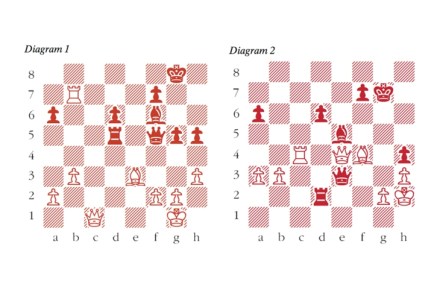
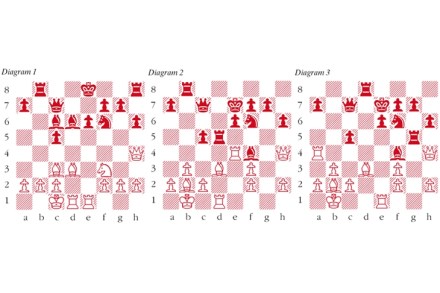
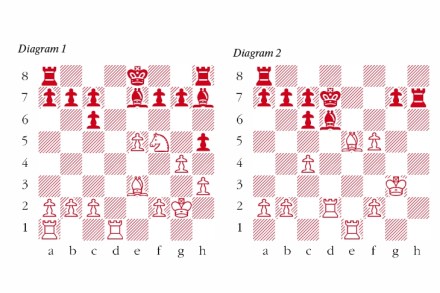
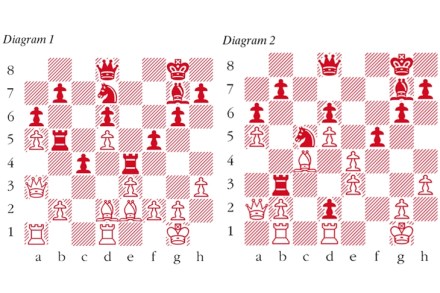
The Azeri grandmaster Shakhriyar Mamedyarov has been distinguishing himself recently at both classical and speed chess time limits. Last month he emerged as the overwhelming winner of the elite tournament in Biel, taking first prize and defeating world champion Magnus Carlsen in their individual clash. Mamedyarov went on to St Louis where he took the bronze medal behind Hikaru Nakamura and Maxime Vachier-Lagrave, and in the process demonstrated an extraordinary originality in his choice of openings and power of attack. We join two of his games against former world title challenger Sergey Karjakin at the crucial moments.   Mamedyarov-Karjakin: St Louis Rapidplay 2018 (diagram 1)   18 Bh7 This proves good enough to win.

no. 521

From our UK edition

White to play. This is from Mamedyarov--Georgiadis, Biel 2018. Many of Mamedyarov’s games feature a kingside attack based upon a powerful bishop on the b2-square. Here, his next move led to a decisive increase in pressure against the black king. What was it? Answers to victoria@spectator.co.uk by Tuesday 4 September. There is a prize of £20 for the first correct answer out of a hat. Please include a postal address and allow six weeks for prize delivery.

Royal road

From our UK edition

The mathematician Euclid once boldly informed King Ptolemy Soter I of Egypt that there was no royal road to geometry. However, a royal road to a UK visa does exist and it has just been granted to the family of nine-year-old prodigy Shreyas Royal, by means of the intervention of the Home Secretary himself.   A vigorous campaign has been in train for most of this year to prevent the Royal family from being deported in September. This included a charitable programme of chess tuition implemented by the experienced junior coach Julian Simpole, whose former pupils included Luke McShane and David Howell.

no. 520

From our UK edition

White to play. This position is from Nakamura-Mamedyarov, St Louis 2018. Unfortunately for Mamedyarov, he has just blundered in a winning position. How did Nakamura exploit his lapse? Answers to me at The Spectator by Tuesday 28 August or via email to victoria@spectator.co.uk. There is a prize of £20 for the first correct answer out of a hat. Please include a postal address and allow six weeks for prize delivery.

Luke’s gospel

From our UK edition

Perhaps the outstanding clash of the recently concluded British championship in Hull, supported by Capital Developments Waterloo Ltd, was the last round battle between grandmaster Luke McShane and David Howell. The former has twice thwarted the latter at the finishing post in the past year. At stake was a final shootout for the title with Mickey Adams, plus the prizes allocated for the victor, £10,000 and runner-up £5,000. Luke has generously provided insights into this epic struggle. Howell-McShane: British Championship, Hull 2018; Ruy Lopez 1 e4 e5 2 Nf3 Nc6 3 Bb5 a6 4 Ba4 d6 5 0-0 Bd7 6 d4 exd4 7 Nxd4 Nxd4 8 Bxd7+ Qxd7 9 Qxd4 Nf6 10 Nc3 Be7 11 Bf4 11 b3, to place the bishop on the long diagonal, is a more popular choice. 11 ...

No. 519

From our UK edition

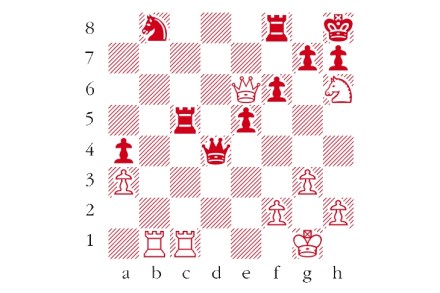
White to play. This position is from Fernandez-Pritchett, Hull 2018. White found an extraordinary, problem-like move to finish the game. Can you see it? Answers to me at The Spectator by Tuesday 21 August or via email to victoria@-spectator.co.uk. There is a prize of £20 for the first correct answer out of a hat. Please include a postal address and allow six weeks for prize delivery. Last week’s solution 1 ... Qg3!+ Last week’s winner C.D.

Royal shame

From our UK edition

Nine-year-old Shreyas Royal, widely regarded as the UK’s best hope to become a future world chess champion, is being deported from the country next month because his father, although in regular employment, does not have earnings that reach the necessary threshold of £120,000 per annum. The chess world is in uproar about this, not least because Shreyas has already been invited to make the ceremonial first move in the Carlsen-Caruana World Championship match to be held in London at the College, Holborn, in November. The case has attracted acid comment from John Cleese on social media and the former chess champion Rachel Reeves MP has written an eloquent plea to the Home Secretary Sajid Javid requesting clemency.

no. 518

From our UK edition

Black to play. This is from Howell-McShane, British Championship, Hull 2018. This was the conclusion of the game that enabled Luke McShane to finish joint first with Michael Adams and force a play-off. How did Black conclude? Answers via email to victoria@spectator.co.uk by Tuesday 14 August. There is a prize of £20 for the first correct answer out of a hat. Please include a postal address and allow six weeks for prize delivery.   Last week’s solution 1 ...
Rice gambit

From our UK edition

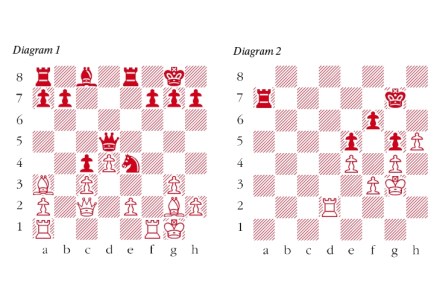
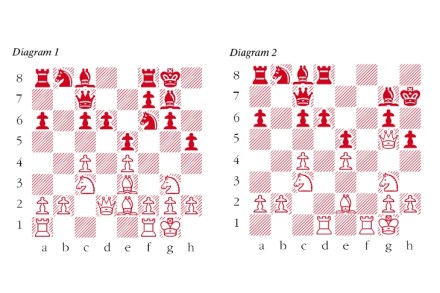
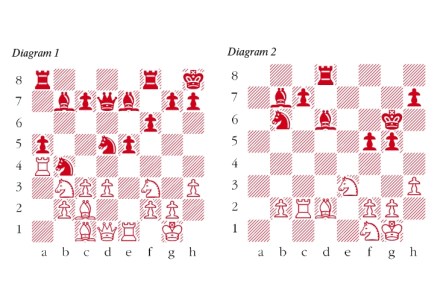
The recent successful revival of the musical Chess, by Sir Tim Rice and the men of Abba, featured some genuine extracts from play in the staged re-enactments of decisive games. One of the most impressive — and most easy to identify even from a distance without opera glasses — was Bobby Fischer’s infamous and very loud rook swoop against grandmaster Pal Benko, who has just celebrated his 90th birthday. Fischer-Benko; US Championship, New York 1963 (diagram 1) White has a powerful attack but his problem is that the natural 19 e5 is met comfortably by 19 ... f5, when Black has no problems. Fischer’s solution is startling. 19 Rf6! Fischer famously described this as ‘rolling a boulder in front of the f-pawn’. 19 ... Bxf6 20 e5 forces mate as the ...

no. 517

From our UK edition

Black to play. This position is from the classic game Réti-Alekhine, Baden Baden 1925. What was Black’s next move? It does not win at once but it successfully fuels the flames of Black’s initiative. It also forms a thematic pendant to this week’s trio of three thunderous rook incursions. Can you find it? Answers to The Spectator by 7 August or via email to victoria@spectator.co.uk. There is a prize of £20 for the first correct answer out of a hat. Please include a postal address and allow six weeks for prize delivery.

Fiend from Hull

From our UK edition

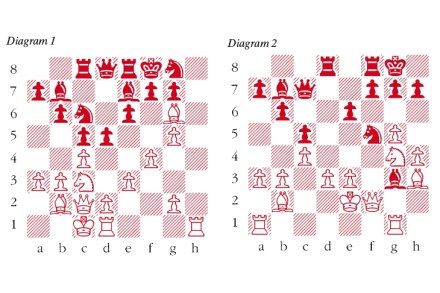
This year’s British Championship commences today in Hull. Among a powerful field, which includes Michael Adams and defending champion Gawain Jones, Luke McShane stands out as a supremely dangerous tactician, who at his best can overrun any opponent. This week’s game shows him outmanoeuvring a leading contender from last year’s championship. McShane-Howell: British Championship, Llandudno 2017; French Defence 1 e4 e6 2 d4 d5 3 Nd2 It is not clear to me that the French Defence suits Howell’s style. In the later playoff game for the title McShane-Howell continued 3 e5 and White also won. 3 ... c5 4 Ngf3 cxd4 5 Nxd4 Nc6 6 Bb5 Bd7 7 Nxc6 bxc6 8 Bd3 White has a slightly more favourable pawn structure but the position is balanced. 8 ...

no. 516

From our UK edition

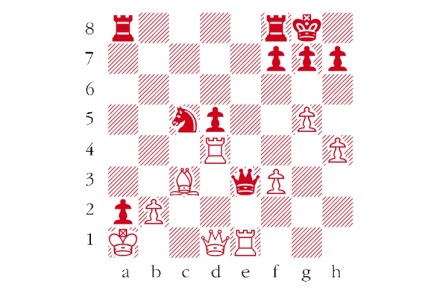
Black to play. This position is from Brown-Adams, British Championship, Bournemouth 2016. Black has various ways to force mate but only one move does the job in five moves at most. Can you find it? Answers to me at The Spectator by Tuesday 31 July or via email to victoria@spectator.co.uk. There is a prize of £20 for the first correct answer out of a hat. Please include a postal address and allow six weeks for prize delivery.   Last week’s solution 1 ...
Mental sport

From our UK edition

Sporting commentators frequently resort to chess metaphors to convey the flavour of a particular contest. In the case of football, chess tends to be wheeled out as a comparison when nothing much is happening. Tennis commentators, in contrast, and somewhat more perceptively, deploy the chess metaphor to convey mental toughness.   I have for some time regarded Judit Polgar as the Serena Williams of the chessboard. A major difference, though, is that on the physical battlefield Serena would stand no chance against Djokovic, Federer or Nadal. On the mental plane, however, Judit has defeated, among others, Carlsen, Kasparov, Anand, Korchnoi and Short.   A new book, Strike Like Judit!, by Charles Hertan (New in Chess) recounts her many exploits.