Raoul Ruparel

Back to Brexit: will the transition be extended?

36 min listen

Brexit is back on the agenda, but this time, talks are even more difficult than the last phase (00:45). Plus, what do we understand about immunity, and how should that inform the lockdown policy (16:45)? And for a nation that bangs on about fish, do we eat enough of it (28:00)?

Brexit might cause a short-term shock but it won’t be as bad as the Treasury makes out

There’s already quite a wide consensus around the basic assumption of the Treasury’s latest report that there would be a short-term economic shock from leaving the EU. However, it’s nigh on impossible to credibly foresee the size of this shock. And by going too far on such estimates the Treasury risks undermining the consensus already in its favour. Contrary to what one may be tempted to assume, short-term economic forecasts are often harder to make than longer-term ones. Making reasonable assumptions about how policy choices a few years down the line shift economic growth from a baseline is a slightly easier exercise than trying to predict short-term market movements – especially without any historical precedent, as in the case of Brexit.

Thankfully for Cameron, EU treaty change isn’t a black and white issue

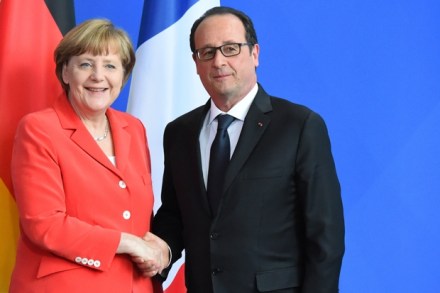
It seems every week now there is a story about France and/or Germany ruling out EU treaty change and thereby putting pay to David Cameron’s EU reform push before it has even really begun. While this makes for good headlines, the reality is much more nuanced. Take today’s example: A leaked preliminary draft of a Franco-German paper on Eurozone reform reported by Le Monde and picked up by the Guardian, stated that in the short term (the next few years) the countries will focus on working within the EU treaties, which has been seen as a blow to Cameron’s reform push. There are some important points to keep in mind though. Firstly, this is not actually a shift in the Franco-German position.

Can the European Union agree a sanctions regime for Russia?

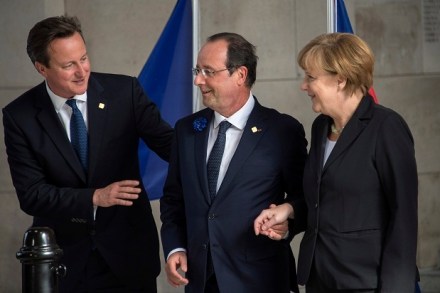
David Cameron talked tough on sanctions yesterday, suggesting that he had the German and French support. I believe he means what he says and is serious about following through with sanctions. I could even be convinced that France and Germany have hardened their positions to the point where they are genuinely willing to consider ‘stage three’ sanctions (which would hit specific firms and possibly sectors of the Russian economy). However, I remain far less convinced that the EU as a bloc can find a clear and united position – as Open Europe noted with its Dove/Hawk scale the divergences between countries are huge and the motivations for their positions is incredibly varied.

Getting over excited

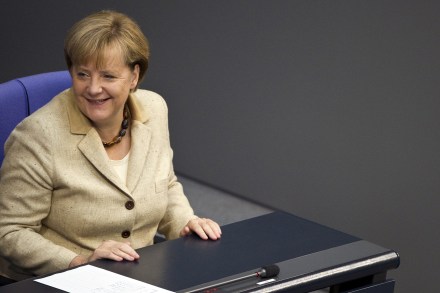
As Peter Oborne observed on Newsnight recently, there is a tendency in the Eurozone to think its problems are political, rather than an economic crisis that cannot be wished away. For example, the Bundestag's much vaunted approval of an expanded EFSF has done little to alleviate Europe's weakness. Here's why: 1) We all knew the vote would pass: the opposition support made sure of that. The key point was that Angela Merkel got an absolute majority. It was a close call, but it always seemed likely that she would gain enough support from the flailing junior coalition party, the FDP, which, given its collapsing poll results, was unlikely to threaten the stability of the coalition for fear of further falls.