Rachel Wolf

Why Reform’s rise isn’t a surprise

13 min listen

It’s day five of recriminations after the local elections, with politicians, pollsters and journalists alike still trying to make sense of what just happened. On today’s podcast, Rachel Wolf gives her verdict: we should not be shocked by Reform’s surge. She argues that Nigel Farage’s success should have been predicted – that it’s the same, distinctly anti-political silent majority who ‘surprised’ us during Brexit, ‘surprised’ us in 2019 and are ‘surprising’ us now.  How will Labour respond? Will they U-turn on winter fuel? And is Boris Johnson the only one who can win back these disillusioned voters for the Tories? Oscar Edmondson speaks to James Heale and Rachel Wolf, CEO of Public First and former adviser to Boris Johnson.

Buckle up: the Liz Truss era begins

35 min listen

In this week’s episode: As the Liz Truss era begins, we assess the bumpy road that lies ahead of her. James Forsyth and Rachel Wolf, co-author of the 2019 conservative manifesto, join the Edition podcast (01:04). Also this week: From generation rent to generation buy: has Help to Buy been a success or a failure? Emma Hollender speaks with economist – and ‘Trussketeer’ – Dr Gerard Lyons (12:29). And finally: is metal detecting becoming popular? Nigel Richardson discusses this in his piece in The Spectator this week and is joined by Julian Evan-Hart, editor of Treasure Hunting magazine (25:17). Hosted by Lara Prendergast and William Moore. Produced by Oscar Edmondson.

The green games: Boris’s plan to rebrand Britain

37 min listen

In this week’s podcast, Katy Balls expands on her cover story, analysing Number 10’s hopes for November’s COP26 summit in Glasgow (01:10). She’s joined by Boris Johnson’s former advisor and co-author of the last Conservative election manifesto, Rachel Wolf and together, they ponder whether the much-anticipated green jamboree signposts a supercharged boost not only for global climate policy, post Covid but also the Johnson premiership?

Weathering the pandemic: has cloud computing become essential?

28 min listen

The pandemic has led to a surge in digitisation in so many aspects of our lives. Cloud computing, in particular, has been a cornerstone of this time - not least for stay at home employees to maintain their productivity during a turbulent time. But what actually is cloud computing, and is it all that it's set out to be? Are privacy and security concerns adequately addressed? Kate Andrews speaks to DCMS Minister Matt Warman and Public First's Rachel Wolf about its potentials and pitfalls.Sponsored by AWS.

Bad grammar

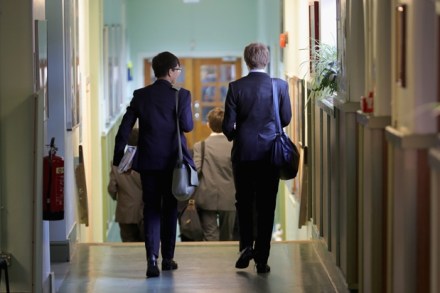
It is almost mandatory, if you want to discuss grammar schools, to swap personal histories. Here’s mine: I am the beneficiary of three generations of social mobility, three generations of academic selection. My grandfather won a free scholarship to a public school (Christ’s Hospital) and left school at 16: his family needed him to work. But his education allowed him to become achartered surveyor. Both of my parents enjoyed free, selective education in schools that now charge about £16,000 a year. My brothers and I won scholarships to private secondaries. The alternative comprehensives were poor quality and a bit scary — my parents were faced with terrible state-school options. Then the story gets better.

Why not start your own school?

Parents who can’t afford to move into the right catchment area, let alone pay expensive fees, are often desperately worried about the local schools. Teachers are worried about schools too: brilliant teachers who have worked in some of the worst classrooms in the country know they can do better. Charities are longing to work where they’re needed most. That’s why in four months we at the New Schools Network have been contacted by hundreds of parents, teachers and charities who all want to set up new state schools. And their first question is: ‘how do we do it?’ The answer isn’t simple. At the moment it’s very difficult to set up a school. Unless there aren’t enough places for the children in the area, it’s rarely possible.