Pieter Cleppe

Is Brussels finally cracking down on NGOs?

Over in Brussels, a scandal has erupted over the role of ‘non-governmental organisations’, or NGOs, in European Union decision making. In a new report, the European Court of Auditors, the EU’s in-house financial watchdog, has criticised the European Commission's ‘opaque’ monitoring of how EU funds are distributed to these organisations. Between 2021 and 2023, the EU dished out €7 billion to 90 NGOs through various funds, focused on environmental policy, migration or science. According to the Court of Auditors,  30 of these NGOs received more than 40 per cent of EU funds between 2014 and 2023 – some €3.3 billion. That may only be the tip of the iceberg when it comes to NGO funding.
It’s time to reform the Big Four accounting firms

It has been exactly 20 years since the Enron scandal upended the reputation of global accountancy firms, leading to the downfall of both the company – one of the largest in US history up to that point – and Arthur Andersen, one of the ‘Big Eight’ accounting firms. Enron’s collapse provoked an avalanche of regulation, ostensibly to reduce the chances of similar accounting fraud repeating itself. In the United States this effort was spearheaded by the 2002 Sarbanes–Oxley Act, while the European Union’s 2006 Auditing Directive followed scandals like the 2003 collapse of Italian dairy giant Parmalat.

Boris shouldn’t write off fossil fuels just yet

At last week’s G7 summit, Boris Johnson pushed his fellow leaders to back his climate finance plan to support large-scale renewable energy projects across Africa and parts of Asia. The PM received a decidedly lukewarm response to his new Marshall plan, only netting pledges from Canada and Germany – and for good reason. As Rishi Sunak highlighted this week, when he declined to put a ‘specific figure’ on the cost of Net Zero in an interview on GB News, the cost of these climate plans are anything but clear. Fundamentally, Boris’s plan to boost renewables around the world misses the fact that renewables are actually struggling to catch up with traditional energy sources.

MEPs have missed their chance to protect human rights

The European Parliament is always eager to lecture the world about human rights. To a degree, this annoys the world's despots and we should, of course, never underestimate how ‘sunlight is the best disinfectant’. But the Parliament’s overall influence on foreign affairs is still limited. On Tuesday, however, MEPs received an opportunity to actually make a difference when it came to protecting human rights. The European Parliament had to decide whether to lift the immunity of three Catalan nationalist MEPs – former Catalan government leader Carles Puigdemont and former ministers Antoni Comín and Clara Ponsatí – that are facing criminal charges in Spain for their roles in organising an independence referendum in 2017.

How border closures halted Covid-19 in Finland

Back in April, I listed five measures governments can take to prevent the spread of Covid in order to prevent any need for economically devastating lockdowns, drawing on the experience of some Asian nations. Four of the measures (test and trace, healthcare capacity, facemasks, and good communication about distancing) have all proven their worth, but the fifth may be the most important of all: imposing border checks in time. That’s exactly what Taiwan did well. It has managed to keep its number of Covid cases down to just 842, with a population of nearly 24 million, by halting flights from China early on and implementing strict quarantine rules.

Did Brexit lead to the UK’s vaccine success?

Today the United Kingdom became the first country in the West to clinically authorise a vaccine protecting against Covid-19, after the medicines regulator, the MHRA, said the Pfizer/BioNTech vaccine was safe to use. The announcement puts Britain ahead of Europe when it comes to rolling out the vaccine, as the EU’s own regulator, the European Medicines Agency (EMA), has not yet approved the vaccine. While Britain will begin administering Pfizer’s vaccine next week, countries like Belgium have announced that they will start their vaccination campaigns in January, subject to EMA approval. When it comes to vaccines, a few weeks of delay can make a big difference, given the economic and health costs of the pandemic.

The EU’s state aid hypocrisy

Another crucial period has begun in the Brexit saga. Boris Johnson has ruled out extending the transition stage beyond 1 January, after which the UK will no longer automatically take over EU regulations or align with EU trade policy. So the key question surrounding Brexit will finally need to be answered: what are the conditions for the UK to retain a decent amount of market access to the EU? The answer the EU has given is that the UK must abstain from unfairly subsidising its companies. That is a fair demand, but the EU also wants the UK to continue to align with EU rules on state aid. The latter is something fiercely resisted by the British, and rightly so. The stakes are high – along with fisheries, it’s seen as the key sticking point in the negotiations.

Lukashenko has learned to ignore the EU’s empty threats

On Belarus, the EU has been eager to talk the talk. But it has been slower to walk the walk. Belarus’s sham election – in which the country’s authoritarian leader Alexander Lukashenko won 80 per cent of the vote – was condemned by EU leaders as ‘neither free nor fair’. But Brussels stopped short of explicitly demanding a new election, in spite of pleas from the opposition in Belarus as well as from four central European countries: the Czech Republic, Hungary, Poland and Slovakia. In refusing to go further and call for a re-election, the EU is struggling with a dilemma faced by other Western countries: what is the best way to deal with authoritarian regimes in the neighbourhood? Is it a good idea to trade with them? Should sanctions be imposed?

Europe is finally coming to terms with Brexit

An article in the Dutch, left-leaning newspaper Het Parool led with the headline ‘Despite Brexit, multinationals prefer London over Amsterdam or Paris’ this week. The piece reports that ‘the feared exit [of companies] from Great Britain is not happening’ as expected, and highlights the fact that Unilever decided to: Become fully British, scrapping its dual [Anglo-Dutch] structure [which has been in place for 90 years]. Its headquarters will be London and not Rotterdam, despite the avid attempts of Prime Minister Mark Rutte. Reportedly, the opportunity offered by London’s capital markets trumps any risks resulting from Brexit, an element that could also play a role in Shell possibly moving its headquarters from the Netherlands to the UK.

Five measures that could prevent future lockdowns

That the World Health Organisation hasn’t exactly shone in the coronavirus crisis is now well-documented. It should remind us of the dangers of following one centrally-guided approach to tackling the disease. Thankfully, given how even experts have been unsure about how to respond to this enormous challenge, there was no unified EU response to Covid-19. Instead, European countries have been dealing with the virus using trial and error. As a result, looking at the responses of European and Asian countries, we can now distinguish five important things that seem to have worked to prevent the need for a strict, economically devastating lockdown. 1.

Britain must fight the EU’s nanny state urges

The UK government has given the EU a Brexit deadline of four months. No. 10 is threatening to walk away from the negotiating table if a broad outline for a Canada-style trade agreement cannot be reached by the summer.  But the UK isn’t really being as radical as it might first appear. For a start, the withdrawal agreement already commits the parties to a July deadline by which point the EU must decide whether to extend the transition period.  Some might argue that the UK is ripping up the political declaration by imposing such a deadline.

What can we expect from European politics in 2020?

As we enter the third decade of the 21st century, here is an overview of what to expect from European politics in 2020. 1. Brexit – or at least a 'beta version' of it – will happen At the end of January, the UK will finally leave the EU, even if for the rest of 2020 it will continue to outsource its regulation-making capacity and trade policy to Brussels, in return for full EU market access. Boris Johnson has promised not to extend this transitional arrangement beyond 2020. A decision on that is due by the end of June. There are two schools of thought as to what the UK will opt for.

We’re heading for a Singapore-style Brexit, no matter what Boris does

Reactions to the landslide victory of Boris Johnson have been rather positive on the other side of the Channel. German Chancellor Angela Merkel for example, stated: 'To be honest, many are now happy to see a clear result. Boris must be recognised for having managed to convince lots of citizens. Chapeau.' So what’s next? First, the Withdrawal Agreement will be ratified by both the UK and the EU. The UK will then formally leave the EU at the end of January. After that, the UK will enter the 'transition' stage, effectively outsourcing its trade policy and regulatory powers to Brussels until the end of 2020, in return for full and unrestricted market access. Nothing will change until then. Meanwhile, negotiations on the future relationship will commence.

What can the UK expect from Phil Hogan, the EU’s new trade negotiator?

For the second time, Ireland's Phil Hogan will serve as an EU Commissioner in Brussels, after his appointment was announced on Tuesday by the next President of the Commission, Ursula von der Leyen. Whereas Hogan didn't receive a lot of attention in his previous post – even though he was responsible for the biggest spending role in the EU budget, agriculture – that is certainly about to change. Hogan is about to become responsible for the EU's trade portfolio, which includes supervising future trade talks between the UK and the EU. What can we expect from him? In his job as Agriculture Commissioner, Hogan didn't upset the status quo very much at all.

An Ursula von der Leyen presidency would be a huge victory for Angela Merkel

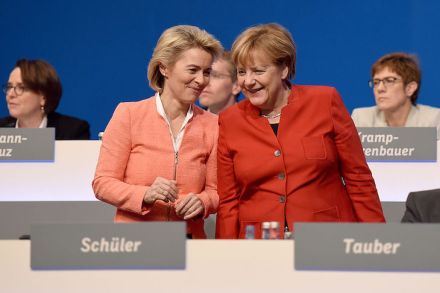
German defence minister Ursula von der Leyen has been put forward by European leaders as the candidate to succeed Jean-Claude Juncker as the President of the EU Commission, a powerful position. If she is approved by the EU Parliament (which is not yet certain) it would be a victory for German Chancellor Angela Merkel, and a bad thing for Europe. Von der Leyen attended the European School in Brussels, just like Boris Johnson. Like Boris, she’s the child of a European Commission official, but that's where her similarities with the potential prime minister end. She wants a 'United States of Europe', a political union for the Eurozone and a 'European army', even if her own track record as defence minister 'is regarded as a failure among friends and foes alike'.

Five myths about the European parliament election results

In the analysis of last week’s European Parliament elections, a number of claims which should be categorised as 'myths' have emerged. Here, I’ve singled out five of them that should be challenged:   1. The 'major development' that the centre-right EPP and centre-left S&D lost their majority isn't a major development For the first time since 1979, the centre-right European People’s Party (which included the UK Conservatives until 2009) and the centre-left S&D group (to which Labour belongs) do not command a majority of seats in the European Parliament.

The good, the bad and the ugly of Jean-Claude Juncker’s presidency

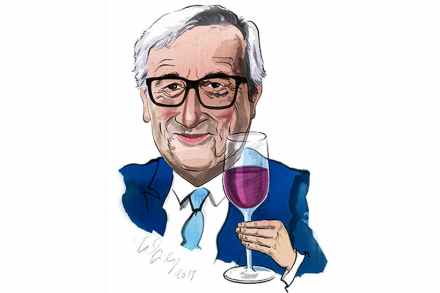
For five years, Jean-Claude Juncker has been head of the European Commission. Luxembourg's former Prime Minister is known for always being able to crack a joke, but as his term ends this year, it's a good time to look at the good, the bad, and the ugly of his track record as president of the European Commission.   The good The Juncker Commission has achieved some results when it comes to concluding new trade deals. Most prominently there are its trade agreements with Canada and Japan, with the latter creating the biggest trade area ever. It may not be an orthodox free-trade agreement, as its standards could function in a protectionist manner, but the perfect is the enemy of the good.

The EU27 are far less prepared for no-deal Brexit than you’d think

As 29 March gets nearer and Theresa May tries to get a Brexit deal through parliament, preparations for no deal continue in both London and mainland Europe. It’s been well-documented that the UK government’s preparations haven’t been optimal, and many British companies aren’t really prepared for no deal. However, on the other side of the Channel, things aren’t going all that well either. Here is an overview of the EU27's no-deal plans: Germany In Germany, the government decided to hire an extra 900 customs officials (trade unions claim that 1300 are needed) to prepare for no deal, but at the end of January, none of these had been employed yet.

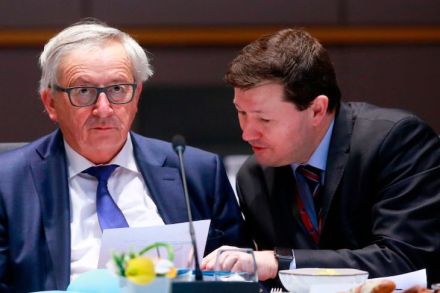
Martin Selmayr is taking over the Brexit negotiations – and that’s bad news for Britain

It’s no coincidence that the EU had already prepared a statement on Monday that ruled out any Brexit renegotiation, even before the 'Brady amendment', which requested the replacement of the backstop within the withdrawal agreement had been voted on. One of the reasons why, is that a certain Martin Selmayr is now very much sitting in the EU’s driving seat. A lot of media attention in the UK is often spent on whatever the EU Brexit negotiator Michel Barnier and his team are saying, but I am hearing in Brussels that when Theresa May’s top Brexit advisor Olly Robbins visits EU institutions, he now meets Martin Selmayr, the controversial Secretary-General of the European Commission.

Martin Selmayr is taking over the Brexit negotiations – and that’s bad news for Britain | 30 January 2019

It’s no coincidence that the EU had already prepared a statement on Monday that ruled out any Brexit renegotiation, even before the 'Brady amendment', which requested the replacement of the backstop within the withdrawal agreement had been voted on. One of the reasons why, is that a certain Martin Selmayr is now very much sitting in the EU’s driving seat. A lot of media attention in the UK is often spent on whatever the EU Brexit negotiator Michel Barnier and his team are saying, but I am hearing in Brussels that when Theresa May’s top Brexit advisor Olly Robbins visits EU institutions, he now meets Martin Selmayr, the controversial Secretary-General of the European Commission.