Philip Womack

Philip Womack is a writer, an ex-private tutor and a parent.

Mothers meeting

Niven Govinden’s This Brutal House is set in the demi-monde of the New York vogue ball. This is an organised, charged battle of display, a peacocking, glitter-fuelled extravaganza, in which transvestites and transsexuals compete against each other for kudos and cash prizes. Eyelashes lengthen, hair is piled up for hours, dresses shimmer and heels clack, as some of the city’s most vulnerable inhabitants seek a place of self-expression and safety. The participants urge each other on with powerful expressions in demotic idiom. One chapter is devoted to a list of vogue ball categories. Running to several pages, it includes everything from ‘Category is: see you in the afternoon realness’ to ‘Category is: dance on my grave madness’.

Daughters of Troy

In the past few years there has been a flourishing of literary responses to the Trojan war. To mention a few: Barry Unsworth’s elegant The Songs of the Kings enhanced the narrative with psychological flair; Alice Oswald’s beautifully distilled Memorial brought a disquieting focus on to the deaths of lesser heroes, as well as the electric beauty of the Homeric similes drawn from the natural world; and last year’s The Silence of the Girls by Pat Barker, which successfully imagined the Iliad with Agamemnon’s slave-girl as the narrator. Natalie Haynes, with A Thousand Ships, a retelling of the war and the stories around it, has entered a crowded field. Haynes’s central premise is that heroism is vested as much in women as in men.

Be careful what you wish for

Adam Foulds’s fourth novel, Dream Sequence, is an exquisitely concocted, riveting account of artistic ambition and unrequited love verging on obsession. In previous novels he has been interested in exploring the limits of perception and knowledge. Here he examines, with beautiful, forensic attention, the minds of a young, thrusting English actor, Henry Banks (a mix of Dan Stevens and Henry Cavill), and Kristin, an American divorcée with a stalkerish crush on him from the other side of the world. She writes letters, decorated with butterflies: ‘He was the key signature in which the music of her life was played.’ This is a novel about celebrity and its consequences, with Henry as, in his own words, a ‘permeating light’.

Passionate pursuits

André Aciman’s 2007 debut novel, Call Me By Your Name, was a sensuous, captivating account of the passionate love a cosmopolitan teenage boy bore for an older American man, which has since been made into an elegant and successful film, directed by Luca Guadagnino. For readers of all sexual persuasions, there was universality in young Elio’s desperation, the false starts and misreadings in his interactions with his desired; the consummation and the final disappointment. Love, unrequited or not, is something of an Aciman speciality, and he returns to it here in his fourth book, Enigma Variations. More of a collection of vignettes than a straightforward novel, it examines the emotional turbulence of the narrator with an exacting, often lyrical eye.

Stories we tell ourselves

Sofka Zinovieff’s new novel, Putney, is an involving, beautifully written, and subtle account of an affair in the 1970s between Ralph, a composer in his thirties, and Daphne, a young girl, who is nine when she is first encountered: ‘Flitting, animal movements; narrowed, knowing eyes; dark, tangled hair; dirty bare feet.’ Enchanted by this creature, whom he idealises as a kind of embodiment of the free spirit of the age, he convinces himself, though he has never felt love for a child before, that this is a new, powerful and pure thing — ‘the beginnings of love’ — and grooms her, kissing her under a tree when she reaches the age of 12, before embarking on a full blown affair.

A love letter to France

When John Julius Norwich was a boy, his father was British ambassador in Paris.School holidays were spent in the exceptionally beautiful embassy which had been purchased by the Duke of Wellington from Pauline Borghese. He would mix dry martinis for Jean Cocteau, and sing songs to the dinner guests which he had been taught by his father’s mistress, the poetess Louise de Vilmorin, who got on famously with his mother, Diana Cooper. It makes you long to have been there. This warm, delightful short history of France, aimed convivially at the general reader, is his love letter to the country he knew so well: and, he writes, most probably his final book.

Paris mismatch

There has been much debate recently about what exactly constitutes ‘literary’ fiction. If the term means beguiling, gorgeously crafted novels that are assured of their place alongside other writers, reacting to, and taking pleasure in discussing them; that are aware of the world’s events and their impact on humanity; that have delicately drawn characters; and that range with ease from intense emotions to moments of high drama; and that use careful, subtle imagery, then C. K. Stead’s The Necessary Angel is all this and more. His previous novel, Risk, touched upon banking and Iraq, but was never overwhelmed by them.

Another gone girl

Adam Thorpe’s latest novel, Missing Fay, examines the lives of a disparate group of people in Lincolnshire, all touched in some way by the disappearance of the titular Fay, a sparky, gobby 14-year-old girl from a council estate. This is an England of motorways, dull campsites, immigrants and nursing homes: where transience is the norm, where those who sit still gently simmer. The landscapes and interiors are rendered with the delicate strokes of a painter, whether the bucolic tainted by sudden violence, the ancient streets of Lincoln, or the underpasses and playgrounds haunted by local youths. In contrast, played out on televisions in the background, are the Davos summit and the kinds of talent shows that promise instant fame.

Defeat by tweet and blog

The Wake, Paul Kingsnorth’s Booker-longlisted debut novel, was set just after the Norman Conquest, and was told in an odd hybrid of pseudo-Anglo-Saxon and modern English. Its narrator, Buccmaster of Holland, being displaced by the incoming Frenchies, gathered a group of fighters to resist, holding them together by the strength of his personality. But something more complicated is also going on: Buccmaster, prone to visions, was an unreliable narrator; reading the book was a shocking, difficult but rewarding experience, capturing a moment in time when a whole way of life was almost entirely destroyed. Zoom forwards 1,000 years or so (the date is not specified) and we come to Beast, billed as the second part in a trilogy.

Escaping the Inferno

I read this, Meg Rosoff’s first novel for adults (though her previous fiction, aimed at teenagers, is widely enjoyed by older readers), curled up with my beautiful lurcher, Una, twitching her ears beside me. Appropriately so, as the novel concerns the relationship between a young man and two dogs, super-intelligent collie Dante and devoted spaniel Sissy. All dog-owners will recognise how Rosoff describes their interactions: Jonathan worries about ‘the practical and spiritual difficulties of caring for other sentient beings’, and spends hours imagining ‘the Byzantine quality’ of their inner lives (when I read that sentence, I exchanged glances with Una; she lifted her tail as if to say, You didn’t know?

Odi et amo

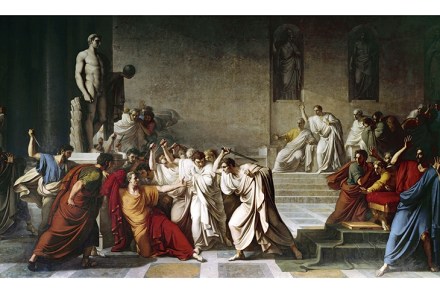
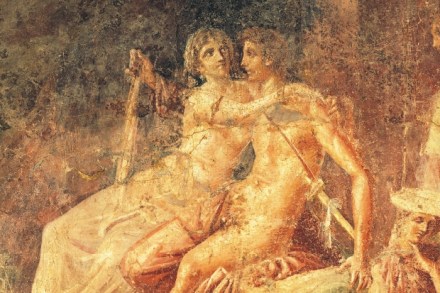
Reading Daisy Dunn’s ambitious first book, a biography of the salty (in more ways than one) Roman poet Catullus, it struck me how lucky we are: only one copy of his collection of poems survived the ages, hidden under a bushel in Verona. Catullus might have gone the way of his contemporaries, such as Cinna, whose lynching is immortalised in Julius Caesar, and whose poems are now dust. Happily, we have Catullus’s small, polished oeuvre, varied and ravishing: there are squibs, lambasting his fellow Romans (‘The father has the filthier right hand/ But the son’s anus is the more voracious’); fascinating mini-epics traversing all of Greek myth; beautiful marriage hymns; and the ‘Lesbia’ poems, recounting his affair with the aristocratic Clodia Metelli.

A break from sabre-thrusting

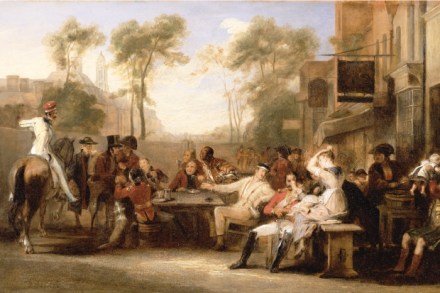
Allan Mallinson’s historical series concerning Matthew Hervey, the well-bred, thoughtful soldier, details a world where men are practical and not too clever; where the only sensible vote is Tory; where Moors make ‘uncommonly good cymbalists’. Everything gleams, buffed up to a shining surface: it is a fantasy of empire and glory. Two thirds of the way through this, the 12th book, our hero finds himself at the site of the Battle of Waterloo. He himself had fought there as a young cornet; now, almost 20 years later, and in command of his own regiment, he reconsiders the scene.

Time-travel, smugglers, arsenic — what’s not to like in Sally Gardner’s novel for teenagers?

Which of us, as an adolescent, did not experience at some point a terrible sense of not belonging? Which of us did not yearn for a door to open into a place entirely elsewhere? At that liminal time in our lives, we constantly search for new thresholds, over which we might find ourselves — or another. For most of us the door lies in our imaginations; for A.J. Flynn, the hero of Sally Gardner’s striking, elegant new time-travelling novel for young adults, it actually exists, in the unprepossessing environs of the post office centre in Mount Pleasant. A.J. is the heir to a key to a door which leads backwards and forwards from the 19th century to the present; he is also the only person who can lock it. Thus a dilemma is neatly set up: does A.J.

Looking for the meaning of life? Come to Constantine Phipps’ poetic theme park

A favourite game of mine is to imagine Virgil and Homer today, plying their trade among the supermarkets and office blocks. What would they sing? Can modern life aspire to the epic, and can such a form still be understandable, even useful? C.S. Lewis, though he did translate the Aeneid beautifully, didn’t quite manage a similar feat with his bizarre modern epic, Dymer. It’s not a field many wish to enter. And yet Constantine Phipps, in his third book, What You Want, has made not only an epic, but a didactic epic, accessible, relevant and involving. In precise, lucidly flowing iambic pentameters, the poem is a meditation on the nature of being, married with a strong narrative. It stands aware of its influences: Lucretius is its guiding spirit and Dante its model.

Questioning tales

Tessa Hadley’s previous book, The London Train, was one of the best novels of last year, though overlooked by prize committees. It concerned the gently disentangling lives of a pair of middle-class couples, and found its strengths in numinous revelations of the everyday. These short stories (all previously printed in magazines such as Granta and The New Yorker) explore, with a questioning intelligence, a mostly similar territory. Here people try to shore up their lives as best they can in the face of vicissitudes. They do so by reaching out to others, often in the face of convention; and by trying to square life with the worlds that they create in their heads, and that are created around them in the forms of fiction.

Chuckles in the middle of nowhere

I really wanted to like this book. After the dire Eragon, which has now been made into a worse film, and this year’s The Meaning of Night, with its coy Victorianisms and pointless footnotes, I was longing for a ‘fantasy’ that would enchant and amuse in delicious detail. And somewhere, in the 750-odd pages of The Glass Books of the Dream Eaters, there might be such a book. The novel starts off fairly promisingly, with the heroine, Miss Celestial Temple, chasing after the stuffed-shirt fiancé who dumped her. She stumbles across a party which is a cover for a deadly ‘Process’ run by a cabal of people with silly, unconvincing names like Xonq or Lacquer-Sforza.

In praise of unwanted gerundives

I had a succession of brilliantly eccentric Classics teachers. Father Hunnwycke, a kindly and acerbic priest, showed his hatred of school inspections by holding up a German book called Group Sex in Ancient Rome every time the inspector’s dreary head was bowed. Another, a small, military Scottish man, would, after berating my misuse of the optative, launch into a diatribe about the evils of Tesco — or the Antichrist, as he preferred to think of it. He eventually ended up on Mount Athos. These wonderful people are a dying breed, says Harry Mount in this likeable, easygoing book. It is an odd creature — part memoir, part grammar book, part history, with a call to arms at the end for more rigorous teaching and more teachers.

Magic and mischief

Susanna Clarke taps enchantingly into a vein of folkloric gold. She presents our world as existing in tandem with ‘Faerie’, but without butterfly-winged Victoriana. Instead she creates a sense of danger, as if the Faeries in question are the displaced gods of Robert Graves’ The White Goddess, still retaining elements of frightful power over mankind. Her debut novel, Jonathan Strange and Mr Norrell, was hard to miss: it worked, like a charm. A story of the relationship between two master magicians in the early 19th century, it combined wit, vigour and elegance with a cracking good story.

Just imagine that

This is a loosely connected series of tales which make up an intriguing, sometimes frustrating and occasionally both compelling and hilarious collection of ‘snatches’ from a bizarre alternative world history, which proclaims that there is no such thing as fiction, and that we are always one step away from destruction. Trotsky’s ghost, a cannibalistic contessa and a dog and his master who change places are just a few of the strange beings that stalk through the text as shadowy harbingers of our own inevitable doom.