Philip Womack

Philip Womack is a writer, an ex-private tutor and a parent.

In praise of anachronisms

From our UK edition

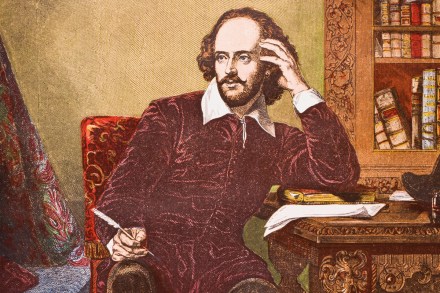
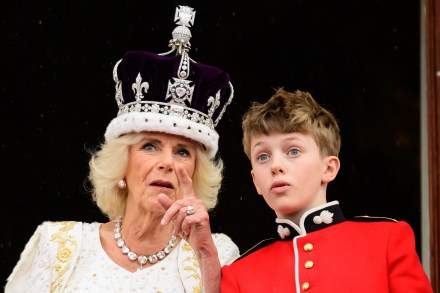
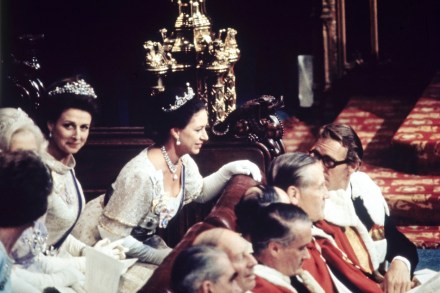
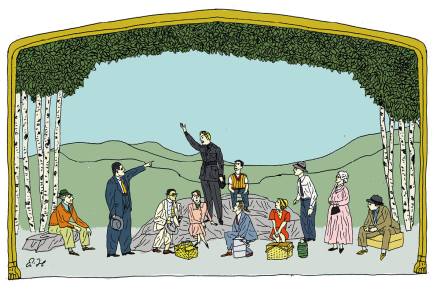
Do you know what an anachronism is? They’re very clear in cultural terms: Shakespeare’s clocks in Julius Caesar, for example. But in historical terms, it’s a different matter. When His Majesty King Charles III was crowned, the online scoffers were quick to mobilise themselves. One enthusiastic Jacobin tweeted that the enthroned, orbed and sceptred sovereign was ‘insane’, an ‘anachronism’. Out the scoffers troop, reliably, at every State Opening of Parliament. (And quite right too: mockery is a vital part of a successful polity). ‘How Ruritanian!’ they sneer (not quite grasping that the Ruritanians were copying us. And also, er, fictional.) The jeerers usually finish by wondering why we can’t be a grown-up country, like that entirely stable republic, France.

Keir Starmer is blind to the brilliance of private schools

From our UK edition

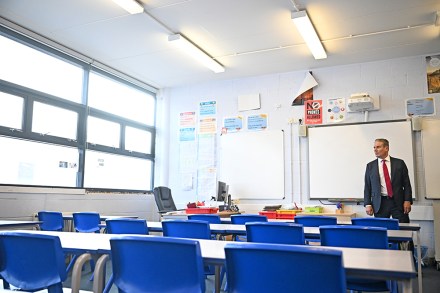
Despite protestations from every quarter, Sir Keir Starmer will press on with his malicious plan to slap VAT on private school fees. I can only assume he’s doing this because he believes an excellent education, stemming from hundreds of years of tradition, is entirely undesirable. Look, there’s no question about it. Our private schools are the cat’s pyjamas. They attract discerning parents from all over the planet, even from New York, that bastion of elitism, where bankers and lawyers duke it out to hire Juilliard grads to teach their four- year-olds the violin. Recently, I met a financier from that city. So enamoured was he of London schools that he upped sticks and transferred his entire family. The spectre of an extra tax is as nothing to him.

More curious canine incidents: Dogs and Monsters, by Mark Haddon, reviewed

From our UK edition

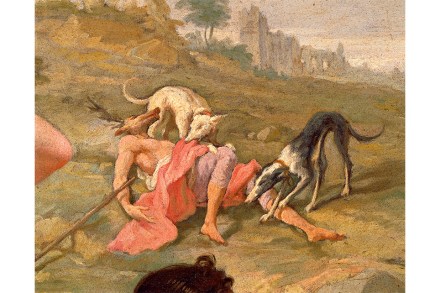
Mark Haddon’s latest collection of short stories, Dogs and Monsters, uses myth and history as springboards into mesmerising accounts of isolation, tragedy and, of course, dogs, which are a motif throughout, from the hounds who mistakenly tear apart their owner Actaeon, to one who befriends St Antony at his lowest point. Haddon monitors the borderlines between man and beast, divine and mortal, and what’s real and what isn’t. In ‘The Mother’s Story’, a reimagining of the Minotaur myth, the action is transported to quasi-medieval England. The first-person narrator is Pasiphae (though unnamed), whose ruthless husband has locked up her son Paul, born ‘a moon calf’.

Creation Lake is one of the best books of the year

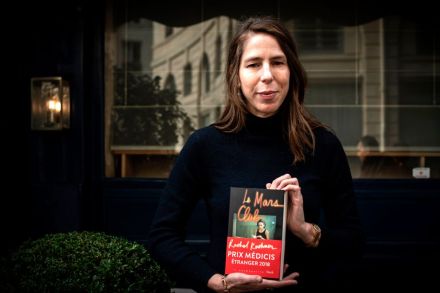
Rachel Kushner’s ambitious, intelligent and gripping latest novel, Creation Lake, concerns the eternal human capacity for delusion, while wondering whether utopian ideals can ever be realized without serious compromise. And it manages all this within the form of an expertly slick thriller, set against the backdrop of contemporary rural France, its history, politics and class system, all carefully woven in alongside an account of the rise and fall of the Neanderthals. Sadie, the first-person narrator, used to work as an undercover intelligence agent in the United States; she was discharged after entrapping a young man who was engaged in animal activism.

Kushner

In defence of the personal statement

From our UK edition

Ucas, the organisation in charge of university admissions, has announced that it’s bidding bye-bye to a crucial teen rite of passage. It is killing the personal statement. No longer will admissions tutors beetle their brows over flowing paragraphs about when you built an orphanage in Malawi using only a spoon, or how really, really passionate you are about late medieval poetry. Instead, it has decreed that wannabe grads must now answer three dour questions. This move is designed to help those from disadvantaged backgrounds, who do not, in the eyes of a Ucas spokesperson, have access to teachers and family members able to help: and who could argue with that? Well, I think it’s not only a shame, but another sign of the creeping hand of cold and normalising bureaucracy.

James Shapiro’s timely account of the rise and fall of an influential public theater

James Shapiro, a distinguished Shakespeare scholar, has turned his attention to the seeds of today’s culture wars in this fascinating, timely and deeply researched book. He unearths them in the demise of the New Deal’s Federal Theatre Project, brought down by a Red-hunting congressional committee. Shapiro’s is an unexpectedly gripping tale, as he exposes the “playbook” of the Texas Democratic congressman Martin Dies, a white supremacist and glory hound who seems to have settled on destroying the Federal Theatre simply as a means of boosting his profile, while also exploring the relationships between politics, plays and propaganda. The Federal Theatre was a utopian project of galactic size, of a kind which, in these days of funding cuts, now seems impossible.

Shapiro

Nostalgia for old, rundown coastal Sussex

From our UK edition

Sally Bayley’s The Green Lady is a beguiling, experimental mixture of biography, fiction and family history. In her excellent memoir Girl with Dove (2018), she wrote about her neglected childhood in the coastal Sussex town of Littlehampton. Here she returns to the same locality, but considers her forebears, embroidering episodes from her own rackety childhood into the lives of her ancestors and local people. The title refers to a hostel on the corner of the lane where Bayley grew up. Its owner, Mary Neal, opened it up to factory girls from London. This is the central image of the book, encapsulating themes of wealth and poverty, town and country, the limitations placed on women throughout the 20th century, and how they worked and cared for each other, or didn’t.

John Freeman’s Hit and Run is gorgeously crafted

John Freeman’s gorgeously crafted novella, Hit and Run, is a gripping account of a few tumultuous months in a youngish man’s life. It is imbued with a black-and-white, noirish tinge, beginning as a detective narrative, moving through domestic drama and romance and eventually morphing into a ghost story, profitably exploring what these genres have in common. Based on real events, though it isn’t clear which elements are true, it shows how lives can unravel (and ravel) at the whims of fate, and at the same time demonstrates that everything is connected. This is a work about significant moments, about “a piece of time so sharp it carved a human being from existence,” glittering with reflections and refractions.

The sad decline of writing

From our UK edition

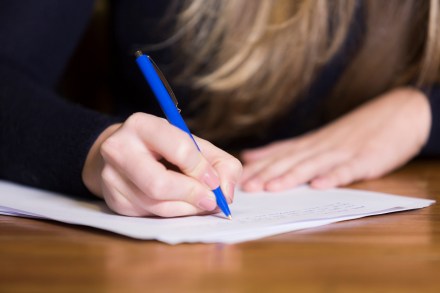
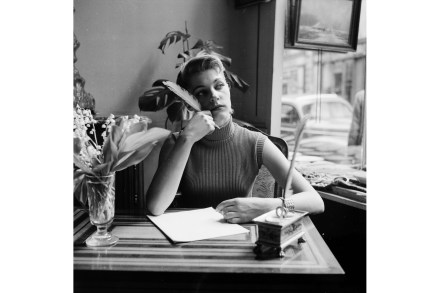
Sometimes, it’s not just bombs, viruses and elections that make you worry about the future of humanity. A recent survey, commissioned by the National Literacy Trust, reveals that fewer than one third of eight-to-18-year-olds enjoys writing as a hobby. If you’re thinking that I’m being wistful about fountain pens (‘whatever happened to ink blots?’) you’re flat wrong: this also includes writing with computers. A mere ten years ago, 50 per cent of children delighted in writing. You can’t help but feel that since then something’s gone terribly awry. If the young’uns are not writing for their own amusement, then they are missing out on a fundamental tenet of humanity.

What drives the Shakespeare conspiracy theories?

From our UK edition

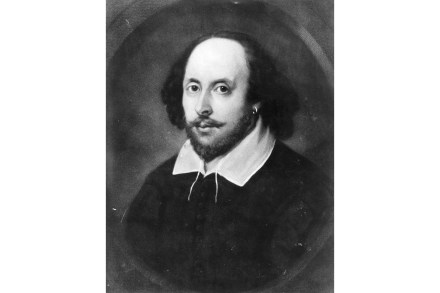
As predictably as the tides, as welcome as a pebble in your shoe, the bogus question of ‘who actually wrote Shakespeare’s plays?’ is in the news again. Jodi Picoult, the writer, thinks that Emilia Bassano (aka Aemilia Lanier), the daughter of a musician, must have had a hand in them, because, she says, Juliet is 13 in Romeo and Juliet, and Bassano was forced to become a mistress at that exact age. This despite the fact that in the play Juliet isn’t forced to love Romeo, and that Bassano was in her late teens when she became Lord Hunsdon’s mistress. Not convinced? In Othello, Desdemona’s servant is called  – wait for it – Emilia! I don’t know about you, but that clinches it for me.

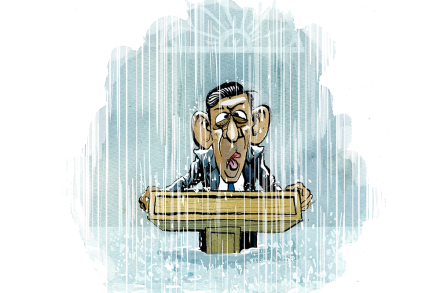
The deluge: Rishi Sunak’s election gamble

From our UK edition

53 min listen

It’s a bumper edition of The Edition this week. After Rishi Sunak called a surprise – and perhaps misguided – snap election just a couple of hours after our press deadline, we had to frantically come up with a new digital cover. To take us through a breathless day in Westminster and the fallout of Rishi’s botched announcement, The Spectator’s political editor Katy Balls joins the podcast. (01:35) Next: Our print magazine leads on the electric car bust. Ross Clark runs through all the issues facing electric cars today – from China flooding the market with discounted EVs to Rishi Sunak dropping the unrealistic target of banning new petrol car sales by 2030. ‘Could the outlook suddenly improve for British EVs?’ asks Ross. ‘It’s hard to see how.

Why is the government making it harder to get an au pair?

From our UK edition

You will have heard, I am sure, of the Conservatives’ recent largesse towards working parents, as their ‘free’ childcare policy has been much publicised. Fifteen hours a week for your kid, from nine months old to the grand age of four. You may not, however, have seen the new rules governing au pairs, which came into effect last month. Our dear, wise governors, while giving with one hand, have taken away with another; they have placed more obstacles in the way of those who need help with looking after their children. They’ve made it even harder to have an au pair. Children, of course, have a tendency to grow past the age of four, at which point they trundle off to school down the merry lane in the sunshine, complete with their adorable little rucksacks.

Salman Rushdie’s memoir is a devastating and powerful account of near-death

In late summer 2022, at the Chautauqua Institute in upstate New York, the celebrated novelist Sir Salman Rushdie was stabbed many times as he was about to give a lecture, the subject of which, ironically, was keeping authors safe. The attack sent shockwaves throughout the literary establishment, and the world. It seemed as if civilization itself was under threat, as if our fundamental freedoms to create, associate and speak as we wish were defunct, reduced to the point of a knife. His new memoir, Knife, examines the attack and its implications for him, and for such freedoms generally.

Rushdie

Parents won’t take Labour’s attack on private schools lying down

From our UK edition

As citizens of an orderly state, we allow ourselves to be taxed. We fork out for council tax so that local services function. When it comes to income tax, some may grit their teeth, but we hope it gets funnelled towards the greater good. We accept, though perhaps dislike, ‘sin taxes’ on cigarettes and booze. We don’t pay VAT on virtuous things, such as books, private healthcare and opera tickets, because these should be available to the widest possible audience. This Very Annoying Tax will put a child’s French lessons on the same level as a packet of Benson & Hedges  Which brings me to school fees: what could be more virtuous than educating your child in the best manner possible? Well, that’s not the thinking of the Labour party.

The frustrating rise of celebrities ‘writing’ children’s books

When you are next visiting a bookstore, and find your way to the children’s section, you might be forgiven for thinking that there is no longer such a thing as a children’s author. Instead, you will be ambushed by piles of books blazoned with the names of actors, singers, comedians, DJs and people who generously exhibit themselves on social media. “Writing” a children’s book has become another string to the celebrity bow. Imagine the scene. You’ve married a prince, and opened a shop that sells vaginal eggs. What more is there to do? A-ha, thinks the celebrity, perhaps while she is sitting on a bench. All those untutored minds, eager for moi! My personal brand will bring them such joy, such self-worth! They will all feel seen!

chidren's

Back from the beyond: The Book of Love, by Kelly Link, reviewed

From our UK edition

Kelly Link’s short-story collections bewilder and delight with their sideways takes on fantasy tropes. People might turn into cats, but they do it while texting emojis (dancing lady, unicorn, happy face). In The Book of Love, Link’s debut novel, she revels in upholding and upturning the genre’s conventions. Mainlining Buffy the Vampire Slayer, and with a dose of recent teen Netflix fantasies such as Locke & Key, her setting is a small coastal town in Massachusetts to which three sarky adolescents have suddenly returned home – although not, as is generally supposed, from a short trip to Ireland, but from what they, alongside assorted supernatural beings, know to be Death itself.

Wolves of Winter focuses on the brutality of the past

Dan Jones’s Wolves of Winter follows from his first novel, Essex Dogs, which tracked the vicissitudes of the titular Dogs, a group of English blokes rampaging around France during the reign of King Edward III. Jones is a historian by trade, and so the setting and context are meticulously researched. If you want to know how to load an early form of cannon, you’ll find out here. Peering into the past is a complicated business, especially far into the pre-modern era, although we do have lots of documentary evidence. It can be hard to remember that those knights and ladies were people just like us, with tempers, frailties and habits.

wolves

Two excellent books that offer new insight into The Iliad

The Iliad, Homer’s extraordinary epic poem, begins with Apollo, the god of light, zooming down from heaven “like night,” bringing plague to the Greek camp before Troy. Many days later, after the Trojan Hector’s funeral rites, the poem ends, at dawn. The light god brings darkness; dawn brings the doom of Troy. Such are the ironies that underpin the epic, revealing it as a work of supreme artistry, probably composed by one hand alone. For decades, I have lived in the light and shadow of The Iliad, reading it at first piecemeal in Greek, then in various translations, then all the way through in Greek (an experience both taxing and exhilarating). My Loeb edition, its prim English translation opposite the raw Greek, is never far from my side.

iliad

Emily Carroll’s new graphic novel plays on our deepest fears

Emily Carroll’s new graphic novel, A Guest in the House, is an involving, beautifully plotted study of the madness of isolation, steeped in the tropes of fairy tale and horror. And, as all good fairy tales do, it confidently deals in the imagery of the unconscious. Narrated via an innovative combination of text and cinematic, sweeping illustration, it concerns the boundaries of the imagination, and the dynamics of a small family as it threatens to fall apart. Abby is a young wife, listless and bored, who has married an older man (David, a normal kind of guy, with that most humdrum of jobs: dentistry). The setting, depicted with haunting precision in muted tones, is 1990s Canada.

carroll

Zadie Smith’s latest novel is glittering, grand and powerful

Zadie Smith’s ambitious latest novel, The Fraud, is loosely based on the life of the little-known nineteenth-century novelist William Harrison Ainsworth. He was, at one point, as popular as Charles Dickens, his novel Jack Sheppard even outselling Oliver Twist. But Ainsworth’s fortunes and talents declined, and his forty-odd novels vanished, going out of print soon after his death. Throughout The Fraud, as he sits groaning at his desk, he is an arch reminder not only of the vagaries of literary fame, but the pains of fiction-writing. As his cousin Eliza Touchet observes: “God preserve me from that tragic indulgence, that useless vanity, that blindness!” Ainsworth’s actual writing is redolent of educated middle-class male privilege. (“‘Zounds!

fraud