Philip Womack

Philip Womack is a writer, an ex-private tutor and a parent.

Zadie Smith’s latest novel is glittering, grand and powerful

Zadie Smith’s ambitious latest novel, The Fraud, is loosely based on the life of the little-known nineteenth-century novelist William Harrison Ainsworth. He was, at one point, as popular as Charles Dickens, his novel Jack Sheppard even outselling Oliver Twist. But Ainsworth’s fortunes and talents declined, and his forty-odd novels vanished, going out of print soon after his death. Throughout The Fraud, as he sits groaning at his desk, he is an arch reminder not only of the vagaries of literary fame, but the pains of fiction-writing. As his cousin Eliza Touchet observes: “God preserve me from that tragic indulgence, that useless vanity, that blindness!” Ainsworth’s actual writing is redolent of educated middle-class male privilege. (“‘Zounds!

fraud

Nostalgia for old, rundown coastal Sussex

From our UK edition

Sally Bayley’s The Green Lady is a beguiling, experimental mixture of biography, fiction and family history. In her excellent memoir Girl with Dove (2018), she wrote about her neglected childhood in the coastal Sussex town of Littlehampton. Here she returns to the same locality, but considers her forebears, embroidering episodes from her own rackety childhood into the lives of her ancestors and local people. The title refers to a hostel on the corner of the lane where Bayley grew up. Its owner, Mary Neal, opened it up to factory girls from London. This is the central image of the book, encapsulating themes of wealth and poverty, town and country, the limitations placed on women throughout the 20th century, and how they worked and cared for each other, or didn’t.

William Boyd’s latest novel is immense fun

William Boyd is perhaps best known for his novel Any Human Heart, which charts the adventures of Logan Mountstuart throughout the twentieth century. Mountstuart marries well, divorces, annoys the Duke of Windsor, is imprisoned, becomes an art dealer in America and has sundry diverting escapades. It’s a warm, impassioned and involving narrative, and Boyd winningly returns to a similar formula in his latest book, The Romantic. The prologue presents The Romantic as a fictionalized biography, reconstructed from notes and maps left behind by its subject. All biography, says Boyd, is by its nature fictional.

Boyd

Men at War examines homosexuality among World War Two soldiers

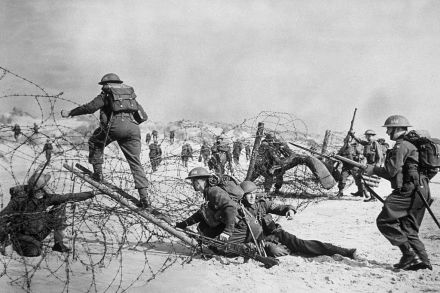
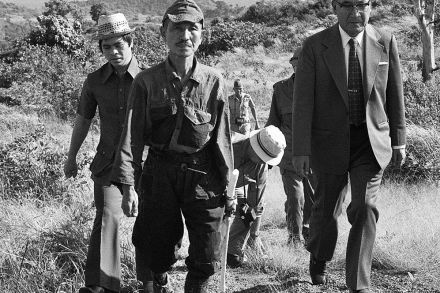
As a little boy, Luke Turner, like so many other little boys, was fascinated by World War Two. He used to spend hours carefully making Airfix models of warplanes, and his favorite haunt was the Royal Air Force Museum in Hendon, a suburb of North London. Men at War, his second book, is an attempt to explore and explain both this interest and his own sexuality (he is bisexual, with a female partner), in response to what he sees as the dominant, jingoistic attitude propagated via general British cultural discourse. He claims that we do not see those who fought as individuals, but as clipped, heroic avatars, like Captain Sir Tom Moore, who raised millions of pounds for NHS charities during the lockdowns: dignified, silent, brave.

war

Tom Hanks should stick to acting

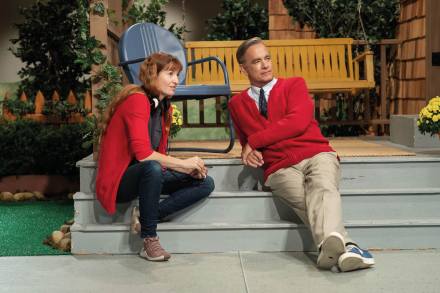
The French novelist Michel Houellebecq recently appeared in a pornographic film. As one does, of course, although he claims that it was by accident. Nevertheless, there aren’t many authors-turned-actors, even by design. (Graham Greene had a small cameo in Truffaut’s Day for Night; Maya Angelou pops up dispensing folksy wisdom in How to Make an American Quilt.) You will, however, lose count of the thespians who clamor to adorn the printed page; I will not mention any, but you can look them up, should you wish to. Tom Hanks (the actor) has produced his debut novel, The Making of Another Major Motion Picture Masterpiece. The title is, I think, supposed to be arch, in a David Eggers, Heartbreaking-Work-of-Staggering-Genius kind of way.

hanks

Forbidden love in the Great War

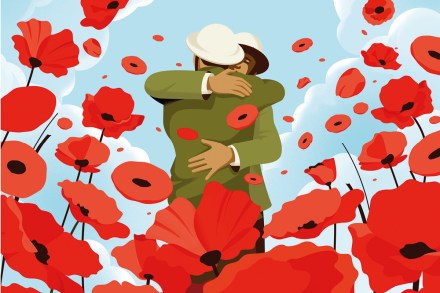
Alice Winn’s beautifully written and engrossing debut, In Memoriam, comes hot on the heels of Tom Crewe’s debut The New Life, which followed the tortured relationship between two men at the turn of the century, and was loosely based on the life of the scholar John Addington Symonds. Winn has turned her impressively attuned eye to World War One, and two young men who fall in love at their public school (old money, military and aristocratic connections, tailcoats and buggery), before heading off to the front; the flower of their generation, doomed to die as the mechanistic future tears apart chivalric ideals, and society starts to question its very nature.

Winn memoriam

No happy ever afters: White Cat, Black Dog, by Kelly Link, reviewed

From our UK edition

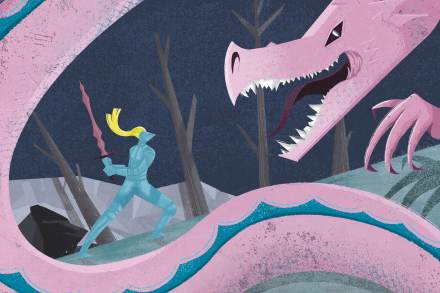
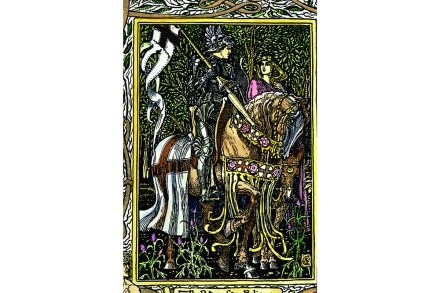
Kelly Link’s latest collection of short stories riffs wildly on traditional fairy tales, filleting out their morphological structures and transposing them. She ranges from a space-set ‘Hansel and Gretel’ to a same-sex version of ‘East of the Sun and West of the Moon’, and much more besides. Like Angela Carter, Link understands the psychological (and narratological) powers of her raw material, and makes thrilling shapes while also dissecting modern society, our fears and our fantasies. Each of these scintillating stories (not a dud among them) concerns lost characters in search of truth about themselves or the world. Sometimes they find it; more often they don’t. Link’s lucid prose moves the reader unerringly onwards through the forested thickets of her imagination.

Tom Crewe’s The New Life is sophisticated, intelligent and gripping

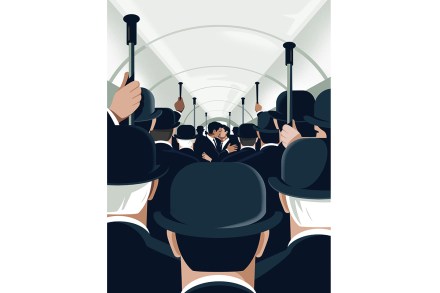
Tom Crewe’s highly accomplished debut novel, The New Life, concerns the suppression of sexual feelings, and how utopian visions can falter when they come up against cold hard reality. It begins with John Addington (closely, though not entirely, based on the nineteenth-century man of letters John Addington Symonds), fantasizing about a homosexual encounter in a London underground train. The carriage is crammed: a man is pressing his buttocks into John’s crotch; John’s excitement cannot be concealed; soon they are in the throes of passion, despite the crowds around them. It’s a claustrophobic, tense, almost nightmarish scene, executed with minute attention to detail.

new life

Behind closed doors

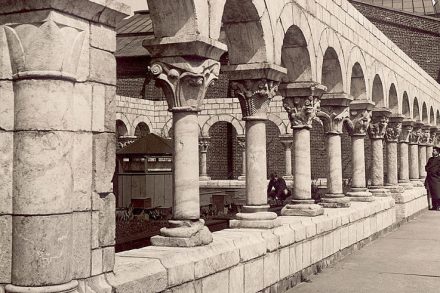
Katy Hays’s involving, well-tuned debut novel takes its name from a real museum in New York, the Cloisters. Built by a Rockefeller, it resembles a medieval monastery and brims with glorious treasures. Ann, our provincial heroine (from Walla Walla, where she worked a menial job in order to fund college), would have preferred the Met, but when she’s serendipitously hired for a summer role, she finds herself swiftly pulled into the institution’s inner workings and the nefarious machinations of its well-heeled staff. The cutthroat nature of the museum is placed under the spotlight.

Stephen Amidon’s day of the locust

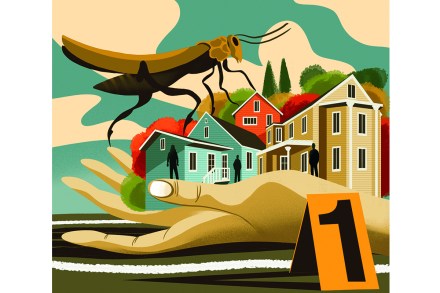
Stephen Amidon’s Locust Lane begins late at night, with a dog run over by an alcoholic fund manager. Patrick is well over the limit: “He didn’t need another item in the overladen shopping cart of guilt he was pushing around.” He vacillates, and then scarpers, setting up the novel’s themes of addiction, accident, power and privilege, and how far people will go to save themselves. Questions of nature and nurture abound: does monstrous behavior pass down the generations, or is it learned and acquired? And what lengths will communities go to in order to protect their own? Locust Lane is a street in the town of Emerson. It’s a tony neighborhood, whose vast, spotless houses contain apparently equally spotless WASP-y families, insulated by centuries of accumulated wealth.

locust

A dangerous gift: The Weather Woman, by Sally Gardner, reviewed

From our UK edition

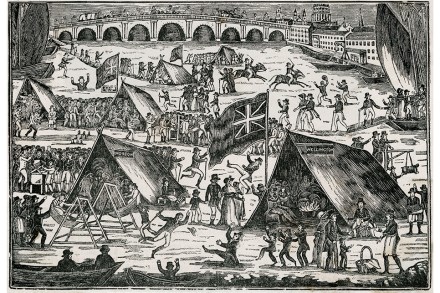
The Weather Woman is the children’s writer Sally Gardner’s first novel for adults under her own name (previously, she used the pseudonym Wray Delaney). Spanning the end of the 18th and the beginning of the 19th centuries, the story describes an England trembling at the French Revolution and haunted by the threat of Napoleon while aristocrats gamble and roister. Gardner’s sense of atmosphere is acute. The frost fairs, the grand ballrooms, the stinking alleyways all come alive. The novel’s major theme is the subjugation of women; its secondary, the border between rationality and intuition. Our thoughtful, unconventional heroine is Neva Tarshin. Her mother, a genius chess player, was forced to hide her talents, only playing as a wayside attraction, disguised as an automated bear.

Paul Theroux’s family values

Paul Theroux is not averse to writing about toxic family relationships. His 2017 novel, Mother Land — written, he said, in lieu of a memoir — chronicled the affairs of the Justus family and its monstrous matriarch. The power plays between the many siblings involved endless backstabbing. At the book’s heart was the rivalry between two brothers, very much inspired by Theroux’s own family. It was an odd, overlong, bitter novel, its characters motivated by spite and revenge, piling up resentments over many hundreds of loosely written pages. Fortunately, The Bad Angel Brothers is a good deal tighter. It also concerns internecine warfare centered around a pair of brothers, who initially seem very different. But, as the narrative progresses, their similarities become all too apparent.

Theroux

Carry on regardless

The director Werner Herzog’s first novel, The Twilight World, occupies quintessential Herzogian territory. Those familiar with his films will recognize the themes: man’s insignificance in the face of a totally implacable nature and his overweening ambitions to surmount this failure. Futility and pride are locked together in hallucinatory, self-destructive cycles. His film Fitzcarraldo, for example, demonstrated the real-life attempts of a rubber baron to transport a steamship over a mountain in Peru. Grizzly Man, meanwhile, documented the sad life of a man who had made his home among bears. It doesn’t end well. (Those readers who haven’t the time to get to know his work may wish to find “Werner Herzog” reading Curious George on YouTube — a delightful parody of his style.

herzog

Faeries and queens

Flint and Mirror, John Crowley’s engrossing and elegant latest book, is set in a sixteenth century where angels and demons watch over human quarrels and sometimes even intervene. History and magic entwine, and yet are opposed. There is the ongoing conflict between Catholicism and Protestantism, as the Catholic Spaniards eye up invading England. The novel is also about the beginnings of modernity. As the reign of Queen Elizabeth I of England comes to an end, we progress gradually toward exploration of the globe and the Enlightenment. Farewell rewards and fairies, indeed. Elizabeth, serpentlike, broods in her English fastness, sending spies both physical and metaphysical throughout the land. Her personal magician, Dr.

crowley

Beautiful and damned

Natalie Standiford’s latest novel, Astrid Sees All, captures the bohemian world of New York in the late 1970s and early 1980s in acutely elegant prose. It charts the fortunes of a young suburban girl, Phoebe Hayes, in elegiac but unsentimental fashion. Phoebe longs to live in the “golden world,” as she sees it, of parties and socialites, where John-John Kennedy rubs monied shoulders with the Shah of Iran’s niece, and cocktails, champagne and cocaine flow undimmed until morning. There are hints of Gilbert Adair’s Parisian youths in The Dreamers and Jonathan Dee’s novel about the effects of great generational wealth, The Privileges.

astrid

The torment of mentoring spoilt rich kids

From our UK edition

For 20 years of my adult life, I moonlighted as a private tutor. After a full day in the office (at a literary job which paid me the price of a Mars Bar p.c.m.), I would traipse the streets, from Notting Hill mansion to cramped suburban flat and everywhere in between, leaving a trail of English comprehensions, Latin translations and Ancient Greek primers in my wake. Not many private jets were involved, but I did run through so much shoe leather that I tried to claim a new pair of brogues as an expense. My accountant, alas, was having none of it. Every so often, the press sensationalises the world of tutoring. That we were paid up to £1,000 per hour is entirely untrue, more’s the pity.

Sex and the city

Coco Mellors’s lively, involving debut novel begins on New Year’s Eve in New York, with Cleo and Frank meeting in a descending elevator. It’s a sure sign that their future relationship will not end well. Cleo is British, young, golden and an artist; Frank is American and old (well, he’s in his late thirties), and he has taken the devil’s dollar by working in advertising. Cleopatra and Frankenstein deals primarily with the indistinct boundaries between commerce and art, set against a backdrop of neurotic New Yorkers, glitter, drugs and booze. As Frank walks Cleo home through streets full of hedonists, swapping one liners and teasing each other, they fall in love (or at least, into a clinch on the stairs of her dingy apartment).

Mellors

Back in the magic land of Narnia

From our UK edition

C. S. Lewis’s enchanting Chronicles of Narnia series has, in recent years, come under critical fire. It’s racist, sexist, colonialist; blatant propaganda for Christianity, hoodwinking children into a life of religious submission. These barbs seem to me to miss the point. As a geeky nine-year-old, I had a dim sense that Aslan had something to do with Jesus Christ. But so what — he was a talking lion! (And, even to children who weren’t Scripture swots, he clearly isn’t Jesus Christ, but something else.) Dyed-in-the-wool atheists get it wrong. I’ve never met a child who marched blindly from Narnia to Christ; but I have met children (now adults) who, already knowing Christ, have felt his joy in Aslan.

Julius Caesar’s assassins were widely regarded as heroes in Rome

From our UK edition

It’s not as if Julius Caesar wasn’t warned about the Ides of March. Somebody thrust a written prediction of the assassination at him as he marched to the Senate on the fateful day. Alas for Julius, as Peter Stothard notes in this gripping, gorgeously written new account of the killing and its consequences, the dictator stuffed it away, unread, into the folds of his toga. Secreted in the folds of his colleagues’ togas were the daggers that would shortly destroy him. The major themes of Roman (and therefore European) history are here writ large: tyranny vs freedom; politics vs self-preservation. We are at a crossroads in time when, if this one event had happened differently, everything might have changed.

Greco-Roman civilisation has dominated ancient history for too long

From our UK edition

What have the Akkadians ever done for us? As it turns out, rather a lot, as Philip Matyszak reveals in this lively, handsomely produced study of peoples and tribes whose PR departments were a smidgeon less muscular than the Romans’. Their obscure names are woven into our language: we sing ‘Land me safe on Canaan’s side’; we talk of oligarchs as ‘rich as Croesus’; we quote the Assyrian coming down ‘like the wolf on the fold’; and the aesthete’s go-to insult, ‘philistine’. Their stories, however, are not, and this book attempts to fill in the gaps. Given the scale and general lack of evidence, there’s a broad-brush approach; but this is more than made up for by a highly engaging style.