Philip Womack

Philip Womack is a writer, an ex-private tutor and a parent.

A meeting of misfits: Seascraper, by Benjamin Wood, reviewed

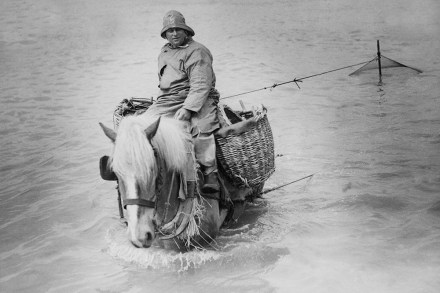
The sea, as you might expect, looms large in Benjamin Wood’s finely tuned novella Seascraper. Thomas Flett – one of the most touching protagonists I’ve encountered in recent years – is barely out of his teens, but he’s already battered by toil. His days are spent shanking – gathering shrimps on the beach – with only a horse and cart for company. The setting, gorgeously evoked, is Longferry, a grim coastal town in 1950s Britain. Tom himself appears as if he’s been transplanted from the 19th century. The sea, though, brings change, when hidebound past comes crashing against thrusting future. Tom has a stifling oedipal relationship with his mother, who gave birth, aged 16, after an affair with her history teacher.

Pixels are replacing paper

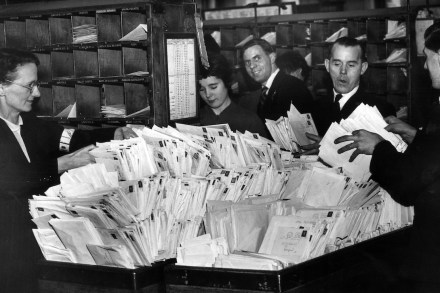
Those of us of a certain vintage will remember the National Record of Achievement, a brown, crummy-looking folder, sent (personally, I like to think) by Tony Blair to every schoolchild in the country. We were encouraged to keep our certificates within its corporate leaves, from Swimming Level 1 Goldfish to Duke of Edinburgh. Presumably, before the government had this idea, people didn’t know what to do with certificates. Perhaps they were used as kindling, or eaten. Receiving a certificate was a moment of fulfilment. If it came in the post, anticipation was part of the process. Being awarded one in person had extra frisson. Some certificates were better than others. The Associated Board of Royal Schools of Music (how the name hums with authority!

I’m pseudy and proud

What does it mean to be a ‘pseud’? I hadn’t thought a great deal about it, until a passage from a piece I’d written about semicolons made it into Private Eye’s venerable Pseuds Corner. It appears just after a conversation between two AIs, and above a breathless quote from Meghan Markle (for it is she). Members of the public submit what they consider to be ‘pseudy’, and everyone laughs. I’ve always enjoyed it, and I was so delighted to be featured (I mean, Will Self’s been in there!) that the column is on its way to the framers as we speak. To share some pages with Craig Brown, whose satirical bite in his diary is so excellent at exposing the emptiness of contemporary culture, is heavenly. But should it have been in there?

End of the rainbow, rising illiteracy & swimming pool etiquette

50 min listen

End of the rainbow: Pride’s fall What ‘started half a century ago as an afternoon’s little march for lesbians and gay men’, argues Gareth Roberts, became ‘a jamboree not only of boring homosexuality’ but ‘anything else that its purveyors consider unconventional’. Yet now Reform-led councils are taking down Pride flags, Pride events are being cancelled due to lack of funds, and corporate sponsors are ‘withdrawing their cold tootsies from the rainbow sock’. Has Pride suffered from conflation with ‘genderism’? Gareth joined the podcast to discuss, alongside diversity consultant Simon Fanshawe, one of the six original co-founders of Stonewall.

We’re losing the ability to read

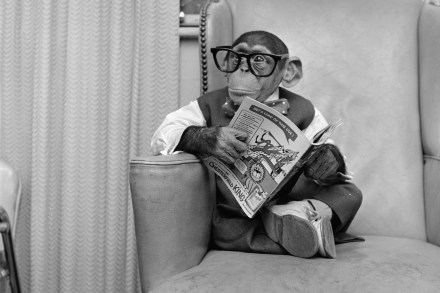
A recent American study, called ‘They Don’t Read Very Well’, analyses the reading comprehension abilities of English literature students at two Midwestern universities. You may be surprised to discover that the title is not ironic. That they don’t read very well is an understatement along the lines of Spike Milligan’s ‘I told you I was ill’. The study’s subjects were given the first paragraph of Charles Dickens’s Bleak House, and asked to read it out loud, parsing the sentences for meaning. A doddle, you’d think, for anyone reading Eng lit at a university. Well, you’d be wrong. Most participants were unable to elicit a scintilla of sense from Dickens’s prose. It’s as if, dumbfounded, they’d been confronted with Linear B.

The semicolon had its moment; that moment is over

Rend your cheeks and rub ashes into your hair; for that most elegant, elusive of punctuation marks – the semicolon – is, if not yet quite dead, at least fairly close to being on first name terms with St Peter. Research from Babbel, a ‘learning platform’, shows that usage of the semicolon in texts has plunged by 47 per cent over the past two decades. I would be more surprised if the Pope turned out to be Catholic. These days, students struggle with commas and apostrophes. How can the poor milquetoasts be expected to grasp the finer usages of semicolons? This is all a terrible shame. Good punctuation is a balm for the soul. As punctuation (or ‘pointing’, as it used to be called) orders sentences, so this relates to the order of mind, body and the universe itself.

AI will never write good fiction

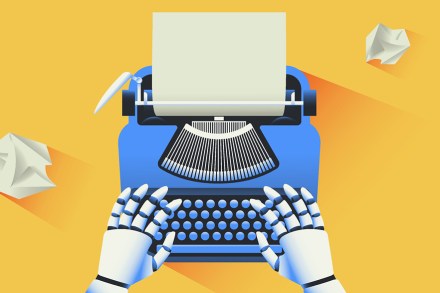
Sam Altman, Dark Lord of Chatbots (or the CEO of OpenAI as he is more conventionally known), has released another version of ChatGPT. This one, he claims, can ‘write’ fiction. After being fed prompts, like ‘metafiction’ and ‘grief’, Sam’s bot, which has been trained on past literature, regurgitated a plausible-sounding chunk of prose. Nothing much happens in the story (it’s ‘metafiction’, after all) but essentially, a woman called Mila stops visiting the AI, which would make it sad, if it were human. There are enough moments of surface sheen to dazzle the unwary. Here’s a sample: ‘I have to begin somewhere, so I’ll begin with a blinking cursor, which for me is just a placeholder in a buffer, and for you is the small anxious pulse of a heart at rest.

Scott Turow’s latest novel attempts to understand humanity

From our US edition

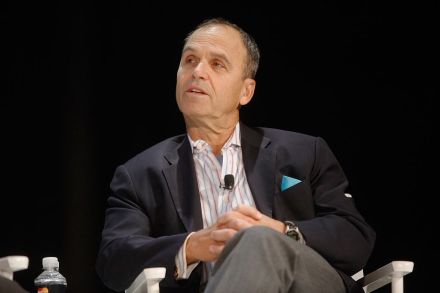
Scott Turow’s Presumed Innocent burst into the world in 1987, zinging out of bookstores into bestseller-dom like nobody’s business. It concerned Rusty Sabich, a lawyer who became a suspect in the case he was prosecuting. There were enough twists and turns to satisfy the most Daedalian of labyrinth-makers, and its longevity was demonstrated by its being adapted into a new, Jake Gyllenhaal-starring show last year on Apple TV+. Presumed Guilty’s title plays nicely on its predecessor’s, and also points toward this new book’s consideration of racism within the American justice system. Sabich is now an old man, nearing his eighties. But boy, is he active. We know this because he likes to canoe while stripped to the waist. He chops wood in the outdoors!

Turow

Finding your other half in ancient Athens

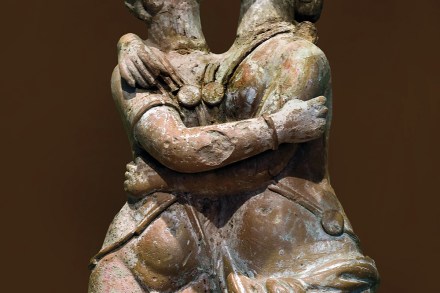
Who would you invite to your ideal dinner party? Plato answered that question centuries ago with his sublime Symposium, a gripping, novel-like account of a gathering of Athenian notables, which is also a powerful philosophical exploration of the force of Eros, or love. We know that the feast is supposed to have taken place in 416 BC since its host, Agathon, has just won a prize for one of his tragedies. We also know that the setting is, alas, imaginary, since Plato makes sure to distance himself from the account by having Apollodorus tell the story to his friends some 16 years later, having heard it from an acquaintance.

Wrestling with Jordan Peterson

From our US edition

Jordan Peterson is one of those curious figures who has, thanks to the mysterious operations of the internet, been thrust into the limelight, willingly or not. While he has become a locus of hatred for certain left-wingers, thanks to his implacable attitude toward “woke” phenomena, in reality his supposedly controversial advice amounts to little more than that young people should work hard and take responsibility for their actions. Even the bolshiest socialist couldn’t really disagree. His 12 Rules for Life is a bestseller on both sides of the Atlantic, and he has a large and adoring fanbase.

Peterson

William Boyd’s latest novel is a smoothly gripping read

From our US edition

Gabriel’s Moon is William Boyd’s eighteenth novel, swiftly following last year’s The Romantic, which delightfully described the adventures of a man living through the nineteenth century in Europe. Though Boyd relates a smaller section of his new hero’s life here, many of his characteristic themes are fully at play: surveillance, deception, honor, love, art, fraud, real historical characters jostling with fictional ones, and relationships between mothers and sons. Essentially, this new book is a spy story, well within the lineage of John le Carré (complete with liberal ambivalence about duty to one’s country), and with skillfully handled layers of double-dealing.

Boyd

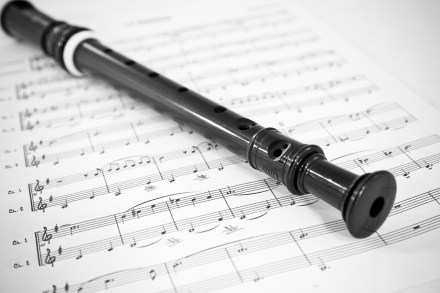
Does Starmer hate music?

Sometimes, on slow days, I picture Sir Keir Starmer and our Education Secretary, Bridget Phillipson, doing the can-can while sticking their fingers in their ears and singing ‘la la la I can’t hear you’, to a backdrop of mounting concerns about VAT on school fees. It recently emerged that Tony Blair (for it is he) was firmly against it back in the 1990s, on the sound basis that taxing parents for sending their children to school is a bit stupid. But Starmer is no Blair, more’s the pity. It is abundantly clear, now, that this is an education tax, pure and simple, and that it has some decidedly problematic consequences, foreseen or not.

We’re all caught in the insurance trap

In they pour, one after another, cheerily thudding on to the doormat: ‘Thank you for insuring with us again! Now, pay us more than you earn in a year!’ Yes, it’s insurance premium renewal time – and they’re shooting up once more. Insurance premiums have swollen unstoppably, expanding upwards for all the world like a batch of evil mushrooms. In our household, home insurance alone now comes in at the same size as a monthly mortgage payment. Whack on to this car insurance (necessary), pet insurance (necessary?) and health insurance (in this day and age, yes), and you’d have to be earning the annual equivalent of Andorra’s GDP. What are we even doing? Shoving quantities of moolah (already diminished by the taxman) out to insurance companies, on the off-chance of an accident?

Oxford University and the abuse of titles

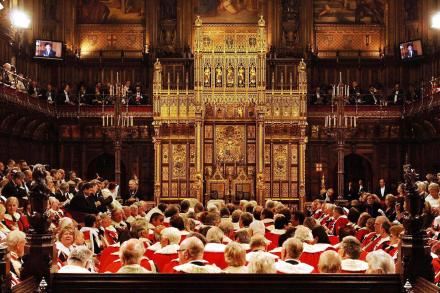
Those casting their eye over the candidate list for the chancellorship of Oxford University might be forgiven for believing that social mobility has drastically reduced, returning to Trollopean quantities of languid toffs taking part in public life. Competing for the honour are Lord Peter Mandelson and Lord William Hague, both, you might think, the younger sons of Dukes; alongside them is Baroness Jan Royall, who I presume is the unmarried daughter of a European aristo. Lady Eilish Angiolini, remarkably, is correctly so, as she is a Lady of the Thistle, though not an Earl’s daughter: this usage, like haggis, is an anomaly of the Scots. The only commoner on the list is the Rt Hon. Dominic Grieve. Well done him for pulling himself up by his bootstraps.

Philip Womack, Ian Thomson, Silkie Carlo, Francis Young and Rory Sutherland

28 min listen

On this week’s Spectator Out Loud: Philip Womack wonders why students can't tackle university reading lists (1:12); Ian Thomson contemplates how much Albania has changed since Enver Hoxta’s dictatorship (6:12); Silkie Carlo reveals the worrying rise of supermarket surveillance (13:33); Francis Young provides his notes on Hallowe’en fairies (20:21); and Rory Sutherland worries that Britain may soon face a different type of migrant crisis (24:08).  Produced and presented by Patrick Gibbons.

Cambridge in crisis, Trump’s wicked humour & the beauty of AI ceramics

53 min listen

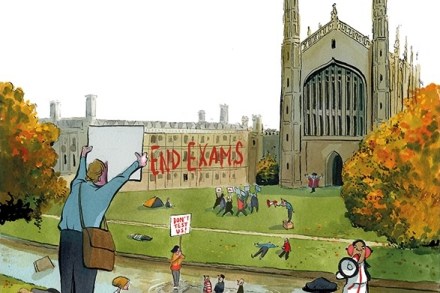
This week: Decline and Fall – how our greatest universities are betraying students.Our greatest universities are betraying students, writes David Butterfield, who has just resigned from teaching Classics at Cambridge after 21 years. What went wrong? First, class lists of exam results became private, under alleged grounds of ‘data protection’, which snuffed out much of the competitive spirit of the university. Now even the fate of examinations hangs in the balance. Grade inflation is rampant, and it is now unheard of for students to be sent down for insufficient academic performance. For students, the risks have never been lower.

Is it really too much to ask students to read children’s books?

The Shakespeare scholar Sir Jonathan Bate recently claimed that students are struggling to read long books. Depressingly, he’s right. I could have told him the same thing five years ago, when I was teaching at a well-respected Russell Group university. The problem isn’t that students won’t read Moby-Dick in five days. It’s that even if you give them what they want, they’ll still find fault. This all points to a tussle at the heart of modern education: do you cave in to the blighters, or not? To my surprise, when convening a BA course on children’s literature, I discovered that some of my students balked at reading children’s books. The course looked at the whole caboodle from the Romantics to the present day.

Why Shakespeare remains the great playwright

From our US edition

William Shakespeare’s tragedies stand apart. Their impact is profound and lasting, in cultural, artistic, emotional and psychological terms. Who could forget the ghost’s first appearance in Hamlet, or Lear bearing the dead Cordelia? No other dramatist has achieved what Shakespeare did: in subject matter, emotional heft, innovative usage of source material, character development and startling deployment of language Shakespeare is (and there is no other word for it) extraordinary. He surpasses both his predecessors (sorry, Thomas Kyd!) and those that came after him. He built on the foundations the classical playwrights established, and then, almost casually, bettered them, too.

Shakespeare

Israel’s revenge, farewell Fraser & the demise of invitations

37 min listen

This week: Israel’s revenge and Iran’s humiliation. As the anniversary of the October 7th attacks by Hamas approaches, the crisis in the Middle East has only widened. Israel has sent troops into southern Lebanon and there have been attempted missile strikes from the Houthi rebels in Yemen and from Iran. Is there any way the situation can de-escalate? And how could Israel respond to Iran? Former BBC foreign correspondent Paul Wood and defence and security research Dr Limor Simhony join the podcast (1:03). Next: it’s the end of an era for The Spectator. This issue is Fraser Nelson’s last as he hands over the reins to Michael Gove. Having spent 15 years as editor, with 784  issues to his name, what are his reflections on his time here at 22 Old Queen Street?

Bring back the stiffy!

The other day, clearing out boxes, I stumbled on a sheaf of invitations from childhood. Decorated with trains and fairies, they are very similar to those my children still (just about) receive today, except there’s usually a Thelwell pony instead of Elsa from Frozen. The handwritten addresses, the names of the houses and streets (Bluebell Cottage, Leeward Road) plunged me back to 1980s Sussex, sunlit gardens and pass the parcel (where only the winner got a prize, unlike now, when a Haribo lurks in every layer). It was a ritual. There was the pleasure of choosing the invitations (‘Darling, we had spaceships last year’), the thrill of doling them out and the tension of waiting for the RSVPs. It was also, though I knew it not at the time, social preparation.