Philip Patrick

Philip Patrick

Philip Patrick is an exiled Scot, who lectures at a Tokyo university and contributes to the Japan Times

Does Gary Lineker deserve Amnesty’s human rights award?

‘We need to be careful with the language we use,’ said Gary Lineker as he picked up an award from Amnesty International in Rome for his ‘strong commitment towards immigration and human rights issues’. It was an interesting line to take, given it was Lineker’s intemperate tweeting – particularly his referencing of 1930s Germany in relation to language used by Home Secretary Suella Braverman – that boosted his social justice warrior profile and probably helped win him the award. Having collected his gong, Lineker claimed in a waffly interview with Channel 4 to be a believer in freedom of speech.

The SNP’s Brexit strategy is bound to backfire – again

The SNP has announced that if the next general election results in a hung parliament it will, as power brokers, ‘undo Brexit as far as possible’. Alyn Smyth, the SNP’s EU accession spokesperson, said his party would demand the UK has a close relationship with Brussels in any negotiations with a minority Labour government. There might be a few titters at this and jokes about signing cheques that can’t be cashed from a scandal-beset party whose relevance and even long-term viability is in serious doubt. But the SNP clearly think this is a winning strategy that can arrest their decline and boost their chances. Whether it truly is, and whether their avowed antipathy to Brexit is all that it is purported to be, is questionable.

The curious business of luxury watches

Ian Fleming once said that a gentleman’s choice of timepiece said as much about him as his Savile Row suit. The latter part of that evaluation seems anachronistic now – after all, who apart from Jacob Rees-Mogg wears Savile Row suits with any regularity these days? But the idea of the watch as indicator of taste, status, wealth and much else besides is, arguably, still valid – and perhaps increasingly so. Luxury watch sales are on the up and predicted to rise further – remarkable given the cost-of-living crisis, their inessential nature and an alarming rise in theft. Watches of Switzerland, who recently opened a multi-brand Canary Wharf showroom, saw revenue jump 17 per cent in the last quarter.

Do Scots support Humza Yousaf’s defence of devolution?

Devolution has largely failed in Scotland and Wales and some powers need to be returned to Westminster. This is a precis of a controversial article by Lord Frost in the Daily Telegraph last week that continues to provoke outrage. Leading members of the SNP have denounced it. Scottish First Minister Humza Yousaf has vowed to ‘defend our democracy’ in the face of the attack, and Stephen Flynn, the SNP leader at Westminster, has called it evidence of ‘a deliberate, co-ordinated attempt to reverse devolution, …and force Scotland under Westminster control.

Another grim reminder of Japan’s violent politics

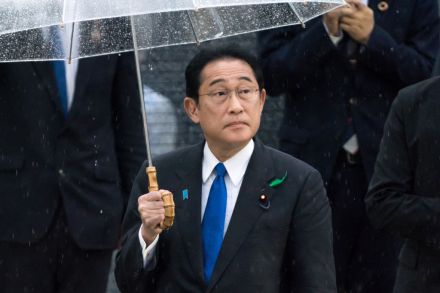
Has Japanese Prime Minister Fumio Kishida just survived an assassination attempt? Kishida was evacuated from the site of a stump speech in the fishing port of Sakizaki in Wakayama western Japan after what appeared to be a pipe bomb was thrown in his direction. No one was injured but people fled in terror after the attack, which occurred at around 11:25 AM shortly before the PM was due to speak. A man was wrestled to the ground clearly holding a cylindrical metal object identical to the one thrown at Kishida before being arrested and taken away.  That’s as much as we know for now. It is not clear yet whether the ‘explosive’ was capable of killing anyone.

Is Humza Yousaf up to the task?

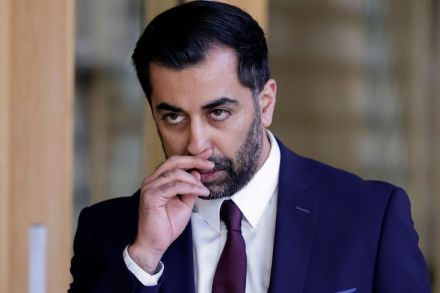
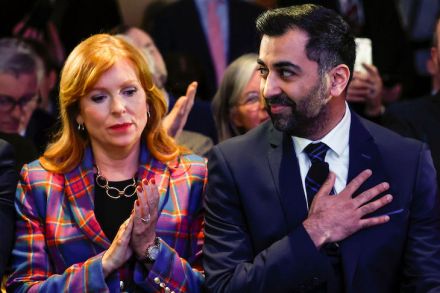
As expected, Humza Yousaf has won the SNP leadership election and, barring something extraordinary, will become the next First Minister of Scotland. Yousaf may have been the bookies' choice but that’s about as far as the favourability extends. Yousaf had a -20 rating with the general public of Scotland and only +11 with his own party (just 33 per cent of the party’s 72,000 members voted for him). Yousaf is widely regarded as incompetent, gaffe prone, and charmless. His much-tweeted speech on the ‘whiteness’ of Scottish society, which seemed designed to annoy the 96 per cent of Scots who are Caucasian, is one of the most controversial in the inglorious history of the Scottish parliament.

Should the SNP leadership contest be stopped?

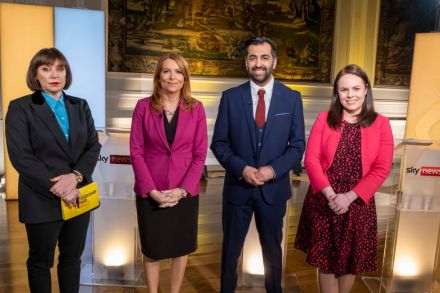
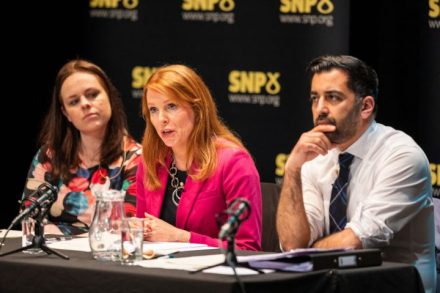
Yesterday saw the final televised debate between the three contenders for leader of the SNP and First Minister of Scotland. Voting will end and the winner will be declared on 27 March.  Or will it? Those sick of this increasingly tawdry contest should prepare themselves: it may have a way to go yet. There are calls for the contest to be halted, restarted or at least reset. And if that doesn’t happen, there is a risk that the winner will not be recognised by certain sectors of the party. There is a talk of a legal challenge from pro-independence blog Wings Over Scotland (which is mulling crowdfunding such a move).  The reasons are simple. There are serious concerns about the integrity of the process and about who will actually be voting/has already voted.

Match of the Day without Gary Lineker was oddly soothing

Well, did you enjoy MOTD? Did you miss Gary?  Thanks to, let’s just say ‘circumstances’, we were able to take part in a unique television experiment last night. For the first time in its 60-year history MOTD consisted of all action and no talk. No presenters, no expert comment, no fancy graphic preview packages, no post-match interviews, not even the title sequence and iconic theme tune. Shorn of these adornments the programme was just 20 minutes long.   The BBC appeared to have various options when Gary Linker decided not to play ball with his employers.

The shame of Scotland’s SNP leadership contest

Ed Miliband must be relieved. With Ash Regan’s idea for an ‘independence thermometer’, a giant screen or billboard visually representing progress towards various aspects of independence, his ‘Edstone’ now has competition for the most ridiculous idea ever presented by a UK politician during an election campaign. It is a measure of how absurd the contest to replace Nicola Sturgeon has become that Regan’s Heath Robinson-esque brainwave has caused only mild amusement. Regan followed up her inspiration by going full Braveheart and endorsing Alex Salmond’s idea of withholding the Stone of Destiny from the upcoming coronation. Quite how this benefits the people of Scotland or advances the cause of independence was left unclear.

Nicola Sturgeon is going nowhere

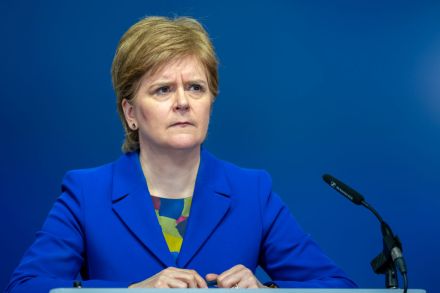
Received wisdom has it that Scotland’s embattled First Minister Nicola Sturgeon is considering her position. ‘She’s finished’ has become a mantra in political circles over the last few days. And not without justification: her absence from a key debate in Holyrood last week did suggest an announcement of some kind might be imminent; perhaps a white flag raised from Bute House.  But Sturgeon emerged from her bunker and was back in action at a press conference in Edinburgh yesterday, answering questions concerning her currently stymied Gender Recognition Reform (GRR) Bill and matters of almost equal awkwardness on SNP finances.

Is Japan doomed?

Japan is heading for trouble, the country's prime minster Fumio Kishida has suggested. ‘Our country is on the brink of being unable to maintain the functions of society,’ he said in a speech earlier this week. Japan’s birth rate, the average number of children a woman will have, is too low, and still falling. It’s 1.3, and needs to be 2.1 to keep the population stable. With every year that passes, there are hundreds of thousands fewer Japanese people.  Economics is mostly to blame. Once, there was a secure and predictable life was for the average Japanese person. The men would toil away at a big company in return for the assurance of lifetime employment.

Why tax-free shopping matters

One initially overlooked aspect of Liz Truss and Kwasi Kwarteng’s ill-fated mini-Budget was the plan to restore VAT-free shopping for tourists. The scheme, which allowed non-EU visitors to claim back 20 per cent on their purchases, was scrapped in 2020 by then chancellor Rishi Sunak but looked set for a comeback. This was excellent news where I live – Japan – and throughout Asia, where holidays are short and shopping plays a big part in overseas trips. But just as tourists were writing up their lists and planning their itineraries, Jeremy Hunt pulled the rug from under their feet by cancelling the uncancelling before it had even reached Kwarteng’s promised consultation phase. Was he right to do so? Almost certainly not.

Why Japan has been a post-Brexit ally to Britain

Japanese prime minister Fumio Kishida is in London today to meet Rishi Sunak and sign an historic defence agreement which will allow the countries to deploy forces on each other’s soil. The two will also toast the new UK-Japan digital partnership which aims to ‘strengthen cooperation across cyber resilience, online safety and semiconductors’ and discuss trade including the UK’s accession to the CPTPP (Comprehensive Agreement for Trans-Pacific Partnership). This all sounds great, but behind the official theatre, what is the substance of the upgraded relationship? The defence agreement is being trumpeted by the government as ‘the most significant between the two countries in more than a century.

Scotland’s Gender Recognition Reform Bill is an open goal for unionists

Having just squandered a quarter of a million pounds on her fruitless Supreme Court independence challenge, Nicola Sturgeon’s government could be headed back to Little George Street sooner than they might have expected. If the UK government deems the hugely controversial Gender Recognition Reform Bill unlawful, a Section 35 order blocking the legislation from going to royal assent could be invoked by Scottish Secretary Alastair Jack. This would oblige Sturgeon’s government to take the matter to court. Is this what the First Minister wants? Many have been perplexed at her stubbornness in pursuing this contentious legislation, warts and all. (She wouldn’t even countenance a few common-sense safeguarding amendments, such as not allowing sex-offenders to change sex.

Japanese food is overrated

From our US edition

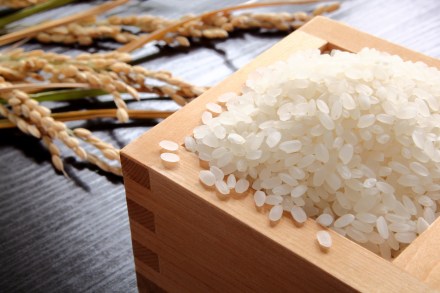
After twenty-three years in Japan, I have concluded that the much-lauded, worshipped even, cuisine is overrated. And I am getting a little tired of being told how awe-inspiringly wonderful Japanese food is, often by people whose only experience is high-end sushi or designer tempura in a showpiece Tribeca eatery, a world away from the standard fare available on the backstreets of Shibuya. Part of the problem is that much of what delights the Japanese about their food is unrelated to its actual taste.

Japanese

What we learned from the Qatar World Cup

It is a measure of the unexpected success of the Qatar World Cup that it could be hailed as the best, by Fifa President Gianni Infantino, and the boast was not entirely laughable. This World Cup had its share of longueurs but had plenty of excitement and ended on such a high note that conspiracists might suspect the final moments were contrived. But the high drama of the final aside, what did we learn from this extraordinary sporting event? First, that we care about the exploited and the marginalised and disapprove of corruption but… not that much. No end of newsprint was devoted to the subject of the unknowable number of migrant workers who died building the glittering jewel-like stadiums in the sand, the bribery allegations, and alleged human rights abuses.

Why Argentina is the team we love to hate

With the prospect of Messi closing out his glorious career with the ultimate prize it’s likely most neutral fans will be rooting for Argentina in today’s World Cup final. The only place where that might not be true – apart from Brazil – is England, where there may even be an unlikely revival of the entente cordiale in some quarters. For Argentina have held the title of the ‘team we love to hate’ mantle for some time now.

Why Messi matters

I hope that the Argentinian national team (also known as Lionel Messi) will win its third (or first?) World Cup on Sunday. But even if it doesn’t, the team’s legendary number ten has surely achieved that rare and precious accolade – earned by Pele in 1970 and Maradona in 1986 – of so dominating a World Cup that it will forever be linked to him. With respect to the supercharged Kylian Mbappé this has been Messi’s tournament. And you can be sure that, win or lose, the world’s media will be focused on him when the game ends.

Let’s kick penalties out of football

Spain crashed out of the World Cup on penalties last night, despite dominating possession against Morocco for two solid hours. Pretty much everyone bar Spaniards will be delighted by this giant-killing by Morocco, who are just the fourth African team to reach the quarter-finals in football history. But their penalty success is nothing to celebrate. Much as it would be great to see less-fancied nations do well at the World Cup, it would be better if this was achieved by scoring more goals, rather than parking the bus and running down the clock.  Spain were the better team last night. While it’s fun for footballing giants to lose now and again, penalty shoot-outs are not good for the game.

Will the end of zero Covid be the real legacy of the World Cup?

You often hear about ‘legacy’ when international sporting tournaments come around. It’s a weasel word used by the organisers to justify the colossal expense by promising some lasting benefit – which usually comes to nothing. But perhaps with the Qatar World Cup, one of the most controversial in the competition’s history, there may be a worthwhile legacy, though not one the organisers could possibly have anticipated.