Philip Patrick

Philip Patrick

Philip Patrick is an exiled Scot, who lectures at a Tokyo university and contributes to the Japan Times

Why should we expect Nicola Sturgeon to support Team GB?

From our UK edition

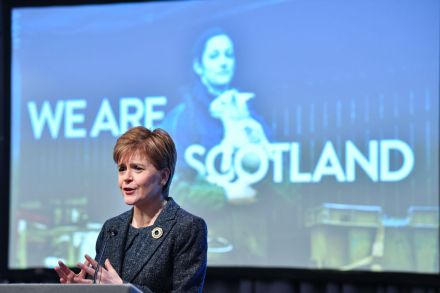
It hasn’t been a great month for Scotland’s First Minister Nicola Sturgeon. First, there was the announcement that an official police investigation would take place into missing money from donations supposedly ‘ring-fenced’ for a future independence campaign; then questions about why Scotland’s vaccination targets had been missed led, apparently, to Sturgeon’s ‘Trump like meltdown’ (how she must have hated that comparison); and to cap it all off, Team GB started off rather well at the Tokyo Olympics. The sporting success led to politicians from all hues of the political spectrum tweeting their congratulations: all hues save the bright yellow of the Nats that is – from whence silence.

Why do the Japanese still seem so ambivalent about Naomi Osaka?

From our UK edition

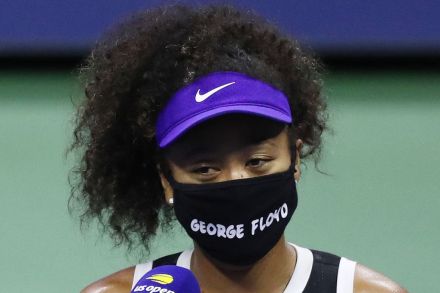
It had all started so well for Naomi Osaka. Dressed in the colours of the Japanese flag, the tennis star was given the signal honour of lighting the cauldron in Friday’s opening ceremony at the Tokyo Olympics. She was presented as a symbol not only of Japan, but also of the Olympic movement’s self-proclaimed diverse and progressive philosophy. Yet her hopes of glory were extinguished just four days later after an error-strewn performance against world number 42 Markéta Vondroušová. Her underwhelming Olympic adventure prompted words of sympathy from many.

Are the Japanese finally embracing the Tokyo Olympics?

From our UK edition

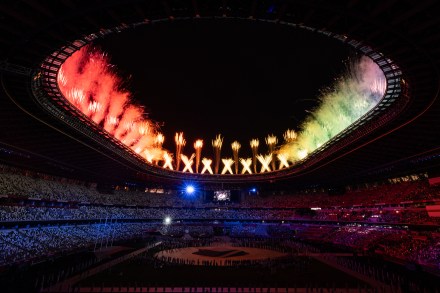
Such gloom and negativity has surrounded the Tokyo Olympics that cynics were suggesting that, when the grand Olympic countdown clock outside Tokyo station finally reached zero at 8pm on Friday, it should be reset – for August 8th. That way we could all ‘count down’ the days until the whole damn thing was over. And then really celebrate. But there are a few signs that the pessimistic mood may be shifting, albeit slightly. One indication was the thousands who gathered outside the Olympic stadium on Friday, as the opening ceremony took place inside. To the evident surprise of the battalions of police, who had cordoned off the arena and were clearly expecting serious trouble, only a very small number, were anti games protesters (I saw about fifty).

Tokyo’s doomed Olympics could be the worst yet

From our UK edition

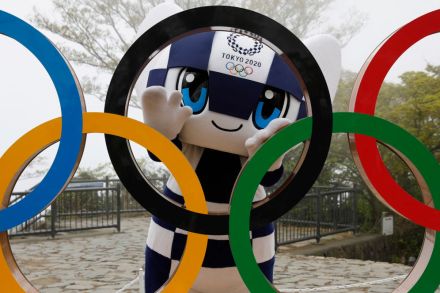
The Tokyo 2020/2021 Olympics, which begins on Friday, looks set to be one of the worst in the event's history. A book detailing all the scandals and mishaps of the games would be longer then the Tales of Genji.  Won way back in 2013, it wasn't long before allegations of suspicious payments materialised. Since then there have been: massive cost overruns, cock-ups with venues (the Olympic stadium was built without a crucible!), multiple gaffes and resignations from the principals, the relocation of the marathon, plus, of course, the one-year postponement and endless uncertainty wrought by the pandemic. The games will open under a dark cloud of public discontent.

Have Southgate’s England lost their moral compass?

From our UK edition

Back in the 1980s the BBC Match of the Day opening credits featured a clip of Manchester United winger Mickey Thomas prostrate on the pitch. He raises himself up and gives a saucy wink to the camera. The implication was that he had ‘won’ a penalty and was cheekily acknowledging his successful deceit. Contrast with Raheem Sterling on Wednesday night. It’s generally accepted that if there was any contact between the England striker and the body parts of various Danish defenders swarming around him, it was minimal, and not enough to send him tumbling to the ground. And certainly not worth a crucial penalty. But Sterling seemed oblivious, no guilty look, no sly wink to anyone, not even a furtive glance at the third official.

Japan’s punishing workplace culture

From our UK edition

Are the world’s hardest workers about to get a well-earned break? That seems to be the hope of the Japanese government, which is trying to encourage companies to ease off a bit and allow their exhausted staff the luxury of a four-day working week. It is hoped this will lead to a healthier work-life balance — or at least give workers a chance to retrain. As an idea, it sounds great. Whether it will actually work is another matter entirely. In January, the ruling (always and forever) Liberal Democratic party drafted a proposal that firms should offer staff the option of a three-day weekend.

Even a robot assistant can’t help you make sense of Japan

From our UK edition

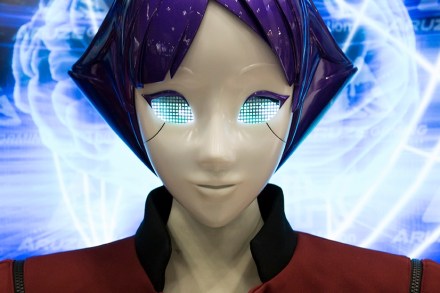
Tokyo The late A.A. Gill, in his notorious ‘Mad in Japan’ essay, concluded that the only way you could make sense of Tokyo was to think of it as a vast open-air lunatic asylum, with inmates instead of residents. Gill would have loved Arisa. I don’t think I’ve ever encountered anything more stereotypically Japanese than Arisa. She’s a multilingual robot concierge at Nishi-Shinjuku station in central Tokyo, one of the thousands of new automatons installed in the city ahead of the Olympics next month. She has a rather creepy Doctor Who look to her — she could be Davros’s girlfriend — and she’s there to assist tourists.

In defence of Naomi Osaka

From our UK edition

‘Kawaisou’ or ‘wagamama’ (poor thing or spoiled brat)? That’s the question Japanese tennis fans have been asking ever since world number two Naomi Osaka quit the French Open, having refused to fulfil her post-match press conference obligations. The tennis superstar cited mental health problems for her reluctance to be quizzed by journalists, after which she was censored sharply, and handed a $15,000 (£11,000) fine. She was told to comply, but has chosen not to, packing her bags and leaving instead.  Osaka has said that she suffers ‘bouts of depression’ and has confessed to a chronic shyness that prompts her to wear headphones to shut out the world whenever she is at a tournament.

The strange truth about Japan’s climate change target

From our UK edition

Japan has just raised its target for reducing carbon emissions from 26 per cent to 46 per cent (by 2030 from 2013 levels). But how was this figure arrived at, environment minister Shinjiro Koizumi was asked? Through a careful analysis of the threat and a realistic assessment of what could be achieved, taking all relevant factors into consideration? Well, er no, according to Koizumi, the number 46 just appeared to him in ‘silhouette’ in a sort of vision. Shinjiro Koizumi, son of former prime minister Junichiro Koizumi, made the comments in an interview with the TV station TBS last weekend. The interviewer, despite her face mask, was clearly stunned by the revelation that the country’s emission target did not appear to have any scientific basis.

Olympics’ organisers could regret banning ‘taking the knee’

From our UK edition

Knee-taking and fist-raising protests have been banned at the upcoming Tokyo Olympics, with the International Olympic Committee warning athletes who flout the rules that they will be punished. The IOC clearly hopes this will mean the delayed and accursed Olympics – already set to be loaded with a slew of joy-killing Covid restrictions – can take place without the additional burden of political controversy. That’s the theory, but could it all backfire? At first glance it looks as if the IOC has been clever. Rather than issue a top-down declaration, they canvassed 3,500 athletes asking whether the current Rule 50, which bars all political demonstrations on the podium (not specifically the knee or the fist), should be retained.

What Yoshihide Suga wants from Joe Biden

Age matters in Japan, so when Prime Minister Yoshihide Suga (73) sat down for talks with President Biden (78), deference to his ‘senpai’ (senior) colleague would have been his default setting. But from the looks of the joint statement following their summit, he seems to have held his own. The main issue, it seems, was China. Japan wanted assurances from the US that their claim to the Senkaku Islands would be respected. The islands’ status is covered by the US/Japan security treaty, but as China routinely sends its own fishing boats to menace Japanese vessels, Suga was looking for a reaffirmation of American support.

suga

How does ‘taking the knee’ help Qatar’s World Cup slaves?

From our UK edition

What was going through the minds of England players as they took the knee, yet again, prior to their victory over Poland in their 2022 World Cup qualifier at Wembley last week? George Floyd? Racism in sport? Nothing in particular?  We’ll never know. But it seems unlikely they were thinking too hard about the destination where, if their good form holds, they will be representing their country next winter: the tiny gulf state of Qatar. If they had, they might have spared a thought, and perhaps a gesture, for the 6,500 migrant workers estimated to have died since Qatar won the right to host next year’s tournament. The issue of migrant worker deaths in Qatar has been a running sore, which has become inflamed again as the qualifiers have got under way.

Has the SNP failed to learn from its ‘snoopers’ charter’ debacle?

From our UK edition

In the run-up to the French vote on the European Constitution in 2005, Jean-Claude Juncker said ‘If it’s a Yes, we will say ‘on we go’, and if it’s a No we will say ‘we continue’’. Nicola Sturgeon and her SNP government are clearly of a similar mind. Not perturbed by the backlash that greeted the party's most notorious rejected policy, the Named Person Scheme, the SNP appears to be attempting its luck again, albeit in a subtly disguised and rebadged form. The Named Person Scheme was originally introduced as part of the Children and Young People Act (2014). It proposed that a ‘named person’ would be appointed for every child in Scotland up to the age of 18.

Can Alex Salmond’s plan to ‘game’ Holyrood’s voting system work?

From our UK edition

Alex Salmond’s reemergence on the Scottish political scene as leader of the Alba party had a pantomimic quality – some cheers, some boos, and a lively mix of interest and anxiety about where the plot would now go with the principal boy back centre stage. But working out how the appearance of Salmond’s new party affects what happens is a considerable challenge, thanks to Scotland’s infernally complex voting system. To paraphrase Lord Palmerston’s reference to the Schleswig-Holstein question, it may be that only around three people truly understand the D’Hondt voting system employed in Scottish parliamentary elections, though there are probably more, who like the fabled German professor, have gone mad trying to figure it out.

Japan’s Olympic ‘scandals’ mark the arrival of cancel culture

From our UK edition

Things are going from bad to worse for Tokyo's cursed Olympics. Just a month after Yoshiro Mori, the former PM, and ex-head of the Tokyo Olympic organising committee was forced to quit for suggesting female members should have their speaking time rationed, along comes another storm in a green tea cup, and yet another resignation.  The latest fiasco concerns comments made by Hiroshi Sasaki, the now former creative director of the opening and closing ceremonies about the actress, comedian and fashion designer Naomi Watanabe. Watanabe, a ubiquitous presence on the inane and exhaustingly upbeat variety shows that dominate TV here, is known as the ‘Japanese Beyoncé’ for the impressions of the American singer, which brought her to prominence.

Will the Tokyo Olympics go ahead?

From our UK edition

Tokyo This week was the tenth anniversary of the Great East Japan Earthquake, the most powerful earthquake ever recorded in the country. It, along with the tsunami it triggered, claimed an estimated 19,000 lives. I was walking in the Shibuya district of Tokyo when the quake knocked me off my feet. I recall being first puzzled (why am I falling?); then awestruck, as I glanced up at a thin concrete ‘pencil’ building swaying gently like a flower in the breeze. Two women on a balcony seemed to be, bizarrely, unaccountably, laughing. Then I became aware of a man running towards me, gesticulating frantically and, oddly for Japan, swearing. When the tremors passed, I picked myself up and noticed his hard hat, overalls and expression of wonder mingled with relief.

The cautionary tale of the Christian teacher who criticised Ruth Davidson

From our UK edition

When Richard Lucas, a maths teacher, uploaded a video criticising former Scottish Conservative leader Ruth Davidson for having what he called a 'fatherless child', he anticipated some controversy. But, nearly three years on, Lucas is still shocked by the reaction it sparked. Lucas, who is a Christian, was hauled in front of the General Teaching Council for Scotland. Finally, this month, a panel threw out allegations that his comments were 'offensive and discriminatory' and allowed him to continue to work as a teacher.

What’s behind Japan’s vaccine scepticism?

From our UK edition

Japan finally began its Covid-19 vaccination programme this week after a consignment of 60,000 vials arrived by charter flight from Europe. Medical staff will be first in line to be jabbed, followed by Japan’s innumerable seniors (presumably starting with the super-centenarians), then those with pre-existing conditions, and finally the general population. A rapid and successful roll out is seen as a last chance to save the summer Olympics and with it, probably, the government of Prime Minister Yoshihide Suga. But a whole host of problems is making that outcome look decidedly optimistic.

Japan Olympic chief resigns over sexism. But did he have to go?

From our UK edition

Yoshiro Mori the 83-year-old former Japanese prime minister has resigned from his position as president of the Tokyo Olympic Organising Committee less than 6 months before the games are due to start. Mori’s crime? Making spectacularly unwise comments during a discussion of how to increase women’s representation on the committee. ‘When you increase the number of female executive members, if their speaking time isn’t restricted to a certain extent, they have difficulty finishing, which is annoying,’ he was reported as saying. Along with a litany of other problems and embarrassments, Mori is the second senior Olympic official to quit due to a scandal.

Yoshihide Suga is the Japanese Gordon Brown

From our UK edition

‘Analytical intelligence, absolutely. Emotional intelligence, zero’. That was Tony Blair’s withering assessment of his successor Gordon Brown. It is a description which could as easily be applied to Japan’s beleaguered prime minister Yoshihide Suga. The former chief cabinet secretary, long-time right-hand man and ‘brain’ of long serving PM Shinzo Abe is showing alarming Brownite tendencies in his handling of the media and political relationships. Amid plummeting poll ratings the rumour is that he’ll be lucky to make it to his first anniversary in power. Like Gordon Brown, Suga took over as PM from a three-time election winner.