Philip Patrick

Philip Patrick

Philip Patrick is an exiled Scot, who lectures at a Tokyo university and contributes to the Japan Times

Japanese food is overrated

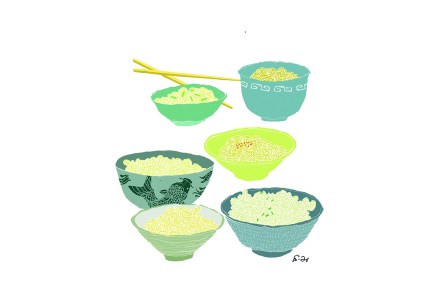
After twenty-three years in Japan, I have concluded that the much-lauded, worshipped even, cuisine is overrated. And I am getting a little tired of being told how awe-inspiringly wonderful Japanese food is, often by people whose only experience is high-end sushi or designer tempura in a showpiece Tribeca eatery, a world away from the standard fare available on the backstreets of Shibuya. Part of the problem is that much of what delights the Japanese about their food is unrelated to its actual taste.

Japanese

What we learned from the Qatar World Cup

From our UK edition

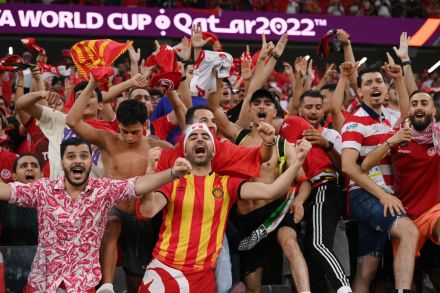
It is a measure of the unexpected success of the Qatar World Cup that it could be hailed as the best, by Fifa President Gianni Infantino, and the boast was not entirely laughable. This World Cup had its share of longueurs but had plenty of excitement and ended on such a high note that conspiracists might suspect the final moments were contrived. But the high drama of the final aside, what did we learn from this extraordinary sporting event? First, that we care about the exploited and the marginalised and disapprove of corruption but… not that much. No end of newsprint was devoted to the subject of the unknowable number of migrant workers who died building the glittering jewel-like stadiums in the sand, the bribery allegations, and alleged human rights abuses.

Why Argentina is the team we love to hate

From our UK edition

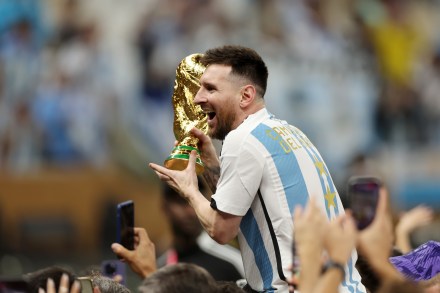
With the prospect of Messi closing out his glorious career with the ultimate prize it’s likely most neutral fans will be rooting for Argentina in today’s World Cup final. The only place where that might not be true – apart from Brazil – is England, where there may even be an unlikely revival of the entente cordiale in some quarters. For Argentina have held the title of the ‘team we love to hate’ mantle for some time now.

Why Messi matters

From our UK edition

I hope that the Argentinian national team (also known as Lionel Messi) will win its third (or first?) World Cup on Sunday. But even if it doesn’t, the team’s legendary number ten has surely achieved that rare and precious accolade – earned by Pele in 1970 and Maradona in 1986 – of so dominating a World Cup that it will forever be linked to him. With respect to the supercharged Kylian Mbappé this has been Messi’s tournament. And you can be sure that, win or lose, the world’s media will be focused on him when the game ends.

Let’s kick penalties out of football

From our UK edition

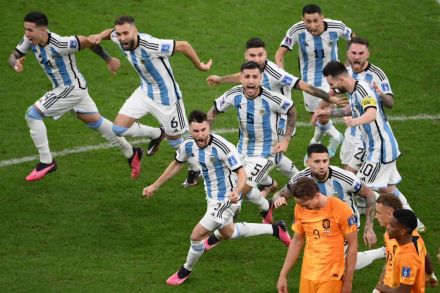
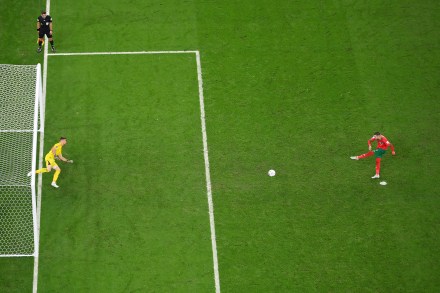
Spain crashed out of the World Cup on penalties last night, despite dominating possession against Morocco for two solid hours. Pretty much everyone bar Spaniards will be delighted by this giant-killing by Morocco, who are just the fourth African team to reach the quarter-finals in football history. But their penalty success is nothing to celebrate. Much as it would be great to see less-fancied nations do well at the World Cup, it would be better if this was achieved by scoring more goals, rather than parking the bus and running down the clock.  Spain were the better team last night. While it’s fun for footballing giants to lose now and again, penalty shoot-outs are not good for the game.

Will the end of zero Covid be the real legacy of the World Cup?

From our UK edition

You often hear about ‘legacy’ when international sporting tournaments come around. It’s a weasel word used by the organisers to justify the colossal expense by promising some lasting benefit – which usually comes to nothing. But perhaps with the Qatar World Cup, one of the most controversial in the competition’s history, there may be a worthwhile legacy, though not one the organisers could possibly have anticipated.

The World Cup armband row would never happen in Japan

From our UK edition

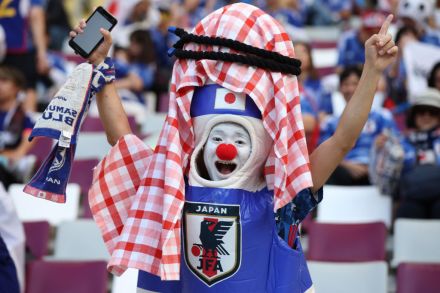
Before the start of their World Cup game with Japan, the German team chose to make a ‘protest’. Each player covered his mouth for the pre-match photo to indicate how the team had been silenced by Fifa's ban on ‘One Love’ armbands – and thus prevented from showing solidarity with Qatar’s gay community. A powerful gesture they no doubt hoped. But slightly less powerful than the images taken 90 minutes later, when the Germans had been truly silenced, or at least rendered temporarily dumbstruck, by their unfancied opponents, who stunned Hansi Flick’s side by coming from a goal down to claim a thrilling victory. The defeat has been compared to Saudi Arabia’s victory over tournament favourites Argentina on Wednesday.

Fifa 1 – England 0

From our UK edition

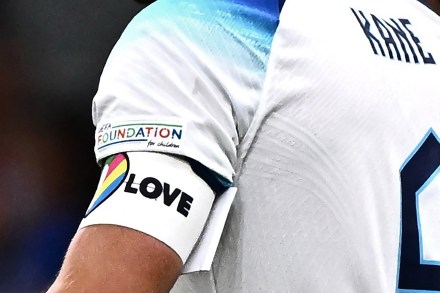
England have backed down in the ludicrous standoff with Fifa over the plan for captain Harry Kane to wear a ‘One Love’ armband – to show solidarity with gay community of Qatar – in today’s opening fixture against Iran. The move would have defied the governing body’s rules on acceptable on field attire. Faced with the threat of an instant yellow card for Kane, which, if repeated in the second game would have kept him out of the third, England blinked.  This absurd little episode ought not to detain us for long, except that it is revealing as it gives us a fairly accurate gauge of the true force of Gareth Southgate and his squad of itinerant social justice warriors’ principles.

Fifa’s president is feeling African, gay and disabled. I’m feeling confused

From our UK edition

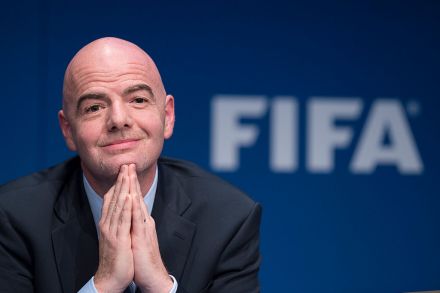
‘I’m defending football here, and injustice’ was the standout quote, for me, from what has been described as a ‘bizarre tirade’ by Fifa president Gianni Infantino at a pre-World Cup press conference yesterday. But (Freudian?) slips aside, there were plenty of gems to choose from. Other highlights of the rambling, hour-long diatribe include Infantino’s impassioned identification with the downtrodden, ‘Today I feel Qatari. Today I feel Arab. Today I feel African. Today I feel gay. Today I feel disabled.’ He could have reached a crescendo by standing up and declaring ‘I’m Spartacus’ but left it at that.

The problem with Ronaldo’s betrayal narrative

From our UK edition

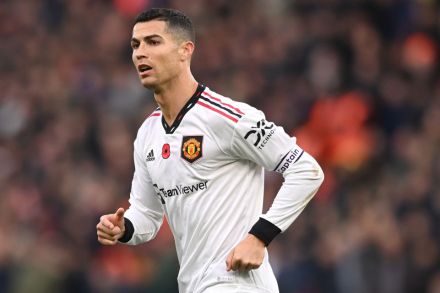
Cristiano Ronaldo has almost certainly played his last game for Manchester United after an ‘explosive’ interview which ‘the whole world’s talking about’ (Piers Morgan’s words). ‘The biggest star that football has ever seen’ (Piers again) spills the beans on his cruel and incompetent employers in a two-part interview to be broadcast tonight and tomorrow. Fans will be left wondering how much is hype and where the truth and blame resides.

Football’s problems run far beyond the Qatar World Cup

From our UK edition

Are there any redeeming features of the Qatar World Cup? Perhaps one: the tournament has a sane and logical format. Having 32 teams reduced to 16 after the group stage, followed by a straight knock out is easy to understand and should produce an exciting third round of games and plenty of thrills thereafter. But if you do have the stomach for Qatar 2022 savour this comforting crumb: it could be the last time a major tournament is organised in a way that makes sense from a footballing – rather than a revenue generating – standpoint. For let’s look ahead to USA 2026. There might not be human rights concerns here, but the tournament will certainly be controversial for other reasons.

Did lockdown contribute to Seoul’s Halloween tragedy?

From our UK edition

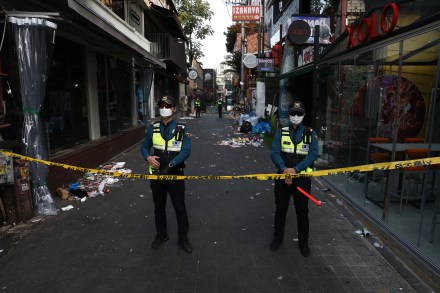
At least 151 people were crushed or trampled to death in a narrow alley in the South Korean capital Seoul last night. That figure – which is expected to rise – makes it one of the worst peacetime disasters in the country’s history. President Yoon Suk-yeol has declared a national period of mourning. Both Rishi Sunak and Joe Biden have sent messages of sympathy. The victims, many of whom were young women, were celebrating Halloween in the Itaewon entertainment district of the South Korean capital. Details of exactly what happened are sketchy, but it seems that a huge mass of people poured in to one of the area’s narrow alleyways, where panic provoked a stampede which led to those at one end of the street falling over. First came a cascade of partygoers, then a disaster.

In defence of VAR

From our UK edition

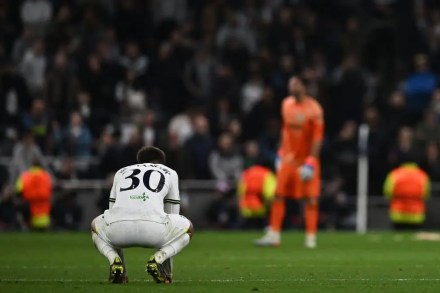
There isn’t much that unites the fractious, dysfunctional football family. But in the UK, at least, there is something most fans seem to agree on: VAR – Video Assistant Referee – is awful. The technology, introduced to limit errors and controversy, appears to be having the opposite effect. Critics speak of VAR as if it were a malevolent spirit tormenting players, supporters, and coaches alike. Its frequent manifestations usually involve lengthy pauses resulting in seemingly random judgements. Onlookers – particularly those watching in the stands – are often left perplexed and enraged. This week, in a classic VAR episode, Spurs were denied a thrilling, potentially lucrative, last second winner in their Champion’s League tie with Sporting Lisbon – thanks to VAR.

Harriet Sergeant, Lionel Shriver, Martin Vander Weyer and Philip Patrick

From our UK edition

30 min listen

This week: Harriet Sergeant writes about why ethnicity matters in sexual abuse cases (0:30), Lionel Shriver takes aim at the American university students failing their exams, (8:06), Martin Vander Weyer looks at the latest forecasts for housing prices (17:01), and Philip Patrick thinks Japanese food is overrated (25:19).Produced and presented by Natasha Feroze.

Hard to swallow: the unjustified hype around Japanese food

From our UK edition

Tokyo After 23 years in Japan, having tried everything from yatai (street food) to deep-fried globe fish in a kaiseki (traditional) restaurant, I have come to the conclusion that Japanese food is overrated. It is rarely less than perfectly presented, and it can be superb – but it can also be bland and homogenous. Part of the problem is that much of what delights the Japanese about their food is unrelated to its actual taste. If British food, in the bad old days at least, was simply fuel, Japanese food has always been, to some extent, art. A high-end Japanese meal is the equivalent of a Wagnerian gesamtkunstwerk, with the colours, the choice of bowls, utensils, tablecloth, room, and tinkling water from a nearby stream, if available, part of the all-encompassing sensory experience.

Paris’s football World Cup boycott will achieve little

From our UK edition

Several French cities have announced that they will be boycotting the upcoming World Cup in protest against the Qatari state’s human rights record and, for some, the alleged environmental impact of the event. The customary big screens and specially designated fans zones have been cancelled in Paris, Bordeaux, Lille, Marseilles, Strasbourg and Reims. Pierre Hurmic, the mayor of Bordeaux, said public screenings of World Cup matches would make the city an 'accomplice' to a form of crime. French great Eric Cantona agrees:  'I will not watch a single match of this World Cup. This will cost me because since I was a kid it’s been an event that I love, that I look forward to and that I watch with passion.

The anger behind Shinzo Abe’s state funeral

From our UK edition

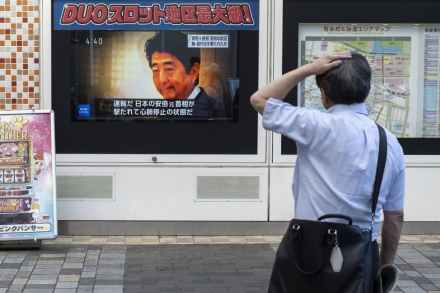
Tokyo While not quite on the scale of Her Majesty’s service, Tuesday's state funeral of Japan’s longest serving PM Shinzo Abe, gunned down while campaigning on the streets of Nara in July, will be an extravagant affair. The ceremony will take place at the Nippon Budokan in central Tokyo with approximately 6,000 attendees including the US Vice President Kamala Harris, Indian prime minister Narendra Modi, and Australian PM Anthony Albanese. Theresa May will represent the UK. It will cost 1.6 billion yen (10.5 million pounds). The event has become mired in controversy. Many in Japan are fiercely opposed to the decision, made by current PM Fumio Kishida, to grant a state funeral to Abe, allegedly to placate his party’s right-wing.

In defence of Rangers’ royal tribute

From our UK edition

Ibrox stadium, home of Rangers football club, saw a powerful tribute to the late Queen last night before the team’s Champion’s league game against Napoli. There was a minute’s silence, then an enormous tifo covering the entire Broomloan stand was revealed (of the Union Jack with the late Queen in silhouette in the middle). The national anthem was played on the public address system joined lustily by the capacity crowd. It was stirring stuff. But Ranger’s tribute to the Queen defied Uefa’s general rules for pre-match ceremony and came after their specific request for an exception had been turned down. And this means the club could now be in hot water.

Japan’s cult of safetyism

From our UK edition

The Japanese government has launched an initiative to encourage young people to drink more alcohol. Yes, really. The national tax agency’s ‘Sake Viva’ campaign is an appeal for ideas to get youngsters boozing after taxes on alcohol products, which accounted for 5 per cent of total revenue back in the hard-drinking 1980s, fell to just 1.7 per cent in 2020. So, at a time of economic hardship, Japan’s youth are being asked to do their patriotic duty and get hammered. The falloff in social drinking is being attributed in part to the pandemic. Japan didn’t have a full-blown lockdown imposed from above, but the more subtle bottom-up lockdown that demonised anyone frequenting bars and restaurants worked pretty well.

Japan’s nuclear renaissance

From our UK edition

Japan is reversing its avowedly anti-nuclear stance, restarting idled plants and looking to develop a new generation of reactors, announced Prime Minister Fumio Kishida on Wednesday. This major policy shift from the world’s third biggest economic power underlines both the seriousness of the global energy crisis and points to the most likely way ahead. This announcement would have seemed unimaginable a decade ago in the wake of the Fukushima nuclear disaster, which saw the plant flooded and led to three separate hydrogen explosions. Then prime minister Naoto ordered those living within a 12-mile radius of the plant to be evacuated as the Fukushima area was designated a contaminated wasteland.