Philip Patrick

Philip Patrick

Philip Patrick is an exiled Scot, who lectures at a Tokyo university and contributes to the Japan Times

Everton’s problems are only just beginning

From our UK edition

Pity the poor Everton fans. Just as their once mighty club, now a perennial relegation battler, seemed to have a climbed a few ladders in recent weeks to low mid-table, they land on a snake. Yesterday the Premier League handed them a ten point penalty for financial irregularities, plunging them back down into the danger zone of relegation. Everton admitted the offences and pleaded mitigation: unexpectedly high interest payments on their new stadium project, the loss of a Russian sponsor due to UK government sanctions in the wake of the war in Ukraine and losses (estimated at £10 million) incurred as a result of criminal charges brought against a ‘player X’. They also stressed that they had cooperated fully with the investigation (unlike some others). But to no avail.

Japanese service is stiflingly polite

From our UK edition

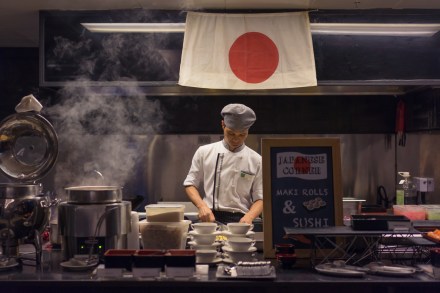
One thing you can be sure of on a visit to Japan is that the service will be at the very least good, and quite often superb. The chances of being short-changed, snubbed, or slighted are virtually zero and truly bad service is so rare I almost, after 24 years in Tokyo, crave it now and again to break the monotony. ‘The customer is God’ as the Japanese say, and sometimes this exhortation to staff feels like only a slight exaggeration. I once witnessed a sad scene where an old lady tried to engage the cashier in a supermarket in casual conversation At its best, Japanese service can be glorious to behold. I once saw a customer drop money from her purse in the crowded food hall of Isetan (Japan’s version of Harrods). At the first tinkle of the coins, staff leapt into action.

Celtic’s Remembrance Day shame is the final straw

From our UK edition

A portion of the crowd at Celtic’s Parkhead stadium booed the minute's silence for Remembrance Sunday. It was abandoned after 30 seconds. This latest embarrassment comes just a week after the club suspended the season tickets of over 250 of its most zealously committed fans – a faction of ultras known as the ‘Green Brigade’. The members of this querulous group which occupies the north curve of Parkhead have been causing trouble/engaging in principled activism (depending on your take) for years, with the latest issue being the repeated display of pro-Palestinian flags and banners at matches, despite warnings from the club to desist. The two events were probably connected. The Green Brigade was founded in 2006 ostensibly to add colour and atmosphere.

Lost in Translation was Tokyo at its bizarre, dislocating best

From our UK edition

You can wait ages for a Japan themed Hollywood film and then three come at once. In an odd spasm of Japanophilia in 2003, Sophia Coppola’s sophomore effort Lost in Translation was swiftly followed by Tom Cruise’s Last Samurai and Quentin Tarantino’s Kill Bill Vol 1. The latter two may have made more money but Sophia Coppola’s film is the most interesting. On its twentieth birthday, Coppola’s vaguely unsettling and still controversial romantic (sort of) comedy is ripe for re-examination. The plot, if it can be called one, sees Bill Murray as a veteran Hollywood actor in Tokyo to film a Suntory whisky commercial, for which he will earn $2 million.

Is sumo wrestling dying out?

From our UK edition

For any young athletes harbouring ambitions of being a sumo wrestler, there was some good news this week. The Japanese Sumo Association (JSA) has decided to relax its height and weight requirements for young recruits, opening up the sport to those previously barred for being too short or too slight. Now all the beleaguered association needs to do is find them and keep them. Given that recruitment is just one of a host of problems the sport is facing, that won’t be easy. The rule change is in response to a precipitous drop in the number of applicants to train to be a rikishi (wrestler) and perhaps join the fabled ranks of legendary Yokozuna (grand champions) that adorn the walls of the Ryogoku sumo stadium in Tokyo, the sport’s version of Wembley.

Football’s shameful silence on Israel’s tragedy

From our UK edition

Few top-flight football matches these days kick off without an expression of solidarity with a cause or condolence. Along with the customary tributes to footballing legends or club stalwarts, just last week Premier League players took the knee, yet again, to show their opposition to racism. In recent weeks, we have had silences for the victims of the Moroccan earthquake and the Libyan floods. Support has been shown for Ukraine, and for the victims of terror attacks in Paris in recent years. And yet, strangely, no decision has apparently been made about honouring the now more than 1,000 victims of Hamas terrorism in Israel. Sunday's Premier League games – including the high-profile clash between Arsenal and Man City – unfolded without a tribute.

Is Fifa trying to destroy the World Cup?

From our UK edition

It’s official, well almost. Fifa has announced the location for the 2030 (centenary) World Cup. And the winner is… all over the place. In an extraordinary departure the tournament will be played in three continents with matches in Argentina, Paraguay, Uruguay, Spain, Portugal and Morocco. The decision, which will surely be rubber stamped at next year’s congress has been hailed by Fifa as ‘unit[ing] the world in a unique global celebration’ and by Football Supporters Europe (a body officially recognised by Uefa) as ‘Horrendous for supporters’ and ‘The end of the World Cup as we know it.’ It is tempting to speculate if Fifa is on a mission to destroy the world’s most popular and successful sporting tournament.

The excruciating pain of being a Manchester United fan

From our UK edition

Can there be a more wretched existence in football than being a Manchester United fan? Well, yes, would be the instant retort from legions of supporters around the country whose teams never get anywhere near the glamour palace of the Champions League; for whom grim, gritty survival in crumbling urinals is the order of the day. But at least those fans have the dignity and fellowship of the underdog, of hope, or a local derby drubbing of a hated rival, a cup tie giant-slaying. United fans have almost none of these thrills. For a club as proud as Manchester United, nothing less than domestic and European glory will really do, and those baubles seem forever out of reach.

The upside of living in Japan’s ageing society

From our UK edition

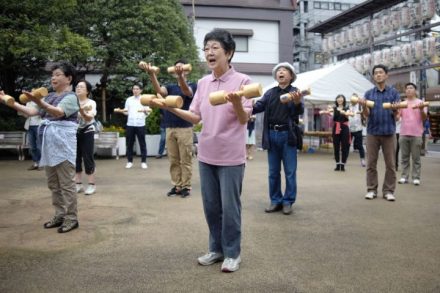
For the first time more than 10 per cent of the Japanese population are aged 80 or older, according to new official data. This reinforces Japan’s reputation as the world’s oldest society with 29 per cent of the population now aged 65 or more, a full 5 per cent ahead of Italy in second place. The evidence is there for all to see: walk around a typical Tokyo neighbourhood in the mid-afternoon and all you’ll see is old, often ancient people. You’ll think you wandered into a gated retirement community or an open air gathering of the Darby and Joan club.  The pandas in Tokyo zoo have been more prolific than the average Japanese youth The new data adds yet more weight to the already abundant evidence of Japan’s frightening demographic challenges.

Was Luis Rubiales’ resignation really necessary?

From our UK edition

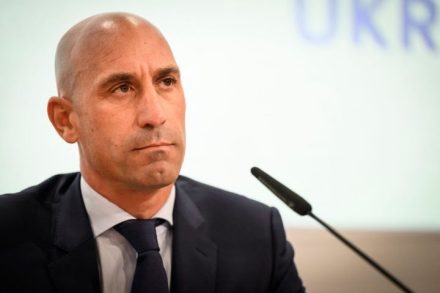
Luis Rubiales, the embattled Spanish football chief, has bowed to the seemingly inevitable and resigned from both his positions as president of the Spanish football federation and UEFA vice president. He made the announcement during an interview with Piers Morgan on TalkTV and then confirmed his decision in a subsequent statement for the press. Rubiales had been suspended for 90 days by Fifa following the now infamous kiss with Spanish captain Jenni Hermoso (which he says was consensual and she says wasn’t) at the medal ceremony after his country’s triumph in the Women’s World Cup final last month.

Does Japan not care about Kitagawa’s abuse?

From our UK edition

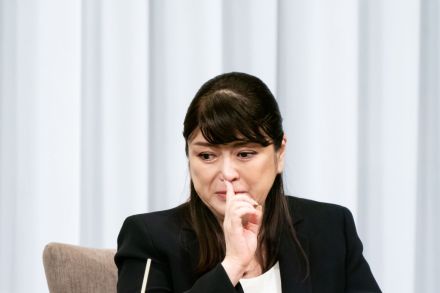
The niece of Jonny Kitagawa, founder of the Japanese talent agency Jonny & Associates, stepped down this week from her role as president, acknowledging the decades long sexual abuse of the company’s young clients by its founder (who died in 1999). In a typically Japanese scene of corporate self-abasement, Julie Keiko Fujishima apologised to the victims and pledged to dedicate the rest of her life to addressing the issue. It was a bravura performance but one that has been met with deep cynicism, at least from some in Japan.

The tragedy of Jordan Henderson

From our UK edition

‘Money has never been a motivation,' according to footballer Jordan Henderson, the ex Liverpool captain and recent recruit to Al Ettifaq in the Saudi pro-league. But it is hard to believe that the main reason for moving to the Middle East wasn't the reported £700,000-a-week contract. For many football fans, Henderson tarnished his reputation with his high-profile transfer earlier this summer. Now, he has finally broken his silence on the subject. Yet his interview with the Athletic might make matters worse.  One of the biggest criticisms aimed at the footballer – who was a vocal advocate of the rainbow laces and armband campaign in support of LGBT rights during his time in the Premier League – is that he has turned his back on gay fans.

Things look grave for Luis Rubiales after his World Cup kiss

From our UK edition

What’s in a kiss? More perhaps than just a moment of bliss. It was really rather stupid of Luis Rubiales, the president of the Spanish football association, to grip the women’s team captain Jenni Hermoso, as if she herself were the World Cup trophy, and plant a smacker full on her lips in the medal ceremony following the team’s victory over England. But he can hardly have expected the Spanish inquisition that has followed.

The Fukushima water is safe. So why does no one trust it?

From our UK edition

Japan will today begin releasing tritium-laced water from the Fukushima No.1 nuclear power plant into the ocean (weather permitting). Japan’s prime minister Fumio Kishida made the announcement on Tuesday after a meeting with relevant ministers. The Japanese government has stressed the necessity of the plan and its safety, but it has nonetheless escalated an international conflict over the issue. China has responded by imposing an immediate ban on all Japanese seafood imports.  The discharge has been sanctioned by a report from the International Atomic Energy Agency. It is part of a long-term decommissioning plan for the plant that suffered major damage from the March 2011 earthquake.

What the future holds for women’s football

From our UK edition

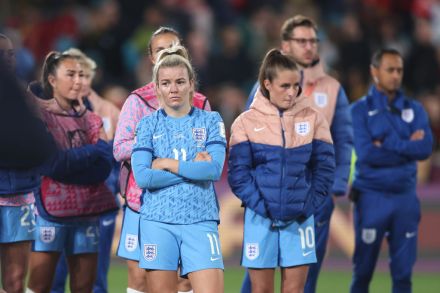
Well, that’s the end of that. Football, like an unrepentant runaway, stubbornly refuses to come home. Spain, deservedly probably, edged the thrilling, almost unbearably tense final and England will return to a warm, if not ecstatic, reception. England’s first football World Cup final in 57 years was undoubtedly that rarest of phenomena these days: a truly national event, with a TV audience likely to set a record for any female sports broadcast. It will also open a conversation about the importance of and future of women’s football. What should that conversation be like? I have a few suggestions and a few appeals.  For a start, can we stop comparing the men’s and women’s games in terms of quality of performance? Let’s dial down both the hype and counter-hype.

Could Sarina Wiegman be the next England (men’s) manager?

From our UK edition

Sarina Wiegman, the manager of England’s women’s football team, probably has a lot on her mind at the moment, what with preparing for Sunday’s World Cup Final against Spain and all that. But she was given one more thing to ponder when Mark Bullingham, Chief Executive of the FA, appeared to tout her as a possible replacement for Gareth Southgate when the current England men’s team manager leaves. Bullingham said the Lionesses coach was ‘doing a brilliant job’. And when it came to the England men’s team coaching job, he expressed his displeasure with the term ‘best man for the job’ and commented that football is ‘behind other sports in terms of a lack of female coaches at the top level’.

Is it really not safe to extradite someone to Japan?

From our UK edition

In November 2015 three men entered a jewellery shop in Tokyo’s upmarket Omotesando district, beat and injured a security guard, smashed a showcase and stole 100 million yen’s (£600,000) worth of goods. The suspects identified by the police fled to the UK, where, after the intercession of Interpol, they were arrested. Japan, unsurprisingly, wants them back. But in the absence of an extradition treaty with the UK it needed to make a special request. Last week, the extradition request for one of the men was turned down – with the court noting that the suspect’s human rights could not be guaranteed by the Japanese criminal justice system.   This is on its face a gross insult to Japan. It is a first world country, G7 member and long-standing partner and ally.

Prince Harry could learn from the Japanese royals

From our UK edition

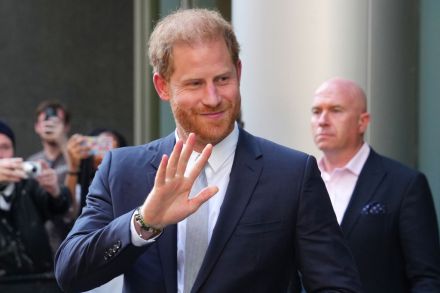
Plain old Harry Windsor, as he is now, is in Japan for the International Sports Promotion Summit and a few low-key engagements before moving on to Singapore for a polo tournament fundraising for AIDS. The relaxed and happy looking former prince was welcomed with enthusiasm and characteristic courtesy by well-wishers as he arrived alone, wearing an Archewell branded cap, at Tokyo’s Haneda airport. Winningly, Harry flew commercial and didn’t use the VIP pathway to navigate the airport. ‘It’s good to see you again’ he said to reporters and added he’d be ‘happy to live here if you’d have me’ and actually looked as though he meant it. This is Harry’s first overseas outing as an ex-royal.

Is Alex Salmond dreaming of a comeback?

From our UK edition

Alex Salmond is hosting a show at the Edinburgh Festival Fringe this week. It’s called ‘The Ayes Have It’ and features special guests such as old mucker David Davis, trusty lieutenant Tasmina Ahmed-Sheikh and former Commons sparring partner John Bercow. SNP notables Kate Forbes and Fergus Ewing are popping up and there will be a guest appearance from former first minister Henry McLeish. Salmond, some suspect, might be dreaming of a political comeback – but is a return realistic? Salmond is probably the only independence supporting politician in Scotland who could mount a show like this without fear of outright ridicule. By contrast, former first minister and festival regular Nicola Sturgeon has just one low key appearance, while Humza Yousaf won’t be participating at all.

America’s female footballers should sing their national anthem

From our UK edition

Just four members of the US football team at the Women’s World Cup sang their country’s national anthem before their game against Portugal yesterday. The rest stayed silent and impassive with their hands conspicuously by their side, not over their hearts. This was the third time the US team, or much of it, has made a silent protest at this World Cup in New Zealand. Are they to be condemned for this, or does every player have the right to express their feelings for their country, or lack of, in their own way? Pre-match protests have become popular in recent years and the US players are not alone in seizing the limelight to make a point.