Peter Wood

Peter Wood is the President of the National Association of Scholars. He is author of 1620: A Critical Response to the 1619 Project and A Bee in the Mouth: Anger in America Now.

Emma Camp almost gets it

From our US edition

In 2014, Sandra Y.L. Korn, a Harvard undergraduate, published a column in the Harvard Crimson, in which she denounced “The Doctrine of Academic Freedom.” Korn’s preferred alternative was what she called “academic justice.” Under this doctrine, a university would drop the silly pretense of letting proponents of dumb, bigoted or politically naive ideas have their say. Instead, Korn asked, “If our university community opposes racism, sexism and heterosexism, why should we put up with research that counters our goals simply in the name of ‘academic freedom?’” Korn’s screed provoked a lot of attention.
emma camp

The latest smear campaign against Clarence Thomas

From our US edition

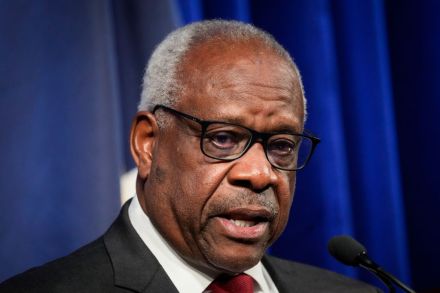
Justice Clarence Thomas and his wife Virginia (Ginni) made the cover of the New York Times Magazine on February 27 amid an eleven-page article titled “The Long Crusade of Clarence and Ginni Thomas.” The authors are Danny Hakim and Jo Becker. It is in essence a hit piece, and the latest of several in the left-wing media aimed at undermining the legitimacy of Justice Thomas’s jurisprudence. The first salvo came in late January from Thomas’s long-time antagonist Jane Mayer in The New Yorker, but other eager journalists have stepped through Mayer’s muddy footprints. Three of their publications — the New Yorker, the Guardian, and CNN — contacted me because Ginni Thomas serves on the advisory board of my organization, The National Association of Scholars (NAS).

Is Europe a continent? Does it matter? 

From our US edition

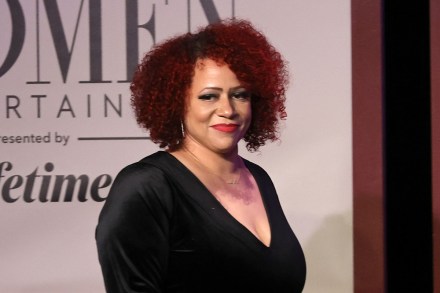
Nikole Hannah-Jones, who is never at a loss for a tweet, ridiculed Americans who are expressing alarm over the threat to Europe implicit in Putin’s invasion of Ukraine. She put down those spoilsports for their referring to Europe as a “continent.”  Quoth Hannah-Jones, under her nom-de-plume Ida Bae Wells: What if I told you Europe is not a continent by definition, but a geopolitical fiction to separate it from Asia and so the alarm about a European, or civilized, or First World nation being invaded is a dog whistle to tell us we should care because they are like us. The triumphant silliness of the author of the 1619 Project always comes down to her desire to find racism at the root of whatever happens.

europe nikole hannah-jones

Our present bewilderment

From our US edition

Bewilderment, a novel by Richard Powers issued last September, has been praised to high heavens by Oprah Winfrey, Barack Obama, Naomi Klein, and reviewers at NPR, the New York Times, the Washington Post, and The New Republic, among others. This ought to be enough to warn any sensible reader to stay far away from its pages and to resign promptly from any reading group that nominates it for collective perusal. But I am not always sensible. The title lured me, for what better word to describe our Zeitgeist?

bewilderment

The art of the Covid protest song

From our US edition

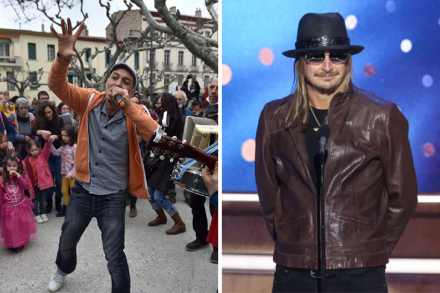
On February 14, Prime Minister Justin Trudeau issued an edict granting himself emergency powers to rule Canada by martial law with the intent of making all those trucks back up. He wants to confiscate them along with freezing truckers’ bank accounts. His soldiery is not altogether with him. Ottawa’s chief of police, Peter Sloly, abruptly resigned. Things aren’t looking bright for North America’s newest autocracy. But, OK.  Let’s back up. On December 18, 2020 a French musician known as HK (Kaddour Hadadi) and his group the Saltimbanks released on video a song titled “Danser encore” (“Dancing Again”).

protest song

Black History Month and the usable past

From our US edition

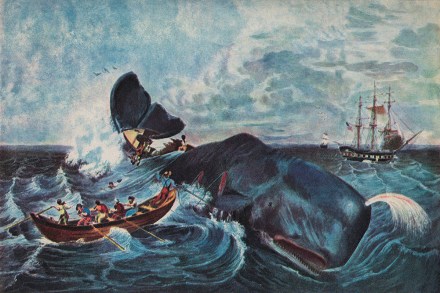
This is Black History Month when we are invited to think through a certain spectrum of the people who came before us. As it happens, I am very much interested in black history. I wrote a book about it, 1620: A Critical Response to the 1619 Project, and several books about diversity, and I have been working for several years on a nearly completed documentary about the early days of black theater and film. But, lacking any black ancestors, I must make do with my own sketchy line of progenitors. When I was growing up in the Fifties and Sixties, my father attempted to find his great-grandfather — GGF in anthropological parlance. GGF had an air of mystery since all anyone knew about him was his last name and GGM’s inveterate reply when asked about him: “He was lost at sea.

black history month

J.P. Morgan and our gilded age

From our US edition

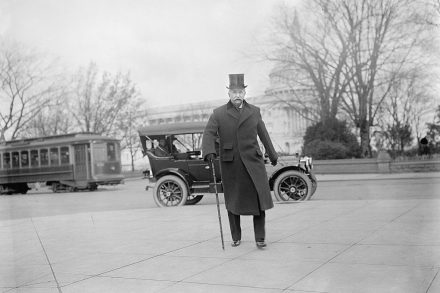
John Pierpont Morgan is the glowering face of the Gilded Age. He may have glowered at pesky men with cameras because he was too busy to sit still, but he was also self-conscious because his nose was deformed from rhinophyma. He liked beautiful things, and he was not beautiful. Born into banking family, Morgan rose to become the greatest financier of his time, building much of his empire on railroads. But he was far more than a shrewd businessman. Fluent in French and German and holding a degree in art history, he became a prodigious collector of books and art, a large portion of which were kept at his house on Madison Avenue and 36th Street — what is now the Morgan Library & Museum.

john pierpont morgan library

Who really deserves to have their honorary degree revoked?

From our US edition

The first time President Trump was impeached by House Democrats was for his “high crime” of having a telephone conversation with Ukrainian president Volodymyr Zelenskyy. There were some other minor details — and Trump was acquitted on February 5, 2020. While the impeachment failed to deliver his removal from office, it did elevate a minor figure to the stature of hero among die-hard Trump haters: Alexander Vindman, who served on the National Security Council. Vindman had conjured the story that Trump’s phone call entailed an impeachable “abuse of power.” Vindman’s feverish dream excited others, but there was no substance to it. Heads of state have hard-ball conversations all the time.

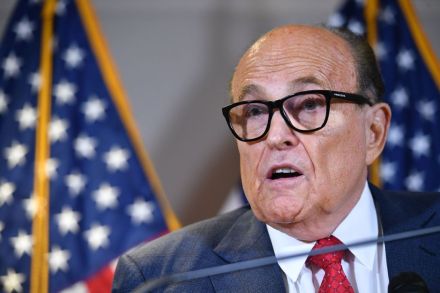
honorary rudy giuliani

How China meddles in American academia

From our US edition

"Congress has dropped language from a must-pass bill governing US defense policy that would have effectively prevented US scientists from participating in Chinese programs aimed at attracting foreign scientific talent,” reported Science, the journal of the American Association for the Advancement of Science (AAAS) in December. The journal cautions, however, that the provision may reappear in another bill. The AAAS is the most authoritative voice for American scientists. It has generally opposed any restrictions on relations between US academics and China, and favored the US government’s stepping back from investigating and prosecuting scientists for lying about their service to China.

china ccp

The false mystery of motives

From our US edition

Faced with some high-profile crimes, our law enforcement authorities are finding it hard to say what has prompted “suspects” to pursue deadly violence. Even President Biden found himself baffled by what would lead a known Islamist terrorist to invade a synagogue on Saturday night and hold a rabbi and other members of his congregation hostage. The FBI likewise for a period expressed its bewilderment. The hostage taker had demanded the release of Aafia Siddiqui, a convicted Islamic terrorist held in a Texas prison, but the FBI wasn’t about to draw any inferences from his choice of hostages or his principal demand. The FBI professed to know nothing of his motives — and President Biden nodded in agreement.

motives

E.O. Wilson and the climate cult

From our US edition

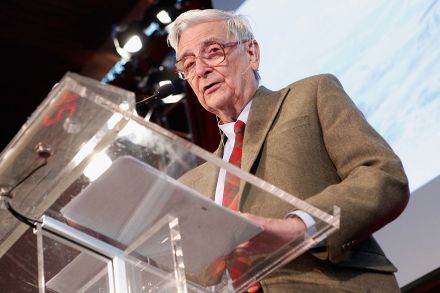
Famed ant specialist and sociobiologist E.O. Wilson passed away on December 26, age ninety-two. He came to national attention in 1975 with the publication Sociobiology: The New Synthesis, which is one of those books that steamrolled into public consciousness. It may not have been as revolutionary as Darwin’s On the Origin of Species by Means of Natural Selection, but not for want of trying. Wilson had something new to say about how evolution works and it provoked responses every bit as harsh as those Darwin encountered a century earlier. He was especially reviled by his Harvard colleague Richard Lewontin, one of the founders of molecular evolutionary theory, who saw no validity at all in Wilson’s interpretation of social structures as embodying evolutionary strategies.

wilson

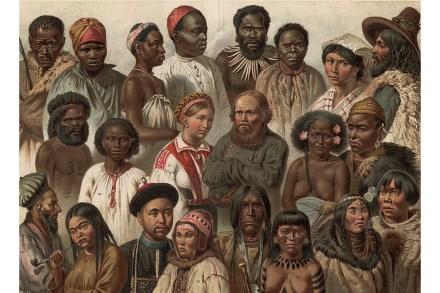
Anthropology has turned its back on its legacy

From our US edition

Freezing rain the other night turned our snowy road to ice and sent our car sliding backwards into a ditch. That was better than the cliff on the other side. This being rural Vermont, my cell phone’s only service was its flashlight and it was a dark and slippery hike to the nearest house. Three hours later, roadside assistance had us back on four wheels. I surely lost some points in the rugged individualism rankings, but my wife and I were only a little chilled by the adventure. Things could be — and indeed they are — much worse elsewhere. At least we didn’t have a former Baywatch actress throwing punches at us for traveling sans mask.

anthropology

The meaning of trees aflame

From our US edition

One of my favorite trees collapsed the other day. It was a tall balsam fir that stood almost cylindrical on the steep hillside behind my house in Vermont, keeping post beside an old hemlock. The branches of the hemlock turn and twist in the breeze with joyous abandon. The fir tree, however, faced the harshest gale with stoic reserve, barely swaying. But last week it suddenly uprooted itself and fell like a wounded comrade into the embrace of its brother. Arborcide, of course, has been in the news lately. On December 8, a man set fire to and destroyed the fifty-foot artificial tree outside News Corp headquarters in midtown Manhattan. Forty-nine-year old Craig Tamanaha was arrested on the spot and was naturally released without bail shortly afterwards.

tree

The climate change conformists

From our US edition

Herman Melville spent several weeks as an involuntary guest of the Typee, Marquesan Islanders known for their fierce cannibalistic ways and their exquisite tattoos. It was 1842 and Melville was a rebellious twenty-two-year-old hand who had jumped ship from a whaling vessel. Several years later, in his first novel, Typee: A Peep at Polynesian Life, Melville recounted his deep fear that his hosts would tattoo his face. Facial tattoos were common among the islanders. Some Westerners got facially tattooed as well, but those were men who had relinquished their homes and become the original beachcombers, white men who belonged neither here nor there. Tattooing in general was hardly a respectable thing.

Why discord delights

From our US edition

Finding fault takes finesse. Oh, anybody can complain. We are a nation of complainers, carping at everything from breakfast vittles to late-night TV. We complain about our politicians, our prognosticators and our pop stars. But these complaints run like water down a windowpane in the same old channels to the same wet destination. Finding fault — finding new faults in a familiar subject — is much harder. It takes talent. It takes a critic. I am well aware that these days a lot of Americans complain that we are too divided. The nation bristles with parti pris. We revile the exponents of political views opposed to our own. We sneer at their provincialism, their pissant pettiness and their lack of civility, for which they should rightly be crushed.

discord

Down with Strunk and White

From our US edition

E.B. White was the author of two delightful children’s books, Charlotte’s Web and Stuart Little, perhaps three if you count the lesser known The Trumpet of the Swan. White also wrote a great many not-so-memorable but often anthologized New Yorker and Harper’s essays. But he is best known to generations of American students as the co-author of Strunk and White’s The Elements of Style. The man whose name comes first on that pamphlet-sized compendium of do’s and don’ts, is William Strunk Jr., a Cornell English professor for forty-six years who would have sunk forever in death’s dateless night were it not for White’s sentimental resurrection of him in the pamphlet’s six-page introduction.

strunk white

The University of Austin: a meteor aimed at higher ed?

From our US edition

Americans are beginning to seek alternatives to our established menu of colleges and universities. In fact, not just Americans. Students from other countries are also choosing alternatives to studying in the US. The combined effect has been a sharp drop in American college enrollment, which is down overall by about 8 percent over the last two years, and more than 14 percent at community colleges. International student enrollment is down a total of 15 percent, but that masks an even more serious problem: enrollment of new foreign students fell last year by 46 percent. Some of this, of course, is due to Covid. And some of it is due to a demographic shift: fewer babies born 17 to 20 years ago means fewer young people to fill the seats in lecture halls.

university

There’s nothing ‘phony’ about the culture war

From our US edition

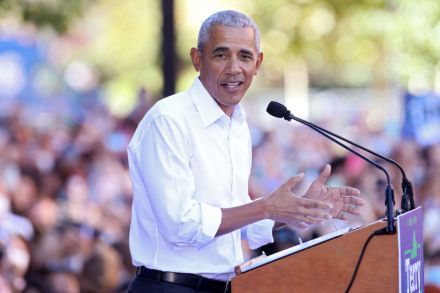
“Phony, trumped-up culture wars.” That’s how Barack Obama described Glenn Youngkin's platform to a rally in Richmond, in the run-up to the Virginia gubernatorial election in which the GOP candidate defeated Terry McAuliffe. Obama didn’t stop there. In the former president’s estimation, Youngkin either “believes in the same conspiracy theories that resulted in a mob” or he is a cynical hack who would “say or do anything to get elected.” After Youngkin prevailed in the November 2, election, and other Republicans swept into the offices of attorney general and lieutenant governor, the reality of the “culture war” themes became abundantly clear to most observers.

culture phony

Whither the woke?

From our US edition

The Dictionary of Obscure Sorrows is a collection of ingenuous words devised by a young man, John Koenig, who spent seven years reflecting on gaps in the English language. He was especially interested in situations that spark an emotion that feels distinct from the general flow. English has taken on words from other languages, such as the German schadenfreude, for the pleasure we feel in an opponent’s misfortune. The elections this month lit up schadenfreude circuits like Times Square among conservatives.

woke

Michelle Goldberg and the art of the Big Lie

From our US edition

Lies come in all shapes and sizes, colors, odors, textures and tastes. Some are only little white lies, but more often the accompanying adjective suggests something unpleasant. Damnable lies used to be the most condemned, but today the foulest of all perfidious, incarnadine, silken and sulfurous lies are Big Lies. Thus when New York Times columnist Michelle Goldberg wants to reassure progressive voters that they can ignore the story about a ninth-grade girl who was raped (i.e. forcibly sodomized) in a girl’s restroom in a Loudoun County, Virginia school, she serves up her diversion under the title “The Right’s Big Lie About a Sexual Assault in Virginia.

big lie