Peter Jones

Plato and Aristotle would have understood Corbyn’s appeal to the young

From our UK edition

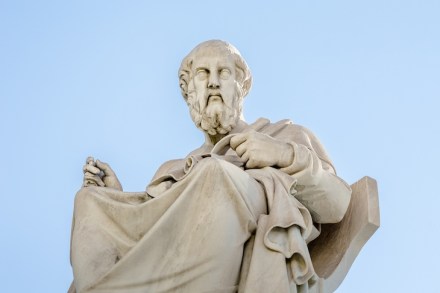
Whether the youth vote had any serious impact on the result of the general election or not, Jeremy Corbyn knew how to exploit it in a way both Plato and Aristotle would have understood. In his Republic, Plato argued that democracy resulted in rulers behaving like subjects and subjects like rulers, with teachers pandering to the young, and the young in turn despising them. As a result, youths make ‘every conversation or action into a trial of strength with their elders’, while their elders ‘patronise them, exuding bonhomie and a sense of fun, and imitate them, because they do not want to appear disagreeable or despotic’: Corbyn rapping with assorted ‘grime artists’ to a T.

Corbyn’s youth vote

From our UK edition

Whether the youth vote had any serious impact on the result of the general election or not, Jeremy Corbyn knew how to exploit it in a way both Plato and Aristotle would have understood. In his Republic, Plato argued that democracy resulted in rulers behaving like subjects and subjects like rulers, with teachers pandering to the young, and the young in turn despising them. As a result, youths make ‘every conversation or action into a trial of strength with their elders’, while their elders ‘patronise them, exuding bonhomie and a sense of fun, and imitate them, because they do not want to appear disagreeable or despotic’: Corbyn rapping with assorted ‘grime artists’ to a T.

The post-truth is out there

From our UK edition

In a political ‘post-truth’ world, currently the subject of a slew of books, emotions and personal belief are said to shape opinion more than ‘objective’ fact. But as Aristotle pointed out in his Art of Rhetoric (4th century bc), there are facts only about the present and past; about the future, politics’ main concern, there are only interests and aspirations.

The Nero in Trump

From our UK edition

Donald Trump, whose word no one can believe and actions no one can anticipate, looks to blame anyone but himself for the chaos of his administration. The result is an inability to attract staff and a deep paranoia among those already in White House trying to work under him. But how to withdraw from serving such a man without recriminations? Seneca, the philosopher and adviser to Nero, took the view that entering politics was honourable as long as there was no good reason not to, and suggested that no state could be so bad that a man could not serve it at some level or other. But when the Trump in Nero emerged, no one had the remotest idea what he would do next or whether what he said was true or false.

Power and the middle class

From our UK edition

The Labour party’s tagline for the forthcoming general election is: ‘For the many, not the few.’ Aristotle, who understood this as ‘For the poor, not the rich’, thought this a recipe for conflict and proposed a solution of which Mrs May would approve. Suspicious of monarchy, Aristotle favoured two styles of constitution: oligarchy and democracy. The problem was that both systems ran the risk of creating an inherently unstable state. In a democracy, the poor would be in control by sheer weight of numbers; in an oligarchy, the rich would gain control (presumably) by sheer weight of influence.

Corbyn vs Socrates

From our UK edition

Jeremy Corbyn said: ‘It is the job of leadership to hold open the space for dissent, new thinking and fit-for-purpose policy… I have always believed in standing firm and in empowering others to make up their minds and come on board when they are ready.’ This is a rum definition of leadership. But then his parliamentary experience of it was nil. According to the essayist Xenophon, Socrates once crossed paths with one Euthydemus who, having read lots of books by poets and intellectuals, considered himself to be the cleverest young man of his generation and therefore fully prepared to take the lead in developing policy in the people’s Assembly.

Friends, Romans and Russians

From our UK edition

President Vladimir Putin, who still supports Bashar al-Assad in Syria, needs help if he wishes to be seen as a member of the civilised world. Rome might provide it. From 509 bc Rome had been a republic, controlled by a senate, consuls and people’s assemblies, all (it was argued) balancing each other out. During that period Rome mastered all Italy, defeated the powerful state of Carthage, and brought much of North Africa, France (Gaul), Spain, Greece and the Levant under its control. It did so not primarily because it was an aggressive, warlike state: so was every other state it faced in that dog-eats-dog ancient Mediterranean world. For all its triumphs, Rome suffered 90 military defeats in that time; the Celts (390 bc) and Hannibal (218-202 bc) nearly brought it to its knees.

Cicero, the lagomaniac

From our UK edition

A year ago, the Danes reached into their groaning cracker barrel and pulled out ‘hygge’ as their own solution to the world’s problems. That was bad enough, but now it is the Swedes’ turn, offering up ‘lagom’ as the shrine before which all must now grovel in untimely worship. Yet what are both of these but replays of two hoary classical injunctions? ‘Hygge’ ultimately stems from the philosopher Epicurus (d. 271 bc): ‘He who needs tomorrow least will approach it with the most pleasure.’ In his take on the subject, the poet Horace (d. 8 bc) urged Leuconoe to ‘trust as little as possible in tomorrow’ and instead carpe diem, usually translated ‘seize the day’.

Osborne and the Athenians

From our UK edition

As a result of George Osborne taking up five jobs on top of his role as MP for Tatton, an ethics watchdog wants to know what the public thinks about MPs having other jobs. One problem is that people’s low opinion of MPs makes balanced judgment difficult. The same was true in the ancient world. There were no ‘parties’ with ‘policies’ in democratic Athens, only ‘speakers’ (the equivalent of our ‘politicians’) at the weekly Assemblies, often holding some office, and attempting to persuade the listening citizens to vote for their solution to whatever problem the Assembly was facing.

Thucydides on McGuinness

From our UK edition

When Gerry Adams rose to announce at his funeral that Martin McGuinness was no terrorist but a ‘freedom fighter’, the historian Thucydides probably allowed himself a grim smile. He knew all about these sort of people. In 427 BC, Corcyra (ancient Greek Kerkura, now Corfu) was in the grip of a ferocious civil war between oligarchic and democratic factions for control of the state. The feature that stood out for Thucydides was the reversal of all normal, civilised values on both sides of the divide. Most striking of all, ‘men reversed the usual evaluative force of words to suit their own assessment of the situation’.

Theresa May at the Rubicon

From our UK edition

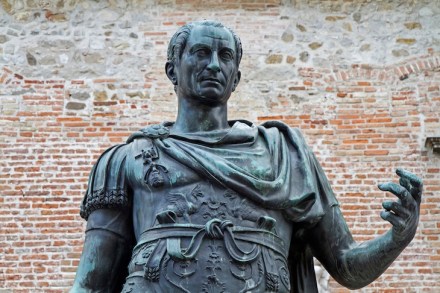
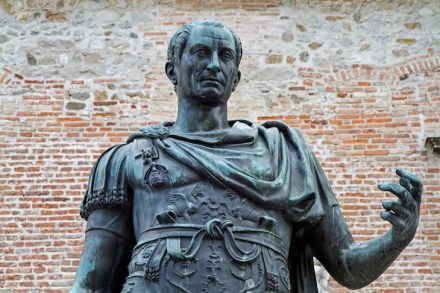
Last week many commentators drew on the Ides (15th) of March, the anniversary of Julius Caesar’s death in 44 BC, to reflect on the signing of Article 50 and Julius Caesar’s famous cry ‘The die is cast’ (iacta alea est) in 49 BC, when he crossed the River Rubicon into Italy and started the civil war against Pompey. But they got it wrong: it does not mean ‘no turning back’. Whatever the rights and wrongs of the Caesar-Pompey power struggle, Caesar knew the consequences of this moment. Our sources describe the build-up. Caesar is camped with his troops in Ravenna. Messages are flying back and forth between him and Pompey in Rome.

How to make the rich love tax

From our UK edition

Now that Philip Hammond is promising yet more tax hikes, he might consider how Athens managed it. During the whole period of their direct democracy (which ended in 323 BC), the decision-making assembly was dominated by the poor. Their empire made Athens a wealthy place, and the poor ensured that wealth came their way, not that of the rich, in forms such as payment for jury service, rowing the triremes (which kept the empire together) and much more. Meanwhile, tax was paid only by the rich. The 300 top richest every year paid property taxes to, for example, construct and maintain Athens’ triremes and fund state festivals for public enjoyment.

Enemies of the people

From our UK edition

Hardly a week goes by without someone applauding Thomas Carlyle’s objection to democracy: ‘I do not believe in the collective wisdom of individual ignorance.’ In other words, infinitely wise politicians should tell the unenlightened mob what to think, not vice versa. Such feelings have been common ever since the Athenians invented direct democracy in 508 BC, which lasted till 323 BC and handed to citizens in the assembly (the dêmos) the power to decide all Athenian policy. One anonymous writer described the dêmos as ‘ignorant, ill-disciplined and immoral’, ascribing it to their ‘poverty and lack of education’. The philosopher Plato thought a state could be well governed only by Platonic philosophers.

No mumbling allowed

From our UK edition

In the audience-free world of TV, where ‘acting’ and visuals have become of far greater importance than the actual words, it is no surprise that mumbling has become the fashion. Any ancient Greek actor engaging in such self-indulgent behaviour would quickly learn all about it. Tragedies and comedies were performed by masked actors, required both to speak and sing, and for the ‘choral’ parts to dance and sing to music, with a script that could veer linguistically from sublime limpidity to the most intense complexity. As a result, the highest premium was placed on voice training and the correctness, clarity and euphony of the actor’s delivery.

All the President’s yes-men

From our UK edition

Donald Trump takes it as read that any criticism of his words or actions is an assault on the truth. The historian Tacitus, who had served Roman emperors in high office (including as consul), recognised the frame of mind and reflected on how one could maintain one’s honour working for such a monster. Tacitus saw that absolutism lay at the heart of the imperial system. To maintain it, the emperor surrounded himself with men who owed loyalty to no one but himself, and over whom he could therefore exert total control.

From Tacitus to Justin Welby

From our UK edition

Many are still questioning the enthusiasm with which newspapers have implicated Archbishop Justin Welby, as a young man, in the abusive activities of a Christian camp leader for whom he was working. This line from the Daily Telegraph is typical: ‘Archbishop Welby is said to have gained much of his early grounding in Christian doctrine from the Iwerne holiday camps, where boys were recruited for John Smyth’s sadomasochistic cult.’ The Roman historian Tacitus (d. c.

Socrates on expertise

From our UK edition

The governor of the Bank of England, Mark Carney, raises his growth forecasts and suddenly everyone believes the ‘expert’. So is it wrong to say that people ‘have had enough of experts’? Yes, totally wrong. Expertise exists: the question is, with what scope? Socrates dissected the problem. In debates in Athens’ democratic Assembly, he pointed out, topics such as building or ship construction were taken to be the business of builders and shipwrights, and anyone who, though no expert, attempted to give advice in those areas was jeered off the platform.

Nero’s tips for Trump

From our UK edition

A Washington Post interview with ‘senior officials’ in the Trump White House reveals that ‘Trump… feels demoralised that the public’s perception of his presidency so far does not necessarily align with his own sense of accomplishment.’ Diddums! Nero could have taught him a trick or two.

Beyond words | 26 January 2017

From our UK edition

In his inaugural speech last week, the new President Trump said, among much else, the ‘American carnage’ of poverty, ignorance and criminal gangs ‘stops right here and stops right now’. Since nobody with the slightest intelligence would offer such hostages to fortune, there is no point in paying attention to what he says, any more than to what he tweets. This disrespect for words would have appalled the ancient Greeks, who were well aware of the power of language, both for good and ill. The sophist Gorgias, for example (d. c. 380 bc), talked of the superhuman might of logos (‘speech, utterance’) which was such that it could make you feel happy, putan end to fear, remove feelings of grief,and so on.

From Socrates to Osborne

From our UK edition

Ex-chancellor George Osborne is planning a book to be titled The Age of Unreason. He says that ‘it will be my attempt to understand why populist nationalism is on the rise in our western democracies’. An Athenian would have been most surprised by that title’s implications. If the ancient Greeks are famous for anything, it is for the invention of western ‘philosophy’. By that is usually meant the attempt to explain the world in humanly intelligible terms, i.e. by the exclusive use of reason and evidence, without calling in aid the supernatural. This sort of thinking, begun by eastern Greeks in the 7th century BC, reached something of an apogee (at least in the eyes of most later generations) in 5th- to 4th-century BC Athens with Socrates, Plato and Aristotle.