Peter Hoskin

Osborne’s inflationary problem

From our UK edition

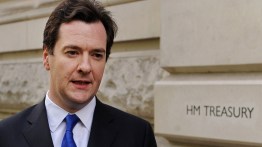
Only a week into his new job, and George Osborne has already had to exchange letters with Mervyn King about inflation.  And here's why: the CPI index hit 3.7 percent in April, up from 3.4 percent in March.  Which is worrying enough when looked at in isolation – but when put alongside headline rates from other countries, it becomes damning.  In China, it's 2.8 percent.  In France, 1.9 percent.  In Germany, 1 percent.  In the Eurozone as a whole, 1.5 percent.  And in the US, 2.3 percent (for March, with the latest figures out tomorrow).  Indeed, thanks in part to quantitative easing and the removal of the VAT cut, inflation in the UK is now well ahead of almost any other major economy you could care to mention.


Nadine Dorries’ Kill Bercow email

From our UK edition

Via PoliticsHome. If anything sways hearts and minds, then I suspect it will be the name of Sir Menzies Campbell among the "able and willing" replacement candidates: Dear new Member, Many congratulations and welcome to the House. Please forgive me for this generic email being brief and to the point. The first job of the House today is to appoint the Speaker. The Father of the House, Sir Peter Tapsell, will present a motion to the House that John Bercow remains as Speaker. At this point, members will shout 'Aye', on this occasion there will also be members from all parties shouting 'No'.

We should judge Bercow at the end of this Parliament

From our UK edition

Well, the news that Sir Menzies Campbell is lobbying to be made Speaker – as revealed by Iain Dale last night – certainly adds a dash of spice to proceedings.  But I'd still expect John Bercow to comfortably survive any re-election vote today.  On paper, all the arithmetic works in his favour.  And there's a sense that many Tory backbenchers are holding their fire for bigger battles with the party leadership ahead. But does Bercow deserve to stay?  I must admit, I'm rather ambivalent about the issue: I didn't really want him as Speaker, but I didn't really not want him as Speaker either.  And after his solid enough first year in the Speaker's chair, my thinking remains more or less the same now.

The Labour leadership battle: tribalism vs anti-tribalism

From our UK edition

While we're on the subject of the Labour leadership, it's worth reading James Purnell's article in the Times today.  I know, I know – he's left Parliament now.  But Purnell is close to Team Miliband (the Elder), so I imagine some of his thinking might show up in the campaign.  In which case... One thing that jumped out at me was Purnell's attitude to the coalition government.  Sure, he attacks it as "only symbolically progressive," but he doesn't dismiss it out of hand.  Indeed, he even suggests that coalition might be a good thing: "Gently, too — we should give credit to Mr Cameron and Mr Clegg for the way they formed this coalition. I thought that they would find it hard to get anywhere beyond a grudging minority agreement.

Frank Field would complete the Tories’ welfare reform jigsaw

From our UK edition

So now the coalition stretches as far as Labour, with the news that Frank Field is being lined up as an anti-poverty advisor for the government.  In itself, this is an encouraging development: Field is one of decent men of Westminster – committed, informed and passionate.  But when you look at it beside the Tories' other appointments in this area, then it really becomes exciting.  Field, IDS, Grayling and Lord Freud – all are deeply knowledgable about the welfare reform agenda, to the point where it's difficult to think of many more impressive teams in recent political history.  So perhaps there is hope for this most difficult of policy areas, after all.

Osborne rolls his sleeves up

From our UK edition

Just in case you didn't see the front cover of the Guardian, let me tell you: it's a big day for George Osborne.  This, after all, is the day when he finally launches the Office for Budget Responsibility's audit of the public finances – zero hour for the age of austerity.  Accordingly, then, Osborne has given his first major newspaper interview since becoming Chancellor.  Here, from that, is a quartet of observations for you: Office for Budget Responsibility.  The more I hear about it, the more I like this Office for Budget Responsibility.  Sure, it's another quango of sorts.

Osborne’s Big Choice: how much of our debt to reveal

From our UK edition

The cover of today's Sunday Times spells out what we all suspected anyway: that the Labour government left behind acre upon acre of scorched earth for the Tories to contend with.  There's the £13 billion contract for tanker aircraft, the £1.2 billion "e-borders" IT project, a £420 million spend on schools, and so on – most of them put in place just before the election.  As James said earlier, Sir Alan Budd's audit of the public finances is likely to show that things are much worse than the last Budget dared admit. All this throws open the wider question of our debt position.  Even by Labour's measures, our national debt is likely to rise once all the hidden spending and exaggerated tax receipts are taken into account.

Ed Balls follows Ed Miliband’s lead

From our UK edition

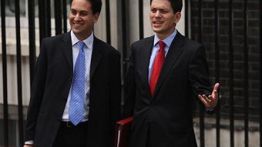
So fraternal rivalry it is, then, as Ed Miliband prepares to announce his leadership bid at a Fabian Society conference today. And, reading his interview with the Guardian, it's clear that Ed Balls is soon going to follow suit. Two Eds, two leadership bids, and much shared rhetoric about "listening" to voters. But the similarities don't end there. The passage where Ed Balls argues in favour of "progressive universalism" – a welfare system which stretches to the middle classes – echoes an interview that Ed Miliband gave to the Guardian in March. Both claim that it's important to make sure tax credits and other benefits reach those higher up the income scale. And both claim that Tory plans to trim back the welfare state are damaging to this goal.

Hurd weighs in on the 55 percent debate

From our UK edition

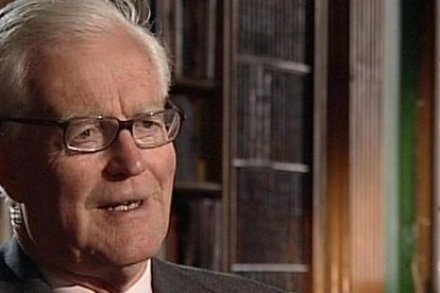
Plenty of eyes on the Tory grandees at the moment.  I mean, the right of the party isn't exactly delighted with the LibCon coalition - so the search is on for figureheads to lead the resistance.  Which is why Andrew Neil's interview with Douglas Hurd on Staight Talk this weekend is worth paying attention to. As it happens, Lord Hurd is quite complementary towards David Cameron and his role in organising the coalition.  Here's the actual quote: "I think it was a brave thing to do.  It might have gone terribly wrong, but he went straight for it and he was completely straightforward in saying this is what this is, and eventually he won what he wanted.  I think it was an act of courage and of skill, those two things which create a good politician...

Who will be Labour’s cuts candidate?

From our UK edition

As Guido and Jim Pickard have pointed out, Liam Byrne's article in the Guardian today reads like the launch of a leadership bid.  But if it is, then it's not a well-judged one.  Amid some sensible points about Labour's demise, there's too much "if we'd have done what I said" bravado which, I imagine, won't go down well with the party faithful right now.  A bit like pouring vinegar on an open wound. But it's worth considering another angle to a Byrne leadership bid.  A couple of weeks ago, I wondered whether Brown's departure would also take Labour away from the "investment vs cuts" dividing line of the past decade, towards a more responsible contribution to the fiscal debate.

Why fraternal rivalry will be good for Labour

From our UK edition

With the Sun reporting that Ed Miliband is going to stand for the Labour leadership, it's probably a good time to dig out Anne McElvoy's profile of the Miliband brothers for the Sunday Times last month. To my mind, its opening neatly encapsulates the choice between the wonkish one and the slighty-less-wonkish one that Labour may have to make: "When David and Ed Miliband were teenagers, their north London household rang to the chatter of some of the most prominent left-wing names of the era: Tony Benn, Tariq Ali, the ANC leader Joe Slovo and the late Michael Foot. David, one regular guest recalls, would sit 'absorbing it all' and asking interested questions of the grandees.

In the foothills of Brown’s debt mountain

From our UK edition

After the sunshine of the Downing St rose garden, the gloom of the public finances. This morning's newspapers are full of stories about the tax hikes and spending cuts that our coalition government is looking to introduce. The Sun and the Times dwell on yesterday's forecast for a rise in VAT. The Guardian outlines possible cuts to middle-class benefits. And there's plenty more besides. Two articles, though, are particularly indicative of the tensions that the government will face.  Interviewed in the Sun, David Cameron has to go on the defensive about tax rises; insisting that "The Conservative party is still a low-tax party, a tax-cutting party – and that's in the agreement.

Reform? Looks more like gerrymandering

From our UK edition

Much ado about this 55 percent proposal – whereby that proportion of the House, rather than just over 50 percent, would be required to vote down a government – and rightly so.  But, as so often, Iain Martin says all that needs to be said.  Here's a snippet from his must-read post: "It is rather stretching things to try and present this piece of proposed gerrymandering as 'Political Reform.' It is actually designed to ensure that even a walk-out of the whole Lib Dem parliamentary group couldn't actually bring down this government. This would weaken parliament and strengthen the hand of the executive considerably - when it is only weeks since both parties were talking of doing the opposite.

The emergency Budget will be the true measure of this coalition

From our UK edition

So who agrees with the economists forecasting that VAT will rise - perhaps to 20 percent - this year? I'm not normally one for making predictions but, as far as I can tell, this one seems pretty likely. Various politicos have been leaning towards this measure over the past year. And the new government will need quick ways to plug the fiscal gap while spending cuts filter slowly through the system. Problem is, it might make Vince Cable's silly attacks during the election look even sillier in retrospect. Oh well. This opens up the wider question of how the coalition will rebalance our public finances. The Lib Dems have said they'd do it only via spending cuts, while the Tories were aiming for a 80:20 split between cuts and tax rises.

David Miliband kicks off his “unity” leadership campaign

From our UK edition

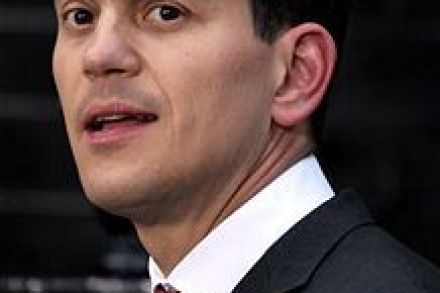
Surprise, surprise – David Miliband has just announced his candidacy for the Labour leadership, and there wasn't a banana in sight.  His address only lasted a few minutes, but it contained a number of hints about how, I suspect, he will look to run his campaign.  The emphasis was on newness, natch – "a new era, new dangers, new possibilities, new opportunities" – but also on unity.  He praised the leadership of Gordon Brown; claimed he was looking forward to a "warm, generous and comradely" contest; and said that he would go on a tour of non-Labour constituencies to "listen" to the public.  All of which was meant to reinforce one impression: that he would take Labour beyond the fierce tribalism of the Blair and Brown years.

Sense reigns, as the Tories redefine their health spending pledge

From our UK edition

Here's another sensible development for the day: the Tories have diluted their pledge to keep on increasing health spending.  As the FT's Alex Barker reports, the Lib-Con political settlement is going to contain these words: 'We will increase NHS spending in every year of the parliament.' So what's the difference?  Well, the previous pledge was to increase health spending in real terms each year - whereas this new formulation suggests that cash spending will increase, but that there will be cuts once you account for inflation.  Sure, it doesn't smash the ringfence down completely.  But it's still progress so far as the fiscal crisis is concerned.  Score one up for Nick Clegg & Co.

Iain Duncan Smith’s appointment is a triumph for the welfare agenda

From our UK edition

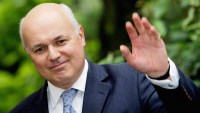
Of all the Cabinet positions announced so far, one is more eyecatching, and holds more promise, than all the rest: Iain Duncan Smith has been appointed Secretary of State for Work and Pensions.  Through his work with the Centre for Social Justice, IDS has shown that he not only knows his way intimately around the welfare brief, but cares deeply about it too.  The hope now is that this will energise the Tories' welfare-to-work policies, and also put the CSJ's crucial benefit reforms on the government's agenda.  On a day when unemployment has risen once again, this may prove to be one of the best decisions that Prime Minister Cameron ever makes.

The Deputy Prime Minister speaks

From our UK edition

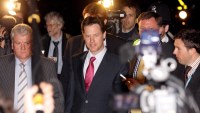
Just as the midnight oil burns out, the Lib Dems have finally agreed to a coalition deal with the Tories.  Speaking in Transport House, Nick Clegg confirmed that the parliamentary party and federal executive had "overwhelmingly accepted" the deal.  And ... well, that was it, really.  There were few other specifics from the new Deputy Prime Minister.  No confirmations of other Cabinet positions, no firm indications about the Lib-Con policy trade-offs – just "thanks and admiration" for Gordon Brown, and a few assurances that the new government would work towards "fair" ends, even though " there will, of course, be problems".  I'm sure that full details will emerge in the morning.