Peter Hoskin

Osborne gets upfront about our debt burden

From our UK edition

A couple of weeks on holiday, and there's plenty to catch up on.  First, though, George Osborne's speech to Mansion House yesterday evening.  In terms of substance, it was fairly radical stuff.  And it's encouraging that so many of the Tories' solid plans for reforming the financial regulatory system have survived the coalition process.  But, really, it was one simple, little sentence which jumped out at me.  This: "Debt [is] set to still rise even at the end of this five year Parliament." "So what?" you may be thinking, "we knew that already."  Ah, yes, but we've rarely heard a politician be quite so upfront about our debt position before – at least not voluntarily.
Hollywood’s introspective icon

From our UK edition

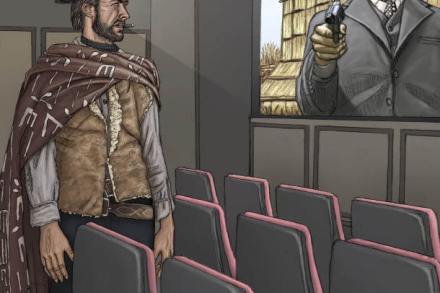
As Clint Eastwood celebrates his 80th birthday, Peter Hoskin salutes his artistic legacy My life at the movies began with Clint Eastwood about a decade ago. Channel 4 was screening A Fistful of Dollars (1964) one night, and my brother insisted that we stay up and tune in. I didn’t know beforehand that it was a western, let alone one directed by the great Sergio Leone. But, from the opening scene, I knew everything I needed to know about Clint: the poncho, the cheroot, those eyes burning with cathode ray intensity. This, I realised, is what people meant when they talked about cinema. And I was hooked. Fast forward to the present, and the lone gunslinger is about to turn 80 years old. He still stands tall, lean and gruff, with none of that old intensity dimmed by the passage of time.

School days

From our UK edition

There it is: Winder, one of the most imposing peaks across all the Howgill Fells. Whenever I visit my brother, a teacher at Sedbergh School, we make a habit of climbing it. Up you march, through grass kept short by wild horses and paths kept alive by other walkers, until you round back on yourself and see the entire town of Sedbergh contained within in the valley below. The school. The houses. The shops. The lives and cluttered history that make a community what it is.    Now two current Sedbergh pupils, Ben King and George Head, have done the literary equivalent of climbing up and looking down. In a collection of interviews with Old Sedbergians, they map the peaks and troughs of life at this hardy school.

Sir Menzies Campbell: Cameron and Clegg look like brothers

From our UK edition

Surprise, surprise – Menzies Campbell doesn't sound 100% taken with the coalition in interview with Andrew Neil on Straight Talk this weekend.  This is, don't forget, the man who encouraged the Lib Dems to seek a deal with Labour at the last minute.  And here he claims that he "would have found it very difficult to make the kind of arrangement with David Cameron that Nick Clegg has obviously found so easy."  He adds that: "...there is this determination to make [the coaltion] work and nowhere is that more obvious than in David Cameron and Nick Clegg.

Laws unto himself

From our UK edition

Wondering why David Laws put in such a convincing performance when defending the government's cuts at the dispatch box on Wednesday?  This little detail from Allegra Stratton's excellent profile of him might help explain: "A friend confirmed that for the past six months, as the official Lib Dem party line decided on by Vince Cable was no cuts, Laws had been telling friends he believed the markets wouldn't tolerate it. 'He has been saying privately the cuts have to start straight after the election,' they said.

Was last night’s Question Time a preview of how the coalition will deal with the media?

From our UK edition

All kinds of hoohah about last night's Question Time, for which Downing St refused to put up a panellist because of Alastair Campbell's involvement.  If he was replaced with a shadow minister, they said, they would happily get involved.  But, as the excutive editor of Question Time explains here, the Beeb wasn't prepared to go along with that.  So Campbell got to lord it up in front of the cameras. For the reasons outlined by Guido and Iain Dale, it was probably a slight mis-step by the coalition – but not one, in itself, that will have any important rammifications for them or the public.  For while it's not the government's prerogative to decide on the entire Question Time panel, it is their prerogative to choose whether or not they join it.

Encouraging early signs for the coalition

From our UK edition

Was the delayed ballot in Thirsk and Malton a referendum on the coalition government?  If so, the result released in the early hours of this morning will greatly reassure David Cameron and Nick Clegg.  The Tory candidate Anne McIntosh won the seat with 52.9 percent of the vote (up from 51.9 percent in 2005), and the Lib Dems came second with 23.3 percent of the vote (up from 18.8 percent).  Labour were pushed way down into third place on 13.5 percent (down from 23.4 percent). So, over three-quarters of the vote for the two coalition parties. I'd be hesitant to draw any firm conclusions from a one-off election, conducted under unusual circumstances.

The IDS agenda could help to end the benefits trap

From our UK edition

Yesterday, it was Michael Gove's schools agenda. Today, it's the other main reason to get behind the coalition: IDS's plans for fixing the welfare system. The Secretary of State for Work and Pensions has given a speech outlining them this morning. You can read it here, and I'd certainly encourage you to do so. There are plenty of welcome ideas in there, but none more so than IDS's emphasis on removing disincentives to work from the tax and benefit system. We at Coffee House have banged on about his "dynamic" approach, developed at the Centre for Social Justice, for some time now - and with due cause.

Cameron’s public debate with his backbenchers

From our UK edition

So, did Cameron say anything particularly noteworthy during his interview on the Today programme?  In truth, not really.  Most of the answers were of the "let's wait and see what in the Budget" variety.  The ratio of spending cuts to tax rises: wait and see.  Plans for hiking capital gains tax: wait and see, and so on.   The only answers that weren't determined by the Budget seemed to be his racing tips for the sports bulletin.  You can hear them here. But that isn't to say the interview wasn't revealing.  For much of it, Cameron was quizzed about the objections that David Davis and John Redwood have raised to the planned hike in capital gains tax.

Gove’s school reforms get off the ground

From our UK edition

The arduous process of reforming our country's education system begins today.  After two school reform bills were announced in yesterday's Queen's Speech, Michael Gove is writing to all English primary and secondary schools inviting them to cut loose from local authority control and become academies.  This is but stage one of the reform process: changing the system that's already in place.  The really radical part will come after the summer recess, with the government's plans for pupil premiums and the like.

The curious race for nominations

From our UK edition

One of the mildly diverting features of the Labour leadership contest so far is this nominations counter on the party website.  Ed Miliband was the first to pass the crucial 33 nominations barrier yesterday, while David Miliband managed it earlier today.  Ed Balls is still lagging behind on 14, Andy Burnham has 8, and poor John McDonnell and Diane Abbott both have none.  Yep, the excitement is reaching fever pitch. There's one curious feature to it all, though, highlighted by Danny Finkelstein earlier.  Why have some of the candidates – or their nominators – been holding back on their nominations?  David Miliband, for instance, has considerably more than 37 backers, and could surely have crossed the 33 nominations mark days ago.

What Harriet Harman can do for us all

From our UK edition

Today's the day, I suspect, when it will really hit home with Labour that they are now in Opposition.  Attacking a government's legislative agenda isn't something they've had to do for 13 years.  And while you could say that the Brown machine acted as an opposition in government – geared to destroy its rivals – this is different terrain, with different priorities.  It will fall to Harriet Harman to lead the charge from 1430 onwards. The FT's Jim Pickard has some sensible advice for Labour's stand-in leader.  But the crucial point is this: "It will be tempting to slam 'Cameron and Clegg' for 'taking £6bn out of the economy' and 'risking a double dip recession'.

The Queen’s Speech: full text

From our UK edition

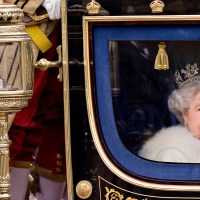
Via PoliticsHome: HER MAJESTY’S MOST GRACIOUS SPEECH TO BOTH HOUSES OF PARLIAMENT TUESDAY 25 MAY 2010 MY LORDS AND MEMBERS OF THE HOUSE OF COMMONS My Government’s legislative programme will be based upon the principles of freedom, fairness and responsibility. The first priority is to reduce the deficit and restore economic growth. Action will be taken to accelerate the reduction of the structural budget deficit.  A new Office for Budget Responsibility will provide confidence in the management of the public finances. The tax and benefits system will be made fairer and simpler.  Changes to National Insurance will safeguard jobs and support the economy.

A day of pomp and positivity

From our UK edition

The sun is filtering through the garden at 22 Old Queen Street, and a brass band is marching around St James's Park: we're getting the light and the pomp in equal measures for today's Queen's Speech.  As for the actual policy, well, we largely know what it's all about.  There will be proposals for scrapping ID cards, strengthening civil liberties, reforming schools, making the police more accountable, and more.  The emphasis from the government is on handing power back to the people. The question is whether the coalition can make today's positives balance out the age of austerity.  The stock market today provides a gloomy reminder that their biggest challenge is, and will remain, the economy.

The media helps the coalition’s fiscal cause

From our UK edition

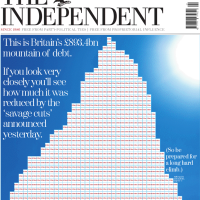
This feels like a watershed moment: a national newspaper devoting its cover to an image of the country's "debt mountain," with a small shaded-off area showing how little of it is covered by yesterday's cuts.  The paper in question is today's Independent.  And while the cover may not perfectly depict what's going on with our public finances – yesterday's cuts will reduce the government's annual overspend, not the overall debt burden which will keep rising for years to come – it is still a powerful reminder of Brown's toxic legacy. In some respects, the coalition might not appreciate this kind of focus: after all, politicians don't much like mentioning the debt burden and their powerlessness in the face of it.

Ministers won’t be able to vote in 1922 elections

From our UK edition

So it turns out that John Redwood's uncertainty was well-placed. According to Jonathan Isaby over at ConservativeHome, the Tory chief whip has decreed that ministers won't be able to vote in 1922 Committee elections after all. They will only be able to attend meetings, which, as Jonathan says, "no-one ever really had a complaint about." All this comes on the back of confusion about what last week's ballot even meant, making a curious situation even curiouser.  But, whatever the reasons behind it, the outcome will be seen as a climbdown by David Cameron – and perhaps the first real dent to his authority since coming to power. Meanwhile, the 118 "rebels" will revel in how things have turned out.

Coalition cuts: the IFS’s verdict is in

From our UK edition

So, the number-crunchers at the Institute for Fiscal Studies have worked their magic and delivered their verdict on today's spending cuts.  You can find their summary here, although the standout line is that the £5 billion in reduced borrowing implied by today's cuts is "less than a tenth of the fiscal repair job that Alistair Darling's March 2010 Budget forecast suggested will be needed over the next few years".  In terms of capturing just how much remains to to be done, it's a sobering remark.  But it's worth remembering that a Labour government wouldn't have made these extra £6 billion of cuts this year.