Peter Hoskin

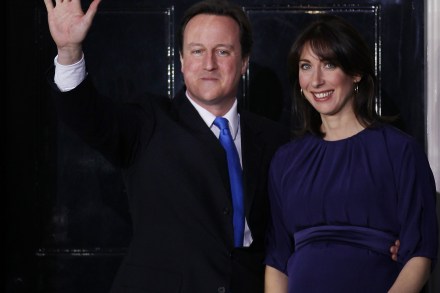
David Cameron is Prime Minister

From our UK edition

And he begins his tenure with an unfussy speech outside the door of No.10.  All of the main Tory touchstones were mentioned: the deficit, responsibility, political reform and social breakdown.  But this wasn't a strident or triumphant performance.  Cameron went out of his way to pay tribute to Gordon Brown and his "long record of public service," and to highlight the role that the Lib Dems will be playing in a "proper and full coalition".  Almost with a dash of regret, Cameron noted that this coalition will "throw up all sorts of challenges". Perhaps he's had a first taste of those challenges with the protestors who greeted his entry, with banners and boos, into Downing Street.
Brown resigns as Prime Minister

From our UK edition

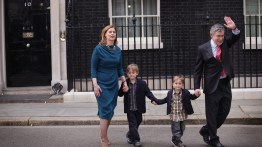
That No.10 lectern has had a lot of use over the past two days. Yesterday, it was wheeled out for Brown's resignation announcement; today, for his resignation proper. It was quite dignified, as it happened. He said that he he loved the job for its "potential to make this country fairer, more tolerant, more green, more prosperous and more just," and wished his successor well. And he finished by paying tribute to his wife and his children, who he said represented the "most important job" he could ever hold. So that is that, as one T Blair once said. The end.

Burnham strikes a blow to the Lib-Lab coalition

From our UK edition

As James suggested, the mood is shifting against a Lib-Lab coalition this afternoon. And now the idea has been dealt its biggest blow so far: Andy Burnham has spoken out against it public. Taking the kind of deliberate step that suggests he may be up for the Labour leadership after all, the Health Secretary said: "I think we have got to respect the results of the general election and we can’t get away from the fact that Labour didn’t win." And there's more. According to the irrepressible Paul Waugh, Burnham first made his discontent known in Labour's Cabinet meeting last night – where, according to Channel 4's Gary Gibbon, he was joined by Bob Ainsworth, Sadiq Khan and Jack Straw. So, then, have the rainbow coalition-ers given battle in vain?

Whatever happens, Clegg has sullied his credibility with the Tories

From our UK edition

Let's not get ahead of ourselves: some sort of deal between the Lib Dems and the Tories is still a distinct possibility, even if negotiations have been rocked by the events of yesterday. But whether it goes through or not, Clegg has seriously dented his credibility in Tory circles. Backbenchers who were warming to the idea of a formal Lib-Con coalition a few days ago – if only to scupper Labour's hopes – are now dead set against it. The very notion of Clegg as Home Secretary is becoming a collective anathema. The question now is whether – failing a Lib-Lab coalition – the Tory leadership is more inclined towards a confidence and supply deal than they were before.

The Lib Dem big hitters pushing Clegg towards Labour

From our UK edition

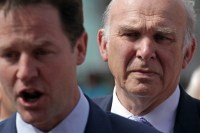
Today's papers have the lowdown on the events of the past few days, and one thing is becoming increasingly clear: a Lib-Con deal faces not just the opposition of the Lib Dem base, but also some of the party's most influential figures.  In a Times account of a Lib Dem meeting yesterday, it's revealed that Sir Menzies Cambell "urged his successor not to bind the party into a irrevocable deal with the Tories."  Meanwhile, the Telegraph reports that "Vince Cable played a significant role in resisting an agreement [with the Tories]."  And Paddy Ashdown was across the airwaves this morning, explaining how a Lib-Lab coalition could provide "stability" and "legitimacy," against a "rabidly anti-European" Tory party.

The Tories should shine a light on Labour’s leadership machinations

From our UK edition

One striking aspect to this evening's brouhaha is how senior Labour figures are going out of their way not to endorse anyone as Gordon Brown's successor.  Brown himself has said that he won't back an "individual candidate," and Peter Mandelson and Alastair Campbell have made similar noises in television interviews. There are, I imagine, two main reasons for this.  First, it's all too soon: Labour won't want to engage in full internecine combat while there's still the chance of a deal with the Lib Dems.  And, second, they will want to create the impression that – contrary to Gordon Brown's ascension to power in 2007 – the next Labour leader has been chosen in an open and clean contest.

Brown statement: now with added video

From our UK edition

And here's a transcript of the statement "We have a parliamentary and not presidential system in this country and as I said on Friday, with no party able to command a parliamentary majority arising from the general election, my constitutional duty as prime minister is to ensure that government continues while parties explore options for forming a new administration with majority support in the House of Commons. "The business of government has continued including concerted action in Europe today to avert the financial crisis in the Euro area. Alistair Darling the chancellor spent much of his time yesterday in the European finance ministers meeting in Brussels.

Gordon Brown announces his resignation

From our UK edition

You're witnessing history, CoffeeHousers: Gordon Brown has just announced his departure from frontline politics.  In a statement outside Downing St, he confirmed that he would be stepping down as Labour leader by September – triggering a leadership contest in the process.  It's clear that he's using himself as a bargaining chip, making a Lib-Lab deal more palatable to Nick Clegg.  Indeed, he even said that formal talks between the parties are now commencing. This threatens not just to shake the kaleidoscope, but to smash it to pieces.  Until 17:05 this afternoon, most folk thought that a Lib-Con deal was imminent.  But surely Brown wouldn't have taken this step if there wasn't a chance – however slight – of sabotaging those efforts.

Suspended animation | 10 May 2010

From our UK edition

Weirdness reigns in Westminster at the moment, as the entire political establishment sits drooling and waiting for insights into the Lib-Con talks. The latest negotiator to break cover was the Lib Dem's David Laws who managed, very artfully, to give very little away.  And so we were told that the Lib Dems are speaking with Labour, and that they are seeking "clarification" from the Tories over every issue from eduction to tax and electoral reform.  In other words: all the parties concerned are still negotiating. There is a growing sense - fuelled by reports that Nick Clegg is meeting his MPs later this evening - that we may not get a deal quite as quickly as expected.  It may be tonight, it may be tomorrow morning, it could even be later this week.

Do the Lib-Lab talks alter the landscape?

From our UK edition

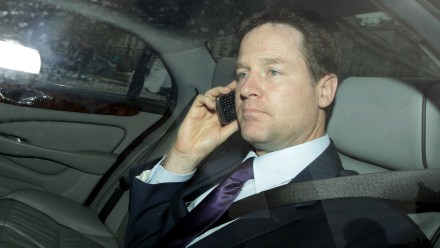
Isn't it all very cosy?  Turns out the Lib Dem negotiating team secretly met with a Labour delegation over the weekend: Ed Balls, Peter Mandelson, Ed Miliband and Andrew Adonis.  And it's thought that Nick Clegg has had more conversations with Gordon Brown, both on the phone and in person.  So the Tories aren't the only ones enjoying some quality LibTime. It doesn't really alter the cut of the situation, though.  Most folk around Westminster seem to expect a Lib-Con deal, of sorts, at some point today.  But Clegg and his team would weaken their hand if they didn't at least explore every option.  The Tory leadership will appreciate this – and, I'm sure, won't be all that perturbed by these latest developments.

So now we know how Boris feels about coalition government

From our UK edition

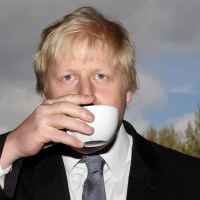
Aside from a few quips about Walls sausages and Meccano, Boris has kept his views relatively private since the events of last Thursday.  But you can always count on the Mayor of London to open up for his Daily Telegraph column, and, today, he does exactly that.  Here's his take on a Lib-Con coaltion – which, to my eyes, seems more than just a little bit dismissive: "The Lib-Con negotiations are still going on, in a foretaste of the Belgian orgies of tedium and paralysis that proportional representation will inflict on the country. Everyone is trying politely to work out exactly how many Cabinet seats to give a party that came a resounding third and did worse than in 2005.

Clegg laps it up

From our UK edition

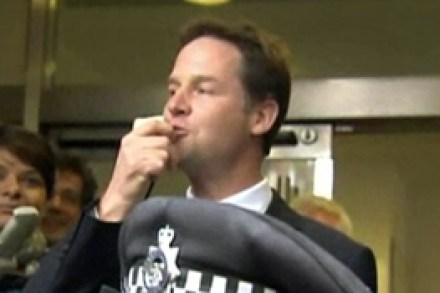
Ooh, a touch of drama just now, as Nick Clegg addressed the 1,000 or so protestors calling for voting reform in Smith Square.  He said that the demonstration was "wonderful," and got big cheers for saying that PR is "in the national interest".  But there were no hints, either way, about how the Lib-Con talks are going, or whether PR was a dealbreaker – which may have left the people shouting "Don't sell out!" a little dissatisfied.  For all the banners and flags, this one will still come down to the decisions of men in suits, behind oak doors. UPDATE: The Beeb's Laura Kuenssberg tweets that the protestors are moving on to Tory HQ. Fun and games.

Where are Labour’s manners?

From our UK edition

For all the feverish political activity in Westiminster today – and beyond the occasional voting reform protest – there's a strange, impermeable calm to the situation.  Everything is going on behind closed doors, and everyone is remaining relatively tight-lipped.  Signs are, we may have to wait a couple of days before any light breaks through the fog of discussion and counter-discussion.   One thing, though, is already becoming increasingly clear: 13 years of tribalism haven't done Labour much good when it comes to cross-party negotiations.  There are, of course, the rumours that Gordon Brown had an – ahem – "unconstructive" meeting with Clegg last night.

Cameron offers the hand of coalition to the Lib Dems

From our UK edition

Woah, I didn't think Cameron would go that far.  In his statement just now, the Tory leader started off by talking about minority government, as one might expect.  But he soon skipped past that, and onto what sounded like a more formal coalition with the Lib Dems.  He called it the Tories' "Big Comprehensive Offer". This offer trumped the one that Brown put forward ealier by virtue of its clarity.  Where Brown had hints and innuendo, Cameron had an itemised list of policies and specifications.  And so the Tory leader set out the areas where he wasn't willing to compromise with the Lib Dems: Europe, cutting the deficit and immgration.

Brown sets out his stall for the Lib Dems

From our UK edition

Gordon Brown's statement outside Number 10 just now was a strange mix of statesmanship and salesmanship.  He began by trying to sound as reasonable as possible: claiming that he "understands" why Nick Clegg would like to meet with David Cameron first, and adding that he would happliy wait for them to finish their negotiations.  He claimed that he is keen to "resolve the situation for the good of the country."  And he mentioned that Alistair Darling would be attending various meetings about the spreading fiscal crisis in Europe. But then, about halfway through, he flipped into used car salesman mode – hawking his rusty party to a sceptical Nick Clegg.