Peter Hoskin

The Tories’ negative brand of politics

From our UK edition

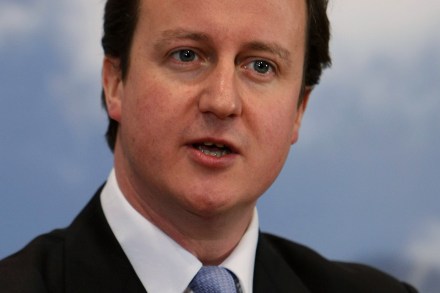
After the findings of the latest Guardian/ICM poll - which placed Labour on 35 percent (up one point) and the Tories on 37 percent (down two points) - there's a hard-hitting article by Trevor Kavanagh in the pages of today's Sun.  Kavanagh laments the Tories' inability to capitalise on recent political events: "Maybe Gordon Brown is a lucky politician after all ... The dour Scot has endured the most brutal battering of any new Prime Minister in history — mostly self-inflicted ... His Government is adrift, dithering and indecisive ... It is under siege on immigration, street violence, squandered cash and rampant hospital superbugs ... Yet voters seem remarkably forgiving ... Instead of turning away from Gordon Brown, they seem to be going off David Cameron ...

The democratisation of culture 

From our UK edition

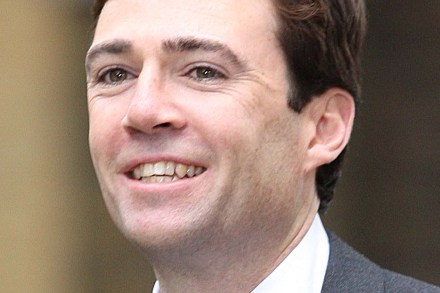
Another interview caught my eye in today's Observer - this one with the new Culture Secretary, Andy Burnham.  In it, Burnham outlines his plans to inject 'punter power' into the top sports and culture organisations across the land: "I'm a big believer that those who invest passion, energy and commitment in an organisation, whether that's their football club or local museum, should help run it.  It's a good principle to have artists and practitioners on the boards of arts organisations and to have representatives of supporters in the boardroom at every football club." He also discusses the introduction of "free weeks", during which tickets for performing arts events would be distributed to members of the public free-of-charge.

Is Brown the heir to Blair?

From our UK edition

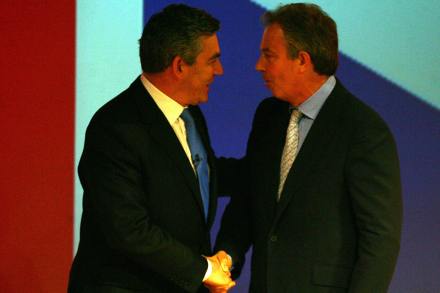
James Purnell's clearly trying to set some Stakhanovite record for delivering soundbites today.  After the “full employment” claim on Marr this morning, he issues an even-more-startling declaration in today's Observer – that “Gordon Brown is clearly the heir to Blair”. Whilst I'm sure Coffee-Housers will enjoy analysing which aspects of the Brown regime are a continuation of the Blair years, what Purnell's suggesting here is that Brown is developing the Blairite reform agenda.  And – just like the full employment claim – this is patently false.

The dangers of a lifestyle culture

From our UK edition

On the day that the Treasury Select Committee skewered the FSA for its role in the Northern Rock crisis, the Telegraph features a thought-provoking article by Charles Moore - suggesting that consumers join the financial regulators in taking a long, hard look in the proverbial mirror.   Moore places Northern Rock's downfall in a societal and historical context; characterising it as a symptom of lax Western attitudes towards borrowing and spending.  There's no totally innocent party here - companies peddle a "lifestyle"; consumers buy into it; and banks fund them.  As Moore puts it: "The consumer dream is summed up in that advertisement for the cosmetic company - 'Because you're worth it.

Maybe Hain’s the lucky one

From our UK edition

Matthew Parris' lucid article in the Times fuels my suspicion that Gordon Brown will come out of the past week in worse shape than Peter Hain.  Media outlets may have given Hain a kicking, but they've delivered an unprecedented broadside into the hull of Battleship Brown.  Parris outlines the main source of ire - Brown's indecision - nicely: "Come on, Gordon, admit the truth: you did not have complete confidence in Mr Hain, you never cared for him much anyway, you hated all that “donor-gate” stuff, but when it came to giving this minister the chop you funked it, hoping events might fashion a peg on which to hang his removal: a peg other than your own decision.

Pete suggests

From our UK edition

BOOK I'm just coming to the end of The Last Titan: A Life of Theodore Dreiser – Jerome Loving's critical biography of my favourite writer.  Loving weaves together three narratives – Dreiser's personal life; his literary development; and the history of early-Twentieth Century America – to create the definitive account of the genius behind Sister Carrie and An American Tragedy.  As the best literary biographies always do, it's got me once again reaching for its subject's work. CINEMA There's a lot of interesting Turkish cinema around at the moment; much of it dealing with that country's place in the world, and the tug between East and West.

A roman holiday for Prodi

From our UK edition

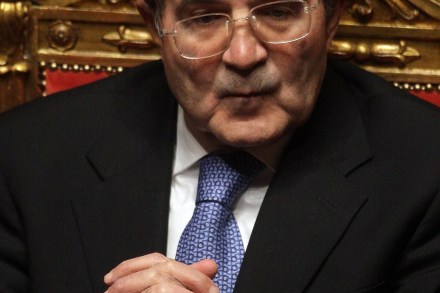
If you think that Gordon Brown's having a tough time of things at the moment, then spare a thought for Romano Prodi.  For - following defeat in a vote of no confidence - Mr Prodi yesterday resigned as Prime Minister of Italy. Opposition senators even uncorked bottles of champagne to celebrate his departure - in the main debating chamber, no less. All of which heralds the likely return of Silvio Berlusconi to the prime ministerial role.  Berlusconi has clawed his way back to a position of enormous popularity with Italian voters, and his advisors expect him to be back in power "within months". Yes, those "strangely charming" gaffes are set to tread the world stage once again.

Iraq revisited

From our UK edition

This caught my eye in today's Guardian: "The BBC is planning a controversial dramatisation of the run-up to the war in Iraq, to be broadcast over 10 days in March, ahead of the fifth anniversary of the start of the conflict. Starring Kenneth Branagh as Colonel Tim Collins, as well as Art Malik and Harriet Walter, the high profile series will focus on the events that happened on the corresponding days five years earlier, the BBC said yesterday. The series, overseen by Colin Barr, who made an acclaimed drama-documentary about Robert Maxwell, will tell the story of the hunt for weapons of mass destruction, the debates in the UN, the plans for reconstruction and the countdown to the war, which began on the night of March 20 2003.

Silver linings and bankers whining

From our UK edition

Recent events have been as nectar for the political blogosphere (no more so than for Guido - who's claiming credit for Hain's downfall), and Michael White has tackled them all with typical aplomb in an excellent post over at the Guardian website. Whilst I'm not sure about White's characterisation of the fundraising scandal as a "moving traffic offence", he makes a pertinent every-cloud-has-a-silver-lining observation about Hain's resignation: "Hain's fall meant that Alistair Darling's retreat on CGT reforms and the compromise on MPs' pay - 1.9% plus the details - were buried on today's inside pages and after the human interest stories (so many of them nowadays) on dumbed-down TV." And I'm particularly taken with White's analysis of the World Economic Forum at Davos: ".

Where now for Gordon Brown?

From our UK edition

I wrote yesterday that Gordon Brown's New Year relaunch is in tatters.  Now he's in the uneviable position of having to relaunch the relaunch.  How should he go about it? We've already witnessed Brown's new approach to personnel - that is, to draft youthful faces into the cabinet.  Now his comment piece in today's FT indicates one of the central planks of his policy agenda - the reform of financial systems: "Most political and business leaders gathered at the World Economic Forum this week agree on one thing: the global economy is facing its biggest test in more than a decade ....  But we should also agree that turbulent conditions, throughout history, have been an opportunity for reform.

The high cost of energy

From our UK edition

According to a new Ofgem report, rising fuel prices are behind a trebling in the number of homes disconnected by power companies over the past two years.  And what lies behind rising fuel prices?  Well, according to energy companies, around 50 per cent of the rises can be attributed to new costs – especially green taxes – imposed by the Treasury.  The sad link between environmental measures and public impoverishment looks set to continue for the forseeable future – compliance with new European Commission environmental proposals will see a 15 percent rise in rise in electricity bills. Regardless of whether or not its necessary in the first place, it's becoming clearer that the green tax programme hasn't been thought through properly.

The strange conversion (and eventual downfall) of a cabinet minister

From our UK edition

Call it incompetence, if you like – it may turn out to be criminality – but Peter Hain’s clearly underperformed as a Cabinet minister.  After his resignation today, blogs, newspapers and politicians are quite rightly sticking their collective boots in.  Just to strike a different tone, I thought I’d give Hain a bit of credit where it’s due – if only for a mid-office conversion on the topic of welfare reform. By now, the facts are well-stated: Wisconsin-inspired welfare reform– which places extra stress on claimants finding work and uses private companies to help them do so – gets more people off benefits and lowers the burden on the taxpayer.

Peter Hain resigns

From our UK edition

Peter Hain has resigned as the donations made to his deputy leader campaign have been referred to the police.   There's no doubting that this will be extremely damaging for the Government.  Whether or not Hain eventually clears his name, the public perception will surely be that corruption is endemic throughout the Labour Party - especially given that his was not the only name linked with malpractice.  How many other names will be tainted by this affair, even if only in the public eye? However, the nature of Hain's departure is potentially even more harmful than any spreading rot.  The Spectator argued weeks ago that Hain should be sacked.

Ken’s personal fiefdom

From our UK edition

If you missed the Today programme's interview with Ken Livingstone, make sure you tune in when it's available on Listen Again – some quite startling revelations were made. When asked whether he headed a “personal fiefdom”, Livingstone seemingly assented and went on to say that (and – for now – I'm quoting as closely as typing-whilst-listening will permit): “That's exactly what Tony Blair set out to do ....  I was originally opposed to it at first”.  Since taking up the role, however, his views have changed.  Now – as he expressed in the interview – he believes the Mayoral set-up has distinct advantages over those operating through “networks” of Sir Humphries and civil servants.

Will a downturn help or hinder Brown?

From our UK edition

Although they look at it from different angles, I think that James Forsyth and Daniel Finkelstein have both identified one of the most interesting political questions of 2008 – will an economic downturn boost or deflate support for Brown’s Government? Contrary to James, Finkelstein claims in an article today that the gathering economic storm-clouds will be good news for the Prime Minister: “The understanding that global forces are at work helps the government rather than hinders it.  The refusal to credit politicians turns into a reluctance to blame them.  Most polls seem to suggest that voters will not regard this Government as responsible for the downturn ….

Brown’s slow-burn politics

From our UK edition

The news that ID cards will be delayed until 2012 perfectly characterises the Government's modus operandi: namely, the politics of delay. Many of Brown's policy approaches have a very long fuse indeed – a house-building programme to be completed in 2020; a new generation of nuclear power stations which will take a decade to complete; and the establishment of a twelve-month NHS review when, as the Reform think tank puts it, “urgent decisions on cost control and reform are already one to two years overdue”. Of course, exercising due care is no bad thing in itself. However, when pressing problems need fixing now, due care is a luxury and delay starts looking like weak-mindedness.

Will the Brits have a date with Oscar?

From our UK edition

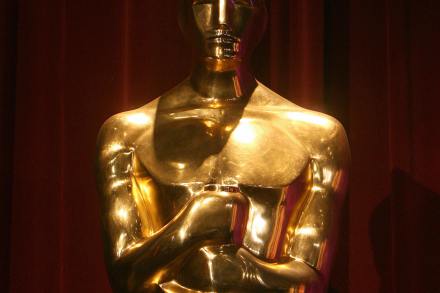
After its victory at the Golden Globes – and its strong showing in the Bafta nominations – I suspected that the British film Atonement would be a shoo-in for the Best Picture Oscar in February.  Now the Oscar nominations have actually been announced, I’m not too sure.  Not only are the American films No Country for Old Men (recommended by the Spectator on, count ‘em, one – two – three occasions) and There Will Be Blood leading the pack with eight nominations each, but the director of Atonement, Joe Wright, hasn’t been nominated for Best Director.

The crash is a symptom not a cause (now let’s start worrying about the cause)

From our UK edition

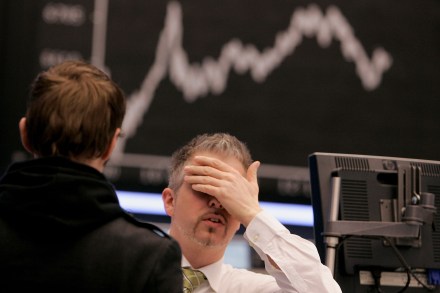
How worried should we be about the market crash? Turmoil continued in Asia today, but in Europe’s bourses there’s more stabilisation (largely down to US interest rate cuts). But do those red screens mean anything for the real economy? History suggests not. For all its drama the 1987 crash had “no appreciable impact upon economic growth”, and the main casualties of the 2001 crash were the egos (and bank balances) of dot-com millionaires.  What matters is consumer confidence – whether shoppers think this is the beginning of the end, or just a bad day for the men in braces. But this time, there is an added factor – which Brown should worry about.

Descent into recession?

From our UK edition

Global stock-markets have plummeted today, with the FTSE 100 share index suffering its largest one-day drop since September 11th, 2001; losing more than 5% of its value.  The falls – which are being mirrored by rapid price drops for commodities such as oil – are being spurred by a fear of a recession in the US. Clearly, George W. Bush’s $140 billion tax-relief package for the American economy has failed to reassure financiers; even though its explicit aim is to catalyse continued growth (but “at a slower rate”) for 2008.  These tax relief measures appear to have come too late in the day to persuade American consumers – who are already worried about troubles in the housing market – to go out and spend, spend, spend.