Peter Hoskin

Is Britain still relevant on the world stage?

From our UK edition

Britain's place in the world is under increasing scrutiny.  There's the continuing debate over the Lisbon Treaty; mutterings that the "special relationship" may break down; and questions about the viability of Brownite free trade.  And now - in a comment piece for the Independent - Mary Dejevsky notes the lack of major British players on the diplomatic stage: "It is hard to date the beginning, or the end, of our retreat, but the return of Mark Malloch Brown, then Deputy Secretary General, from the United Nations to join Gordon Brown's "government of all the talents" might be seen as a moment when we pulled up one of the last drawbridges linking us to the outside world.

Yet another rethink…

From our UK edition

After a wave of criticism, Alistair Darling's said to be considering a rethink over the Treasury's non-dom tax proposals.  He's right to do so - the current plans are a mess - but it's likely to just increase the speculation surrounding Darling's job.  After all, his Chancellorship has been little more than a series of copied polices followed by a series of embarrassing retreats.   Gordon Brown spent his time in No. 11 taxing-and-spending the economy into a hole (figures yesterday revealed that Brown's spree cost the economy at least £14 billion), but at least he did it with conviction...

NHS on life support

From our UK edition

Earlier, Fraser mentioned the work of the think-tank Reform, and today that same group released an insightful - and scathing - report on the state of the NHS.  Download it, read it, and internalise it, as it should set the healthcare agenda for the momentous year ahead.   The report's key message is that the Government is talking the talk on beneficial NHS reform, but not walking the walk.  This floundering situation is all the more worrying as we're about to enter healthcare's equivalent of a "perfect storm" - during which demographic, lifestyle and technological changes will place an unprecedented level of stress on the already-creaky health system. The answer isn't the new charter that we've been lead to expect from the Government, nor is it Brown's faux-Blairism.

Can Darling survive the media blitzkrieg?

From our UK edition

After the grim speculation over the weekend, there's little comfort for Alistair Darling in today's papers. The Telegraph runs with the finding that the Chancellor's tax crack-down on non-doms will actually cost the Treasury some £2 billion.  Whilst the Times lands a triple blow via a leader on the "misguided" tax proposals; an article by William Rees-Mogg, entitled "Why Mr Darling is a menace to Britain"; and a scathing piece by Anatole Kaletsky. The last article is particularly damning, as it sets about demolishing the "reasons to be confident" that Darling outlined in a speech last week.  Darling's kidding himself over the state of the economy, says Kaletsky, and is thus standing in the way of revival.

Just in case you missed them…

From our UK edition

Be sure to check out some of the posts made over the weekend: Matthew d'Ancona charts how the Archbishop of Canterbury's recent proclamations have kickstarted a political row. Fraser Nelson laments Britain's endemic lack of leadership. Rani Singh discusses how Pakistan's PPP party is moving on from the death of Benazir Bhutto. I look at the disconnect between Gordon Brown's rhetoric and actions on public service reform. And, over at Americano, James Forsyth explains the key role that Al Gore could play in the race for the Democrat nomination.

A false dawn?

From our UK edition

Gordon Brown has a comment piece in today's Observer.  It rehashes the usual statements about skills, schools and the global economy ("in a globally competitive national economy, there will be almost no limits to aspirations for upward mobility").  And outlines the Government policy relevant to these areas - more academies; an expansion of the Teach First programme; raising the school leaving age to 18; and giving an apprenticeship to "every qualified young person who wants it.  Nothing particularly surprising, then, but a couple of paragraphs at the end of the article really stand out: "We must take the reform of public services to the next level, at all times seeking to personalise these services so they meet the distinct and unique needs of individuals.

The wrong man for the job?

From our UK edition

Malcolm Rifkind writes an acerbic article over at Comment is Free, on why Tony Blair shouldn't fill the role of EU President.  He has two key points: 1) The role's not that powerful, and 2) Blair spells bad news for Europe.  Rifkind lets loose on the second of these:   "Ultimately, however, the question is whether Blair is the appropriate person to do the job. The answer to that has to be no. At the time of the Iraq war, he divided Europe in a way not seen for 40 years. His foolish decision to side so unequivocally with George W Bush has damaged his own credibility across Europe to such an extent that he would find it difficult to forge a consensus on political issues or to speak on Europe's behalf.

Clegg Watch

From our UK edition

Nick Clegg's certainly proving his worth as a newsmaker; something the Lib Dems have lacked in recent times.  After his we-could-possibly-enter-a-coalition-with-the-Tories revelation in the FT, he has a very-readable piece in today's Times on "how to stop future funding scandals".  The article's more noteworthy for it's punchiness than for its ideas (although Clegg does recommend that non-doms should be banned from "taking a position in Parliament").

The theatricality of Ed Miliband

From our UK edition

In his overview of PMQs yesterday, Fraser picked up on Ed Miliband's startling facial gymnastics (and Coffee House regulars Austin Barry and Nicholas Millman identified the parallels with Japanese Noh theatre).

Hague on Europe

From our UK edition

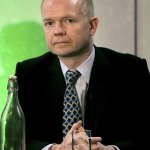
William Hague delivered a masterful speech on "The Conservative agenda for Europe", at Policy Exchange today.  In short, it's the definitive statement of why Britain deserves a referendum on the Lisbon Treaty, although it skips around many of the key questions. I've identified some of the best bits below, but the whole transcript's well worth reading (when, that is, it becomes available on the Tory website). First, there's an incisive attack on the Government's failure to call a referendum on the Lisbon Treaty: "It is a puzzle why the most enthusiastic proponents of deeper European integration in this country are a referendum’s fiercest opponents.

A bad deal | 7 February 2008

From our UK edition

On Tuesday it was tax credits.  And now the Public Accounts Committee delivers a boot to another of Gordon Brown's pet projects – the New Deal.  The findings should (but won't?) put pay to those claims that the UK's achieved “full employment”.  Some six million people now live in homes where “no-one has a job and 'benefits are a way of life'”.  Put another way: one-in-six households are now benefit dependent.  And then there are the pots and pots of taxpayers' cash that have been used to reach this unedifying position.  Those households cost some £12.7 billion a year in public money.  One New Deal scheme  found jobs for only 61 people in a year, at a cost of £1,100 each.

Points don’t necessarily mean prizes

From our UK edition

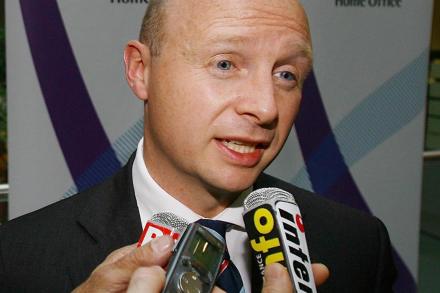
Immigration Minister Liam Byrne confirmed the final details of the UK's point-based immigration system today.  The Australia-style scheme - first outlined in 2006 - will be rolled-out as of 29th February. I was struck by Byrne's claim that: "The points system means only those migrants Britain needs can come to the UK" Which jars a bit with his previous statement that: "I am not the general secretary of a Soviet-style central planning system. I do not sit, together with my colleagues, in an office in the Home Office deciding what the needs of the British economy will be next year" Surely, the Home Office using a points-based system to determine which migrants "Britain needs" is little more than a "central planning system".  If so, it's a dangerous approach.

Last stand against protectionism?

From our UK edition

Irwin Stelzer writes a great piece in today's Telegraph, characterising Gordon Brown and George Bush as united by their strident belief in free trade: "Both have a relaxed attitude towards the free movement of people, and are therefore reluctant to prevent immigrants from joining their nations' workforces. Both resist efforts to raise barriers to the free flow of goods into their countries, with an occasional politically necessitated lapse on Bush's part. And both favour the free flow of capital and welcome the investment of sovereign wealth funds in their nations' financial and other institutions. The British Prime Minister and the American President might be the last two men standing in the fight against protectionism.

Waste continued…

From our UK edition

Following Fraser's earlier comments on Tory spending, I thought I'd point out Iain Martin's excellent post on tax credits over at Three Line Whip.  Martin rightly characterises Brown as a "wasteful spendaholic": "The next time the PM calls the Tories a bunch of lunatic cutters who will defile the public realm, they should call him a spendaholic who has put the bill on our, the taxpayers, account." Just for the record, yesterday's tax credit report isn't the first time (or even the second - third - forth - or fifth time) that the Public Accounts Committee has accused the Labour Government of immense waste of taxpayers' money.

Wind power: so much hot air?

From our UK edition

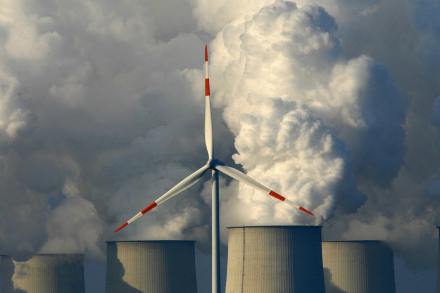
The Lewis islanders up in arms against the 181 wind turbines planned for their little slice of Hebrides have many aesthetic reasons to object. Environmentalists are torn between the green windmills, and their supposed threat to the island’s ecology/wildlife. The MoD fears that turbines block radar signals, creating “holes” in the national defence network. But the most powerful argument against wind power comes from Scared to Death, the recent book by Richard North and Christopher Booker.   Their study of the UK’s 165 wind farms shows they are not significantly cleaner, nor cheaper – and they drain the pockets of the consumer and taxpayer. Their gist: wind is unreliable – sometimes it blows, and sometimes it just doesn't.

A political hybrid?

From our UK edition

Thanks to Rachel Sylvester over at Three Line Whip, Tim Montgomerie’s tortoise-and-the-hare analogy has now been mapped onto the Labour Party. Sylvester characterises the Blairite reformers as “hares”, whilst those who stand in the way of reform are “tortoises”. On this account, she argues, Brown is increasingly acting like a hare:  “Now, there are increasing signs that the Prime Minister is turning from tortoise to hare. David Freud has been appointed to implement welfare reforms that Mr Brown tried to block (or at least delay) when he was Chancellor. This former banker is a hare on speed - he wants to hand large sections of the benefits system over to the private sector and get tough on those claiming incapacity benefit and lone parents.

Defend yourself

From our UK edition

John Rentoul writes a typically-perceptive piece in the Independent on Sunday, doubting that Gordon Brown will ever seize back the political initiative.  For Rentoul, Brown's major problem is that he's not engaging in "the drama of a dialogue in his own defence" - mainly because he hasn't identified a position to defend:  "If he was a 'change' from Blair, what had he changed to? Brown himself made a telling mess of answering that question on the BBC's Politics Show last weekend. 'The changes that we are making are to recognise that the world has changed over the last 10 years. We didn't have the environmental problems we have now. We didn't have the global restructuring; we have got it now. We didn't have the sense of rising aspiration.

Tories on the offensive?

From our UK edition

Another poll, another decreased lead for the Tories.  The latest ICM/Sunday Telegraph poll - the first conducted after both Peter Hain's resignation and the Derek Conway furore - puts Labour on 32 per cent (down 1 from last month); the Conservatives on 37 per cent (down 3); and the Lib Dems on 21 per cent (up three). I suspect the Tories' uninspiring poll performances are down to their complacent politics since New Year.  Now, however, there are signs that the complacency's fading, and proactivity's reigning once again. The Sunday Telegraph contains the double-punch of an interview with George Osborne and a comment article by David Davis.  Both pieces set out a different agenda to the Government's.

Election Watch

From our UK edition

Be sure to check out Rani Singh's Coffee House coverage of the forthcoming Pakistani elections.  Rani's first post is an unmissable primer in the issues, parties and individuals that will dominate the contest.  She will continue to provide insight and commentary until election day, on February 18th.  And for views on the US Presidential race, head over to the Spectator's latest blog - Americano.

Stopping the rot

From our UK edition

There's an essential interview with David Freud in today's Telegraph.  Freud wrote a review of welfare for the DWP, and many of its reforming proposals are being adopted by the two main parties.  Now, however, Freud wants the policymakers to go further, particularly on incapacity benefit: "When the whole rot started in the 1980s we had 700,000 [people on incapacity benefit].  I suspect that's much closer to the real figure than the [2.6 million people] we've got now... ...If you want a recipe for getting people on to IB, we've got it: you get more money and you don't get hassled.  You can sit there for the rest of your life.