Peter Hoskin

Going further on welfare reform

From our UK edition

James Purnell yesterday confirmed that David Freud-style welfare reform will be implemented by the Government. And now Frank Field writes a comment piece for the Telegraph, warning his Labour compatriots not to get complacent on the issue. As usual, he's well-worth listening to: “It is not the first time that Labour has trumpeted its credentials and objectives on welfare reform. The electorate won't be so easily beguiled this time. With an election unlikely to take place until the very end of the parliament, voters will want to see results rather than listen to brave rhetoric... ...But to match fine rhetoric the government will have to be far more radical than it has disclosed to its parliamentary supporters. Three further mini revolutions are required.

Who is Gordon Brown?

From our UK edition

Our Prime Minister's been compared to quite a few (real and fictional) characters of late.  Lord Turnbull got the ball rolling with his "Stalin" jibe; Vince Cable observed Brown's transformation into Mr Bean; and the Spectator's own Fraser Nelson saw similarities with Del Boy.  And now David Hughes spots the parallels with Inspector Clouseau. So, CoffeeHousers, who does Brown remind you of?  And why?

Lansley splashes the cash

From our UK edition

Andrew Lansley lobs a firecracker into the tortoise-hare debate this morning; announcing that the Tories would increase health spending by an extra £28 billion a year. The pledge actually goes beyond any made by the Government, and will see health expenditure rise by 2 percent of GDP. It sends a strong message out to the voting public. Something like: “We care about the NHS because we're pumping more money into the NHS”. Sadly, though, it's the wrong message. If ten years of Blair and Brown have taught us anything, it's that increased inputs don't necessarily equate to improved outputs. Today's National Audit Office report only serves to underline this.

Davey bites backĀ 

From our UK edition

Open House have afforded Ed Davey a plaform from which to deliver his version of yesterday's events.  Unfortunately - yet predictably - he uses it peddle the Lib Dem's ludicrous line on Europe.  One passage leapt out at me:  "It’s not unusual for Liberal Democrats to be squeezed out of parliamentary debates by the other parties seeking to maintain their cosy establishment arrangements. True, but this was different.  First, all the parties fought the last election on referendum pledges, so there is a democratic obligation for a debate. Second, it goes to the heart of the disagreements between the parties over EU reform. Third, we had undertaken an unprecedented amount of preparatory work to secure a debate, but were still denied. So we were cross.

Protestville

From our UK edition

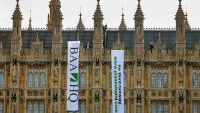
With anti-Heathrow-expansion protestors scaling the roof of Parliament - and sparking all kind of security concerns in the process - it's worth asking when & whether protests cross the line of decency. It's a question that Benedict Brogan's certainly tackling over at his excellent blog.  He takes a hard-line on the matter.  Brian Haw and his ilk were yesterday described as "a disgusting bunch" whose public profanity is (technically) illegal.  And now today's protestors are dismissed as "idiots". But does that mean we should clamp down on such protestors?  Or can we pardon their methods on the basis that they're not doing any particular harm?

A blessing in disguise

From our UK edition

The Today Programme's interview with Hector Sants – the chief executive of the Financial Services Authority – is well-worth listening to. His message is that the credit crunch will change banking “forever”, and that never again will money be available so cheaply. At first, the words seem doom-laden, but Sants puts a positive spin on them.  Yes, there will be short-term difficulties - he says - but eventually people will adjust to the long-term unavailability of easy money and fast credit.  The result?  Excessive borrowing will become a thing-of-the-past, and the UK can finally leap from the swamp of debt it's currently mired in.

Taking leave of their senses

From our UK edition

Fraser told us to "stay tuned" to the Lib Dems' continuing efforts to force an "in or out" referendum, and now we've been rewarded with a spot of Parliamentary drama.   Ed Davey - the Lib Dem Foreign Affairs spokesman - was ejected from the Commons for his angry insistence on the matter.  The rest of his party then walked out in protest. It's difficult to see what the Lib Dems hope to gain from their bizzare behaviour.  Of course, they're trying to present themselves as staunch defenders of the British public's rights.  But their actions will most-likely deny that same public a referendum on the Lisbon Treaty, whilst achieving nothing by way of compensation.

Tex Avery is 100

From our UK edition

One of the greatest American artists of the Twentieth Century was born 100 years ago today.  The artist was Tex Avery (d. August 26th, 1980), and his medium was animation.  At his height - in the 1940s - Avery created numerous cartoons and cartoon-characters which gleefully undercut the fluffy Disney archetype.  Bugs Bunny, Daffy Duck and Droopy belong to his menagerie.  And his filmography contains such works of subversive genius as Red Hot Riding Hood (1943) (watch it below!) - which transplants the popular fairytale to a seedy nightclub, and recasts the heroine as a voluptuous cabaret dancer. But Red Hot Riding Hood is only one of Avery’s many masterpieces.  Among my personal favourites are Who Killed Who?

Fixing the Prozac Nation

From our UK edition

“Anti-depressants don't work” is the message splashed across the front pages this morning, after a research team from the University of Hull discovered that: “The difference in improvement between patients taking placebos and people taking anti-depressants is not very great ....   There seems little reason to prescribe antidepressant medication to any but the most severely depressed patients.” The finding isn't too surprising.  In 2004, the National Institute for Clinical Excellence (NICE) said that antidepressants shouldn't be prescribed in the case of mild depression, as the “risk-benefit ratio is poor”.

School daze | 25 February 2008

From our UK edition

Why would anyone want to be the “heir to Blair”?   It’s a question that’s popping up numerous times in the comments on Michael Gove’s latest piece for the Spectator. And I’m sure it enters many people’s heads when they hear either Brown or Cameron laying claim to the title.   A short, simple answer might be: “because Blair was right about some things (not everything, but some things)”. For instance – and Gove makes much of this – he was right about the academies programme. That much is made abundantly clear by Richard Tice’s report for the think-tank Reform today. As the Chair of Governors at Northampton Academy, Tice is reporting from the front-line on these matters.

A mobile police force?

From our UK edition

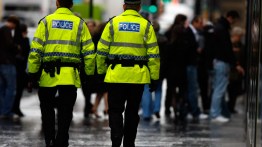
Reading the news release, I initially thought that Gordon Brown's "new kind of policing" - by which every household in England and Wales will be given e-mail/mobile phone details to contact "neighbourhood police teams" - sounded like a good idea. But then two figures jumped out at me.  The first is the cost of the scheme - some £325 million.  And the second is the percentage reduction in crime that the pilot version brought about in Clapham - some 0.9 percent. Of course, falls in crime shouldn't be sniffed at.  But £325m is a not-insignificant 3 percent of total spending on police in England and Wales.  It's a large commitment to make - especially on the back of so slim a crime-reduction.

Clegg and his European red herring

From our UK edition

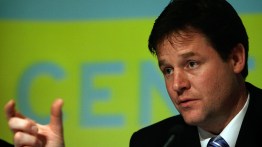
Now, as Fraser’s noted before, the official Lib Dem position on the Lisbon Treaty is a tad bizarre.  Nonetheless, Nick Clegg stubbornly sets about defending it in today’s Guardian: “It's time we pulled out the thorn and healed the wound, time for a debate politicians have been too cowardly to hold for 30 years - time for a referendum on the big question. Do we want to be in or out? Nobody in Britain under the age of 51 has ever been asked that simple question. None of them were eligible to vote in that 1975 referendum. That includes half of all MPs. Two generations have never had their say... … Pro-Europeans have got to face up to the truth: the EU is not popular in Britain. It is perceived as distant, and is mistrusted.

The protective cloak

From our UK edition

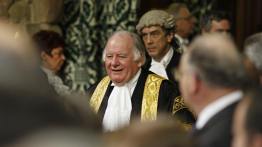
After the events of the weekend, all eyes will be on Michael Martin.  Will he buckle under the media's relentless pressure?  Or will he dig in his heels, and continue to stress the legality of his actions?  The way things have gone so far, I'd put money on the latter scenario. The most worrying feature of this episode is the protective cloak that MPs have drawn around the Speaker.  Most criticism has been dismissed as snobbery, even though the left-wing papers have also taken Martin to task.  And – as Nick Robinson put it on this morning's Today programme – numerous MPs blindly regard the allegations as “nonsense”.

The right long-term decisions?

From our UK edition

Just in case anyone still believed Gordon Brown's "right long-term decisions" claim, then the Observer's interview with Anne Owers – the chief inspector of prisons – should set them straight.   Owers stresses that the the current prisons crisis is down to past (in)action on the part of the Government: “You wouldn't start from here if you wanted to create a decent prison system ....  This is a result of decisions taken – or not taken – a long time ago.” And who – in the past – refused to put up the money for increased prison-building?  That's right – Chancellor Brown. If he's to regain any credibility, Brown needs to rapidly shift into short-term mode.

Gimmicky Gordon

From our UK edition

In the wake of Coffee House's Brownies campaign, numerous commenters have been imploring the opposition parties to undermine Gordon Brown's little porkies.  Take, for instance, CoffeeHouser Mike O'Callaghan's recent suggestion: "Each week Brown is allowed to provide statistical lies and seemingly gets away with it although anyone with an ounce of intelligence is not fooled. Can I suggest a tactical ploy for Cameron. Each week analyse the Brown statistical lies and the following week ask him specific questions relating to those figures. When Brown is unable to back the figures up he loses credibility. This tactic would allow the public once and for all to pick up on the lies being told.

Groundhog Day

From our UK edition

With the prison population reaching an all-time high of 82,006 (only 21 places short of full capacity), Jack Straw once again begs judges to consider more non-custodial sentences.  Of course, it's embarrassing for the Justice Minister.  His line is wide-open to opposition attack, and he's condemned to repeat it until those Titan prisons are finally completed.  Not that we should feel sorry for him.  Straw should have made the right, forward-looking decisions during his time as Home Secretary between 1997 and 2001.  Yet, somewhat masochistically, he's reluctant to take the proper steps even now.  The result?  Numerous tragedies waiting to happen.

Chinese whispers | 21 February 2008

From our UK edition

Judging by this post over at Sky's Adam Boulton & Co. blog, the dispute between Steven Spielberg and China over Darfur has just entered the realm of the bizarre.  According to Chinese Ambassador Liu Guijin, Spielberg never accepted the role in the first place, so - apparently - "there could be no question of a resignation". So why, then, was the first Chinese reponse to Spielberg's decision one of "regret"?  This latest claim is damage-limitation to the point of madness, and it reveals how worried the Chinese are about having their Olympics besmirched in any way.  The fact they need to face is that - rather than defusing the situation - continued denials will only incense the global community even more.

A rhetorical divide

From our UK edition

David Cameron’s announcement that a Tory government would consider making forced marriages a criminal offence opens up – at the very least – a rhetorical divide between his party and the Government. Cameron’s message is unambiguous: certain immigrant traditions are unacceptable in British society. Whereas, if today’s Home Office Green Paper enshrines this approach, then it’s not coming across very clearly. Here’s the relevant section:  “Under our proposals, the journey to citizenship will enable migrants to demonstrate a more visible and a more substantial contribution to Britain as they pass through successive stages.