Peter Hoskin

Targeted taxation

From our UK edition

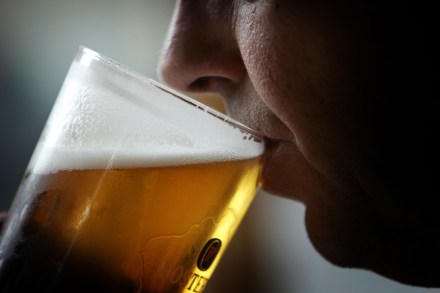
Massive increases in the tax on alcohol have recently been mooted as a way to stem the binge-drinking culture. Yet how does the government go about this without unfairly penalising the 90 percent of drinkers who don't consume alcohol to excess? Today, George Osborne offers a solution.  His idea is to only increase the tax on those drinks which are associated with binge-drinking.  So alco-pops and cider would be targeted, rather than wine and beer.  In fact, says Osborne, the extra revenue raised could be used to lower the tax on those beverages enjoyed by the sensible drinker.

A cutting debate

From our UK edition

Yesterday, Matthew agreed with Daniel Finkelstein that the Tories should hold back a little – and spend more time reassuring the electorate – before cutting taxes wholesale.  As he put it: “As tiresome as it may sometimes be, the essence of modernisation always boils down to reassurance of one kind of another: and those who think that the core Cameroon project of reassuring the voters is complete really are living in cloud cuckoo-land. I very much hope that Chancellor Osborne has the scope to cut the tax burden. He certainly has the inclination.

Referendum Watch

From our UK edition

Just elaborating on my post of last night, here are the full numbers for yesterday's Commons vote on the the Tory proposal for a referendum: 311 MPs opposed the proposal 248 MPs supported the proposal 29 Labour MPs supported the proposal 308 Labour MPs opposed the proposal 14 Labour MPs did not vote 186 Conservative MPs supported the proposal 3 Conservative MPs opposed the proposal 2 Conservative MPs did not vote 13 Lib Dem MPs supported the proposal 50 Lib Dem MPs did not vote The Lib Dem rebels were: Annette Brooke Alistair Carmichael Tim Farron Sandra Gidley Andrew George Mike Hancock David Heath John Hemming Paul Holmes Martin Horwood Greg Mulholland John Pugh Richard Younger-Ross David Heath, Tim Farron and Alistair Carmichael have resigned from the Lib Dem front-ben.

It’s Brownie time

From our UK edition

For the past few weeks, CoffeeHouse has been asking its readers to shout out about Gordon Brown’s lies – or Brownies, as we call them.  The response has been superb.  Congrats to CoffeeHouser James, for providing an almost comprehensive list: “As for GB's lies...where to begin: The Constitution/treaty. The state of the economy when he took over in 1997. Comparing RPI in the 1990s with CPI now. Constantly pretending that unemployment is now low, and youth unemployment almost abolished - when over 4million are not in proper work. The scandalous New Deal. The scandalous failure of the Tax Credit system. The lie that defence spending has gone up in real terms (inflation in the defence sector runs at around 8%).” But there are others.

Testing times | 5 March 2008

From our UK edition

As Guido reports, Nick Clegg has accepted the first Lib Dem front-bencher resignation over Europe.  No news of who it is, though.  How many more will follow? UPDATE: According to CoffeeHouser, Oscar Miller, Andrew Neil says differently: "According to Andrew Neil the resignation story put about by Crick is "pants" i.e. not true..." Stay tuned.

It’s so unfair!

From our UK edition

I briefly mentioned the exchange between David Miliband and William Hague on the Today Programme earlier, although a little detail deserves its own post. The to-and-fro discussion went as expected - Hague arguing well for a referendum on the Lisbon Treaty, and Miliband arguing (quite) well against it.  However, when James Naughtie pressed Miliband on whether the Government are opposing a popular vote on the referendum because it's one they'd lose, the Foreign Secretary dropped in this (quoting as accurately as scrambing around for a pen and paper will allow): "James, I'm sorry you've given William Hague a points victory in the last minutes of this interview.

Deciding on a referendum

From our UK edition

The big Parliamentary event of the day is undoubtedly the vote on whether to hold a referendum on the Lisbon Treaty. The outcome's expected at about 1900 this evening. It should mark another chapter in Nick Clegg's turbulent start as Lib Dem leader. His call for an in-or-out referendum was trampled on yesterday – 68 MPs supported it, 471 voted against it. And today he wants his fellow party-members to abstain from the voting. He's even put them on a three-line whip. If Lib Dems rebel en masse, then Clegg's grip on the party could be irreparably undermined. On the other side of the same coin, a smaller number might make him feel vindicated. At the moment, around 3 Lib Dem front-benchers – and 12 Lib Dem MPs overall – are expected to go against the party leadership.

Cooking the books | 4 March 2008

From our UK edition

Northern Rock is £110 billion of public debt.  An amount which “blows a hole” in the Treasury’s “sustainable investment rule” – that the debt-GDP ratio shouldn’t go higher than 40 percent.  It’s simple – now let’s look forward to Alistair Darling squirming as he delivers next week’s Budget. The only problem is that the Government looks set on keeping the Rock debt off the public balance sheet.  So it won’t affect the sustainable investment rule, and Darling can meet all his targets.  There’ll be no squirming after all. Their reasoning?  That the Northern Rock burden is so “temporary and exceptional” that it needn’t trouble the fiscal rules.

Remembering Chancellor Road-Block 

From our UK edition

Rachel Sylvester writes a typically excellent article in today's Telegraph, charting Brown's apparent transformation into a fervid Blairite. I'm still not convinced that the change is anything more than rhetorical.  But regardless of Brown's sincerity, he'll face a big challenge to make people forget his time as a "roadblock to reform".  As Sylvester puts it: "But what if [Brown's pro-reform stance is] too late? What if the image of sullen ground has stuck? What if it takes too long for the reforms to come into effect? What if the voters do not have the patience to wait? As one minister says: 'The problem is, we're about three years behind where we would have been if Gordon hadn't been so difficult when he was Chancellor.

A successful policy?

From our UK edition

Apparently, the Government's 24-hour drinking laws have been a success.  So much so, in fact, that a review will today mark them a solid 7-out-of-10 for delivering "excellent" results in many areas. Why, then, do the statistics paint a different picture?  In the 12 police forces that keep the relevant records, alcohol-related anti-social behaviour has risen by around 46 percent since the new laws were introduced.   Throw in massive increases in alcohol-related illnesses and injuries, and it becomes clearer that 24 hour drinking is a part of the problem rather than the solution.

Clegg keeps digging

From our UK edition

As James Kirkup reports over at Three Line Whip, Nick Clegg’s still getting himself into a "pickle" over Europe.  Here are the three key points which came out of his media briefing earlier today: “Yes, [Clegg]'s put his MPs on a three line whip not to vote at all when the Commons decides on a Tory bid for a referendum on the Lisbon Treaty. But no, he won't say if he'll sack the (significant) number of front-benchers who may well defy him on that: ‘I'm allowed to decide at that time.’ And no, he (probably) won't allow his side to back a clever two-question amendment being worked up by Ian Davidson, a Labour rebel, which might just have given him a get-out:  ‘We certainly aren't getting into game-playing.

From Putin with love

From our UK edition

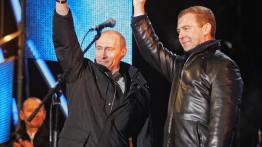
So, Putin’s protégé Dmitry Medvedev scored an overwhelming – and very much expected – victory in the Russian Presidential elections.  Was it a fair result?  It seems unlikely.  The chairman of a European delegation sent to observe the contest has already said that: “The results of the presidential elections … are a reflection of the will of an electorate whose democratic potential was, unfortunately, not tapped.” These concerns have been echoed by the German Chancellor, among others.  (No such audacity from Gordon Brown – he’s already dispatched his letter of congratulation). In the end, though, the protests won’t change a thing.

Back at square one?

From our UK edition

With Israeli troops conducting operations in Gaza over the weekend, it’s well worth reading (or re-reading) Lorna Fitzsimons’ prescient article for the Spectator. Fitzsimons concludes her piece as follows: “What is plain is that the past seven years of attacks — and the dramatic increase in the past few months — have been unbearable for so many Israelis. Israel has acted with a commendable level of restraint that in all probability no other country in the world would have shown when under attack.

We want a referendum

From our UK edition

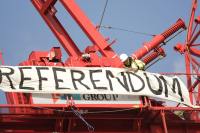
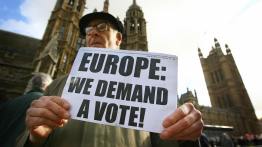
I Want a Referendum have released the results to the referenda they conducted in ten marginal constituencies. The numbers say it all. 150,000 people registered their votes. 88 percent of them want a referendum on the Lisbon Treaty. And 89 percent don't think the Treaty should be approved by Parliament. There can be no clearer message for the Government and the Lib Dems. They've both underestimated the strength of public feeling on this. And we can expect numerous MPs to beat a nervous retreat from their parties' ludicrous positions, ahead of Wednesday's vote on a Conservative amendment calling for a referendum. In the meantime, it's all more grist for Cameron's anti-Westminster grindstone.

A healthy alternative?

From our UK edition

Martin Ivens writes a punchy article in today's Sunday Times, in which he castigates both the Government for wrecking the NHS and the Tories for not yet providing an alternative approach: "Yes, nothing very much is happening any time soon in the good old NHS. People are still dying from cancer in greater numbers than in most civilised countries in Europe. Money is still being wasted from the great splurge on health presided over by Blair and Brown – spending has roared ahead. Productivity is still going south. It’s harder than ever to see a GP out of hours. True, a start has been made on allowing private contractors to provide services... ...

Tired rhetoric

From our UK edition

Gordon Brown's speech to the Labour Party Spring Conference was hardly inspiring stuff.  In fact, Rosa Prince tells you all you need to know over at Three Line Whip: "Theme: Elitist Tories want cuts in public services and a referendum on the past (i.e. Europe) - Labour is delivering on opportunity for all." Here - for intrepid readers - is Brown's version of that:   "So let me explain why only the Labour Party has the seriousness of purpose, the hunger for change, the passion for spreading opportunity,  the mission of justice for all that can meet the rising ambitions of this new age. Why?

A mixed bag

From our UK edition

Today's YouGov / Telegraph poll places the Tories on 40 percent (down 1 on last month); Labour on 33 percent (unchanged); and the Lib Dems on 16 percent (unchanged). Like most other recent polls, it's something of a mixed bag for the Tories.  As well as their healthy(ish) overall lead, they're also ahead on the economy and on the question of which party leader would make the best Prime Minister.  But the worry for Team Cameron is that many of these leads are decreasing, whilst opinion of the Goverment is stabilising.  In the wake of Northern Wreck, more might have been expected. To their credit, the Tories seem to be acting.  In the current climate, their new, anti-Westminster approach feels like a good idea.

A litmus test for Cameron’s leadership?

From our UK edition

Iain Dale flags up a letter in today’s Telegraph written by 27 of the 2005 intake of Tory MPs.  They’re asking for the sanctions that MPs face to be tightened, and even suggest the introduction of US-style recall mechanisms: "...we do think that consideration should be given to creating a recall mechanism, similar to that used in some US states, to enable constituents to vote on whether they remove their MP during the course of a Parliament. For example, in California in 2003, a petition was organised calling for the recall of the governor, Gray Davis. Once it was established that a sufficient number of electors had signed the petition, a ballot was held on whether Davis should be recalled. That ballot succeeded, and Arnold Schwarzenegger was elected to replace him...