Peter Hoskin

Labour sharpens its attack, but to what end?

From our UK edition

It's no secret that Gordon Brown loathes George Osborne - and that loathing manifests itself in a dossier that Labour released earlier today.  It lists what Labour calls Osborne's "schoolboy errors" over the economy, and is certainly the most shameless version of the "experienced heads vs novices" argument that we've seen so far.  Whether you agree with the substance of Labour's attack or not, there's little doubting that this dossier reflects a general sharpening of their spin/attack operation.  There's a brutal efficiency about them that was lacking during Stephen Carter's time at Downing Street.  But that efficiency could bring trouble down on their own heads.

Too nice?

From our UK edition

Steve Richards' balanced New Statesman article on the extent of the Brown bounce is well worth reading in full.  But this passage jumps out:  "Another view from inside the government is that Brown is too loyal to colleagues. As one minister who had been pressing for changes in Downing Street for months put it, 'the untold story about Gordon is that he is too nice'.

Welles shocks a nation

From our UK edition

It's 70 years to the day since Orson Welles pulled one of the grandest media stunts in history.  His Mercury Theatre radio adaptation of H.G. Wells' War of the Worlds was broadcast on 30 October, 1938, and - thanks largely to its faux-news bulletin construction - it convinced swathes of its listeners that an alien invasion was actually taking place (the main headline of the following day's New York TImes: "Radio listeners in panic, taking war drama as fact").  I've embedded the first ten minutes of the programme below, although you can download the whole thing here.  It's a great listen, particularly with Halloween just around the corner...

Darling demands cheaper petrol

From our UK edition

The government's demands that oil companies cut petrol prices are now getting beyond parody.  Alistair Darling repeated them on GMTV this morning - blithely ingnoring the fact that fuel taxes account for well over half the cost of petrol at the pumps.  Fern Britton, for one, wouldn't have let him get away with it. The question hovering over all this is whether the Treasury will go ahead with a planned 2p rise in fuel duty.  There's always the chance that Brown 'n' Darling could try and gain some political capital - and attept to steal Nick Clegg's "reduce the burden on low-income earners" thunder - by scrapping it in the forthcoming pre-Budget report.

Ten films for Halloween

From our UK edition

Ok, so Halloween isn’t until Friday. But I thought I’d post a list of favourite horror films now, so that – should you wish – you’ve got some chance to pick them up on DVD. Two things before I get onto the films. First, many of these aren’t actually scary. On the whole, I like my horror films from the 30s, 40s and 50s, when eeriness was the order of the day. And second: whilst I’d shy away from calling this a list of alternative horror classics – whether they’re “alternative” depends on the reader, not the choices – I have avoided the touchstones of screen horror.

PMQs live blog | 29 October 2008

From our UK edition

Welcome to this week's PMQs live blog.  There's plenty of stuff on the economy and for the Brown, Cameron and Clegg to debate - provided, of course, they don't get mired in BrandRossgate.  Things will kick off at 1200 - you can watch proceedings here. 1200: Adrian Bailey delivers the first question: "What measures are the government taking to ensure that small businesses get the same degree of support that the banks have had."  Perfect opportunity for Brown to mention his "discussions" with Sarkozy. 1205: Cameron now.  Punchy start: "If he wants to start supporting small businesses, he could cancel plans And onto the question: "Will the PM finally admit he has not abolished boom and bust in this country".

Who will triumph in Glenrothes?

From our UK edition

According to today's Herald, the betting markets are continuing to move towards Labour: "The bookmakers are making it an increasingly close contest. William Hill said yesterday that they had not taken any bets on the SNP winning the seat since Prime Minister Gordon Brown campaigned there at the weekend. The bookmakers have the SNP as narrow favourites, with Labour rapidly closing the gap." Of course, we shouldn't be surprised that Labour are in the running for a seat where they currently enjoy a 10,644 majority.  But, should they triumph, expect it to be milked for all its "Brown bounce" worth.

The day the fiscal rules died

From our UK edition

So today's the day; the day Alistair Darling will confirm that Brown's current fiscal rules are to be scrapped.  Now, the rules have always been more of a fiddle than a useful economic tool - to meet the "golden rule" that the budget remains balanced over the course of the economic cycle, Brown blithely changed his definition of the economic cycle; and his use of off-balance sheet trickery to meet the "sustainable investment rule" is well-documented.  But the worry is that if those fiscal rules failed to constrain Brown, what will he be able to achieve - what debt will he be able to accrue - under a more "flexible" framework?  One shudders to think. This is now a battle of political narratives.

A grim statistic

From our UK edition

According to the Financial Services Authority, home repossessions in the second quarter of 2008 were up 71 percent on the previous year.  With the financial and economic crises now biting even deeper, the figures for the third and fourth quarters of the year will most likely be even grimmer.  Of course, this tragic human element to the downturn presents a challenge to all the political parties: they need to devise ways to limit it.  But it also creates a particular problem for Gordon Brown: the more people feel the fiscal pain, the less likely they are to go along with the Our Economic Saviour narrative of the past few weeks.

The Mandy factor

From our UK edition

When Gordon Brown appointed Peter Mandelson to his Cabinet he may have grabbed the newspaper headlines, but the general sentiment was: be careful Prime Minister, this could backfire.  Already, Mandy's return has prompted the whole Yachtgate scandal. And now the media have turned their attention to the recently-ennobled one's links with Oleg Deripaska, Brown must be even more worried about what will emerge next.  The expectation that there's more to come is reflected in a Politics Home poll of 100 Westminster insiders today - in which only 42 percent of respondents think that Mandelson will stay in his job until the next election.  So what do CoffeeHousers' think: is this yet another potential blot on our PM's horizon? P.S.

Encouraging signs for both Labour and the Tories

From our UK edition

Today's ComRes poll for the Independent has the Tories on 39 percent (down 1 from the ComRes poll in the Independent on Sunday a couple of weeks back); Labour on 31 percent (no change); and the Lib Dems on 16 percent (no change).  That means the Tory lead has been more than halved in the past two months, and that they're now in hung parliament territory - all encouraging enough for Labour. But despite the "Brown bounces back" headline in the Indy, there's no need for the Tories to get disheartened just yet.

Moving on?

From our UK edition

So, George Osborne's admitted that he "made a mistake" getting chummy with Oleg Deripaska in Corfu, and the Westminsterati are prepared to draw a line under his involvement in the Yachtgate scandal.  The Tories should now grasp this opportunity to completely remove themselves from the story.  And - however great the temptation may be - that means not prodding Peter Mandelson over his refusal to disclose more about his meetings with Deripaska. Two main reasons why: 1) It was Osborne's attempt to rile Mandy that largely got him into this mess in the first place.

The Government’s new motto: Borrowing is Good

From our UK edition

Do watch Brown's speech to Imperial College earlier, in which he defends the Govenrment's plan to increase public debt in order to spend, spend, spend our way out of recession (or at least that's the theory).  It's our PM doing what he does best - deviously shifting the economic narrative to suit his agenda - and doing it with great aplomb.  No longer is government debt something to be swept under the fiscal carpet in a series of dodgy off-balance sheet manoeuvres.  Rather, it's something to be proud of: a badge of "responsibility" in these depressed times. Brown's certainly an advocate of the Keynesian economics underpinning all these claims.  But I'm sure there's another motivating factor behind them: namely, cutting off lines of attack from the Tories.

CoffeeHousers’ Wall, 27 October – 2 November

From our UK edition

Welcome to the latest CoffeeHousers' Wall. For those who haven't come across the Wall before, it's a post we put up each Monday, on which – provided your writing isn’t libellous, crammed with swearing, or offensive to common decency – you’ll be able to say whatever you like in the comments section. There is no topic, so there’s no need to stay ‘on topic’ – which means you’ll be able to debate with each other more freely and extensively. There’s also no constraint on the length of what you write – so, in effect, you can become Coffee House bloggers. Anything’s fair game – from political stories in your local paper, to chat about the latest football results.

The storm rumbles on

From our UK edition

There's a sense this weekend that the media hurricane has moved on from George Osborne - leaving him bruised and bloodied, but unbowed - and is now bearing down on Peter Mandelson.  Sure, the Tories are still experiencing some turbulence: a story about how they should repay a loan from the Rothschilds, as well as some ex post facto analysis by the Sunday columnists.  But after his letter to the Times yesterday, the Key New Revelations are all about Lord Mandy.  And the questions being flung at him, about his links with Oleg Deripaska, are the more difficult to answer.

The case for an “austerity Olympics”

From our UK edition

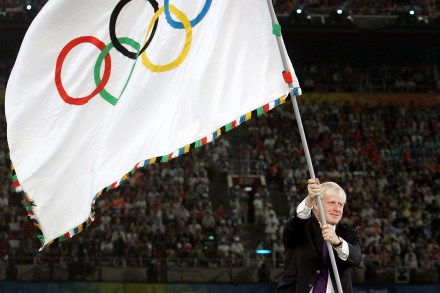
60 years ago, in the economically-depressed aftermath of WW2, Britain successfuly staged an "austerity Olympics" - pared-down, efficient, organised and even profitable, it was widely considered a momentous success.  In today's Guardian, Simon Jenkins persuasively argues for another austerity Olympics in 2012 - the times call for it, he says.  And it's hard to disagree.  Even if you think Darling's spend-our-way-out-of-trouble approach is the right way forward, there remains the question of what all that public cash should be spent on.  There's something deeply irresponsible about "pour[ing] crazy sums of money - £9.3bn - into two weeks of sport".  Particularly when that £9.

Opec won’t play along with the Brown narrative

From our UK edition

Oh dear. After Brown's grandiose claim that he was "trying to get the oil price down", No.10 must have hoped that the pre-existing downwards trend in prices, and the petrol pump competitiveness by supermarkets, would continue for some time to come - so our Dear Leader could claim all the credit. A shame, then, that the Opec countries have just decided to cut oil production; with the expressed aim of increasing prices. The problem for the PM is that if tries claiming credit for positive developments he hasn't influenced, then he risks looking like a failure when the trends turn against him.