Peter Hoskin

Maude responds

From our UK edition

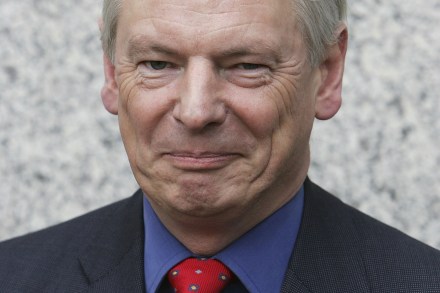
Here are Francis Maude's answers to the questions posed by CoffeeHousers: Sue Denim "The Tories are ignoring their base to chase the votes of the soft centre-left. Discuss." I don’t really know what this means.  We have to be a national party, generous in outlook and broad in appeal.  I’ve always thought that most people’s instincts and preferences are in line with ours: for social responsibility rather than central state control; believing that there is such a thing as society but that it’s not the same thing as the state.  We’ve never believed that everything can be left to the market or that individual responsibility is all.

Should the Tories lie low?

From our UK edition

An engaging article by Simon Jenkins in today's Guardian, on why the Tories shouldn't worry about the vacillating opinion polls, and would be better served by lying low for the time being: "There is no electoral advantage ever to be gained by an opposition during a national crisis. The sane policy is to keep your head down and stay quiet... ..Political commentators have widely attributed Cameron's fall to the vagaries of his economic policy and the vacillations of Osborne. History offers no support for this analysis. It suggests that the behaviour of an opposition at such a time is irrelevant. History also suggests that Brown's current standing will for sure decline as crisis turns to long, grinding recession.

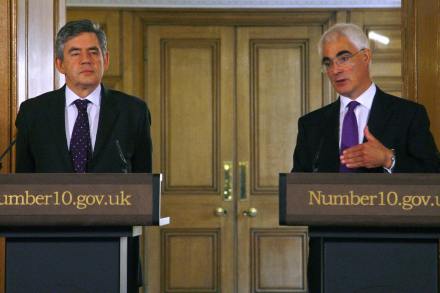
Could a Brown-Darling split undermine Labour’s economic message?

From our UK edition

The latest official borrowing statistics were released earlier today, and - thanks to a few revisions, detailed by Paul Waugh here - they're slightly lower than you might expect.  Not that the numbers aren't still massive.  Public sector net borrowing between April and October stood at £37 billion - bringing the total over the economic cycle up to £640.9 billion, or 42.9 percent of GDP.  While, crucially, net borrowing for October was 1.4 billion - the first time that there hasn't been a net repayment in October since 1994.  And that's even when leaving, say, PFI liabilities and the bank bailout off the balance sheet, as is Brown's want. Now, all this does represent a "borrowing binge," as Cameron and Osborne put it.

Cooper spins us a choice

From our UK edition

Paul Waugh spots this line in a speech given by Yvette Cooper an hour ago: "David Cameron has said we should not borrow to boost the economy now. But the truth is that if we don't act, our economic problems will last longer and run deeper." As Paul notes, this represents another hardening of the battle lines between Labour and the Tories.  The Government are spinning things as a choice between increased borrowing now (with the caveat, in the small-print, that taxes will need to rise once the downturn's over) or a longer-lasting recession.  And you can expect them to push this message ad nauseam over the coming months.  The grand irony, of course, is that Brown will no doubt be wanting the downturn to last as long as possible, so he can strengthen his own position.

An admission of failure?

From our UK edition

Just following up my post of yesterday evening, it's worth pointing out the story in today's FT that Alistair Darling is going to throw small businesses a "credit lifeline" in next week's PBR.  This was actually one of the aims of the multi-£billion bank bailout.  But - as that doesn't seem to be having the desired effect - the Government's natural reflex is to throw more money at the problem and thereby increase the liabilities shouldered by the taxpayer.  Here is yet another area where the war of words - the political sloganeering - is crucial.  Will this spending-on-top-of-spending be seen as the Government doing "whatever it takes"?  Or will it be seen as an admission of failure, as "waste"?

Bashing the bailout

From our UK edition

Looking back on PMQs - and reading Iain Martin's deft analysis - it really was quite striking how both opposition leaders decided to major on the same issue: namely, that the banking bailout isn't yet meeting one of Brown's key aims for it and freeing up credit for small businesses.  It's a potentially fruitful line of attack.  After all, Brown's sunk a monstrous amount of taxpayers' cash into this bailout, and if the opposition parties can in any way indicate that it's not working - and to some extent characterise it as £billions worth of waste - then they could well strike a hammer blow against Brown's borrow 'n' spend approach to the downturn. The problem, though, is how to convey this attack.

PMQs live blog | 19 November 2008

From our UK edition

Welcome to this week's Coffee House PMQs live blog.  As always, things will kick off at 1200.  It's expected that the party leader exchanges will centre on the economy - particularly in light of the CBI's prediction that unemployment will hit 2.9 million, and the Tories' announcement on public spending yesterday.  Don't bet against hearing the "Tory/Lib Dem cuts" mantra from Brown. 1200.  Here's Brown now.  First question from Philip Dunne; "Can the PM explain why the pound has lost a quarter of it's value against the dollar in just 4 months."  Brown just rehashes his line of the weekend: "I'd remind Conservative members not to talk down the pound.

Will Brown call an election in ‘1943’?

From our UK edition

Weighing up the prospects of a snap election, Jonathan Freedland makes a pertinent point in today's Guardian: "But what happens when the immediate mood of crisis passes, and voters ask whether Brown's frenetic activity actually made any difference? If the answer is not much, he'll be finished. Yet success might not help, either. Voters could decide that Brown had served his purpose and was no longer needed. Think 1945: it was because Winston Churchill had won the war that Britons felt free to boot him out. So Brown needs it to be 1943 for as long as possible. He needs voters to believe the crisis is ongoing, that we are still in the emergency phase.

The dangers of high spending

From our UK edition

The Independent's Hamish McRae - who's been on the money more often than most commentators during this downturn - today outlines the reasons to be wary of a Government spending boom in the PBR. They're worth quoting in full: "The first is international. Trust is vital and there is a danger of a systemic loss of confidence in British financial management. Already sterling has fallen by as much as it did in 1992 when it was ejected from the ERM. We are going into this downturn with an exceptionally high budget deficit of around 4 per cent of GDP and that could rise to 6 per cent or more in the next financial year. It is plausible that the deficit could be even greater proportionately than the deficit run up by the Tories in the early 1990s.

A Book A Week

From our UK edition

Just to flag up a little task I've set myself over at the Spectator Book Club.  The plan is for me to read a book each week, and review and discuss it on the site's discussion board.  The first book will be Tom Bower's biography of Gordon Brown, and the thread for it - along with more information about my future reads - is here.  It 's certainly not obligatory, but 'twould be nice to see some CoffeeHousers over there - if only so you can make sure I don't skip a week...

Should the Tories fear these poll numbers?

From our UK edition

Courtesy of Political Betting, the headline figures from the latest MORI poll: Conservatives -- 40 percent (down 5) Labour -- 37 percent (up 7) Lib Dems -- 12 percent (down two) Opinion polls have been varying wildly over the past couple of weeks, so it will be interesting to see if - and how - they settle after the PBR.  In the meantime, numbers like these will fuel the idea that Brown's set to call an early election.

Osborne delivers a clear Tory message

From our UK edition

This from George Osborne, speaking on the Beeb just now: "Spending restraint under Conservatives, tax rises under Labour" This bluntly effective message - that Brown's tax-cuts-now translate to tax-rises-in-future - is perhaps that best chance the Tories have to set the economic narrative.

Cameron dumps Labour spending plans

From our UK edition

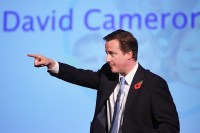
I wrote earlier that David Cameron needed to do more to to outline how the Tories will respond to the fiscal and economic downturn.  He just has.  In a keynote speech, the Tory leader announced that his party will ditch their commitment to match Labour spending plans for 2010/11.  The emphasis now, as he put it, is on building a low tax, low debt, low interest rate economy Now, this marks a massive strategic shift for the Cameroons.  To all intents and purposes, the nebulous "sharing the proceeds of growth" concept has been jettisoned.  The emphasis now is on cutting back the size of the state and, one assumes, using the funds to bring down national debt and reduce the tax burden.

The Tory attack operation warms up

From our UK edition

There's a punchy op-ed from David Cameron in today's Guardian, centred around this three-pronged attack on Brown's borrowing binge: "But excessive borrowing, adding to permanent national debt, to cut taxes or boost spending is the wrong approach. There are three reasons for this. The first is that we simply cannot afford it. We're already mired in debt thanks to Brown's age of irresponsibility - £2.4 trillion at the last estimate - so we have nothing to fall back on. Paying back Brown's planned £15bn borrowing binge will mean the equivalent of an additional £880 tax bill for every family in Britain. Imagine the toll this would take on people. Think of the drag anchor for an economy in recovery. The second reason is that it has been proved not to work.

There may be damp squibs ahead

From our UK edition

Just to follow up Fraser's and Daniel's posts, Clive Crook's column in the FT today contains a striking example of just how few waves this G20 summit created: "You might have thought that an emergency gathering of leaders from the world’s 20 main rich and emerging economies, with the global economy poised for its worst slump since the Great Depression, would have aroused some interest. The event was deemed unworthy of the main section of Saturday’s New York Times. (Room was found on the front page for a story about how hard it is to open the “clamshell” packaging of toys and electronic gadgets. The summit, “A crisis in finance”, made page 3 of the business section.

CoffeeHousers’ Wall, 17 November – 23 November

From our UK edition

Welcome to the latest CoffeeHousers' Wall. For those who haven't come across the Wall before, it's a post we put up each Monday, on which – provided your writing isn’t libellous, crammed with swearing, or offensive to common decency – you’ll be able to say whatever you like in the comments section. There is no topic, so there’s no need to stay ‘on topic’ – which means you’ll be able to debate with each other more freely and extensively. There’s also no constraint on the length of what you write – so, in effect, you can become Coffee House bloggers. Anything’s fair game – from political stories in your local paper, to chat about the latest football results.

Do the forecasts point to an early election?

From our UK edition

The CBI have come out with another set of gloomy forecasts this morning, by which the recession will be "deeper and longer lasting" than previously thought.  They predict that the economy will contract by 1.7 percent in 2009 and that unemployment will hit just under 3 million in 2010.   It's still something that I think unlikely, but every forecast such as this strengthens the increasingly popular idea that Brown will call an early election.  Not only will he find it more difficult to maintain his Economic Saviour narrative as the recession worsens and unemployment skyrockets.  But also - if he waits - then the very real possibility of other countries recovering quicker than the UK will shatter his claim that we're "best placed" to deal with this downturn.