Christmas culture picks
From our UK edition
I've just uploaded my set of culture recommendations, which you can read here. If CoffeeHousers have any culture picks of their own, please give them a mention in the comments section to this post.
From our UK edition
I've just uploaded my set of culture recommendations, which you can read here. If CoffeeHousers have any culture picks of their own, please give them a mention in the comments section to this post.
From our UK edition
The Labour protest over the Government's plan to allow foreign investors to take up a stake in Royal Mail has just been ramped up a notch by the resignation of Jim McGovern as PPS to Pat McFadden, Minister of State for Employment Relations and Postal Affairs. All signs now are that this could turn into one of the biggest rebellions that Gordon Brown's faced during his premiership - and certainly something that could punctuate the general stream of positive coverage that's been flowing his way recently.
From our UK edition
The mutterings about this have been around for a while, but now it's been confirmed: UK troops will be leaving Iraq by July 2009. In a joint statement just now - at the start of a surprise visit to Iraq by our PM - Brown and Nouri Maliki claimed that UK forces will have "completed their tasks" by then. Expect plenty of questions over all this: are those tasks really complete? Are the Iraqis being abandoned? Is the withdrawal operation too rushed? But, as I see it, the most important conflict zone for us is Afghanistan; or, more specifically, the Afghanistan-Pakistan border region. Any signs that the Afghan mission is being given greater priority should broadly be welcomed.
From our UK edition
The Telegraph's Iain Martin makes the key observation over the two outrageous government waste stories (here and here) in the papers today: "This is not simply a bureaucratic failure, it is a moral failure too: taking high taxes from a public feeling the pinch and then throwing it away when it could have been put to work by individuals to pay their bills and care for their family or rebuild their savings." The downturn - and the human misery it catalyses - makes wholesale government waste all the more disgraceful. From a political perspective, this strengthens the Tories' core economic message - although there's still a sense that the Cameroons could do more to flesh out their approach for helping those individuals worst hit by the recession.
From our UK edition
Plenty of noteworthy snippets in this Telegraph article by James Kirkup today, among them a claim by a Labour strategist that "Voters would be disgusted if we called an election at a time when they are worried about their homes and their jobs". Of course, that could be a deflection rather than a true indication that we won't be seeing a snap election, but other parts of the article - that Labour are going to introduce more housing "security" measures and that they're going to re-heat the "Tory cuts" attack - do sound believeable. Perhaps the most important passage, though, is this: "Labour's research suggests voters like Mr Cameron but remain less than convinced, with many suspecting he is a "phoney.
From our UK edition
Just as an addendum to Fraser's post on the international resistance to Brown's world-saving act, there's an intriguing little story in today's Independent about "Labour backbench unrest" over the fiscal stimulus announced in the PBR. I quote it here in its entirety: "Frustration is growing among Labour backbenchers over the Government's rescue plan for the economy. Several MPs believe a VAT cut was the wrong way of spending the bulk of the fiscal stimulus package, and others fear more should have been funded through tax reforms. 'Going shopping last week I was offered a little over a pound off a £35 item," the former environment minister Michael Meacher said. "It really isn't doing anything.
From our UK edition
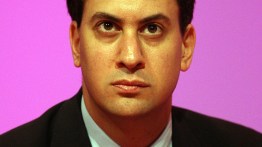
One of the quaintest - and most enduring - of all Westminster traditions is how ambitious politicians skirt around the question of whether they want to be party leader/PM. They don't say "yes" - that would be far too brash. But they don't say "no" either - feeling, for some reason, that that's the one lie they can't tell. Instead, we get ambiguous non-denials, which almost everyone interprets as a "yes" anyway. For the record, Ed Miliband's the latest to issue such a non-denial, in the 'You ask the questions' section of today's Independent: Do you have any desire to be Prime Minister?
From our UK edition
Welcome to the latest CoffeeHousers' Wall. For those who haven't come across the Wall before, it's a post we put up each Monday, on which – provided your writing isn’t libellous, crammed with swearing, or offensive to common decency – you’ll be able to say whatever you like in the comments section. There is no topic, so there’s no need to stay ‘on topic’ – which means you’ll be able to debate with each other more freely and extensively. There’s also no constraint on the length of what you write – so, in effect, you can become Coffee House bloggers. Anything’s fair game – from political stories in your local paper, to chat about the latest football results.
From our UK edition
Yet another poll to report on today; one which more or less falls in line with the two released yesterday. The Ipsos MORI poll in the Mirror has the Tories on 42 percent (down 2 percentage points); Labour on 36 percent (up 4); and the Lib Dems on 11 percent (down 4). There's also a hefty lead for Brown on the question of which party leader is best to steer the country through the recession: he's on 41 percent, with Cameron on 29 percent. The more the post-PBR landscape solidifies, the more questions people in the Westminster Bubble have to ask of themselves. The general view among politicos, commentators and journalists - including myself - was that the PBR and the Damian Green affair would be damaging for Labour.

From our UK edition
Ok, I'm as sceptical as Peer Steinbrück when it comes to Gordon Brown's big-spending, debt-heavy approach to managing our economy. And I regard the main fiscal debate between the splurgers and the thriftniks as perhaps the most important in British politics today. But the fact remains that the splurgers are in power. As Andrew Rawnsley points out in his Observer column this morning, that means that - at some level - there needs to be a secondary debate; a debate over what the splurge should be used to fund.
From our UK edition
Remember the statistics released by the Home Office yesterday - and reported in the newspapers today - which highlighted positive devlepments in the war on knife crime? Well, you can officially disregard those statistics. The Chair of the UK Statistics Authority, Sir Michael Scholar, has issued an angry letter saying that the numbers weren't ready for public consumption and blaming Number Ten for getting them released prematurely. The Standard's Paul Waugh has the complete text of Scholar's letter, but here's the main thrust of it: "It has been reported to me by the National Statistician's Office that officials or advisers in No.

From our UK edition
As it's Friday, I'll let you in on a little past-time we have here at Spectator Towers. My colleague Mary Wakefield and I often instigate 'Dear Deidre' reading sessions - whereby one of us reads out the letters sent into the Sun's resident agony aunt, Deidre Sanders, while others say how they'd respond or guess at Deidre's actual response. Sounds tragic, I know, but it's fun nonetheless - and oddly heart-warming too. These Dear Deidre sessions usually end with us commenting that the Tories should hire her as some kind of adviser on "family breakdown". After all - with years of experience at this kind of thing - Deidre's answers tend to be right on the money, and her series of "free leaflets" seems exhaustive too.

From our UK edition
Does the failure of the bailout package for the US car industry mean we're going see another of those apocalyptic days in the markets? Things certainly aren't looking great so far. The Hang Seng index closed down 5.48 percent; the Nikkei was down 5.56 percent; and - at time of writing - our very own FTSE 100 index is down 2.63 percent. So far as the FTSE's concerned, the big losers are the banks. Lloyds TSB down 18.86 percent; HBOS down 17.81 percent; RBS Group down 13.01 percent; the list goes on. It will be interesting to see what the Dow Jones looks like when it opens later today. We'll keep you up to speed with any major developments.
From our UK edition
So yet another German politician has launched a broadside against Gordon Brown's debt-heavy approach to the downturn. Here's what Steffen Kampeter said earlier: "The tremendous amount of debt being offered by Britain shows a complete failure of Labour policy... ...After years of lecturing us on how we need to share in the gains of uncontrolled financial markets, the Labour politicians can't now expect us to share in its losses... ...In questioning the British government's approach, Peer Steinbrück is exactly expressing the views of the German Grand Coalition." Sure, Kampeter is just a backbencher.

From our UK edition
It's been a few days now since we asked CoffeeHousers to put forward their questions for Theresa May. We've since picked out the best, which have now been put to the shadow leader of the Commmons. She'll get back to us at the start of next week. Anyway, here are the questions: john miller "Why have Government ministers been able to spout the most outrageous lies over the last few months, effectively unopposed by the Conservatives? The Tories seem to lack a short succinct rebuttal that gives a voice to the feelings of the public." Rajesh "There has been a lot of comment about the Damien Green case and how this relates to MP's specific rights as the opposition.

From our UK edition
Just how significant was Brown's "Saved the world gaffe" in PMQs yesterday? Was it - as one respondent to Politics Home's latest PHI100 Index puts it - "a tiny motif ... that tells a bigger story" about Brown's hubris? Or is the whole thing childish and overblown, as the Spectator's own Clive Davis argues? These questions may seem trivial - and I guess, to some extent, they are - but the opposition parties will certainly want to know the answers. With Campbell and Mandelson back on the scene, the war of words has become even more hard-fought, and Cameron and Clegg will be sorely tempted to remind the public of Brown's slip-up at every availiable opportunity.

From our UK edition
The Telegraph's Iain Martin quotes a "Labour man," who offers the following take on the next general election: "Brown holds the election, fights on the economy and emerges at the head of the largest party. Vince Cable becomes leader of the Lib Dems, is made Chancellor in a coalition and demands a deal on Proportional Representation which Gordon gives him. PR means the Tories can never win again. Gordon stays as PM for a while and then walks off into the sunset having destroyed the Conservatives." Now, this highlights two things in particular. First, the growing confidence in Labour ranks that their man can actually defeat Cameron - a confidence that's palpable 'round Westminster way.

From our UK edition
Guido's already highlighted Ed Balls' repsonse to the German attack on our government's "crass Keynesianism", and now Brown's weighed in on the matter. Here's what our PM said earlier: “I do not really want to get involved in what is clearly internal German politics they have a coalition in Germany of different political parties. The important thing is that every country around the world is doing what we are doing. Actually the German government is investing more and has just announced a fiscal expansion so they can invest in public works and help their banks,” It's all part of Brown's blunt approach that it permits no nuance.

From our UK edition
So what emerges from Alan Sugar's interview with Gordon Brown, a transcript of which is published by the Sun today? Not a great deal, really. The headline-grabbers are Brown's sort-of-admission that the downturn has strengthened his position, and his "No, no, no," when asked about joining the Euro. The first of these is almost certainly true; the second may not be. Apart from that, the rest of the interview is largely a collection of the usual Brownite platitudes. Sure, we've heard all the "Global crisis which started in America"-style lines before, but here they're perhaps more brazen than ever. Here's how Brown sets up both America and British banks as the fall guys: Alan Sugar: Why have we in England got this problem?
From our UK edition
Over at Comment Central, Alice Fishburn's highlighted a couple of 2008's worst predictions. Of course, we'll have to wait to see how things pan out, but I reckon Alistair Darling's claim that the economy will start recovering by the third quarter of 2009 could well be a contender for the list. He first deployed it during his Pre-Budget Report statement, but it popped up again during the Chancellor's appearance before the Treasury Select Committee today. Here's how the indispensable Politics Home reports it: Mr Darling said that he expects the economy: "to start to grow in the second half of next year.