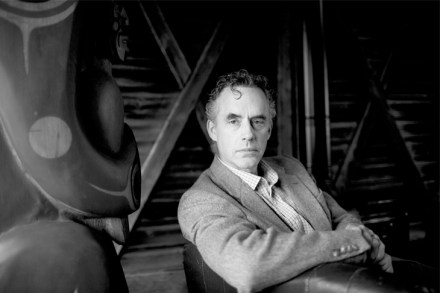
Peter Hitchens

Peter Hitchens lived in Moscow from June 1990 to October 1992. He is a columnist for The Mail on Sunday.

The last Noël in the USSR

From our UK edition

It was on Christmas morning in Moscow in 1990 that my daughter, then aged seven, realised that Santa Claus was not to be trusted. She had made the usual elaborate suggestions to him in a letter to Lapland (perhaps hoping that, being posted from a frozen region, it would get through more readily). But when she came to rip open her gifts, the parcels did not contain the things she had hoped for. Instead, they were full of pale, oddly coloured and sometimes faintly dangerous Soviet products, breathing the last enchantments of the 1930s. Mrs Hitchens had queued fiercely to buy these delights in the colossal ‘Children’s World’ department store which stood just across the road from KGB headquarters. Christmas in the Evil Empire was different, you see, though not always worse.

Douglas Murray, Mary Wakefield, Peter Hitchens

From our UK edition

22 min listen

On this week's episode, we’ll hear from Douglas Murray on the political fate of US vice president Kamala Harris. (00:58)Next, Mary Wakefield on her experience during storm Arwen and subsequent media coverage. (09:39)And finally, Peter Hitchens on his fears regarding the future of the city of Oxford. (15:58)Produced and presented by Sam HolmesSubscribe to The Spectator today and get a £20 Amazon gift voucher: spectator.

Only a benevolent dictator can save Oxford

From our UK edition

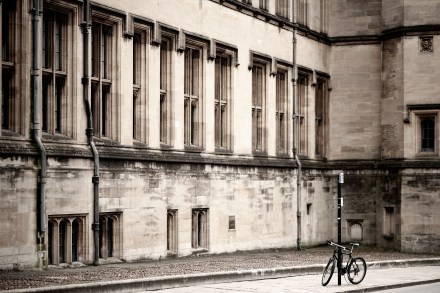
Only a dictator can save Oxford now. Local government simply cannot grasp how precious this marvellous, unrivalled city is, and how easy it will be to erode it into bare, dispiriting bleakness and ugliness. Any fool can see that the ancient colleges of the university must be preserved, but the setting in which they stand has no reliable defenders. It is true that a plan to put a bypass through the ancient pastures of Christ Church meadow was defeated in 1968. But that was after 27 years of wrangling, during which this hideous megalo-maniac scheme was actually described as ‘indispensable’. In the half century during which I have lived in Oxford, with a few breaks, the nibbling of developers and expanders has continued without cease.

The link between drugs, terrorism and mental illness

From our UK edition

Rod Liddle once actually said to me the immortal words ‘You were right and I was wrong’ at a Spectator summer party. This is a moment I shall treasure till the hour of my death. But even so, I was disappointed. For the subject was only Theresa May. I had predicted she would be a terrible premier. Rod had believed she would be good at the job. A year later, it was obvious who was correct. For one brief shining moment I had hoped that Rod had changed his mind about something much more important. I wish he and a lot of conservatives would shift their opinions about the role of mental illness in rampage killing all over the world. And, once they have done that, I wish they would be willing to examine the role of certain illegal and legal drugs in creating such mental illness.

Justin Bieber and the truth about cannabis

From our UK edition

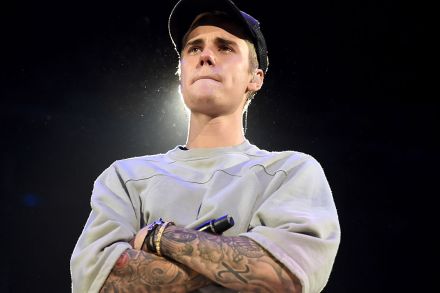
Every few days some celebrity ninny will call for the scrapping of marijuana laws, saying that it will take the drug out of the hands of criminal gangs. And all kinds of conservative-minded people will gravely nod their heads at the idea. But those looking to condone cannabis use through the law should think about the consequences of such a move. All crime is caused by law. If we had no laws, there would be no need for those expensive police, courts and prisons to enforce them. There would be no crimes. There would be no criminal gangs. But there would still be a lot of people doing stupid, wrong things. Decriminalising cannabis won’t make its impact on society any less potent.

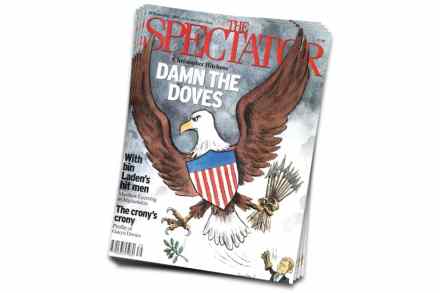
How the left thought they were right to fight the war on terror

From our UK edition

Late one soft summer night in 1966, my brother Christopher slipped out of our north Oxford house and bicycled to the centre of the city. There he spent a worryingly long time with a spraypaint can, inscribing the words ‘Hey! Hey! LBJ! How many kids did you kill today?’ on a long builders’ hoarding outside Trinity College in Broad Street. You will have to work out for yourselves how I know this, but I do. The punctuation was perfect, and a handwriting expert could easily have told it was him. The slogan endured for months and even appeared in a TV drama filmed in the city some months later. This was how we felt then. There was no other cause so great. Even on its own terms, the Vietnam war was a terrible error and multitudes did indeed die for a mistake.

The golden age of the grammar schools

From our UK edition

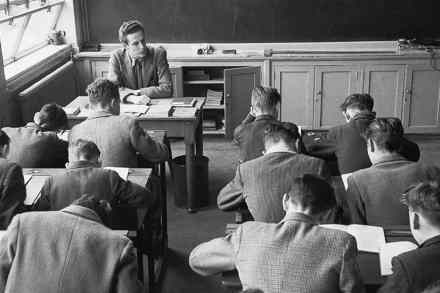
Some lucky parents have already solved their school and university problems. They have managed to insert their young into state grammar schools. If all goes according to plan, they will need to pay no gigantic fees, their sons and daughters will be educated to what at least looks like a high standard, in orderly classrooms — and an increasingly anti-middle-class Oxbridge will not be prejudiced against them when they apply. I envy them, having myself spent the GDP of a small Latin American country on private education over the past three decades, with variable results. But I also increasingly wish it were not so.

Owen Matthews, Lionel Shriver, and Peter Hitchens

From our UK edition

26 min listen

Owen Matthews on Russia's plan to unleash chaos in the West (00:50); Lionel Shriver on the peculiar similarities between the open letter and the ransom note (11:00); and Peter Hitchens on why he won't be wearing a mask when he's giving blood (19:40).

Why should I have to wear a face mask to give blood?

From our UK edition

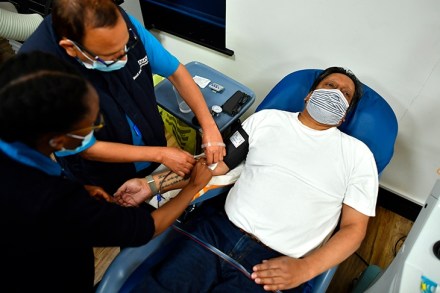
Any day now I shall be frogmarched, or at least very firmly escorted, out of a blood donor centre in London. I know this is going to happen because I made the appointment weeks ago and I intend to keep it. But when I signed up to donate my pint of blood to the public good, I was not required to wear a muzzle during my donation. Now I am. I do not intend to do so. I find the idea of donning one of these face-nappies physically repulsive, and dislike the mouthless, submissive appearance they create in all their wearers. I also believe them to be futile. I know the government believes this too, because it was saying so only eight weeks ago, and there has been no great scientific discovery since then. But above all, I am severely distressed by the obligation.

Why won’t others take sides on the most important political issue for 60 years?

From our UK edition

Douglas Murray says he has no idea whether I am right or wrong about whether the government has acted correctly over the coronavirus. Why on earth not? I have not endured having a hundred buckets of slime tipped over my head over the past few weeks to provide a sort of sporting spectacle for Douglas or anyone else to enjoy. I do not argue for the sake of it. I loathe the abuse and the solitude as much as anyone might expect me to. I see my country in danger of grave and lasting threats to its freedom and its prosperity. I fear a future of over-mighty officials and police displaying the unbridled insolence of office, a dead political consensus, combined with confiscatory tax, shrivelled savings and pensions, lower wages and standards of living, and diminished hopes for the young.

What would Orwell have made of Trump?

From our UK edition

As far as we know, George Orwell never visited America. This is a great pity. What a joy it would be for a biographer to find in some provincial attic the long-lost diaries of his travels around the segregated South, or his acid reflections on working as a scriptwriter in late 1930s Hollywood. I think the best indication of how he thought of the United States is to be found in his essay Raffles and Miss Blandish. In this, he contrasts E.W. Hornung’s light-hearted tales of the cricket-playing gentleman thief Arthur Raffles and James Hadley Chase’s No Orchids for Miss Blandish, a violent crime thriller of the late 1930s, set in the USA, which became notorious — and successful — in Britain during world war two. Oddly enough it is technically English.

In defense of journalism

It was lucky for the New York Times and the Washington Post that they did not uncover the Pentagon Papers or the Watergate Scandal in this unhappy age. They would have found themselves mercilessly beset by ‘citizen journalists’ denouncing them as tools of the Soviet Kremlin or the Red Chinese. Perhaps the same self-appointed guardians of rectitude would also have gone through the past writings and sayings of the journalists involved, and found they were insufficiently loyal to the fashionable opinions of the time. It is a form of McCarthyism. And if you scoff at that, you have to ask yourself honestly if you would have recognized Joe McCarthy for what he was in his own time, or stood up to him, as so few actually did?

syria journalism

Trump’s Syria missile strike was a scandal

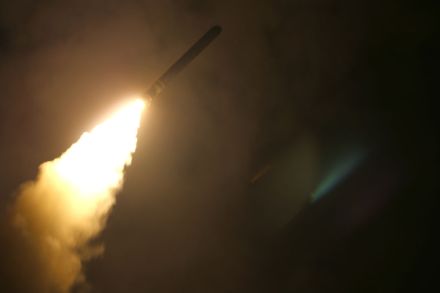
This article is in The Spectator’s January 2020 US edition. Subscribe here. I suspect the Third World War will begin with a claimed atrocity — probably the use of poison gas by a ‘regime’ against ‘its own people’. Such things are now the favorite way to make wars where there was peace. Border violations went out of fashion years ago. Invasions are illegal under the UN Charter. There are no Archdukes left to assassinate. ‘Weapons of Mass Destruction’ will forever evoke hollow laughter. But democracy needs a popular pretext for war, and righteous mass outrage about the inhumanity of the enemy is almost invariably effective. This is why it is rather important that the people we trust to verify such claims are honest and trustworthy. For who will verify the verifiers?

syria

Stop with the propaganda – marijuana use is not trivial

From our UK edition

It is difficult to decide whether to condemn Chris Daw QC for his defeatism, or for his wilful ignorance of the true state of law enforcement in this country. There is no ‘prohibition’ of drug possession, as he claims. Hardly a week passes without some police force declaring that it is not interested in applying laws it is legally obliged to enforce. On 20 April, marijuana’s holy day, 5,000 people gathered in Hyde Park and broke the law, while police stood about. Not one person was arrested for an offence which officially carries a maximum sentence of five years in prison and an unlimited fine. This is the culmination of a de facto surrender which goes back almost 50 years. It is the users who sustain the entire drugs trade.

War of words | 16 August 2018

From our UK edition

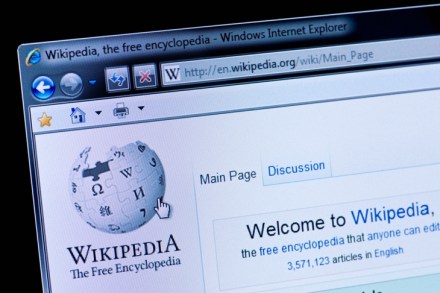
How can you be attacked by an encyclopaedia? Until last week I would have thought the idea as absurd as being savaged by a tree frog. Now I know better. Wikipedia bites. Fortunately it can only do so in the electronic dreamland of the internet. But as we all increasingly discover, that world is growing fast alongside the real one: millions spend much of their lives within it, and for many people it is almost as solid as reality. I signed up some years ago as a Wikipedia ‘editor’, thinking that, as I knew a little about some subjects, I could help to straighten out the online encyclopaedia a bit. Heaven knows, it needs some help.

What happened to communism?

From our UK edition

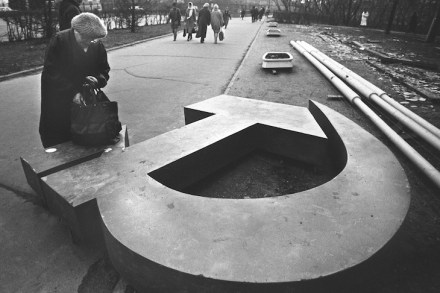
I remember the autumn day in 1990 when they came to cart away the large hammer and sickle outside my Moscow block of flats. It was about the size of a cow and made out of a gritty grey metal alloy which had, like almost everything in the USSR, never looked new or clean. Once, these objects had been all over the city. Now they were vanishing. Nobody else seemed especially interested in its departure, probably because there were — more excitingly — eggs on sale down the street. A few weeks later, I would watch the Soviet Army’s last Revolution Day parade trundle through Red Square.

A very minor prophet

From our UK edition

Now that I seem to have become a prophet of doom, I wonder whether I should have been a guru instead. Doom doesn’t sell. Bookshops hide my books in back rooms. My recorded harangues and TV appearances reach a few thousand dedicated YouTube enthusiasts. But Dr Jordan B. Peterson, supposedly as reactionary as I am, speaks to millions. His new book 12 Rules for Life: An Antidote to Chaos adorns the front table of every Waterstones. Annoyingly, friends of mine recommend his lectures to me, people on Twitter tell me incessantly that I ‘must’ explore his work. They become positively rude if I express reluctance. How has he done this? Is he a cult? Should I too be a cult? Is it the way to reach minds otherwise closed to conservative thought?

Missed connection

From our UK edition

To me, the strange words ‘Marsh Gibbon’ once meant I was nearly home. My heart lifted as we creaked and shuddered into the little station at Marsh Gibbon and Poundon, on the slow and pottering line between Cambridge and Oxford. Usually it was dusk by the time we got there, and I can remember seeing the gas lamps lit and flaring, a pleasing moment for anyone who likes a little melancholy. But equally remarkable was the lowness of the platform. Had it actually sunk into the marsh after which the desolate little halt was named? I recall a withered, gloomy porter in a peaked cap carefully setting steps by the door, for the few passengers wanting to alight at this mysterious destination. Without him, they would have had to jump.

If all tasteless jokes require a public apology, where will we end up?

From our UK edition

Now, I can’t say I thought all that much of Michael Gove’s laboured joke about Harvey Weinstein and John Humphrys. But what about his apology? If all bad, tasteless jokes require a public apology, where will we end up? Everyone involved in Armando Iannucci’s dreadful, crude and trivialising film about The Death of Stalin would be saying sorry for the rest of their lives, for instance. Also, surely the people who laugh at these things ought to be made to say sorry, too? Should the BBC round up the Wigmore Hall audience who laughed at the Gove joke, and not let them go till they have provided written regrets? Those of you who chortled at home might make a donation to an ‘appropriate’ charity.

Diary – 2 November 2017

From our UK edition

Where better to be than in Liverpool on a crisp autumn evening, haranguing an open-air meeting of students? I hadn’t done a soapbox speech since my Trotskyist days 45 years ago, and had forgotten how exhilarating it is — the questions sharper, the audience more alert, the tempo brisker, and the missionary feeling of spreading the word. Also, the students didn’t cough all the time, which they tend to do in stuffy lecture rooms. But I had never meant to do this. Months before, Tom Willett, of Liverpool University’s politics society, had asked me to come and speak about my favourite subject, the fact that there is no ‘War on Drugs’.