Paul Wood

Paul Wood was a BBC foreign correspondent for 25 years, in Belgrade, Athens, Cairo, Jerusalem, Kabul and Washington DC. He has won numerous awards, including two US Emmys for his coverage of the Syrian civil war

Washington Notebook | 7 May 2015

From our UK edition

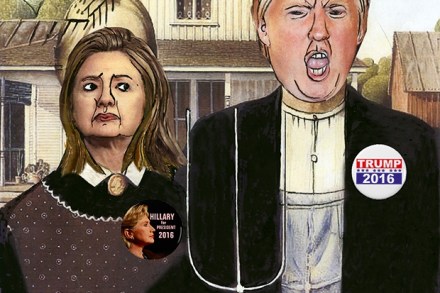
This week has been all about the election, the US presidential election that is. It is 18 months away but already the race is sending out sparks and popping like a newly lit fire. On the one hand, there’s Hillary. She takes a trip by van across ‘the real America’ — a near-faultless launch of her campaign, everyone agrees, until she eats a meal in a fast food restaurant and forgets to tip. Then there’s the Republican field, heading for a dozen strong, but perhaps ending up whittled down to just Jeb Bush. This state of affairs caused one frustrated challenger to complain: ‘The presidency of the United States is not some crown to be passed between two families.’ The winner will spend around $2.5 billion getting elected.

Forget Geneva: the real US-Iran carve-up is happening in Iraq

From our UK edition

 Washington DC and Iraq   We stood on a bleak hillside in eastern Iraq looking at a makeshift grave. It held a dozen Shia Arabs, according to the Kurdish troops escorting us. The dead were men, women and children murdered by fighters from the so-called Islamic State as they retreated, said the Kurds. We stepped gingerly around scraps of women’s clothing and a bone poking out through the dirt. In the town on the dusty plain below, Shi’ite militias were busy taking revenge on Sunnis, our escorts said, looting and killing. The town’s Sunni Arab population had fled to a miserable camp. Streams of sewage ran between their tents. But they wouldn’t go home, they said, until the militias left, replaced by the army. They may be there a while.

Shelling, militiamen and shattered villages: welcome to eastern Ukraine’s ceasefire

From our UK edition

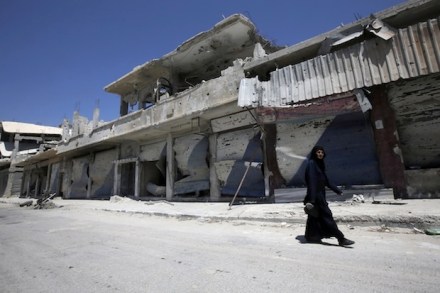
  Eastern Ukraine For a moment, the sound of shelling is drowned out by a thumping beat coming from a camouflaged van. ‘Separatysty [Separatists]!’ says the rousing chorus: ‘The day of your death is here!’ We are with a Ukrainian nationalist militia in a village outside Donetsk airport, which is in the hands of pro-Russian rebels, usually referred to by the Ukrainians as terorysty or bandyty. But despite their bravado, the war is not going well for the Ukrainian side. There have been a series of disastrous setbacks, towns and territory lost, whole units put to panicky flight. The shattered village, Piesky, reminds me of Chechnya or Bosnia, the houses’ red roofs caved in, shell craters in the soft earth, rubble everywhere.

Black flags and Christmas lights: a letter from Beirut

From our UK edition

Blue and white Christmas lights twinkle over the shops near my apartment in Beirut’s Christian quarter; pricy boutiques display elaborate nativity scenes. But people are having trouble getting into the festive mood. ‘Do you think the war will come here?’ asks my landlady nervously, not for the first time. There is no rush to battle, no electric charge in the air, just a rather depressed feeling among Lebanese that their country can no longer escape the violence over the border in Syria. The black flag of the so-called Islamic State has appeared after Friday prayers in some mosques in the north. The assumption is that Lebanon will be the next place the jihadis target. Still, there are reasons to hope.

How Islamic State commanders squeeze their hostages for every penny

From our UK edition

 Turkish/Syrian border ‘They asked $5,000 to $10,000 for every move they made. Emirs are making a living by such means’ It was Abouday’s heavy metal T-shirt that started the trouble. Two jihadis at a checkpoint said the fire-breathing dragon showed he was a devil worshipper. In fact, he worshipped only Metallica, but he did not realise the danger he was in. People had scarcely heard of the Islamic State in Iraq and Syria back then. His mother, Faten, sat weeping at her kitchen table as she told me how she had begged him not to travel at night. After being seized at the checkpoint, Abouday was interrogated by a 20-year-old ‘emir’, or commander, a man the same age as him. Faten was told he would be sentenced to memorising the Koran.

Pistols, airstrikes and smuggled cows: a letter from Islamic State border country

From our UK edition

 Turkey, Syria It is the early hours of the day that Parliament votes on whether to bomb the so-called ‘Islamic State’ — and we are sitting cross-legged on the floor of a Kurdish smuggler’s house. He has a picture of Mecca on his wall, a gold watch on his wrist, and an open bottle of whisky by his side. His main business is running guns — we are offered a Beretta pistol for $1,000 — but last night he smuggled 70 cows from Syria into Turkey. We want to go the other way, into Syria and the Kurdish town of Kobane, which is under siege by IS. Our plan is already in trouble, because of the cows. Turkish soldiers watching the border are usually bribed to look the other way, the smuggler explains, but this time their officers could hear something was up.

The foreign hostage market is worth millions to Islamic State

From our UK edition

The horrific situation in Syria and Iraq means both aid workers and reporters are urgently needed, but as the awful murder of British hostage, David Haines shows, it's now virtually untenable for any foreigner to try to help. As Paul Wood wrote after the murder of Steven Sotloff, hostage taking has become a $100 million business for the so-called IS:  At Jim’s Foley's memorial gathering, a correspondent for one of the big American TV networks remarked that none of this should stop us going into Syria. It is a noble idea, but increasingly hard to act on. In July, we went to do a day’s filming in the rebel-held town of Azaz, just over the border from Turkey. Twenty minutes in, the rebels protecting us said we had to leave: other fighters were coming to kidnap us.

Paul Wood’s diary: From James Foley’s memorial to gunfire in the streets

From our UK edition

 Lebanon The Beirut press corps gather to remember the murdered journalist Jim Foley. People stand for a minute’s silence, drink in hand. Below the balcony, the nightly Beirut traffic jam sends the sound of car horns floating upward. Before killing him, the so-called Islamic State emailed his family: ‘The scum of your society… are held prisoner by us, THEY DARED TO ENTER THE LION’S DEN AND WHERE [sic] EATEN!’ I always thought of the hardy band of foreign freelancers, of which Jim was a part, as the best of us. They venture into Syria without the cushion of a big news organisation behind them, often not knowing if they’ll even be able to sell anything. They do it purely for the love of being on the story.

Travels in Isis country: priests, Peshmerga and property developers

From our UK edition

Arriving in Erbil, you don’t feel you are in Iraq, but another country altogether, which is what the Kurds would like. The city’s outer ring is shiny and new, a touch of Dubai in the smooth highways and glittering hotels. A London property developer told me he had made a 40 per cent return in Erbil. He was Jewish, too — might have been a different story in Baghdad. The Kurds are proud of their embryonic capital: open for business; tolerant of all faiths; you can even get a drink. But two weeks ago Erbil was seized by panic, the Islamic State almost at the gates. A diplomat told me the security forces were on the point of fleeing. The US airstrikes steadied nerves. It’s been suggested the Kurds have been living off their reputation for military prowess.

‘It’s jihad, innit, bruv’: meet the British Muslims going to fight in Syria

From our UK edition

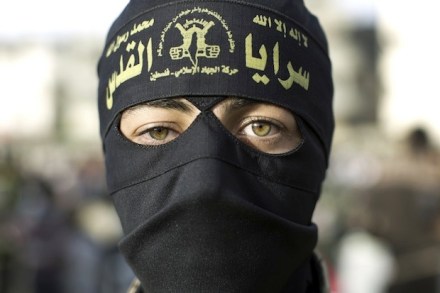
Turkey, Syria, Iraq: ‘It’s jihad, innit, bruv.’ The young British Muslim cut an absurd figure in ski mask, dark glasses and hoodie. He had not used that exact phrase but it would have summed up our faintly comical encounter. I remembered a security analyst’s remark that British Islamists in the Middle East are best explained by Four Lions, the mock documentary about some Yorkshire jihadis on an incompetent quest for martyrdom. He called himself ‘Obeid’ and he described, in a Leeds or Bradford accent, how he had arrived in Turkey on a tourist visa.

Baghdad notebook: “Things were better in Saddam’s time”

From our UK edition

In the passport queue at Baghdad airport, my heart sinks. This place vies with Cairo for the title of most venal airport in the Middle East. Our luggage is minutely examined by the Mukhabarat, or secret police, then customs. Early morning becomes mid-afternoon. Our papers (scrupulously in order) lie unattended on a desk. Eventually, a customs man, with a large moustache and belly hanging over his belt, waddles over. ‘We cannot stamp these today,’ he says. ‘We will have lunch now, and then we will sleep. Come back tomorrow. Or the next day.’ Our bags are moved into a room piled high with luggage seized from other TV crews: flak jackets, lights, someone’s camera and editing gear. ‘How much?’ asks our fixer, wearily.

A new Islamist alliance among Syria’s rebels has given Assad the enemy he wants

From our UK edition

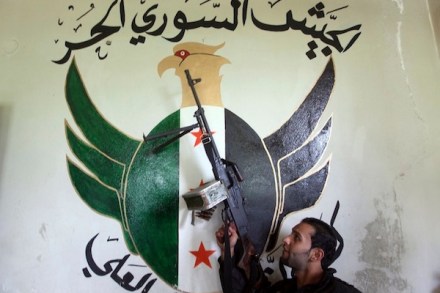
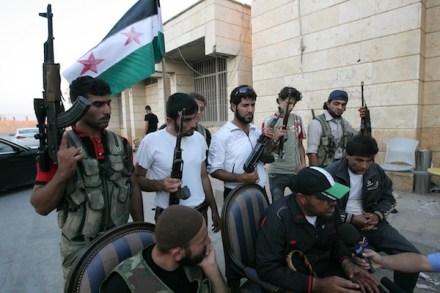
   Amman — Beirut — Istanbul I recently bumped into a senior officer with the rebel Free Syrian Army who was waiting in the passport queue at the Turkish border. I didn’t recognise him at first, out of uniform and without his entourage, and I told him so. He was following the example of the 7th-century Second Caliph, Omar bin al Khattab, he replied. The caliph was so humble he took turns with his servant riding a horse to Jerusalem to receive the city’s surrender. There was no imagery from Islamic history when I first met the officer a year ago. He was one of those ‘rebels’ western officials have in mind when they describe a ‘secular, moderate’ armed opposition.

Syria’s war in miniature: meeting the Christians driven out of Qusayr

From our UK edition

 Beirut Ilyas was, he told me, the very last Christian to flee Qusayr. He had been one of just a handful in the town to join the revolution — an odd thing for a Christian to do because the Free Syrian Army (FSA) were and are mostly Sunnis, and the Christians mostly sided with Assad. Still, it didn’t save him. One day he heard banging on the door and saw men with Kalashnikovs standing there. There were familiar faces, some he had known for years. He said: ‘They told me: “You’re a Christian – you’re not welcome here.”’ Qusayr is a grim little town of 30,000-40,000, a few miles into Syria from the Lebanese border. It was once around three-quarters Sunni Muslim, one-quarter Christian, all living peacefully together.

The Free Syrian Army is being taken over by groups of jihadist thugs

From our UK edition

Ghadi had spent the past two years on the run from the Syrian regime but it was the rebels fighting against the government, the so-called Free Syrian Army (FSA) who finally caused him to abandon the revolution and flee Damascus. He had made the mistake of speaking out against one of the big FSA brigades running the Yarmouk district of the capital. ‘They are thieves and gangsters,’ he told me. ‘One Facebook post about what they’re doing will get you killed.’ I met Ghadi in a Beirut café, after he had made the long trek over the mountains from Syria to Beirut. Other activists joined us, all bitterly disillusioned by the corruption, looting and kidnapping that has consumed the uprising.

‘We are one body’

From our UK edition

Near Damascus ‘Remember: what we do, we do for God,’ said the rebel commander to the huddle of his men at the foot of the mountain. They divided up their ammunition. They had so little — one clip’s worth was shared between two Kalashnikovs. They set off, a line of men stretching into the dark, breathing heavily on the steep slope: another night’s gruelling walk to bring them closer to Damascus. The Free Syrian Army’s failed offensive in the capital had been the week before. Fighters poured in, only to run out of bullets. The city did not rise up to help them. Government forces hit back with tanks, artillery and jets; but time and again the regime has tried to crush the uprising using ever greater violence, only to cause a bigger reaction.

‘If no one helps us, we will turn to the devil’

From our UK edition

Homs province Between the distant pop of the mortar when it’s fired, the pressure wave, and the roar of the blast five or six seconds later when it lands, the rebel fighters recited the Shahadah, the Muslim declaration of faith. ‘There is no God but Allah and Mohammed is his messenger.’ ‘We do this in case one hits us,’ the group’s leader tells me, smiling. ‘So we go straight to paradise. No delays.’ The rebels and I were hiding out in the apricot orchards along Syria’s border with Lebanon. Every night, the Syrian army sent a few dozen mortars crashing down. And although the rebels had no heavy weapons of their own to return fire, they took comfort in stories about the army’s inability to aim in a straight line.

Revolution or civil war?

From our UK edition

Homs, Syria Hassan the smuggler got on his motorbike and disappeared up a dirt track that led from Lebanon into Syria. He did not return and an hour or so after nightfall we heard long, echoing bursts of automatic fire. Hassan had been captured by a Syrian Army patrol, said one of the villagers. No, he had run away, said someone else. He had been killed, said a third person. He had escaped. He told us the story the next morning, grinning triumphantly. He had bolted when it became clear he could not bribe his way out and the patrol was going to hand him over to the secret police. Just before he ran, pursued by bullets, Hassan, a Sunni, told his captor, an Alawite officer: ‘My family and my tribe know where you live. If I die here tonight, they will slaughter your village.

Can they take Tripoli?

From our UK edition

Into battle with Libya’s middle-class rebel army Nafusa mountains, Libya ‘My people, did you forget what you got from this tyrant Gaddafi? Only pain, death and humiliation!’ The commander of the Tripoli Brigade was rallying his men at a rebel base not far from the frontline in the western mountains. ‘Stand up, in his face, and say in one voice: No more!’ The Tripoli Brigade is a ‘special unit’ being prepared to storm the capital. Most of its members still have family in Tripoli, so had covered their faces with masks. If I hadn’t known that they were an army of teachers, engineers and accountants, many holding a gun for the first time, I might have thought them a bit sinister.

Blood price

From our UK edition

Sangin, Afghanistan ‘You don’t want to end up on a bracelet or on a fucking T-shirt. If you see people that need to die, kill them,’ said the US Marine Corps sergeant, briefing the convoy about to leave. It was night and we were setting off along the main road out of Sangin. Highway 611 had recently reopened — one of the successes here trumpeted by Nato — but no one would call it safe. ‘If you need to fire your weapon, that’s between you and Jesus. Good to go? Let’s do this shit.’ As the armoured vehicles rumbled into the pitch black, I remembered a friend’s account of a dinner party in Kabul at Christmas. Two visiting American newspaper editors were holding forth about the UK’s ‘failure’ in Sangin.

Yemen is a lesson in the limits of Western power

From our UK edition

It is 3 a.m. in the Yemeni capital, Sana’a, and the Horse Shoe nightclub is a tableau to inflame the Jihadi heart with rage. To thumping music, Yemeni prostitutes cavort with fat, thuggish-looking local men. The tables are dotted with bottles of single malt costing $500 each (almost a year’s wages for the average Yemeni). The hotel which houses the Horse Shoe, the Mövenpick, is assumed to be one of al-Qa’eda’s main targets, after the British and US embassies just across the road.Visiting journalists usually ask for rooms at the back, just in case a truck bomb makes it past the Yemeni army machine-gun emplacements at the entrance.