Paul Goodman

Paul Goodman

Paul Goodman is a senior fellow at Policy Exchange.

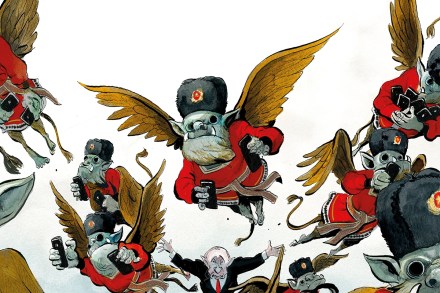
What is Russia’s plan to unleash chaos?

39 min listen

As the long-awaited Russia report is released this week, we discuss Russia's plan to unleash chaos (00:45). Plus, does Boris Johnson have a management problem with his new MPs? (14:30) And last, the pains of dating during lockdown (28:30). With Russia journalists Owen Matthews and Mary Dejevsky; the Spectator's deputy political editor Katy Balls; Conservative Home's editor Paul Goodman; Sunday Telegraph columnist Madeline Grant; and author James Innes-Smith.Presented by Cindy Yu.Produced by Cindy Yu and Pete Humphreys.

Escaping the dragon: rethinking our approach to China

42 min listen

It's not just coronavirus, but the government is keen to have a new approach to China. We discuss what this entails and whether or not it's a good idea (00:50). Plus, what will be the lasting impact of the Cummings affair on the government? (17:16) And last, the way to deal with noisy neighbours now that people are working from home (34:00).With our Political Editor James Forsyth; former Cabinet minister Sir Oliver Letwin; our Deputy Political Editor Katy Balls; Conservative Home's Paul Goodman; Spectator columnist Melissa Kite; and our 'Dear Mary' columnist and Gogglebox star Mary Killen.

How the Conservatives can win back young voters

Election day polling by Michael Ashcroft showed a Britain divided not so much by class or region as age. The 45-54 age group split almost evenly between the two main parties. Older voters went for the Conservatives; younger ones for Labour. Among 18-24 year olds, only 18 per cent voted Tory, while 67 per cent supported Labour. Among 24-35 year olds, that first figure rose to only 22 per cent and the second dropped to only 58 per cent.

What does the Conservative Party offer ethnic minorities?

It was the ethnic minority vote that swung it for David Cameron. Had it voted in line with expert pre-election predictions - which foolishly forecast that the Conservatives would scrape a mere 16 per cent of Britain's non-white English voters - a hung Parliament would have resulted, and he might have been condemned to a fractious coalition with the Liberal Democrats. Instead, marginal seats tumbled into the Tory column: Chris Philp in Hampstead and Kilburn won by a whopping 10,034; Mark Clarke in Tooting by 5,421 (thus unseating Sadiq Khan, that rising Labour star); even Nigel Dawkins in Birmingham Selly Oak scraped home by 599 votes - re-taking a seat for the Conservatives that they last won in 1987, the best part of 25 years before.

The romance of Islam

For anyone trying to follow the journey begun by Abraham, conversion to Islam should recommend itself with compulsive force. It’s the most plausible of the three religions that look back to him. Near the root of Judaism is the conviction that a single people are chosen by God — a people, moreover, who are hard to join. At the core of Christianity is the belief that a man was God and rose from the dead. Both claims seem to spit in the face of reason. Isn’t it an offence against justice to assert that God specially favours one people in particular? Isn’t it an affront to common sense to hold that a baby was divine, and that a dead man walked from a cold tomb?