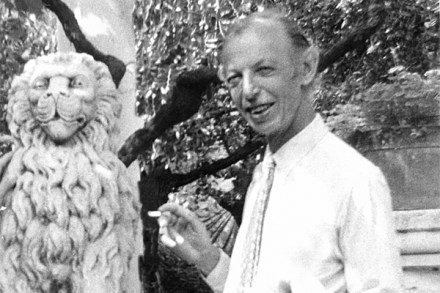
Patrick Skene-Catling

Family divisions

From our UK edition

The geological title of this unhappy memoir is an apt metaphor for fissures in the relationships between individuals of David Pryce-Jones’s extended family. Emotionally and financially competitive but interdependent, benefactors and beneficiaries, Jews and gentiles of various sexual proclivities are depicted grinding away against each other like so many incompatible tectonic plates. Pryce-Jones offers a candid expression of filial impiety for which Eton, Oxford and the Brigade of Guards surely cannot be entirely to blame, although it is true that education far from home, from an early age, has been known to piss children off, as they say. Young boys banished to boarding school may feel tormented by Oedipal yearnings and resentment of paternal indifference.


An elegy for Concorde, the most beautiful airliner of all time, that died aged 27

From our UK edition

The Concorde experience, a fleeting indulgence in luxurious grandiosity, began each day with circumvention of the hugger-mugger of the hoi polloi at Heathrow. In the tranquillity of the exclusive Concorde departure lounge, insulated against the vulgar cacophony of the rest of the terminal building, elite passengers, only 100 at a time, while awaiting the call to the aircraft, were able to sip gratis buck’s fizz and make gratis unlimited international telephone calls. On my three Concorde trips, one from London to New York and two to Washington, I was impressed by the rich variety and subliminal sameness of my travelling companions, the modish accoutrements of haute couture and the blasé cool of genuine or simulated cosmopolitanism.

Love, loneliness and all that jazz

From our UK edition

Woody Allen (born Allan Stewart Konigsberg), the prolific, Oscar-winning auteur, New Orleans-style jazz clarinettist, doyen of New York delicatessen society, moralistic nihilist and icon of nebbishes everywhere, will be 80 on 1 December. He says he hopes to sleep through the occasion, but he is already completing next year’s film, his 47th, and preparing a series of programmes for television. In the meantime, here, in homage, are two magnificently illustrated catalogues raisonnés. Both books incidentally tell the story of his life, including the time when he courted his former partner Mia Farrow’s adopted daughter, Soon-Yi Previn, and caused all media hell to break loose. He survived disapproval by working, married the girl in 1997, and they still live happily together.

Master of vitriol

From our UK edition

‘Genuine invective is an almost lost art in our wild satirical age,’ Dennis Potter complained in New Society in 1966. Now, as the British Film Institute celebrates the life and work of ‘the writer who redefined TV drama’, Oberon Books, with perfect timing, offers this collection of Potter’s critical abuse in journalism and interviews at its most constructively eloquent. The Art of Invective essentially complements Humphrey Carpenter’s magisterial biography and all those DVDs of the plays that can still galvanise what Potter called ‘the palace of varieties in the corner of the room’. He believed that television, with its vast, all-inclusive audience, was a potentially powerful means of promulgating true democracy.

The new rules of dating

From our UK edition

An American stand-up comedian Aziz Ansari, who usually performs in Los Angeles and New York, has found time to conduct an international investigation of the mating habits of the young in the digital age. Like most other stand-up comedians, male and female, Ansari evidently bases his act on nationalistic, ethnic and sexual misanthropy, expressed with facetious cynicism. The first words of his introduction are ‘OH, SHIT!’, which seem to promise streetwise modernity but nothing romantic. Is the book only some kind of wise-guy scam? No, it’s not that simple. Born 32 years ago in Bennettsville, a small town in South Carolina, Ansari apparently felt restricted by what he calls his ‘brown skin tone’ until he moved up to the less racist north.

Blue Note’s 75 years of hot jazz

From our UK edition

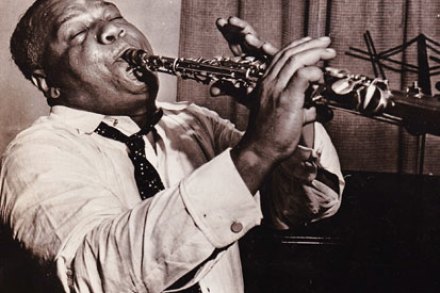
This is a big book, a monumental text with 800 illustrations, 400 of them in colour, to be contemplated more easily on a lectern than in bed, celebrating the 75-year history of the greatest record company devoted solely to the variegated music called jazz. Blue Note Records, with headquarters in Manhattan, originated in the romantic imagination of a privileged adolescent, a Jewish architect’s son (the Jewishness was significant), who was born and brought up in Christopher Isherwood’s neighbourhood in Berlin, which regarded itself, with justification, as Europe’s capital of jazz in the hedonistic heyday of the Weimar republic. Alfred Lion precociously consorted with the city’s artists, musicians and all-round bohemian intellectuals.

A Troubles novel with plenty of violence and, thank heaven, some sex too

From our UK edition

‘The Anglo-Irish, their tribe, are dying. . . . They will go without a struggle, unlamented,’ Christopher Bland, 76, declares at the outset of his exciting, poignant and ultimately consoling debut novel. He refers particularly to the Protestant landed gentry, who achieved political and economic ascendancy in Ireland even before the Penal Laws disenfranchised and dispossessed the Catholic majority, until, in the 20th century, rebellion and civil war brought about independence, with incomplete national unity.

The robber baron who ‘bought judges as other men buy food’

From our UK edition

The robber barons of the gilded age, at the turn of the 20th century, were the most ruthless accumulators of wealth in the history of the United States, and none of them was less handicapped by moral scruples than W.A. Clark. He was up there near the pinnacle of acquisitiveness with Rockefeller but was not as legendary in popular imagination. While other pioneers were searching for gold, Clark developed copper-mining at the most opportune time, when there was a great and growing demand for copper for electrical wiring. The copper lode he discovered in Butte, Montana, produced 11 million tons and earned the town its nickname ‘The Richest Hill on Earth’. In those days, US senators were appointed by the state legislators, rather than elected.

The two people who brought us The Grapes of Wrath

From our UK edition

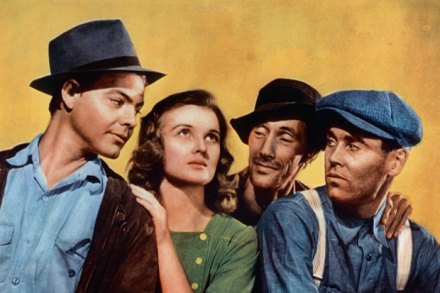
John Steinbeck (1902–1968), an ardent propagandist for the exploited underdogs of the Great Depression, had barely enough money for subsistence during the years he spent preparing and writing The Grapes of Wrath, the protest novel regarded as his masterpiece. It made him a Nobel laureate and a very rich man. The Nobel committee praised his ‘realistic and imaginative writing, combining . . . sympathetic humour and keen social perception’. Seventy-four years after first publication, the book still sells more than 100,000 copies a year. In his Nobel acceptance speech in 1962, Steinbeck said that ‘a writer who does not passionately believe in the perfectibility of man has no dedication nor any membership in literature’.

How to get old without getting boring

From our UK edition

When one notices the first symptoms of senile dementia (forgetting names, trying to remember the purpose of moving from one room to another, and so on), books can be wonderfully helpful. At the age of 80, Penelope Lively, the prolific, generally esteemed, novelist, has written an encouraging guidebook for the ageing: For me, reading is the palliative, the daily fix. Old reading, revisiting, but new reading too, lots of it, reading in all directions, plenty of fiction, history and archaeology always, reading to satisfy perennial tastes, reading sideways too — try her, try him, try that.

The Spoken Word, Irish Poets and Writers – audio book

From our UK edition

Here is further evidence that it is disillusioning, more often than not, to encounter close up any artist long admired at a distance. This generalisation applies to actors, musicians, painters and writers of all shapes and sizes, male and female. Coiffure and couture are rarely sufficiently haute; on the other hand, bohemian grooming and costumes are often rather scruffy. In advanced cases, there are dangers of rheumy eyes and bad breath. The Spoken Word, the British Library’s admirable series of compact discs of historic literary recordings of lectures, readings and discussions from the archives of the BBC, audibly reduces icons to curios on an ordinary human scale.

A hero of folk

From our UK edition

‘This Machine Kills Fascists’ was the ambitious slogan that Woody Guthrie (1912-1967) painted on his guitars. By fascists he meant the entire American capitalist establishment during the Great Depression and after. A self-taught socialist, Woody wrote more than 3,000 songs, mostly in angry protest on behalf of millions of underdogs. As the ‘Dust Bowl Balladeer’, he became the legendary folk hero who inspired Bob Dylan, Willie Nelson and many others. Woody was born in Okemah, Oklahoma. When he was 15, his mother was institutionalised with Huntington’s disease, a hereditary cause of early dementia and other mental disabilities, which he eventually inherited. At 17, he moved to Pampa, a small town on the Texas Panhandle.

Pig in the middle

From our UK edition

With nice ecumenical parity, Peter Somerville-Large derides equally both Ireland’s principal Christian churches as they compete for the soul, or at least the membership, of young Paul Blake-Willoughby. His discordant Ascendancy parents, a Catholic father and a Protestant mother, are on what the late Brian Inglis, an esteemed Spectator editor, called ‘a descendancy course’. Somerville-Large, who was born in Dublin and educated partly at St Columba’s, — a boarding school modelled on English public schools — is a historical social observer of merciless accuracy and caustic wit, moderated with just a touch of nostalgia.

Bionic bore

From our UK edition

After wading through 646 pages of narcissistic gush and breathtaking vulgarity in the accents of Dr Kissinger and Dr Strangelove, I am consoled by the thought that the ordeal has not been entirely a waste of effort. Frequently able to put the book down, yet obliged every time but one to lift it up again, I have found the exercise has wonderfully enlarged, defined and beautified my deltoids, trapezii, latissimus dorsi and other muscles too intimate to mention. Now, like Arnold Schwarzenegger, I can gaze into looking glasses with intensified Gemutlichkeit.

Thrills and spills

From our UK edition

The singer of the ‘Lumberjack Song’, vendor of the Dead Parrot and leader of the Spanish Inquisition has written another novel. It is Michael Palin’s second, called The Truth. On the cover, a sticker certifies that this is the authentic text ‘as read on BBC Radio 4’, and on the back is a portrait of the national treasure gently smiling, as so often seen on BBC television. It is rather tiresome when publishers exploit electronic achievements to sell written works of fiction; but it would be unfair to penalise Palin for his celebrated niceness. His novel deserves to be judged on its own. The Truth is a very good story, very well told. The protagonist, Keith Mabbut, is a battered 56-year-old idealist who has betrayed his ideals.

Swinging into action

From our UK edition

Whereas it is generally agreed that music has charms to soothe a savage breast, Congreve might have added that music also has the power to inflame bellicose fervour. Patrick Bade, who lectures at Christie’s Education and the London Jewish Cultural Centre, has written a commendably exhaustive history of how all sorts of music were used to strengthen civilian and military morale and to demoralise enemies immediately before and during the second world war. The BBC radio programme Music While You Work, for example, was believed to help make British factory workers contentedly productive. Musical propaganda broadcasts were supposed to convince Germans that we were patriotically more ardently motivated than they.

Bookends: Prep-school passions

From our UK edition

In his introductory eulogy, Peter Parker calls In the Making: The Story of a Childhood  (Penguin, £8.99) G. F. Green’s masterpiece, which, though not popular, attracted the admiration of E.M. Forster, Christopher Isherwood, Stephen Spender, J.R. Ackerley, John Betjeman, Philip Toynbee, C.P. Snow, Pamela Hansford Johnson, Frank Tuohy and Alan Sillitoe. According to Elizabeth Bowen, he was ‘the most neglected writer of his generation’. Explaining the title to his friend Michael Redgrave, Green (pictured above) said: ‘The theme is unequivocally that of the conditioning of a homosexual and the foreshadowing of his future love pattern.

Travel Special – Grenada: Fit for a prince

From our UK edition

Having visited most of the islands of the Caribbean when they were British colonies and since they were granted independence, I am convinced that Grenada, in the far south-east, is the fairest one of all. Its volcanic origin created wonderfully varied landscapes, from mountainous rainforests down to fertile plantations and a palmy littoral, brightened by bougainvillea, hibiscus, jasmine, orchids…. This is where Alec Waugh’s Island in the Sun, a novel about romantic miscegenation, was filmed with scandalous success. My partner Diana and I came to Grenada this year for the ninth time. I planned to work on a novel and do some painting, but the very first day my typewriter broke down and somehow the tops wouldn’t come off the tubes of acrylics.

Time to sit and stare

From our UK edition

Hermitic, oneiric withdrawal from responsibilities and threats is the most effective way of alleviating the pangs of middle age, suggests Marcus Berkmann. In his fifties, he is a frank and eloquent expert on ageing, by turns indignantly curmudgeonly and philosophically resigned. He is observant and witty, but there were moments when he reminded me of complaints in Punch of neighbours who failed to return borrowed lawnmowers — perhaps my fault, rather than his. He recommends a shed of one’s own as a refuge in which to escape from stressful reality. ‘If I had a garden,’ he writes, ‘I would have a shed. In fact the main reason for getting a garden would be to get a shed.