Patrick Skene-Catling

A serenely contented writer

From our UK edition

Beaming Sir Pelham Grenville Wodehouse, KBE, D.Litt. (Oxon), Mark Twain medallist and co-founder of the Hollywood Cricket Club (1881-1975), personified a rare oxymoron: he was a serenely contented writer. Shortly before the Queen awarded him a knighthood and the Queen Mother, a devoted fan, wrote a letter congratulating him, Madame Tussaud’s sent an artist from London to the final Wodehouse home, in Remsenburg, Long Island, to measure him for waxwork portrayal, which, up to that time, he said, was ‘the supreme honour’. He wrote his first short story at the age of five (the first of more than 300) and at 93 took the half-completed manuscript of his 97th book, a Blandings Castle novel, to his hospital deathbed.
Humph swings

From our UK edition

Last Chorus: An Autobiographical Medley, by Humphrey Lyttleton ‘Old Etonian ex-Guards Officer jazz trumpeter’. That was the way tabloid gossip columnists used to describe Humphrey Lyttelton (1921-2008) in the early years of his fame. Not long after he was released from the Grenadiers at the end of the second world war, he hyphenated his identity to become Old Etonian ex-Guards Officer jazz trumpeter-bandleader-broadcaster-cartoonist-calligrapher-birdwatcher-gastronome-paterfamilias. In this amiable hotch-potch of a book, he reviews every aspect of his multifaceted life with bonhomous éclat. Now, as ever, Humph swings. His father, C. W.

A literary curio

From our UK edition

Jean-Louis Lebris de Kerouac, better known as Jack Kerouac (1922-1969), the son of French-Canadians spiced with the blood of Mohawk and Caughnawaga Indians and subdued, no doubt, by migration from Quebec to Lowell, an old mill town in Massachusetts, eventually fulfilled his adolescent ambition to live the life of the eccentric ‘artist’ . . . a high form of aesthete who has nothing to do with this maddening world of Philistines. He hoped that ‘lingual spontaneity’ would enable him to achieve ‘Supreme Reality’. In fact, On the Road (1957) did indeed serve as a guide to all America for the Beat Generation of the Fifties and after.

Bookends: The Jazz Baroness

From our UK edition

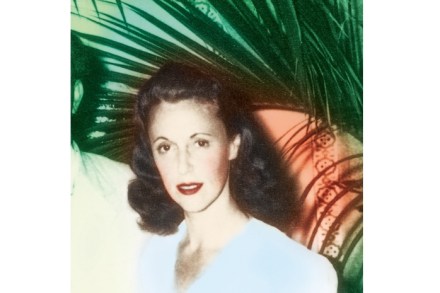
She was born Kathleen Annie Pannonica Rothschild. Her father, Nathaniel Charles Rothschild, an ardent lepidopterist, named her Pannonica, Nica for short, as a tribute to the region in Hungary where he met her mother and captured a particularly interesting moth. Nica married a French aristocrat and became the Baroness de Koenigswarter. When he divorced her she was already known as the Jazz Baroness. By the age of 40, Nica had devoted herself to jazz and freed herself from the restrictive obligations of two illustrious banking dynasties. A generous Rothschild trust fund enabled her to live comfortably as an informal Lady Bountiful, nurturing her many needy friends among the jazz musicians of New York.

Bookends: A Jazz baroness

From our UK edition

Patrick Skene Catling has written the Bookends column in this week's issue of the magazine. Here it is for readers of this blog: She was born Kathleen Annie Pannonica Rothschild. Her father, Nathaniel Charles Rothschild, an ardent lepidopterist, named her Pannonica, Nica for short, as a tribute to the region in Hungary where he met her mother and captured a particularly interesting moth. Nica married a French aristocrat and became the Baroness de Koenigswarter. When he divorced her she was already known as the Jazz Baroness. By the age of 40, Nica had devoted herself to jazz and freed herself from the restrictive obligations of two illustrious banking dynasties.

A well-told lie

From our UK edition

Autobiography provides a sound foundation for a work mainly of fiction. A voyage in an ocean liner provides a sound framework of time and place. Michael Ondaatje was born in Ceylon in 1943 and migrated to Canada at the age of 19. The Cat’s Table is an entirely believable, warmly empathetic novel about an 11-year-old boy’s journey, alone among 600 passengers in an Orient Line ship, from Colombo to London in 1954 by way of Aden, Port Said and Gibraltar. The boy’s first name is the same as the author’s, and the circumstances are depicted so realistically one feels as though the two Michaels’ points of view are identical.

Going through the hoops

From our UK edition

Dreaming Iris by John de Falbe Love, whether originally mental or glandular, a coup de foudre or a gradual smouldering incandescence, fulfilled or not, constitutes the basis for most readable fiction. In Dreaming Iris, John de Falbe, abiding by this tradition, examines the effects of imaginary love on two real but fragile relationships. He has written a subtly engrossing novel about characters who in actuality might provoke good shakings. This is a story of privileged family life in which the only stable foundation is a dilapidated country estate in Leicestershire. How different from love in a ‘romcom’! The admirable higher literacy of de Falbe’s prose invests adulterous yearnings with something like gravitas.

Bookends | 12 March 2011

From our UK edition

About 80 per cent of books sold in this country are said to be bought by women, none more eagerly than Joanna Trollope’s anatomies of English middle-class family life. Her 16th novel, Daughters-in-Law (Cape, £18.99), is sociologically and psychologically as observant as ever, showing how not to be a suffocatingly possessive mother-in-law. About 80 per cent of books sold in this country are said to be bought by women, none more eagerly than Joanna Trollope’s anatomies of English middle-class family life. Her 16th novel, Daughters-in-Law (Cape, £18.99), is sociologically and psychologically as observant as ever, showing how not to be a suffocatingly possessive mother-in-law.

Bookends: Matriarchy without tears

From our UK edition

Patrick Skene Catling has written the Bookend column in this week's magazine. Here it is for readers of this blog. About 80 per cent of books sold in this country are said to be bought by women, none more eagerly than Joanna Trollope’s anatomies of English middle-class family life. Her 16th novel, Daughters-in-Law, is sociologically and psychologically as observant as ever, showing how not to be a suffocatingly possessive mother-in-law. Men, too, should benefit from this stylishly entertaining work, especially young men who are considering legitimising their love affairs. Trollope offers valuable lessons to both sexes alike on the snipping of umbilical cords.

Beatrix Potter meets the Marquis de Sade

From our UK edition

Anthropomorphism and a weird, astringent sense of humour combined to make The Queue, the late Jonathan Barrow’s only novel, a work of genius in the opinion of his brother Andrew. Anthropomorphism and a weird, astringent sense of humour combined to make The Queue, the late Jonathan Barrow’s only novel, a work of genius in the opinion of his brother Andrew. The typescript he inherited, though ‘unedited, repetitious and often excessively scatological’, he writes, ‘appealed to me immediately . . . I found it screamingly funny.’ In this affectionate expression of sibling adulation, he describes Jonathan’s style as ‘part journalese, part satire, part Beatrix Potter, part Marquis de Sade’.

On the charm offensive

From our UK edition

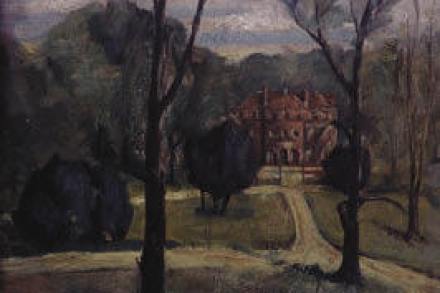
Derek Hill (1916–2000), writes Bruce Arnold, was an English representational landscape and portrait painter of ‘haunting and evocative creative spirituality that is perhaps indefinable’. Derek Hill (1916–2000), writes Bruce Arnold, was an English representational landscape and portrait painter of ‘haunting and evocative creative spirituality that is perhaps indefinable’. But the biographer was undeterred. As an English author of books on the arts and the chief arts critic of the Irish Independent, he was a friend of Hill’s for the last 37 years of his life.

Nothing like a Dame

From our UK edition

Kafka was right: ‘Strange how make-believe, if engaged in systematically enough, can change into reality.’ But Barry Humphries, at the age of 76, manages much of the time to control his vacillating schizoid tendencies in nice equipoise. In his autobiography More Please, he stated that Edna Everage was a figment of his imagination. In this new ‘unauthorised’ biography of Dame Edna there are Kafkaesque indications that he believes she actually ‘has her being’, as he might put it. Like a ventriloquist’s dummy, she has long enabled him publicly to deride others in malicious innuendo that he would not have uttered in his less frivolous role of kindly Barry Humphries.

Mud, blood and jungle rot

From our UK edition

The Matterhorn, at 14,679 feet in the Alps, is said to be very difficult to climb. It is an apt military designation for a (fictional) jungle peak that United States Marines were ordered to assault, abandon and assault once more, against fierce opposition, to establish an artillery base near the North Vietnamese border during the Vietnam war. Matterhorn is also a suitable title for a formidable epic novel, which is arduous reading but well worth taking on, especially if there is any need for further testimony that war is a criminal waste of time, money and men. About 60,000 Americans died in Vietnam to prove the point. It is being demonstrated again, with carefully limited casualties, in Afghanistan, but even greater expense and popular misgivings.

High priest of bop

From our UK edition

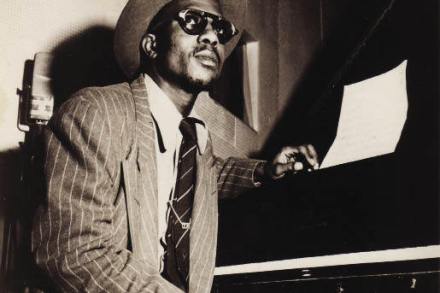
In the Rainbow Grill in New York one evening in 1971, according to Robin D. G. Kelley, Professor of History and American Studies at the University of Southern California, Duke Ellington  halted his band in mid-flow and announced: ‘Ladies and gentlemen, the baddest left hand in the history of jazz just walked into the room, Mr Thelonious Monk.' In the Rainbow Grill in New York one evening in 1971, according to Robin D. G. Kelley, Professor of History and American Studies at the University of Southern California, Duke Ellington  halted his band in mid-flow and announced: ‘Ladies and gentlemen, the baddest left hand in the history of jazz just walked into the room, Mr Thelonious Monk.’ In the code of jive talk, ‘baddest’ meant the best.

The Knights of Glin

From our UK edition

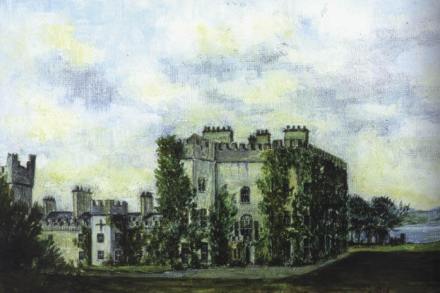
In this splendid, monumental slab of a book, Desmond Fitzgerald, the 29th Knight of Glin, has made the chronicle of his family epitomise the whole turbulent history of Ireland since the arrival of the Normans. The survey includes chapters by academic genealogists and other historians, with less formal contributions from the Knight himself and his wife, Madam Olda Fitzgerald. The illustrations are comprehensive: ancient maps and land- scapes and portraits ancient and modern. There are a characteristically misty watercolour by Louis le Brocquy and photographs of architectural embellishments, fine furniture and paradisal gardens.

A literary gypsy

From our UK edition

When Lavinia Greacen undertook her magisterial yet intimately sympathetic biography of James Gordon Farrell, she gained access to his diaries and many of his letters, especially love letters and letters to his literary agents, editors and publishers about his professional desires and requirements. In this supplementary volume, a selection of her prime sources is presented in their full extent, amounting to a warts-and-all self-portrait of the novelist. It might well serve as an inspiration or a warning. Even with his fecund talent, ardent ambition, sound education (Rossall and Brasenose), eagerness to work and sufficient charm for social survival (English father, Irish mother), writing novels for a living proved intellectually arduous, financially precarious and often desperately lonely.

Rich pickings

From our UK edition

Delicious is a word that keeps coming to mind as one reads Jane Gardam’s new novel. Delicious is a word that keeps coming to mind as one reads Jane Gardam’s new novel. Delicious and poignant. The 81-year-old author’s mood is elegiac, and so eventually is that of Elizabeth, Betty, the wife of Sir Edward Feathers QC, who was portrayed first as the protagonist of Old Filth. ‘Filth’ is the acronym for Failed in London Try Hong Kong. Actually, his career progressed right from the start in a smooth upward trajectory, as a successful barrister in the Temple, an eminent judge in the Crown Colony. Now, depicted mainly from Betty’s point of view, the portrait is stereoscopic.

Dangerous liaisons | 27 June 2009

From our UK edition

Surviving, by Allan Massie The Death of a Pope, by Piers Paul Read Coward at the Bridge, by James Delingpole Alcoholism, with its lonely inner conflict between escapism and conscience, is an inexhaustible subject for literature. The emotional agony of addiction is fascinating, as long as it is other people’s. Allan Massie, the illustrious Scottish littérateur, has written an empathetic novel about the loneliness of the long-distance boozer, always isolated, even in the company of fellow alcoholics who try to help. Some alcoholics in desperation submit to Alcoholics Anonymous, in the hope that mutual support may ease the daily fear of lapsing. Massie once spent several years in Rome and evidently knows the city street by street. It is the perfect venue for his novel.

The decline of the West

From our UK edition

‘This is a work of non-fiction,’ Alexandra Fuller writes. ‘But I have taken narrative liberties with the text.’ She presents a fictionalised account of the life and early death of one man to personify the tragedy of a whole generation in the modern American West, which is no place for John Wayne heroics. With the force of an emotional novel, this dramatised biography is a polemic against the energy industry’s spoliation of the high plains of Wyoming and the dangerous exploitation of the men who drill there for oil and gas. The book is a panegyric to an austerely beautiful land and a lament for the pioneer cowboys’ descendants, now economically compelled to risk their lives as roughnecks on the oil rigs. Fuller was born in England in 1969.

Genius under many guises

From our UK edition

‘A satisfactory novel should be a self-evident sham,’ in an opinion Flann O’Brien (1911-1966) shared with one of his fictional characters, ‘to which the reader could regulate the degree of his credulity’. Furthermore, the inhabitants of novels should be allowed ‘a private life, self-determination and a decent standard of living’. The distinction between reality and fantasy in the author’s life was nebulous. His own identity, by choice, was often unclear. One of 12 children, as an adult he preferred seclusion, hiding behind the interchangeable masks of a multiple persona.