Patrick O’Flynn

Patrick O’Flynn

Patrick O’Flynn is a former MEP and political editor of the Daily Express

Why Labour secretly fears the Rwanda scheme

When Boris Johnson and Priti Patel first launched the Rwanda scheme, in the Spring of 2022, there seemed every chance that it could win the Tories the next election. Despite the ‘Partygate’ furore taking chunks out of the Conservative poll rating and ushering in a febrile atmosphere, Labour was struggling to create a large and durable poll lead. Exactly two years ago, the Politico website’s poll of polls had the Labour lead at just four points and Keir Starmer’s party was highly vulnerable to a Tory fightback based around the touchstone issue of tackling illegal immigration. These days the poll gap is so vast that not even the most Tiggerish Tory optimist would dare talk about Rwanda being a potential springboard to victory.

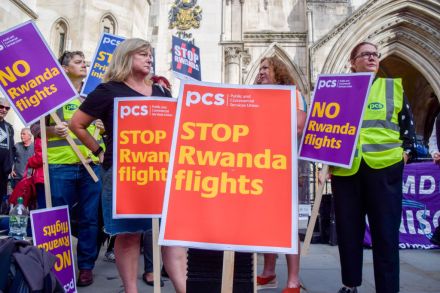
What should Labour do about the Rwanda bill?

14 min listen

All ten of the amendments to the Rwanda bill, put in by the House of Lords, were rejected by the House of Commons last night. The bill will head back to the Lords tomorrow, where they will decide whether to continue the process of 'ping pong' (putting more amendments in and sending the bill back to the Commons). Should Labour peers worry about being portrayed as foiling the Rwanda asylum plan? Cindy Yu talks to Katy Balls and Spectator contributor Patrick O'Flynn. Produced by Cindy Yu.

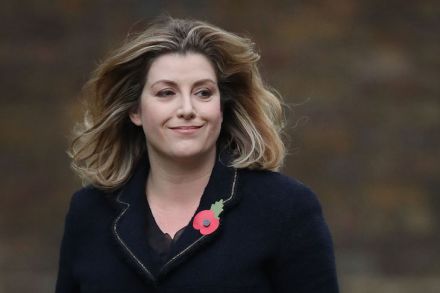
Penny Mordaunt isn’t the answer

During her last Tory conference speech, Penny Mordaunt told her audience: ‘If you remember nothing else from what I have said today remember this – stand up and fight.’ This serial Conservative leadership candidate got her way on that at least, for it was the only point from her address that stuck in anyone’s mind. Mainly that was because she used the phrase, or near-variants, almost 20 times, including in a disastrously over-extended closing crescendo that ran as follows: ‘Stand up and fight. Because when you stand up and fight, the person beside you stands up and fights. And when our party stands up and fights, the nation stands up and fights. And when our nation stands up and fights, other nations stand up and fight.

Penny Mordaunt

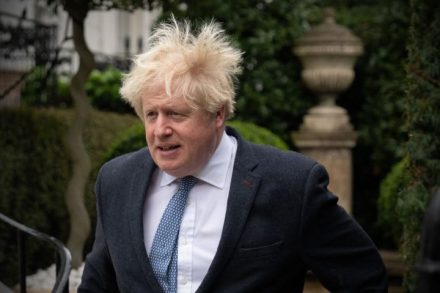
Boris Johnson won’t help Sunak win back the Red Wall

What are we to make of today’s rather breathless story in the the Times suggesting that Boris Johnson will make a 'comeback' at the general election? The nature of the return being touted is hard to pin down. An unnamed source 'familiar with Johnson’s thinking' tells the newspaper he is primed to campaign in marginal constituencies, make speeches and appear on leaflets. 'Just as he has always supported the Conservative party he will do so now,' it is claimed. Another unnamed source, this time a government one, adds that there will be no joint appearance with Rishi Sunak, but that Boris is 'up for it' and that the relationship between the two men 'is in a fairly good place'. The days of factory workers hand painting 'We Love Boris' signs are long gone So what is it all about?

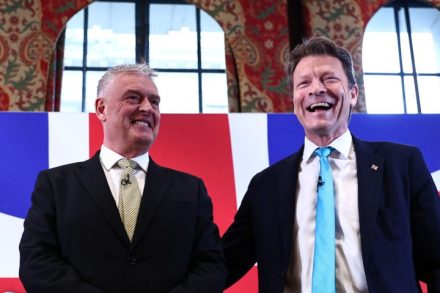
Why Starmer shouldn’t celebrate Lee Anderson’s Reform defection

Lee Anderson joining Reform UK is unquestionably a disaster for Rishi Sunak. It will guarantee the challenger party huge coverage and further orientate it towards the 'Red Wall' vote that powered the Tories to victory in 2019. Expect to see opinion polls showing a further decrease in the gap between Reform and Conservative vote shares in the coming weeks.  The outspoken Anderson hitching his wagon to Reform will create a pull factor for working class culturally and socially conservative voters to match the push factor that Sunak himself set in train when he sacked Suella Braverman and brought David Cameron into his cabinet. Reform has added about five points to its poll rating since that politically clueless reshuffle.

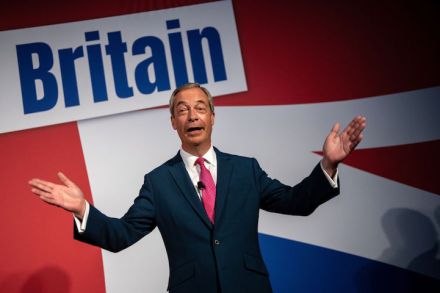
Only Nigel Farage can save us now

When the Prime Minister cannot be bothered to listen to the Budget it sends out a pretty big signal to the country that there’s nothing much in it. Rishi Sunak spent long chunks of Jeremy Hunt’s latest financial statement on Wednesday chatting away to Treasury Chief Secretary Laura Trott. It was a wholesome scene reminiscent of one of those joint social evenings that neighbouring boys’ and girls’ schools in pleasant Home Counties towns sometimes put on for their sixth-formers. Compared to listening to Hunt, it must have been a gas. Sunak’s semi-disengaged demeanour was emblematic of the Conservative benches in what was supposed to have been a key week in the great Tory fightback that clearly isn’t going to happen.

Hunt’s Budget is doomed

Anyone expecting Jeremy Hunt to unleash the animal spirits of wealth creators in his Budget today cannot have been paying much attention to the Treasury’s pre-briefing. Two per cent off National Insurance is likely to be as good as it gets, we are told. Perhaps a white rabbit will be pulled from a hat during the speech itself but more likely the animal in question will be a sloth. Such a creature – steady and dependable but resolutely undynamic – would be emblematic of the condition of what pundits used to term 'UK plc'. For Britain under Hunt does not have an economy so much as a 'meh-conomy'. While talk of a serious recession is overblown, major GDP growth is not a prospect and GDP per capita continues to decline.

Can the Tories avoid oblivion?

Another day, another terrible poll for the Tories – the latest YouGov survey records support for the parties at Labour 46 per cent, Conservative 20 per cent, Reform 14 per cent, Lib Dem 7 per cent, Green 7 per cent. So far, so normal for our beleaguered governing party – even if Reform has nudged up another point to its record-ever showing. Six points between the Cons and Reform looks to me like the sort of margin that could be wiped out altogether were Nigel Farage to take the helm of the challenger party. The Labour lead and vote share is so commanding that the current response of many Tory MPs – just to grimly await a career-terminating encounter with the British electorate and to start ‘putting out feelers’ for alternative employment – would seem quite logical.

Keir Starmer must stand up to George Galloway

George Galloway has done it again. As an expert in riding waves of fury among Muslim voters about happenings in the Middle East, from the Iraq War to the Gaza conflict, Galloway has turned into a skilled tormentor of successive Labour leaders.  The biggest short-term risk by far that Galloway’s win in Rochdale poses to Keir Starmer is that it will force an over-correction in Middle East policy from the Leader of the Opposition. Were Starmer to become detectably more anti-Israel and pro-Palestine over the coming weeks as a result of pressure from a perceived Muslim block vote, it would certainly shore up Labour’s position in a couple of dozen urban seats.

Why is the BBC not telling the truth about a trans cat-killing murderer?

Given that the BBC places great store in having a 'Verify' unit to root out fake news emanating from other outlets, one might expect the corporation to be merciless on itself when it comes to sticking to the facts. Yet the roughly two million viewers who tuned into BBC1’s flagship lunchtime news yesterday were at risk of being deceived by misinformation every bit as disturbing as any of the stuff that Marianna Spring and colleagues unearth on far-right websites. Hey @BBCNews guess what’s missing in this report?H/t @oflynnsocial pic.twitter.

The Lee Anderson row shows the Tory party has broken down

What are we to make of the Lee Anderson saga? The very fact that this low-rent furore is dominating our Sunday political discourse speaks volumes. At the end of a week which saw the Commons change its procedures in a bid to placate the threat posed by a mixed bag of Islamist and Corbynista pro-Palestine ultras, the political media has found a compelling talking point with which to divert our attention. Rather than address the fundamental issue – that the Leader of the Opposition and the Commons Speaker gave ground to the mob – here we are agonising about whether Rishi Sunak acted swiftly or harshly enough against his most notorious backbench blowhard. Or perhaps whether he was too swift and too harsh.

Lindsay Hoyle has become a menace

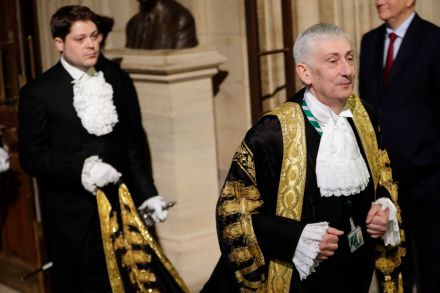
The Labour party is not very good at electing prime ministers but it is very good indeed at electing House of Commons Speakers. Lindsay Hoyle is the fourth in a row to have been a Labour member, though it should be noted that John Bercow was nominally a Tory when he was installed and didn’t formally join the People’s party until after he stood down. Hoyle has discovered that he rather enjoys the limelight and the sound of his own voice While Bercow took the Speaker’s chair at the behest of many Labour MPs who understood the loathing felt for him by some of his Conservative colleagues, Hoyle attracted substantial Tory backing on the grounds of his supposed common sense ‘old Labour’ Euroscepticism.

The Tories should be worried about Reform

And with one bound he was free. In fact let’s make that two. A pair of whopping by-election wins in seats the Tories held at the last general election with five-figure majorities have brought to a close a torrid fortnight for Labour leader Keir Starmer. His U-turn on green policy can now safely gather dust, or perhaps moss, in the public mind. The Rochdale anti-Semitism row is more serious. But Starmer reached the right position in the end and unless the Conservatives can exploit it by performing strongly in the Rochdale by-election at the end of the month (spoiler alert: they won’t) it will come to be seen as a containable difficulty.

What the Rochdale disaster says about Keir Starmer

Sometimes a single act changes the entire course of events for years to come. For instance, many Manchester United football fans fondly recall the moment in 1990 that a young striker called Mark Robins scored a crucial goal in an FA Cup tie that saved the job of Alex Ferguson, who had at that stage not won a trophy three seasons into his tenure. So might Tory supporters point in future years to Keir Starmer’s disastrous mishandling of the anti-Semitic comments of his Rochdale candidate Azhar Ali as the moment that changed the game for them? In short, no. Starmer’s flip-flopping and lack of principle is already, as financial market analysts say, ‘priced in’.

Rishi Sunak’s week of howlers has exposed his big weakness

It is quite some achievement to launch an attack on Keir Starmer’s contortions over trans rights versus women’s rights and come off worse. Yet that is what has happened to Rishi Sunak this week thanks to an increasingly visible flaw in his make-up: Sunak simply lacks political nous. While he may have been a fluent public performer when serving as chancellor during the covid pandemic, it has become obvious that this was because he was in his comfort zone as a financial geek. But exposed to the much wider demands that the post of Prime Minister entails, Sunak is all at sea. He cannot spot an ambush to save his life and is also too inexperienced to understand historical context.

Christians are being played for fools in asylum claims

It came as quite a shock when we learned that many of our universities had moved into the lucrative trade of selling visas to foreign nationals, with a bit of higher education attached as a legacy sideline. Now there is a new question hanging in the air: is nothing sacred? For we are having to get our heads around the idea of churches apparently participating in the immigration racket too. It seems that something of a ‘pray to stay’ ruse has been in operation for people from non-Christian backgrounds who have illegally gate-crashed into Britain.

Tory MPs must share the blame with Sunak for the party’s troubles

Rishi Sunak is a drab technocrat mired in a failed political paradigm and with a tin ear for public opinion. And yet to blame him for the current dreadful state of the Conservative party is largely to miss the point. The Tory party is facing an extinction-level general election result, not primarily because of Sunak but because it has reached a philosophical dead end. It has proved time and again over the past few years that it is incapable of addressing the foundational issue of border control, even while in possession of a bumper House of Commons majority. As I have pointed out many times before, restoring robustness to our immigration and asylum system is the top priority among Conservative-leaning voters.

Clarke’s bid to oust Sunak has flopped – for now

It was 'the knife of the long knight', joked one social media wag about the bid by the unfeasibly tall Sir Simon Clarke to oust Rishi Sunak from 10 Downing Street. So lanky was he as a youth that Clarke was nicknamed 'stilts' in his schooldays. Conventional wisdom at Westminster will tell you this morning that his attempted coup is nonsense on stilts as well. Certainly, there has thus far been a notable lack of colleagues replicating his call for Sunak to stand down. And yet, in recent years Westminster conventional wisdom has often got things wrong.

Why did Tory MPs trash the Rwanda Bill – and then vote for it?

There is a scene in the film Reservoir Dogs where three gangsters are pointing guns at each other and one suggests they should put down their weapons and 'settle this with a conversation'. Instead the trio create the ultimate bloodbath by all pulling their triggers. The absence of trust can do that to people. Just look at the goings on in the Conservative parliamentary party this week. Not content with spraying reputational ketchup over Rishi Sunak by trashing his Rwanda Bill as a mendacious con job which he must know won’t work, the Tory right has gone on to shred its own credibility by, in the main, tamely assenting to the legislation’s Third Reading.

The damning poll that could inspire Tories to move against Sunak

The debate about whether Rishi Sunak’s Tories are heading for a 1992-style against-the-odds narrow election win or a 1997-style landslide defeat is pretty much settled now: it’s the latter. A terrible few months for Sunak had been pointing that way in any case, but now a huge political data-dump has confirmed it. YouGov’s giant opinion survey and analysis, with a sample size of 14,000, published overnight in the Daily Telegraph estimates that the party is heading for 169 seats and that Labour will have a majority of around 120. But for the Tories there is much more scope on the downside than the upside as regards this finding.