Patrick O’Flynn

Patrick O’Flynn

Patrick O’Flynn is a former MEP and political editor of the Daily Express

The Tory leadership contest is Kemi Badenoch’s to lose

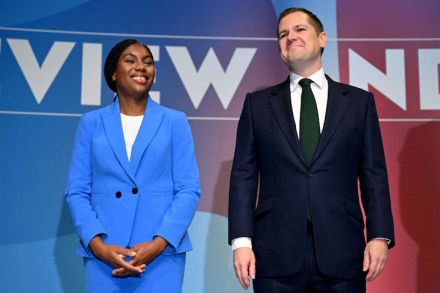
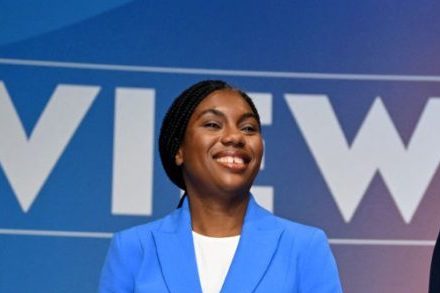
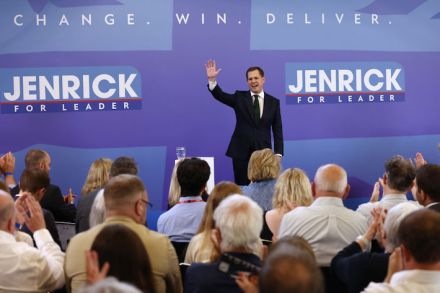
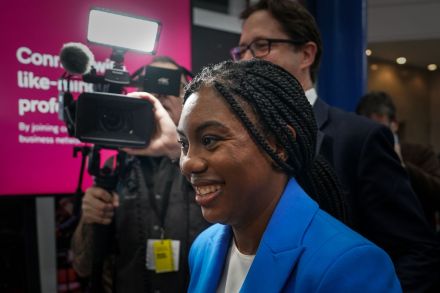
Were Kemi Badenoch not to be unveiled as the next Conservative party leader in a couple of weeks it would now go down as a very notable upset. Exposed to a demanding hour of cross-examination on the GB News leadership special, Badenoch landed her pitch almost perfectly. As the strong favourite with the bookies, Badenoch probably only needed a draw against her sole remaining opponent, Robert Jenrick. But for all his fluency, she did rather better than that. A show of hands at the end among the audience of several hundred Tory members broke overwhelmingly in her favour. Trust me, I’m an engineer, she told her party Perhaps Jenrick blundered by winning the toss and yet deciding to go first, meaning the audience was fully warmed up by the time Badenoch took to the stage.
Britain’s lax immigration policy is making it an outlier

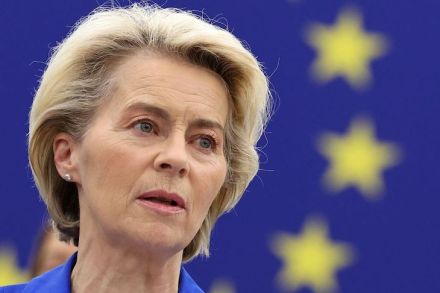
European Commission President Ursula von der Leyen has this week put out an official statement that could fairly be described as ‘Wir schaffen das nicht’ – ‘we can’t do it’. Its official title is the rather drier – ‘Work on designing innovative ways to counter illegal migration’ – but you get the drift. It was back in autumn 2015 that Angela Merkel launched a policy towards undocumented migrants that had huge implications for the entire continent. ‘Wir schaffen das!’ – ‘we can do it’ – she declared, in response to the huge flow of irregular (thus also illegal) migrants heading into the EU, mainly from Syria and surrounding countries.

Robert Jenrick doesn’t have long to turn the tables in the Tory leadership race

And then there were two. Either Kemi Badenoch or Robert Jenrick will be the next Conservative leader. This is a contest that, for the first time since members were given the final say, will really go down to the wire. Whoever wins, the Tory party looks set to change radically. Badenoch’s list is peppered with centrists of the highfalutin and careerist kinds When Iain Duncan Smith made the final two back in 2001, it was clear that he would beat Ken Clarke. The outcome of the tussle between Davids Cameron and Davis in 2005 was pretty much a foregone conclusion after Eton Dave’s Chinese takeaway of a speech – very yummy, what was in it again? – at party conference.

The Tory heirs to Blair are no more

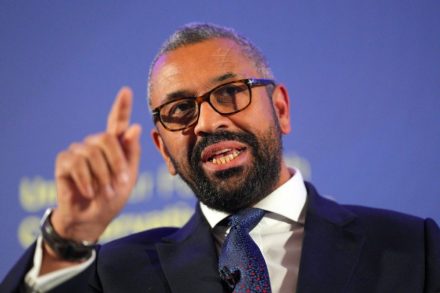
So the Conservative party is not going to try to become 'more normal' in the eyes of establishment centrists after all, but will instead chart a course towards becoming more conservative. After the astonishing elimination of James Cleverly from the Tory leadership contest this afternoon, Tory grassroots members are to be presented with a right-of-centre head-to-head between Kemi Badenoch and Robert Jenrick. Badenoch will be favourite. But Jenrick could easily win off the back of his commitments on immigration policy and leaving the European Convention on Human Rights and its supervisory court.

How James Cleverly can stitch up the Tory leadership race 

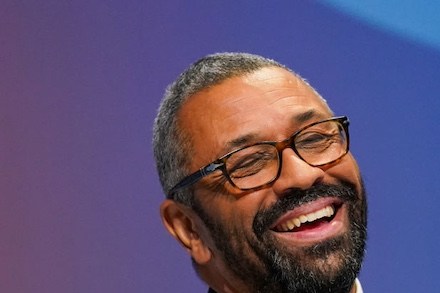
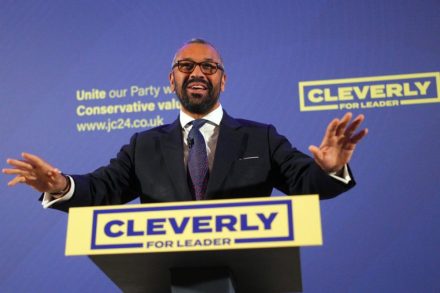
Today’s third round of MP voting in the Tory leadership race has given James Cleverly an almost perfect result. Not only did he have a massive uplift of 18 MPs to 39, but with the 20 votes of the eliminated Tom Tugendhat now in play, it looks like he can afford to ‘choose’ the opponent he will face in the final two. Robert Jenrick has lost ground, sliding two votes to 31, while Kemi Badenoch has added two to reach 30. It does not take a genius to work out what Cleverly’s team is likely to do next.

The case for – and against – James Cleverly

When is the best time to hit the front of a Tory leadership contest? In the final chain of the final furlong after coming up unseen on the rails, obviously. As charismatic front-runners from Michael Heseltine to Michael Portillo have found out, Conservative leadership battles are brutal for the established heir apparent. There is something about the Tory tribe, or perhaps the Tory disposition, which creates a mania for dragging them down. It's far safer to do a John Major and be christened as the best 'Stop X' or least-unpalatable-option candidate at the last by the party establishment. So congratulations to James Cleverly for gaining momentum so deep into the current race.

The demise of the Tory party has been greatly exaggerated

Something happened at the Conservative party conference today which suggested it is too soon to write off the democratic world’s most successful party: there were three brilliant speeches in a row. Given that this political era is not known for its great orators, this was a most unusual and very welcome occurrence. It is too soon to write off the democratic world’s most successful party Of the four Conservative leadership contenders, only Tom Tugendhat – perhaps hampered by being first on and having to warm-up the audience – failed to truly connect beyond his enthusiastic gaggle of camp followers. His workmanlike address was perfectly competent but lacked a transcendent moment.

What Cleverly gets wrong about Sunak’s pledge to ‘stop the boats’

Back in the 1980s, the American business guru Tom Peters came up with the advice to companies to 'under-promise and over-deliver'. The idea behind it was that there was an asymmetry in customer responses to service standards which depended on what they had been guaranteed. A long delivery time could, for example, be perfectly acceptable to them unless they had been promised the purchased item sooner, in which case the reputation of the company involved would be badly harmed. The very best outcome for a company’s reputation was often when it set seemingly modest goals for itself in public but then outperformed them.

Could Badenoch blow it?

Fans of Frank Sinatra used to have a favourite saying when their hero was in his pomp: 'It’s Frank’s world. We just live in it.' After a day and a half of the Tory conference in Birmingham, there is a temptation to refashion the observation around Kemi Badenoch, so completely has she dominated proceedings. And not, it must immediately be said, always in an obviously advantageous way for her leadership campaign. Supporters of Badenoch were left deeply irritated Badenoch seemed unabashed at the welter of stories surrounding her when she told an event for leadership candidates held by the influential ConservativeHome website at which she spoke last: 'I think we all know I am the one everyone has been waiting for.

How the Tories can bounce back

What will be Rishi Sunak’s political legacy, other than the terribly embarrassing thing that happened on July 4? Not free speech on campus: Sunak never got round to putting that law onto the statute book before the general election. Not the absurd age-related rolling smoking ban: ditto. Nor A-level reform. Nor the new law that was going to force convicts to appear in person for sentencing. Nor the Rwanda removals scheme for illegal migrants. All fell by the wayside in the Sunak dash to defeat. Farage’s tanks will churn up whatever is left of the Tory lawn There is a strong case for regarding something he did as chancellor as the one tangible thing to remember him for: minting a new 50 pence piece embossed with the slogan: 'Diversity Built Britain.

Keir Starmer has shown why the Tories will struggle against him

Keir Starmer gave a formidable speech to the Labour conference today. It was easily good enough to inspire the party’s natural supporters to cut him some slack over the bumpy months ahead. In doing so, the Prime Minister also clawed back some of the ground lost through the needless mistakes that have afflicted his rookie administration and shifted the dial just a bit from doom-mongering and towards hope for the future. Starmer's spirit of doggedness may be the key to explaining how far he has got in life without exhibiting any sign of natural brilliance While he will never be a Boris Johnson-level natural communicator, Starmer nonetheless has improved his delivery very markedly to the point of it becoming perfectly serviceable.

Keir Starmer’s problems are of his own making

That nobody in Keir Starmer’s inner circle worked out that trashing his personal reputation for a hundred grand’s worth of free stuff was a bad deal tells us a lot. Worse still, nobody seems even to have clocked that accepting so many freebies, especially from the ambitious Labour peer Lord Alli, could prove politically toxic – even though Starmer in opposition had frequently lambasted the likes of Boris Johnson for filling his own boots. On top of that, apparently no one had an issue with giving the right-wing media a free hit on the Prime Minister’s wife for the sake of £5,000 worth of clothes and personal shopping advice.

How Robert Jenrick stole Kemi Badenoch’s thunder

Robert Jenrick appears on course to become leader of the Conservative party within a year of resigning from ministerial office in Rishi Sunak’s administration. That is a telling indicator of how far the Conservative regimes of the last parliament had strayed from the gut instincts of the Tory tribe. Jenrick has been focused on victory for many months The Newark MP is far from home and hosed in the contest and may yet be defeated by the force of Kemi Badenoch’s political personality, or the sheer 'nice guy' campaigning warmth of James Cleverly. But the bookies now make him clear favourite to become Leader of the Opposition on 2 November after he topped the first round of the leadership contest.

Keir Starmer’s popularity delusion

All year Keir Starmer has been using a reassuring phrase about his inevitable Downing Street tenure in a bid to calm the nerves of those not certain they were keen on it. He debuted it in January, when the Labour leader promised to bring forth 'a politics that treads more lightly on all our lives'. Starmer used a similar line on the steps of Downing Street on July 5, after becoming Prime Minister, when he pledged to 'tread more lightly on your lives and unite our country'.

Keir Starmer can’t blame the Tories forever

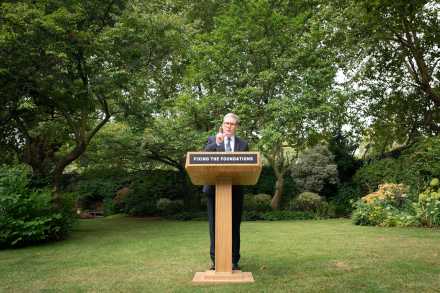
Keir Starmer’s rose garden speech today should be seen as a companion piece to last month’s melodramatic Commons statement by Rachel Reeves on the condition of the public finances.  In each case the purpose was clear – to lower expectations and buy the government more time by heaping extra blame on the last Conservative administration for the state of the nation. So there we have it – any union that can bring a key industry to a standstill now knows there is a PM in office who will always seek to buy it off How much validity there is in a pitch saying things are much worse than they expected is highly debatable. But it was both predictable and indeed predicted that Labour would do this.

Things can only get worse for Keir Starmer

When Rishi Sunak announced a July election during a torrential downpour, one leftist wag played ‘Things Can Only Get Better’ at high volume in adjacent Whitehall. The audible strains of the D-Ream hit – which served as Tony Blair’s election anthem – added to the impression of a drowning PM and conveyed the notion that a heavy Tory defeat was inevitable. And so it proved. Yet the parallels with 1997 are already done and dusted. Because while Blair had a political honeymoon which lasted all the way to the subsequent election, Keir Starmer’s ended almost as soon as it began. It is today reported that Starmer will acknowledge this in a speech on Tuesday in which he will explicitly declare: ‘Frankly, things will get worse before we get better.

Keir Starmer is caving on immigration already

It should come as no surprise that Keir Starmer has already contracted a severe dose of Boris Johnson disease when it comes to immigration policy. This occurs when a prime minister has a general commitment to bring down the overall volume of inward migration and yet makes so many specific exceptions that such an outcome becomes impossible. In Johnson’s case the list of special cases became comically long: Ukrainians, Hong Kongers, Afghans, overseas students and their dependents, social care visas, lower earnings thresholds, not getting round to deporting illegal arrivals to Rwanda or almost anywhere else. As a result net migration rose to levels that led to a ferocious electoral punishment for his party early last month.

Starmer’s plan to ‘smash the gangs’ won’t work

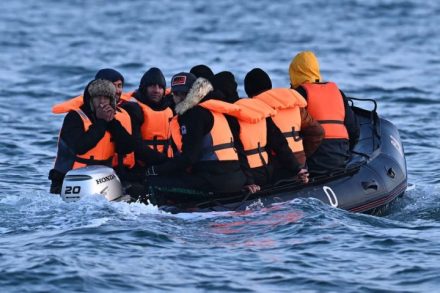
We are approaching the fifth anniversary of British prime ministers promising to stem the tide of illegal migration across the English Channel. It was in late August 2019 that Boris Johnson did a piece to camera in which he warned potential new waves of illegal immigrants: 'We will send you back.' In the event, hardly anyone got sent back anywhere. Next up was Rishi Sunak, who hyped up the Rwanda removals plan that he had sought to block on value for money grounds when Johnson first proposed it. Sunak promised nothing less than to 'stop the boats' via the creation of the Rwanda deterrent. The boats were not stopped. In fact, Sunak left office with cross-Channel arrivals having hit a new record rate. And nobody at all was removed to Rwanda against their will.

Migration figures are falling – but the crisis is far from over

Ok folks, the show is over and there’s nothing left to see: that traditional refrain of an American police officer at the scene of an on-street drama is being repurposed for Britain’s immigration debate. Official figures out today show a significant downward trend in visa applications for work and study – and especially for bringing in dependants after a tightening of the rules at the fag end of the last Conservative administration.  Sponsored study visa applications fell by 16 per cent in the first half of this year compared to the same period last year, while applications to bring in dependants plunged by a massive 81 per cent. Applications for health and social care worker dependants are also down sharply.

Keir Starmer’s riot crisis

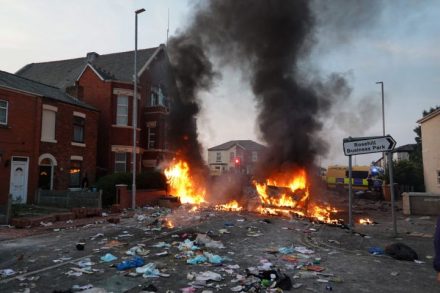
Just a month into the Labour ascendancy and its first major political crisis has already taken shape. It is not the looming tax-raising Budget Rachel Reeves is preparing in contravention of assurances made during the election campaign about her party’s plans being fully funded. It is instead something much more visceral and basic: a breakdown in law and order. On the first BBC Question Time programme after the election, Andrew Marr gave his thoughts on what the new Starmer administration would mean. 'For the first time in many of our lives, actually Britain looks like a little haven of peace and stability,' he declared.  He was referring to parliamentary stability – but outside of Westminster, things haven’t looked very stable of late.