Patrick O’Flynn

Patrick O’Flynn

Patrick O’Flynn is a former MEP and political editor of the Daily Express

How big business failed in its plot to stop Brexit

A little over a year ago, at the nadir of the May administration’s excruciating bungling of Brexit, the Daily Telegraph landed a dynamite exclusive. The Chancellor, Philip Hammond, and Business Secretary Greg Clark had hosted a confidential conference call for corporate bosses in which they said the threat of a no-deal Brexit was effectively off the table. And the Telegraph had obtained a tape recording of the whole thing. Behind the backs of the British people, the well-upholstered felines of big business were being told that a huge Commons defeat for May’s withdrawal agreement (it had just lost by 230 votes) did not mean that Brexit would go ahead on WTO terms at the end of March.
Sadiq Khan should get on with his day job

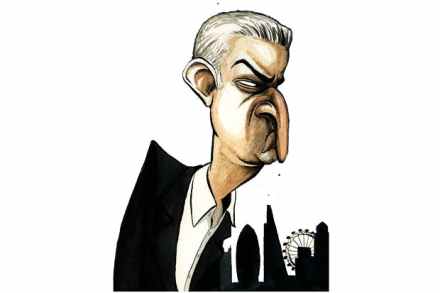
It is often said a job is what you make of it. If so, it is hard to avoid the conclusion that London's mayor Sadiq Khan regards his mainly as a means of burnishing his personal brand. Rather than getting to grips with the core responsibilities of his position – making transport work better, getting more homes built and fighting crime – his mayoralty has been punctuated by an apparently endless series of photo opportunities and overseas tours, often related to issues over which he has no direct responsibility. Today he took an entourage to Brussels to discuss his post-Brexit agenda with big players at the European parliament and European commission, fighting, as he put it himself, “for a deal that protects London’s economy and the rights of all Londoners”.

What Boris Johnson’s opponents need to know about the PM

Margaret Thatcher famously said of Mikhail Gorbachev “We can do business together”. Clearly she wasn’t endorsing the policies and outlook of the USSR, just reaching a practical conclusion that was to lead to beneficial outcomes for both sides in the years ahead. It’s time for Boris Johnson’s opponents to arrive at the same conclusion – and accept that Boris is a man they can do business with. Boris’s critics might not admit it but the Prime Minister is a pragmatist with liberal inclinations in many policy areas. Yet the luminaries of progressive liberalism still pledge to fight him on every front.

Sajid Javid’s departure doesn’t matter

Much of the reaction to Sajid Javid’s departure yesterday, alongside the sacking of several other Cabinet ministers, would have you believe that it is a very big deal. ‘Moderate reshuffle morphs into major crisis,’ said Sky News political editor Beth Rigby. Rory Stewart tweeted out a picture of Theresa May’s Cabinet from the middle of last year, with the chiding question: “How many are still in the Cabinet today?” (The answer, by the way, is only about half a dozen out of more than 30.) Jon Sopel on the Today programme this morning said Javid’s replacement, Rishi Sunak, was in a very powerful position because the Prime Minister could not afford to lose another Chancellor. Really? Says who?

Let’s not forget the unintentional heroes of Brexit

A week on from Brexit day, it is worth stopping and reflecting on just how Britain's departure from the EU actually came about. We're familiar of course with those from the Leave side who contributed to Brexit. But what about the unintentional heroes of Brexit, those who ensured accidentally that Britain really did leave the EU? On the day we were supposed to leave the EU last March, I bumped into an important member of Tony Blair’s social and political circle in the lobby of a St James’s club. “Are the Tory Spartans holding firm? Are they going to stop May's deal going through?” he asked. “Yes, quite comfortably I think,” I replied. “Good,” he said, “that’s what we need.

Labour must ditch the doom and gloom if it ever wants to win again

Tony Blair's election anthem “Things Can Only Get Better” was infectious, even for those like me who were not from the same political tribe. It was impossible not to get swept up in New Labour's era of Cool Britannia. At the 1997 Labour party conference, just a few months after the Labour landslide, I was left wondering: were Labour supporters cheerful because they had won, or did they win because they were cheerful? Whatever the answer, it does not take a genius to discern that the left in general and the Labour party in particular is far away from such a place today. Gone is the happy optimism. In its place, Labour's leading lights spew out a seemingly endless stream of doom-laden forecasts and bile about the state of our nation and its people.

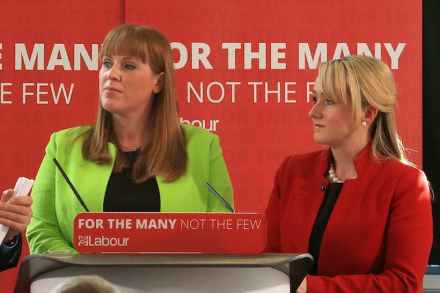
Why Angela Rayner is Rebecca Long-Bailey’s secret weapon

Labour has nothing to say to large chunks of Britain, may well never win power again and is in fact an irrelevance to the political direction of our country. Yes, yes, we know all that already. But if you are a political nerd, as I am, you can’t knock a good leadership contest as it unfolds. And the current battle to become Leader of the Opposition is shaping up rather nicely. Some had been writing it up as a procession, with former Director of Public Prosecutions Keir Starmer – he of the luxuriant hair and slippery ability simultaneously to project himself both as a diehard socialist and a centre-left moderniser, the first Kinnockite Corbynista – simply bound to win.

Why Clive Lewis’s royal referendum gambit will backfire

What do you do if you are an outsider in the Labour leadership race and need to grab some extra attention fast? Answer: come up with something eye-catching that you think will go down well with party members even if it is not necessarily a realistic proposition. First we had Jess Phillips suggesting that she might campaign to rejoin the European Union. Now we have Clive Lewis calling for a referendum on the monarchy. 'Why not have a referendum on the future of the Royal Family?... I’d rather see us as citizens than subjects in the 21st Century,' said Lewis, who is currently short of the 22 Labour MPs or MEPs he needs to nominate him if he is to make the leadership ballot paper.

Harry and Meghan have placed the Queen in an impossible position

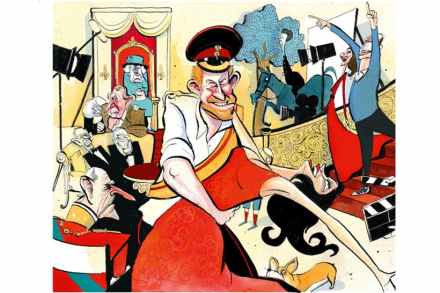
In the Queen's Christmas message, she observed that 2019 had “felt quite bumpy” at times. Her implication was that a new year could well bring happier, more stable times. Unfortunately for Her Majesty, it isn’t how 2020 is panning out. The pseudo abdication of the Duke and Duchess of Sussex from the Royal Family, just in time for the early evening TV news yesterday, will come as a bitter personal blow to the Queen. It also presents the monarchy with a problem that may come to dwarf even the terrible ongoing publicity about Prince Andrew’s friendship with the late Jeffrey Epstein. Harry and Meghan’s announcement came, we are told, despite the Queen not having been given prior notice of their intentions. It presents Her Majesty with a truly unenviable choice.

Britain and the Royals must do more for Australians in their hour of need

In the Netflix series The Crown an entire episode is dedicated to the disaster at Aberfan. More than 100 people – mainly schoolchildren – lost their lives in October 1966 when a junior school and surrounding buildings were buried under a landslide from a colliery spoil tip. Grief spread far beyond the valleys of South Wales to grip the entire British nation. The Queen put out a swift statement giving her condolences but didn’t visit the scene for more than a week and not until after Lord Snowdon and the Duke of Edinburgh had each attended. Her Majesty’s slow response is said to remain one of her biggest regrets during a reign which has seen few mistakes.

Give Nigel Farage a peerage

Almost half of Tory supporters think that Nigel Farage deserves a peerage, according to a new poll. And while some 53 per cent of the overall public are said to oppose the elevation of Farage to the Lords, if anyone does deserve to become a peer the Brexit party leader should certainly make the shortlist. Elevation to the Lords is meant to be an exceptional honour for exceptional people. This, of course, isn't always the case. Over recent decades it has all too often been a reward for reliable placemen who have done a party leader’s bidding with such obsequiousness that not sending them down the corridor to wallow in pomposity becomes unthinkable.

The Tory war over Europe is finally over

Happy Christmas (War Is Over). John Lennon probably didn’t have the decades long Conservative dispute over Europe in mind when he wrote that, but the message seems very apt this year after almost the entire Tory parliamentary party trooped through the lobbies in support of its leader’s plan to take Britain out of the EU. It was back in 1971 that Lennon released his blockbuster Christmas single. At the time, the Conservatives were largely united behind the idea of joining the European Economic Community. So few could have anticipated that an internecine political war lasting almost half a century was taking hold.

Boris’s big win is a decisive moment in the battle for Brexit

So in the end Leave voters decided to save Nigel Farage from himself by once again using their strategic nous to herd behind the party that could do most to take us out of the European Union. Which wasn’t the Brexit party. As widely predicted, including by me, the Brexit party did not even come close to winning a single parliamentary seat. In fact, as I write, its final vote share overall is on course to replicate the two per cent achieved by Ukip under Paul Nuttall in 2017. Most heavily-defeated leaders who had spent six weeks predicting swathes of MPs for their party in the Commons might have turned to introspection, admitted errors and spoke of “learning lessons” after such a result. But such talk was not for Nigel Farage today and I am glad.

Today is an exciting and nerve-wracking day for Brexiteers

It's tense for us Brexiteers, isn’t it? We know that if the Tories don’t secure a Commons majority today then our country probably won’t end up leaving the EU at all. Almost certainly, an alliance of pro-Remain parties would put Jeremy Corbyn into Downing Street. They would keep him there just long enough for Remain to win a low-turnout second referendum. Many Leave voters would boycott such a vote on the grounds of it being a stitch-up that offers a choice between actually staying in the EU and virtually staying in it, just without any political representation. So it is quite understandable that our nerves are frayed just now. But there is another way of looking at things.

Only Brexit voters can save Nigel Farage from himself now

Nigel Farage last painted himself into a corner at the end of the 2015 general election. Now he has done it again. And Farage's only hope is that Brexit voters can save him from himself. In the lead-up to that election, Farage foolishly spiced up a serialisation of his autobiography by declaring it would be 'curtains' for him – and that he would quit as Ukip leader – if he failed to win in South Thanet. Of course, he didn’t win. And early the next day, Farage duly called a clifftop press conference to declare that, being a man of his word, he was indeed standing down as Ukip leader.

Nish Kumar and the anti-Brexit comedy club

When I was interviewed a long time ago for admission to one of our ancient universities, a don used the phrase “the maintained sector” to describe my educational background. He meant that I was a state school lad and I suppose his implication was that independent schools were somehow more free-thinking, reliable bastions of excellence. At the time I could only see the other side of that particular argument, but the phrase has come to mind again now in a different context. The disastrous reception given to comedian Nish Kumar at yesterday’s Lord's Taverners' lunch is a sign that the maintained sector of British comedy has fallen victim to lazy groupthink and general mediocrity.

The Tory manifesto shows we don’t need to trust Boris on Brexit

'But can we really trust the Tories to deliver Brexit?' This is the question I am most often asked on social media and in person by long-standing Brexiteers who, like me, are not habitual or tribal Conservatives. And the reply I never give is: 'Yes, of course we can'. Because let’s be blunt about this: the Conservative party has not earned the trust of Brexiteers over the years. It had to be bullied into holding a referendum by Ukip, at a time when the number of Conservative MPs prepared openly to speak in favour of leaving the EU could be counted on the fingers of one hand. It then immediately handed the Brexit process over to a pro-Remain leader who constructed a deal that would serve as a 'bridge' (copyright, Sir Olly Robbins) to a high-alignment future, i.e.

The flaws in Nigel Farage’s Brexit party manifesto

Nigel Farage has never been particularly sold on manifestos or the hard slog of policy formulation in general. His aversion dates back at least to the Ukip manifesto of 2010 which was accompanied by detailed policy documents that ran to the length of an old telephone directory and proved a rich source of material for the many commentators seeking to mock the party. He later derided it as “drivel”. So it is unsurprising to see him release a slim, 24-page booklet printed in large type on A6 pages, several with full-page photographs (rather than text) and to market it not as a manifesto at all, but as a “contract” with the British people.

Nigel Farage’s Brexit party u-turn still isn’t enough

Nigel Farage says his party will stand aside in all 317 seats the Tories won in 2017. This drastic u-turn in the Brexit party election strategy had been expected. But it still strikes me as a poorly thought through plan, given that it means the Brexit party will give a free pass to Brexit rebels like Greg Clark (in Tunbridge Wells) and also make life difficult for Tories in top Labour-held target seats. Farage can point to an explicit, on-camera promise from Boris Johnson about not extending the post-EU departure transitional phase beyond the end of next year as yet another shift he has forced in the Tory position. And he can use that as a rationale for abandoning his unconvincing threat to stand everywhere.