Patrick O’Flynn

Patrick O’Flynn

Patrick O’Flynn is a former MEP and political editor of the Daily Express

The chart that will decide Rishi Sunak’s fate

After his five key pledges speech this week, one can only conclude that Rishi Sunak must have been shown the chart.  The chart in question crops up in a regular update that polling firm YouGov puts out on the key political issues, as seen by various segments of the electorate. It measures the priorities of those who voted Conservative in 2019 and therefore have it within their collective power – and potential inclination – to grant the party yet another term in office. And it has told a consistent story for the past two years. The three biggest issues for voters – miles ahead of anything else – are the state of the economy, immigration and asylum, and healthcare.

Labour’s race policies would be deeply damaging

The parlous state of the Conservative party would matter very much less were it not for the fact that the alternative is a Labour government led by Keir Starmer. Recent days have given us two examples of how a Starmer administration would be very far from the moderate and sensible force he tries to depict. First, it emerged that Labour is still very much in the gender self-ID camp. Then came a reminder that Labour in power will implement a corrosive and extreme stance on matters to do with ethnicity that ascribes any difference in outcomes across different groups to ‘structural racism’ that the state has an urgent duty to eradicate.

Why won’t the Conservatives stand up for conservatism any more?

Is it supposed to be enough for those of us of a culturally and socially conservative persuasion to know that some Tory MPs share our outlook? Are we meant to look back over the radical left’s march through the public realm during these past 12 years of Tory-led governments and think: 'Well, at least some Conservative MPs tried to make a bit of a fuss about it, so we’d better vote Tory again?' It should not take a genius in Conservative Campaign HQ to realise that no, it isn’t enough. Not when one of the Tory prime ministers from this long phase of nominally conservative government has just come out to say she agrees with the SNP’s policy of gender self-ID.

Sunak could learn from David Cameron

Our naturally centrist and establishment-minded Conservative prime minister trails Labour badly in the polls even though the electorate is at best lukewarm about the leader of the opposition. Former Tory voters are drifting away, outraged about a perceived abandonment of sound Conservative principles and European interference in the immigration system. Economic austerity may have convinced financial markets that the PM is serious about rebuilding the battered public finances, but the tax rises and spending restraint involved are making popularity a stranger to him. With the Commons in Christmas recess, a threat is growing on the Conservative right flank which will make the next election impossible to win unless it is dealt with decisively.

The High Court Rwanda ruling is a win for the Tories

Today’s High Court ruling that the government’s plan to send irregular migrants to Rwanda on a one-way ticket is lawful will be greeted with huge relief in ministerial circles. It gives Rishi Sunak a fighting chance of being able to demonstrate progress in tackling the Channel boats issue by the time of the next general election. The terms of the ruling, announced by Lord Justice Lewis, will delight ministers. He declared straightforwardly: 'We have concluded that it is lawful for the government to make arrangements to relocate asylum seekers to Rwanda and for their asylum claims to be determined there.' This establishes a principle that ministers believe can be applied to other potential partner countries once the Rwanda scheme is up and running.

Rishi Sunak’s immigration plan could be a game changer

Rishi Sunak today gave a potentially game-changing statement in the Commons, finally committing the Conservatives to effective action when it comes to combating illegal immigration. The five-point plan unveiled by Sunak for addressing the issue of the Channel boats in the short-term will garner most of the headlines, but it is small beer compared to his most significant announcement. Electoral salvation for the Tories won’t come via a new ‘unified small boats operational command’, a doubling of immigration enforcement raids, 10,000 new non-hotel accommodation places, faster processing of claims or even a fancy new deal with Albania. These are all incremental measures that will, at best, help at the margins.

What’s the difference between Starmer and Sunak?

If we were to build a hybrid politician out of the Prime Minister and the leader of the opposition, then which of each party’s main policy stances would he advance and which would be dropped? Our amalgam – let’s call him Krishi Sumer – would accept the basic permitted spending envelope for any given level of taxation that was set out by Jeremy Hunt the other week. He’d certainly advance strong support for Ukraine and unflinching resistance to the evil ways of Vladimir Putin. He’d also be a stout supporter of the Union and hammer of the SNP and other Celtic nationalists. On so-called ‘culture war’ matters he would play things low key but probably sit fractionally to the right of centre.

Will Braverman turn on Sunak over the Channel crisis?

Finally the Tory government appears to have realised that its serial mishandling of the Channel boats issue is the top cause of the voter disaffection that is killing its re-election prospects. Rishi Sunak’s administration now understands that the position he has set out so far – saying there is no 'silver bullet' to solve the dinghy problem, and that progress will require careful and patient work across many fronts – will not suffice, if well-briefed pieces in the weekend newspapers are anything to go on .

Why do so many people now hate the Tories?

When Labour lost Hartlepool to the Tories in a parliamentary by-election 18 months ago, Keir Starmer was reported to have asked aides: 'Why does everybody hate us?' After the heavy Tory defeat in last night’s City of Chester by-election, Rishi Sunak would do well to pose the same question to his own lieutenants. Because the result confirms him as the second Conservative prime minister in a row not to receive any kind of electoral honeymoon. That Labour held Chester will in itself raise few eyebrows. After all, opposition parties are supposed to find defending their own seats at by-elections pretty straightforward.

Where’s the moral outrage at England’s cricket tour of Pakistan?

Everyone on the television agrees: seeing an England team give succour to a repressive regime by playing prestigious fixtures on its soil is deeply troubling – or 'problematic' to use the latest horrible buzz word. A society that represses gay people and women and whose ruling class routinely engages in corruption to further its own interests should not be 'normalised' via world-class international sport, runs the argument.  But all these conditions apply in Pakistan just as they do in Qatar. Yet has anyone heard a squeak of broadcast media complaint about the England cricket team’s tour of that country?

Keir Starmer is playing politics on easy mode

It must be great fun being Keir Starmer at the moment. Eighteen months ago he was asking aides ‘why does everybody hate us?’ in the wake of Labour’s disastrous defeat at the Hartlepool by-election. Now scoring points off the Tories is like shooting fish in the proverbial barrel. The Conservatives have ceded so much political territory that the Labour leader doesn’t even properly have to upset his base among soft-left progressives in order to woo back traditionalist Red Wall voters or even to resonate with diehard Tories. Hence was he able to exploit for his own political ends the tax-raising, growth-killing Budget delivered by Jeremy Hunt last week when he appeared on a special edition of Chopper’s Politics, the podcast run by the Telegraph’s Christopher Hope.

Will Rishi Sunak get away with ignoring voters on the right?

Conventional wisdom has long held that the Conservatives win elections from the centre ground – including territory just to the right of centre – but lose them if they become 'right wing'. John Major set out this theory explicitly in a press conference, and most of those in attendance nodded sagely along. For many years, election results appeared consistent with this assessment. Major won in 1992, turning round a Labour opinion poll lead by dumping the poll tax and tacking towards the centre.

A Swiss-style Brexit would delight Nigel Farage

Someone near the top of government – let us give him the random alias Heremy Junt – is stoking the idea that post-Brexit trading arrangements with the EU constitute a disastrous impediment to UK economic growth. Heremy himself, or perhaps an authorised senior aide, has just briefed the Sunday Times that the way ahead could be to dump Boris Johnson’s Brexit deal and replace it with a 'Swiss-style' arrangement with Brussels. Switzerland pays an annual fee to the European Commission in return for single market access almost identical to that enjoyed by EU member states. It also accepts the single market regulatory framework, including a decisive role for the European Court of Justice and the free movement of people.

Rishi Sunak’s image problem

Back in February the New Statesman reported that Keir Starmer’s inner-circle had concluded that Rishi Sunak was no longer to be feared as a potential successor to Boris Johnson because he was ‘crap at politics’. At the time this appeared to be a pronouncement that fell under the ‘doth protest too much’ rule, coined by William Shakespeare back in the day, especially given that the briefing also alleged Labour considered Liz Truss a more formidable threat to its electoral fortunes. But the first month of Sunak’s premiership suggests the Labour briefer was onto something. After the disastrous collapse of Truss’s economic strategy, the failure of which had been accurately predicted by Sunak, he had every chance of receiving an electoral honeymoon.

Rachel Reeves’s killer question of Hunt’s Autumn Statement

After the disaster that befell Kwasi Kwarteng’s mini-Budget, his successor Jeremy Hunt was never likely to want to pull many rabbits out of hats in his Autumn Statement. In fact, seldom has a pitch been rolled so extensively before a Chancellor’s statement as it was before today’s, both via a string of briefings emanating from within the Treasury about its likely contours and contents and the seeking of statements of advance approval from independent scrutineers. Hunt was at pains to quote the NHS chief executive as confirming the extra resources for healthcare should be sufficient to allow the service to discharge its core responsibilities. More crucially still, he deferred to – and referred to – the forecasts of the Office for Budget Responsibility time and again.

Braverman’s Channel migrants scheme won’t work

One tries to find grounds for optimism about the resolve and capacity of Her Majesty’s Government in these testing times but there is none to be found in today’s deal with France on Channel migrants. In fact, the wearily familiar outline of the agreement – yet more UK taxpayers’ money going to the French in return for more beach police patrols, better information-sharing, embedded UK officers working alongside them, blah blah blah – fits very neatly into the failed approach of Boris Johnson and Priti Patel. Clearly having what Home Secretary Suella Braverman heralded as a '40 per cent uplift in the number of French gendarmes patrolling the French beaches' has the potential to reduce the cross-Channel traffic at the margins, and for a while.

The threat to Rishi from the right

Most dads will have been on a beach holiday where they helped their children build a sandcastle near the water’s edge and then waited for the tide to overrun it.  Sometimes there are false alarms, when a rogue wave comes in a bit further than expected but then its successors return to the holding pattern and the castle stands proud and safe a while longer.  Up until now this has also been true of the threat posed to Tory fortunes by Reform UK, the successor to the Brexit party, currently led by the property developer and broadcaster Richard Tice.  Has a Reform tide started lapping up against the walls of the Tory fortress?  Tice’s outfit has bumbled along on 3 or 4 per cent, occasionally notching up a 5 or even a 6 during a bout of Tory self-immolation.

The remarkable transformation of Keir Starmer

Amid all the frenetic changes of leadership in the Conservative party, something important has been overlooked about the Labour party: it also has a new leader. Outwardly nothing has changed. Keir Starmer – he of the slicked-back hair and strangulated vowels – still stands at the despatch box at PMQs each week. But he has been given an electoral personality transplant. It is not that Starmer has become intrinsically more fluent or exciting (though one cannot fail to notice he has grown somewhat in confidence lately). Rather, it is his entire political persona that has been changed.

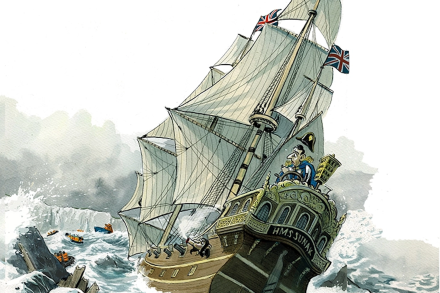
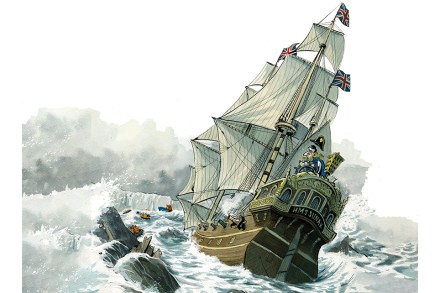
At sea: can Sunak navigate the migrant crisis?

36 min listen

On this week's podcast: Can Rishi Sunak steady the ship? Patrick O'Flynn argues in his cover piece for The Spectator that the asylum system is broken. He is joined by Sunder Katwala, director of the think tank British Future, to consider what potential solutions are open to the Prime Minister to solve the small boats crisis (00:52). Also this week: Should we give Elon Musk a break? In the aftermath of his sensational purchase of Twitter, Mary Wakefield writes in defence of the tech billionaire. She is joined by James Ball, global editor of The Bureau of Investigative Journalism, to ask what his plans are for the social media platform (14:27). And finally: Ysenda Maxtone Graham writes in the magazine this week about the joy of hating the Qatar World Cup.

At sea: can Sunak navigate the migrant crisis?

It’s not hard to see why migrants come here. For those who make it across the Channel illegally, there is only a small chance of deportation. About 72 per cent of the predominantly young males who leave the safety of France can expect to have their UK asylum claims granted. The success rate is more than twice the EU average (34 per cent). That’s part of the reason for the extraordinary growth in numbers coming across. Three years ago, 2,000 people arrived in small boats. So far this year, it’s 40,000. It’s funny to think that when 40 migrants crossed the Channel on Christmas Day in 2018, the then home secretary Sajid Javid was forced to cut short his family holiday amid the outcry. Last Saturday alone, 1,000 people made the crossing.