Patrick Gibbons

Patrick Gibbons is a member of The Spectator’s broadcast team.

Can Rayner survive tax row?

16 min listen

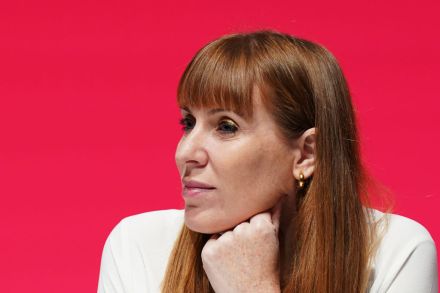
24 hours after Angela Rayner admitted underpaying tax, the pressure remains on the deputy prime minister as Westminster now waits the outcome of the probe by the Prime Minister’s standards adviser. The Spectator’s political editor Tim Shipman and the Sunday Times’s Whitehall editor Gabriel Pogrund join Patrick Gibbons to discuss whether Rayner can retain her briefs. As Gabriel points out, regardless of the outcome of the ethics probe, Rayner was seen as Labour’s ‘sleaze-buster in chief’. So how damaging is this to ‘brand Ang’? Produced by Patrick Gibbons.
Why haven’t the Greens cut through more?

19 min listen

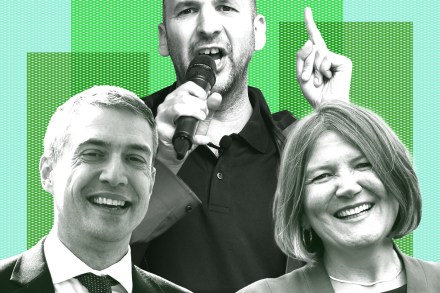
The Green Party leadership election is underway, pitting new MPs Adrian Ramsay and Ellie Chowns against London Assembly Member Zack Polanski. The Greens achieved their best ever result at the 2024 general election, but they’ve remained static in opinion polls ever since. Lucy Dunn and Luke Tryl of More in Common join Patrick Gibbons to try to make sense of this. As Luke says, the dynamics within the leadership election are symptomatic of a wider divide over party strategy – two of the seats they won last year come from more liberal, traditionally left-wing seats, while two others come from traditionally conservative-leaning, rural shires. Plus, does Corbyn’s new party complicate any attempt to make them the anti-system party of the left?

The uncomfortable history of Narva

The Alaska talks between Donald Trump and Vladimir Putin might have happened on American territory, but the symbolism of their location is a win for the Russian President. Alaska is considerably closer to Russia than it is to the rest of mainland America, and it was once a Russian territory. Putin was returning to a land previously conquered by his people. On Russia’s opposite border, to the west, it is Russia’s imperial past, and Putin’s twisted view of shared history, that worries Europeans. Narva, Estonia’s third largest city, is a strange place, and seems even stranger since the full-scale invasion of Ukraine.

How a history festival became a forum of fear

‘Defence needs to be our number one priority.’ This sounds like the sort of thing you’d hear at a Nato summit, or a Chatham House conference, but it was the plea of Colin Bell, a 104-year-old second world war RAF veteran, as he was interviewed at Chalke Valley History Festival last weekend. The Wiltshire festival was the brainchild of historian James Holland (second world war specialist; brother of Tom). Originally designed as a fundraiser for his local cricket club, the weeklong event is now in its tenth year. Speakers at last weekend’s event ranged from Max Hastings and Alice Loxton to Al Murray and Peter Frankopan, and were complemented by live re-enactments and activities.

Israel strikes Iran – how will Iran retaliate?

14 min listen

Israel struck military and nuclear targets in Iran overnight in a major escalation of hostilities in the Middle East has begun further strikes on Friday. Iran has vowed retaliation though President Trump has warned Iran and encouraged the Iranians to continue negotiations over their nuclear programme. Further talks had been due to take place this weekend. What’s Israel’s objective? And does this underline the unpredictability of geopolitics, at a time when the UK has pledged significantly more money for defence?  Patrick Gibbons speaks to James Heale and Michael Stephens, associate fellow at RUSI. Plus: updates on assisted dying and the government’s plans for welfare. Produced by Patrick Gibbons.

Is the welfare state about to expand?

18 min listen

James Heale and Michael Simmons join Patrick Gibbons to discuss the speculation that Labour could scrap the two-child benefit cap. Is this just red meat for the left of the party or is it a sign that public opinion around welfare has shifted? And, with mixed messages on the economy, can the country afford to scrap it? This comes just a week after Labour’s partial U-turn over the winter fuel allowance so, with pressure also increasing from Reform, is the welfare state about to expand? Produced by Patrick Gibbons.
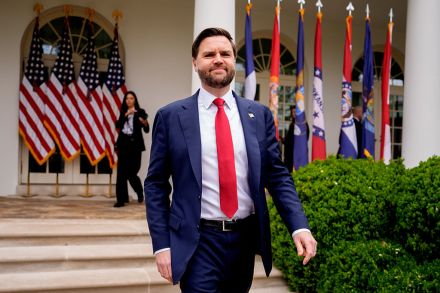
What has reaction been to the UK-EU deal?

18 min listen

Fallout continues from yesterday's summit and the announcement of a deal between the UK and EU – or is it fair to call it 'fallout' as, despite criticism over the deal from Nigel Farage and Kemi Badenoch, has the public got Brexit fatigue?  James Heale and Michael Simmons join Patrick Gibbons to talk about the reaction to the deal. Fisheries has taken up most discussion but Michael points out a lesser talked about commitment to energy policy. And, with the government keen to talk about it in tandem with recent deals with India and the US – and Gulf states soon, according to Rachel Reeves this morning – what's the political narrative around the summit? Produced by Patrick Gibbons.
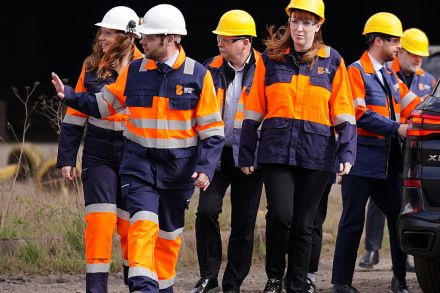
Revenge of the centrists: Carney wins in Canada

13 min listen

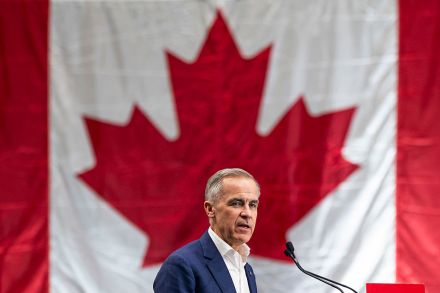
Mark Carney has won the Canadian election, leading the Liberal Party to a fourth term. Having only been Prime Minister for 6 weeks, succeeding Justin Trudeau, this is an impressive achievement when you consider that Pierre Poilievre’s Conservatives were over 20 percentage points ahead in the polls earlier this year. Trump’s rhetoric against Canada – engaging in a trade war and calling for the country to become the 51st state – is credited as turning around the fortunes of the Liberals. Are there lessons for conservatives across the anglosphere, including Kemi Badenoch? Patrick Gibbons speaks to James Heale and Michael Martins. Produced by Patrick Gibbons.
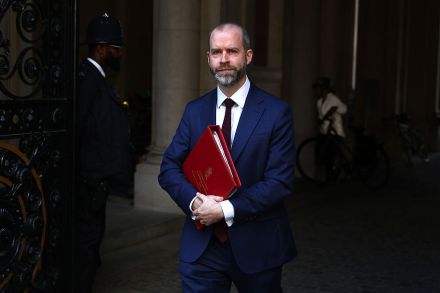
10 years of politics as Balls bows out

21 min listen

Katy Balls joins Coffee House Shots for the last time as the Spectator’s political editor. Having joined the magazine ten years ago – or six prime ministers in Downing St years – what are her reflections on British politics? Katy’s lobby lunch partner from the Financial Times Stephen Bush joins Katy and Patrick Gibbons to try and make sense of a turbulent political decade, work out where the greatest risk is to the current Labour government, and attempt to make some predictions for the next ten years.  Produced by Patrick Gibbons.
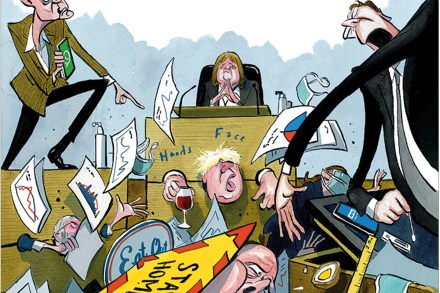
Has a US-UK trade deal inched closer?

13 min listen

As Donald Trump’s policies on tariffs keep shifting, leaving countries scrambling to react, there has been some good news for Keir Starmer and the Labour government. Speaking to UnHerd, the US vice-president J.D. Vance spoke up the UK’s chances of securing a trade deal. While this would be a win for Starmer, questions remain over the substance – from agriculture to food, what would be included? And can we really believe it will happen? The Spectator’s political editor Katy Balls and deputy US editor Kate Andrews join Patrick Gibbons to discuss.  Produced by Patrick Gibbons.
Scunthorpe’s steel and Birmingham’s bins: a tale of two Labours

10 min listen

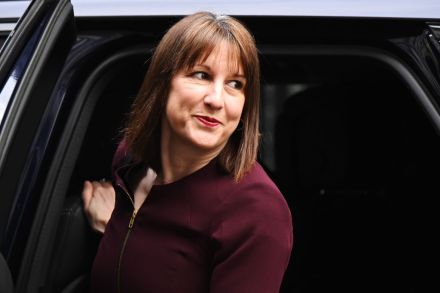
Panic has subsided over the British Steel crisis as Deputy Prime Minister Angela Rayner, while visiting the site in Scunthorpe, confirmed that the raw materials needed to keep the furnaces running have been secured. While questions remain over the long-term future of the site, the Government are quite confident in their handling of the crisis so far – something not unhelpful with just over two weeks to go from the local elections. Less helpful is the news that over in Birmingham workers have rejected a pay deal with the Labour-run city council; the bin strike will continue. Is there more the government could be doing to end the dispute? Political editor Katy Balls and former Political Secretary to Tony Blair John McTernan join Patrick Gibbons to discuss.

‘Nationalisation in all but name’: the blame game over British Steel

11 min listen

Parliament was recalled from Easter recess for a rare Saturday sitting of Parliament yesterday, to debate the future of British Steel. Legislation was passed to allow the government to take control of the Chinese-owned company – Conservative MP David Davis called this 'nationalisation in all but name'. Though, with broad support across the House including from Reform leader Nigel Farage, the debate centred less around the cure and more around the cause.  Katy Balls and James Heale join Patrick Gibbons to discuss the debate, the political reaction and how much of a precedent this sets for Starmer.  Produced by Patrick Gibbons.
Were we right to lock down? Michael Gove vs Toby Young

31 min listen

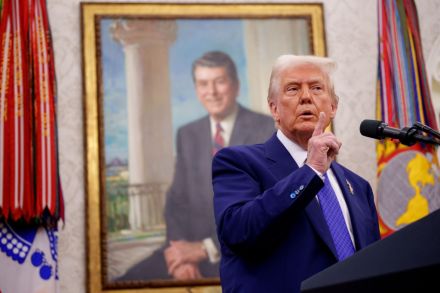
On 23 March 2020, then-Prime Minister Boris Johnson announced the unprecedented decision to put the UK into lockdown. To mark the 5th anniversary of that announcement this weekend, we have brought together our editor Michael Gove – then a cabinet minister under Boris – and our associate editor Toby Young – an ardent critic of the decision – to answer the question, was the government right to lockdown? Was the decision a necessary and reasonable health measure based on the available evidence at the time, or a significant and avoidable violation of civil liberties by a government that was meant to champion liberal freedoms? You decide. Produced and presented by Patrick Gibbons.

The UK economy is shrinking – how much pressure is Rachel Reeves under?

14 min listen

New figures from the Office for National Statistics show the UK economy unexpectedly shrunk by 0.1% in January. This comes only a few weeks after the Chancellor's pro-growth speech, and a fortnight ahead of her Spring Statement. Just how much pressure is Rachel Reeves under? And how likely is it that Labour will change their approach? Economics editor Michael Simmons and deputy political editor James Heale join Patrick Gibbons to discuss, as well as a look ahead to next week's expected announcement on reducing the welfare bill. Produced by Patrick Gibbons.
The UK’s balancing act over Trump’s ‘Ukraine peace plan’

13 min listen

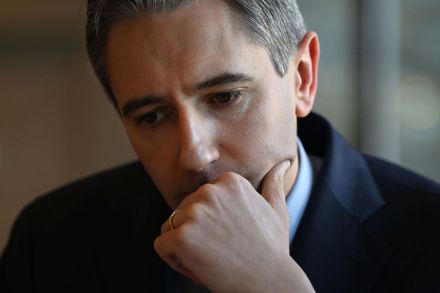
Leaders from around the world are gathering at the Munich Security Conference, with the UK represented by Foreign Secretary David Lammy. All attention has turned to Ukraine, given statements this week by President Trump that he had spoken to Putin (and later Zelensky) about ending the Russia-Ukraine war. Trump's statements, for example that NATO membership should be off the table, put him at odds with European allies. The UK signed a joint statement with leaders from France, Germany and others, that Ukraine's independence and territorial integrity are unconditional. Is the UK walking a tight-rope between the US and Europe? Where does this leave the NATO alliance? And, with a strategic defence review underway, what should the UK's approach to defence spending be?

Ireland’s centre has held

Two years ago, I secured an apartment in Dublin through a gay dating app. I was desperate and there was a housing shortage in Ireland so I was prepared to ignore safety concerns to get a roof over my head. ‘You must be used to this in London’, Irish friends would say to me. But I was not. In London if you’re happy to compromise on cost or location, there are plenty of rooms available. In Dublin you can double or triple your budget or look further afield and still not find a place. There are some very high-spec, new-build apartments in the city’s docklands (its ‘tech hub’), which can cost around €3,000 for a two-bed, and are designed primarily for expats and American tech workers.

Farage’s next move

14 min listen

Party conference season continues as Reform UK’s kicks off today in Birmingham. Katy Balls has been at the NEC hearing from Richard Tice, Lee Anderson and leader Nigel Farage, amongst others. What’s been the mood? And, after a remarkable few months, what could be next for the party? With Labour conference starting at the weekend, how worried will Starmer be about Farage? Also, what's been the latest on the PM's 'donations for clothes' row? Patrick Gibbons speaks to Katy Balls and James Heale. Produced by Patrick Gibbons.

Is the UK still a ‘staunch ally’ of Israel?

16 min listen

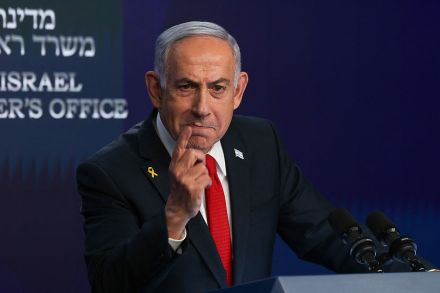
The fallout continues from the UK's decision to suspend some arms sale licenses to Israel. Defence Secretary John Healey insists the UK remains a 'staunch ally' of Israel, yet the decision has been criticised by Israeli Prime Minister Benjamin Netanyahu as 'shameful'. What has the domestic reaction been to the government's decision, and who is it designed to please?  Patrick Gibbons speaks to Katy Balls and Michael Stephens, associate fellow at RUSI.  Produced by Patrick Gibbons.
What could a Kamala Harris presidency mean for the UK?

16 min listen

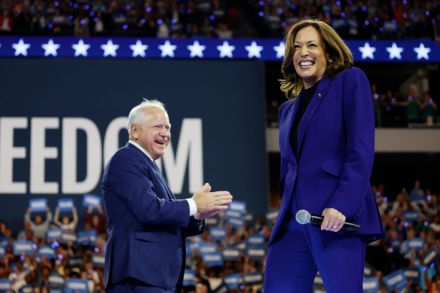
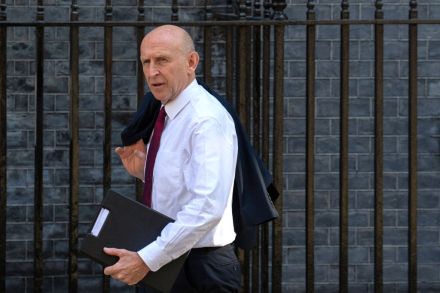
As the Democratic National Convention draws to a close in Chicago this week, Patrick Gibbons is joined by James Heale and Gerry Baker, editor at large of the Wall Street Journal to try to make sense of what a Harris presidency could mean for the UK. Is she continuity Biden? Do we really know what she stands for?  Produced by Patrick Gibbons and Cindy Yu.

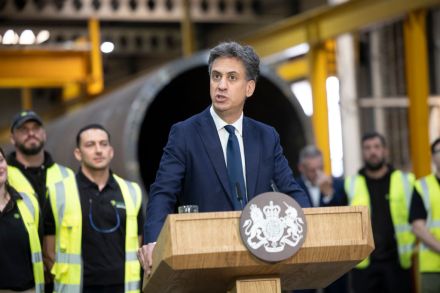
Is the energy price cap hike bad news for Labour?

17 min listen

Ofgem, the energy regulator, has announced that the price cap will rise by 10% in October. Is this bad news for Labour, or will they be successful in framing it as part of their economic inheritance from the Conservatives? And could this strengthen opposition to the proposed change to winter fuel allowance? Patrick Gibbons speaks to James Heale and John McTernan, former political secretary to Tony Blair.  Produced by Patrick Gibbons and Cindy Yu.