Patrick Gibbons

Patrick Gibbons is a member of The Spectator’s broadcast team.

Is Norway about to take a step closer to joining the EU?

This weekend in Oslo politicians and activists from Norway’s conservative party, Høyre, will meet to confirm their new leader, Ine Eriksen Søreide. This is not just a vote to further the prospects of the next generation of centre-right leaders but – due to a rare alignment of domestic and geopolitical conditions – the potential starting point for a renewed push towards Norway joining the European Union (EU). Formerly Norway's minister of foreign affairs, Søreide is a committed Europhile. She has been unambiguous on EU membership, saying Høyre is ‘clearly a yes party’.  It is perhaps just a peculiar coincidence that has left several North Sea powers outside the EU.
Is Starmer back from the brink?

13 min listen

After a dramatic day in Westminster, the threat to Starmer appears to have receded – at least in the short term. But with the Gorton and Denton by-election less than three weeks away, (more) trouble could be on the horizon. Luke Tryl – from pollsters More in Common – and James Heale join Patrick Gibbons to discuss. Produced by Patrick Gibbons.

Is Starmer back from the brink?

How should the UK manage its relationship with China?

17 min listen

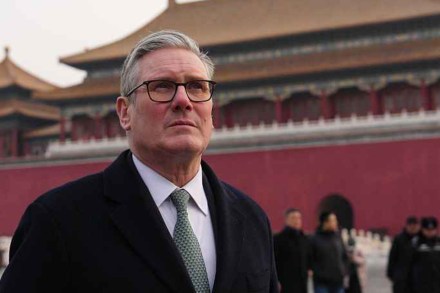
As Keir Starmer's visit to China draws to a close, Sam Olsen – who runs the States of Play substack – and Times columnist Cindy Yu join Patrick Gibbons to discuss how the UK should manage its relationship with China. Starmer's visit has drawn criticism from various China hawks – and from President Trump – but is there a way for the UK to balance legitimate security concerns with the need to trade with the world's second largest economic power? Plus, to what extent to the British public care about these geopolitical concerns? Cindy and Sam explain why is it important for policymakers to explain how these trips link back to domestic issues – and Cindy name checks James Cleverly as she highlights the importance of consistency amongst the political class.

How should the UK manage its relationship with China?

What does Starmer want to achieve in China?

19 min listen

Keir Starmer lands in China tonight as he becomes the first British Prime Minister to visit since Theresa May in 2018. Sam Hogg from the Oxford China Policy Lab and James Heale join Patrick Gibbons to assess the UK-China relationship right now, what Labour is hoping to get from the visit and whether there are risks for Starmer as well as rewards. Is the tight rope Starmer is walking between the UK & China a sign of weakness, or an extension of a pragmatic 'Starmerite' foreign policy? Produced by Patrick Gibbons.

What does Starmer want to achieve in China?

The truth about Britain’s claim to Greenland

Every time Donald Trump repeats his threats towards Greenland, a familiar claim does the rounds that the UK has ‘first dibs’ should Denmark ever choose to sell the territory. Most versions of this story trace back to comments by Tom Hoyem, who served as Denmark’s last minister for Greenland in the 1980s. The claim gained traction again after Trump’s recent threats about acquiring the island, saying ‘one way or the other, we’re going to have Greenland’. These threats – which have now been accompanied by additional tariffs on countries including the UK – are being taken so seriously that the Danish and Greenlandic foreign ministers met US vice president J.D. Vance in Washington this week.

International statesman or ‘never here Keir’?

18 min listen

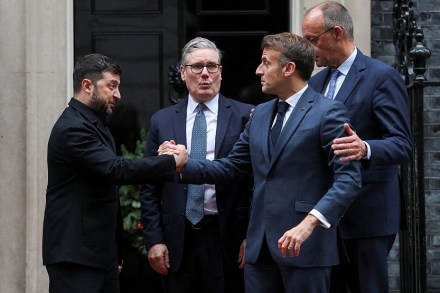
From 'regime change' in Venezuela to Russia's war in Ukraine, the Labour government is trying to navigate complicated situations across foreign affairs. Having appeared to weather the domestic reaction to the situation in Venezuela, Keir Starmer is in Paris today to discuss Ukraine alongside Chancellor Merz and Presidents Macron and Zelensky. This is undoubtably important – but to what extent will this fuel the criticism that the Prime Minister spends too much time abroad? And how can Starmer reconcile the demands of foreign affairs with his domestic priorities? James Heale and Tim Shipman join Patrick Gibbons to discuss. Produced by Patrick Gibbons.

Ten years after Brexit, the EU is wrestling with its identity

As the tenth anniversary of the Brexit vote approaches, renewed debate about Britain’s relationship with the European Union is perhaps inevitable. A steady drip of stories has suggested that closer ties between the UK and EU may once again be under consideration, with speculation over rejoining the customs union appearing every week since the Budget. Health Secretary Wes Streeting went further just before Christmas, arguing in favour of the move. The economic case for deeper cooperation may be compelling, but even for those who hope this is a prelude to something bigger, it is worth asking a more fundamental question: what kind of European Union would Britain be re-entering? One answer can be found among the generation now beginning to shape European politics from below.

Brexit’s back – and so is Truss

16 min listen

There has been a flurry of UK-European activity across Britain this week, with the German state visit in London, the Norwegian Prime Minister signing a defence agreement in Scotland and the British-Irish council meeting in Wales today. Perhaps then it's inevitable that speculation over closer ties between the UK and the EU has re-emerged. Could Labour seek to rejoin the Customs Union? Would this help or hinder Reform? And would the EU even stomach it? Plus – Liz Truss launches a new show today. Will she say anything new? James Heale and Charles Grant from the Centre for European Reform join Patrick Gibbons to discuss. Produced by Patrick Gibbons.

Will Mahmood’s asylum reforms force Ireland’s hand?

Labour’s plans to overhaul Britain’s overstretched asylum system have forced the Irish government to do the same. As the Northern Irish border is the only international border across these islands, Shabana Mahmood’s pledge to create ‘by far the most controlled and selective [asylum system] in Europe’ left Dublin with little choice. Ireland’s Minister for Justice, Home Affairs and Migration – Ireland’s equivalent to the Home Secretary – Jim O’Callaghan warned that Ireland must be ready to adjust its own policies to prevent a surge in applicants travelling via Northern Ireland.

Mahmood’s right turn, as migration figures revised – again

19 min listen

Economics editor Michael Simmons and Yvette Cooper's former adviser Danny Shaw join Patrick Gibbons to react to the Home Secretary's plans for asylum reform. Shabana Mahmood's direct communication style in the Commons yesterday has been praised by government loyalists and right-wingers alike, but her plans have been criticised by figures on the left as apeing Reform. Will her calculated risk pay off and how will success be judged? Plus, as ONS migration figures are revised – again – Michael restates his appeal for more reliable data. And how could migration data affect the budget next week? Produced by Patrick Gibbons.

Is South Korea bracing for a third Trump-Kim summit?

Donald Trump’s meeting with President Xi was the standout moment of this month’s Asia-Pacific leaders’ summit in South Korea. Yet almost as much attention focused on the rumours that Trump’s gaze had turned once again to North Korea. Addressing suggestions he would meet Kim, the American President told reporters, ‘I’d be open 100 per cent. I get along very well with Kim Jong Un.’ A meeting never materialised, but speculation – and tension – has only grown since.  Days after Trump’s departure, US Defence Secretary Pete Hegseth arrived as part of his own tour of Asia. In Seoul, he became the first defence secretary in nearly eight years to visit Panmunjeom, the border village within the Joint Security Area (JSA) of the Demilitarised Zone (DMZ).

Migration, the customs union & a £40bn black hole?

14 min listen

There are reports that the OBR will downgrade Britain’s productivity growth forecasts, increasing the size of the black hole facing the Chancellor at the end of the month. This continues the spate of bad news for the Chancellor on the economy – but can we trust the figures? James Heale and Michael Simmons join Patrick Gibbons to talk about what this means ahead of the budget, whether anger over the money wasted on asylum hotels can be linked to the cost-of-living crisis and what Rachel Reeves is doing in Saudi Arabia this week. Plus: is a debate over the customs union really what Britain wants right now? Produced by Patrick Gibbons.

Catherine Connolly’s election is a humiliation for Ireland’s establishment

‘I will be an inclusive president for all of you,’ Catherine Connolly declared as she was announced the winner of Ireland’s presidential election – a landslide victory over Fine Gael’s Heather Humphreys.  The independent TD received 63 per cent of the vote (with spoiled ballots excluded) to become Ireland’s tenth president. The result was officially confirmed early yesterday evening, but Connolly’s victory was clear from the moment counting began. ‘Catherine will be my president,’ Humphreys conceded, having received just over 29 per cent of the vote. Connolly defeated Humphreys in Ireland’s first head-to-head presidential race since 1973.

How Catherine Connolly could change Ireland

‘How could you possibly say the EU is good as it stands?’ the woman says. Brexit, she continues, is a ‘first step [in] exposing the EU’. The speaker is Catherine Connolly. She is the frontrunner to win Ireland’s presidential election tomorrow. The footage stands out for two reasons. One, it’s rare for an Irish politician so close to high office to be seen as critical of the EU. Two, the video has only just resurfaced, despite being nine years old. While support for EU membership in Ireland typically polls between 70 and 90 per cent, opinion is becoming less homogenous, an interest in alternative views about the bloc is growing. The video of Connolly surfaced and entered the national conversation a week ago.

Britain’s doom loop continues

11 min listen

Rachel Reeves is hosting an investment summit in Birmingham, trying to turn the narrative away from Britain's economic 'doom loop' ahead of next month's budget. But the harbinger of bad economic news Michael Simmons – who joins James Heale and Patrick Gibbons on the podcast – points to the news today of soaring government borrowing costs, and expected higher inflation figures tomorrow. Plus, what have some politicians made of further developments in the Prince Andrew scandal? Produced by Patrick Gibbons.

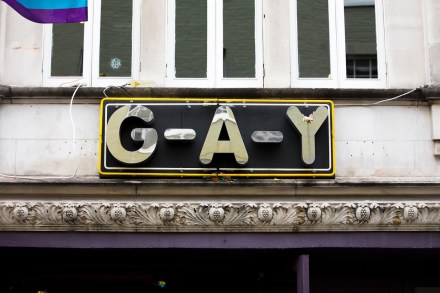
Gays won’t mourn the death of G-A-Y

My colleague seemed surprised that I replied ‘no’ when asked if I was sad at the news that G-A-Y bar – a staple of Soho for decades – was closing. A more intelligent answer would be that the closure of any ‘gay space’ is sad, but the truth is this is not somewhere that many in ‘the community’ will mourn. I tried to think about the last time I went to G-A-Y and I can’t remember. I texted a dozen friends and they can’t remember either. I guess that speaks to part of the problem. Jeremy Joseph, the owner of the bar, announced the closure on social media on Wednesday. But the speed of its closure this weekend, just days after the announcement, is surprising. Joseph says that ‘Old Compton Street has lost [its] LGBT identity’.

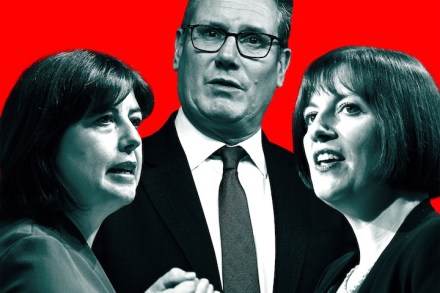
Labour’s deputy divisions: insider vs outsider?

14 min listen

Tim Shipman and Claire Ainsley from the Progressive Policy Institute join Patrick Gibbons to reflect on Labour's party conference as it draws to a close in Liverpool. This conference has been received positively for Labour but, on the final day, a hustings for the deputy leadership demonstrated that divides remain under the surface. Is Lucy Powell versus Bridget Phillipson a case of left versus right in the party, or is it more about the outsider versus the insider? And, as a leading political commentator declares Labour to now be the 'party of the professional middle class', what does the contest tell us about who Labour needs to appeal to? Produced by Patrick Gibbons.

Only EU membership will secure Moldova’s future

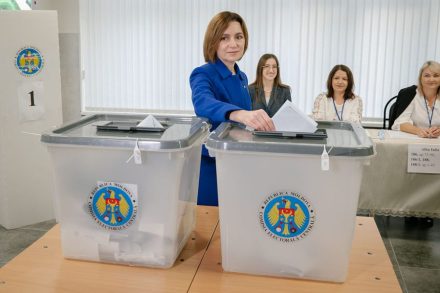
‘The European path of Moldova must go on,’ a young Moldovan politician texted me as their parliamentary election results began to roll in yesterday. His party PAS, the pro-European Party of Action and Solidarity, won. The race was not as close as some supporters feared, with PAS receiving about 50 per cent of the vote. The main opposition, Patriotic Electoral Bloc – an alliance of pro-Russian socialist and communist parties – received around 25 per cent. This is a remarkable moment for Moldova. Just three weeks ago President Maia Sandu, the founder of PAS, addressed the European parliament in Strasbourg, warning of Russian interference. Calling the election a ‘battlefield’, Sandu declared that joining the European Union was a ‘matter of survival’ for Moldova.

Ed Davey pitches himself as the anti-Farage

11 min listen

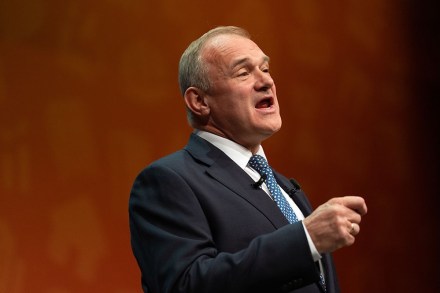
The Liberal Democrat party conference in Bournemouth has concluded with a speech from leader Sir Ed Davey. While the current crop of Liberal Democrats are the most successful third-party in 100 years, they have faced questions about why they aren't cutting through more while Reform is. It's something Davey is aware of and – hoping to exploit how divisive the leader of Reform is – he sought to pitch himself as the anti-Farage. Will it work? Plus, more bad news for the Chancellor. Labour had pledged to aim for the highest growth in the G7. New figures from the OECD did upgrade their global growth forecast, including for Britain, but projected that the UK would see the highest inflation across the G7. How bad is this for Rachel Reeves?

Will Shabana stop the boats?

19 min listen

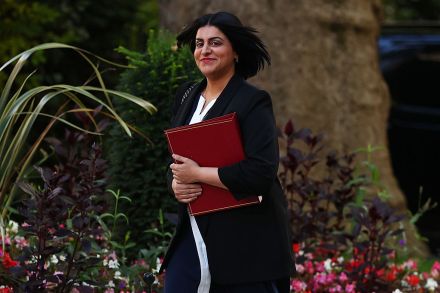
With the announcement yesterday that the government would be prepared to suspend visas for countries that don’t cooperate with the UK over deportations, has Shabana Mahmood shown she has what it takes to tackle immigration? Tim Shipman and James Heale join Patrick Gibbons to discuss whether the new home secretary can ‘stop the boats’. But, as the government ‘reset’ continues, all eyes are on Labour’s deputy leadership race. The most high-profile MPs to throw their hats in the ring are education secretary Bridget Phillipson, former shadow foreign secretary Emily Thornberry – and Lucy Powell, fresh from her sacking as Leader of the House of Commons. Is the race shaping up to be a one-on-one between a government loyalist and an outsider?