Owen Matthews

Owen Matthews

Owen Matthews is an Associate Editor of The Spectator and the author of Overreach: The Inside Story of Putin’s war on Ukraine.

Matt Ridley, William Cook, Owen Matthews and Agnes Poirier

From our UK edition

28 min listen

On this week’s Spectator Out Loud: Matt Ridley argues that whoever you vote for, the blob wins (1:02); William Cook reads his Euros notebook from Germany (12:35); Owen Matthews reports on President Zelensky’s peace summit (16:21); and, reviewing Michael Peel’s new book ‘What everyone knows about Britain’, Agnes Poirier ponders if only Britain knew how it was viewed abroad (22:28).  Presented by Patrick Gibbons.

Zelensky’s peace summit flop

From our UK edition

Volodymyr Zelensky’s Global Peace Summit in Switzerland was meant to demonstrate the world’s support for Kyiv and underscore Russia’s isolation. It did the opposite. Russia wasn’t invited. China didn’t send a delegation. Other major countries that might influence the Kremlin – including Brazil, India, Saudi Arabia, South Africa and the UAE – refused to sign the watered-down final communiqué. According to a former senior member of Zelensky’s administration, Ukraine’s leader had ‘hoped the conference would mark a new benchmark of international support… [but] it just showed how badly we have lost the support in the Global South’. Take Brazil’s President, Lula da Silva.

Distrust and resentment have plagued Anglo-Russian relations for centuries

From our UK edition

Has a book ever been more bizarrely mis-titled than this one? The First Cold War: Anglo-Russian Relations in the 19th Century has nothing whatever to do with the actual Cold War, nor is it for the most part concerned with the 19th century. Rather, Barbara Emerson has written a thorough and often diverting diplomatic history of Anglo-Russian relations from the 16th to the early 20th century. This period encompasses at least 14 wars in which British and Russian troops found themselves embroiled, sometimes on the same side, sometimes on opposite sides. None of these wars was remotely ‘cold’. Nor does Emerson attempt to make any argument that the shifting great power politics of the 19th century resembled those of the post-second-world-war nuclear age.

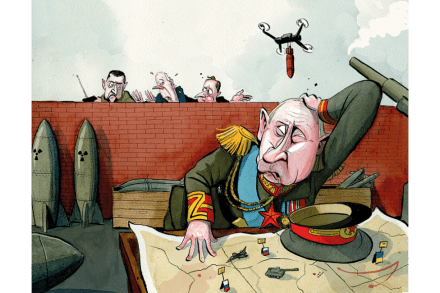
Putin’s purge of his top generals

From our UK edition

In the past month, Vladimir Putin has had five top generals arrested on corruption charges. More are likely to follow in what looks like a gathering purge by the Federal Security Service (FSB). ‘There is a fierce clean-up under way,’ a source close to the Kremlin told the Moscow Times last week. ‘There is still a long way to go before the purges are finished. More arrests await us.’ Without doubt, the FSB will find plenty of the corruption it’s looking for. Timur Ivanov, Russia’s deputy defence minister – the first senior general arrested – was hardly shy about flaunting his wealth.

Quentin Letts, Owen Matthews, Michael Hann, Laura Gascoigne, and Michael Simmons

From our UK edition

31 min listen

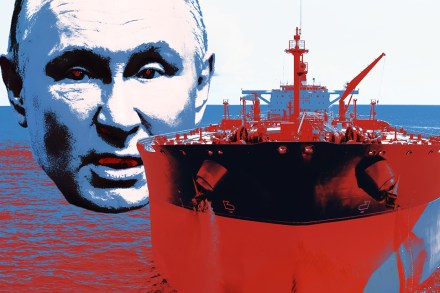
On this week’s Spectator Out Loud: Quentin Letts takes us through his diary for the week (1:12); Owen Matthews details the shadow fleet helping Russia to evade sanctions (7:15); Michael Hann reports on the country music revival (15:05); Laura Gascoigne reviews exhibitions at the Tate Britain and at Studio Voltaire (21:20); and, Michael Simmons provides his notes on the post-pub stable, the doner kebab (26:20). Produced by Patrick Gibbons and Oscar Edmondson.

The shadow fleet helping Russia to evade sanctions

From our UK edition

Economic sanctions were meant to be the West’s secret weapon against Russia, a way of crippling Vladimir Putin’s war machine and bringing his invasion of Ukraine to a halt without Nato firing a shot. Instead, Russia’s economy and military remain in rude health. After recent heavy attacks north of Kharkiv, Putin’s troops have seized more than 38 square miles of territory and stretched Kyiv’s already thinly deployed defences as they grind forward in Donbas. Putin has demoted his long-serving defence minister Sergei Shoigu, replacing him with the little-known economist Andrei Belousov. Appointing a finance specialist as military chief was a reminder that armies march on money. In Russia’s case, oil money.

The US war aid might be too little, too late for Ukraine

From our UK edition

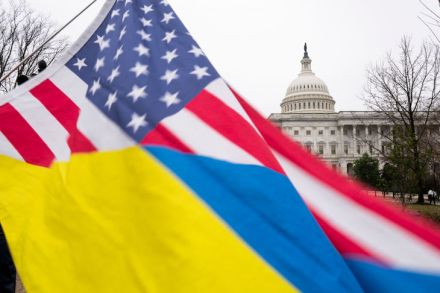
At the last possible moment, after months of prevarication and with Russian troops on the brink of a major breakthrough in Ukraine, the US Congress last night voted to approve more than $61 billion (£50 billion) worth of military assistance for Kyiv. In a vote that a vocal minority of Republicans had desperately attempted to stop through procedural objections and threats to remove speaker Mike Johnson, 210 Democrats and 101 Republicans finally joined to support Ukraine. A majority of Republicans – 112 Congress members – voted against. The money comes at a critical moment in Ukraine’s war effort.

Will Biden support Ukraine’s attacks on Russia?

From our UK edition

46 min listen

This week: will Biden support Ukraine’s attacks on Russia? Owen Matthews writes the cover piece in light of the Zelensky drone offensive. Ukraine’s most successful strategy to date has been its ingenious use of homemade, long-range drones, which it has used to strike military targets as well as oil refineries and petrol storage facilities in Russia. The strikes are working but have alienated the US, who draw a red line when it comes to attacks on Russian soil. Owen joins the podcast alongside Svitlana Morenets, author of The Spectator’s Ukraine in Focus newsletter to debate what comes next.

Will Biden support Ukraine’s attacks on Russia?

From our UK edition

This time last year, Volodymyr Zelensky was touring western capitals, calling for weapons and money to launch a decisive summer offensive. Nato eventually provided Leopard and Challenger tanks, Bradley infantry fighting vehicles, M777 howitzers, Himars rocket artillery and Patriot air defences – but too little, too late. The much-vaunted offensive went nowhere, despite a mutiny by the Wagner Group and widespread disarray in the Russian army. Instead, Soledar, Bakhmut and Avdiivka were seized. Today, Russian missile assaults are intensifying, not receding. In March, Russia hit Ukraine with 264 missiles and 515 drones. A relentless bombardment of Kharkiv is making Ukraine’s second city uninhabitable.

The Moscow terror attack is Putin’s 9/11

From our UK edition

The Crocus City Hall attack blindsided Putin’s vast security state. Employing nearly a million policemen, 340,000 national guards and over 100,000 spies, that apparatus has proved ruthlessly efficient at terrorising babushkas bringing flowers to Aleksei Navalny’s grave, tracking down lone bloggers and persecuting homosexuals. But as the Crocus attack demonstrated, the Kremlin’s securocrats are utterly incompetent at doing their actual job, which is to protect the lives of Russian citizens. Rather than keep a relentless watch for emerging threats from all over the region, Putin’s security chiefs have instead focused on only two tasks – repressing internal dissent, and stealing money.

Pope Francis’s unhelpful Ukraine comments

From our UK edition

Pope Francis has made a statement on the Ukraine war that has sparked fury among many of Kyiv’s supporters. Asked by a Swiss television interviewer whether the Ukraine should ‘raise the white flag’ Francis replied, ‘When you see that you are defeated, that things are not going well, you have to have the courage to negotiate,' adding that he believed that ‘the stronger one is the one who… thinks of the people, who has the courage of the white flag.’  Blessed are the peacemakers. But Pope Francis was addressing the wrong side After a storm of criticism, the Vatican press service put out a clarification.

Putin may seem confident – but Russia’s future is bleak

From our UK edition

How old will you be when Vladimir Putin’s next presidential term ends in 2030? Which of today’s world leaders will still be in office? By that time Putin will have been in power for 29 years, and just under half the population of the Earth at that time will have been born during his reign. On current form, Putin is set to see in at least two more US presidents – or more, if he chooses to stay in power until 2036. Putin has made a fetish of defending a Russian national sovereignty that no one had attempted to destroy When Putin launched his invasion of Ukraine in 2022 many dared to hope that defeat on the battlefield would force Russians to finally accept that they are no longer a great global superpower and confront their imperialist assumptions.

Navalny’s final agony at the Polar Wolf gulag

From our UK edition

One winter’s night before the Ukraine war, I was on a train that stopped at a remote station deep in the Russian arctic. It was late November. The mercury stood at 15 degrees below zero – the hard, dry frost of the far north. The train stood silent, wreathed in the coal smoke of the stoves that heated every carriage. The village’s name was Kharp. Though I did not know it at the time, Kharp is home to the FKU IK-3 penal colony, a Soviet-era arctic facility known as Polar Wolf where Alexei Navalny has just died. It was here that the Putin regime, with its rigid deafness to irony, chose to imprison Navalny for his final agony I wanted to catch a glimpse of the Northern Lights, so I pulled on a couple of coats and headed outside.

Harry Mount, Lara Prendergast, Catriona Olding, Owen Matthews and Jeremy Hildreth

From our UK edition

29 min listen

On this week's Spectator Out Loud, Harry Mount reads his diary, in which he recounts a legendary face-off between Barry Humphries and John Lennon (00:45); Lara Prendergast gives her tips for male beauty (06:15); Owen Matthews reports from Kyiv about the Ukrainians' unbroken spirit (12:40); Catriona Olding writes on the importance of choosing how to spend one's final days (18:40); and Jeremy Hildreth reads his Notes On Napoleon's coffee. Produced by Cindy Yu, Margaret Mitchell, Max Jeffery and Natasha Feroze.

The tragedy of Alexei Navalny

From our UK edition

I knew and greatly respected Alexei Navalny. The news (as yet not independently confirmed) that he died in prison came today as a physical blow – sickening, but at the same time tragically unsurprising. Navalny’s passion, his intelligence and his refusal to make compromises with the Putin regime made him a colossus in a world of opposition politicians filled with moral pygmies. The Soviet Communist party once claimed to be the ‘intelligence, the honour and the conscience’ of the Russian people. But that title properly belongs to Navalny, whose life and career were living proof that Putin had not yet entirely extinguished Russians’ spirit of freedom and defiance, even in the face of terrifying odds.

Ukraine’s spirit isn’t even close to broken

From our UK edition

Rome and Kyiv have one thing in common – the distinctive whine of motor-scooter engines in the night. The difference is that in Kyiv the high, Vespa-like noise does not rise from the streets but drifts down from among snow-laden clouds. It’s the unmistakable sound made by Iranian-designed Shahed-136 suicide drones, essentially modern-day doodlebugs armed with warheads big enough to collapse a medium-sized building. Kyivans nickname these sky-borne menaces ‘mopeds’. Shaheds are slow-moving, low altitude and easy to spot, so Russia fires them after dark. With a great deal of noise and spectacular flashes in the night sky, Ukrainian anti-aircraft and Patriot missile batteries usually blow most of them out of the sky as they come in.

Ukraine’s new strategy hits Russia where it hurts

From our UK edition

Ukraine is fighting not one but two hot wars against Russia. The first, a conventional, bloody land war along an 810-mile front line, has descended into stalemate. But the second – drone and missile strikes and sabotage raids deep into enemy territory – may prove to be a game-changing strategy for hitting Russia where it hurts. Last week, two Ukrainian kamikaze drones scored a spectacular hit on an oil and gas refinery and an oil export terminal in Ust-Luga near St Petersburg. At a range of 775 miles from Ukraine, the strike has severely dented Russian ability to produce and export naphtha, jet fuel and gasoil, and export liquefied natural gas (LNG). It might take weeks or months before the refinery returns to significant capacity.

Putin’s ‘peace’ is a partitioned Ukraine

From our UK edition

52 min listen

On the podcast: In his new year’s address this year Vladimir Putin made no mention of the war in Ukraine – despite missile strikes over the Christmas period – and now Owen Matthews reports in The Spectator this week rumours that Putin could be looking to broker a land-for-peace deal. Unfortunately – Owen says – this deal would mean freezing the conflict along its current lines and the de facto partition of Ukraine. Owen joins the podcast alongside The Spectator’s Svitlana Morenets who gives her own take on Putin’s 'peace' deal in the magazine this week. (01:21) Next: Former Sky News and GB News broadcaster Colin Brazier writes a farmer’s notebook in The Spectator this week about his new life as a farming student.

Putin’s ‘peace’ is a partitioned Ukraine

From our UK edition

Is Vladimir Putin trying to end his war in Ukraine? According to recent reports, the Kremlin has launched a new ‘back-channel diplomacy’ to reach out to senior officials in the Joe Biden administration. Putin’s message: to signal that he could accept a ceasefire that freezes the fighting along current lines. Reactions to the story have been furious. Some Ukrainians, sheltering from Russia’s biggest-ever missile and drone assaults of the war over Christmas, saw it as evidence of a nefarious Washington insider plot to sell Kyiv down the river. President Volodymyr Zelensky dismissed Putin’s initiative as disingenuous, saying that he saw ‘no sign’ Russia genuinely wanted to negotiate. ‘We just see brazen willingness to kill,’ he told the New York Times.

The Ukrainian war can only end in a peace deal

From our UK edition

Kyiv In Ukraine, the political mood has become sombre and fractious. As the front lines settle into stalemate, Russia ramps up for a new season of missile and drone attacks, and vital US support for Ukraine’s war effort crumbles under partisan attack in Congress, one existential question looms large. Should Volodymyr Zelensky continue to fight endlessly in pursuit of a comprehensive defeat of Russia which may be unattainable – or should he consider cutting his losses and reaching a compromise? At the war’s outset, the Ukrainian President had a clear answer. ‘I am sure there are people who won’t be satisfied with any kind of peace [with Russia] under any conditions at any time,’ he told the Associated Press.