Owen Matthews

Owen Matthews

Owen Matthews is an Associate Editor of The Spectator and the author of Overreach: The Inside Story of Putin’s war on Ukraine.

Few rulers can have rejoiced in a less appropriate sobriquet than Augustus the Strong

From our UK edition

Augustus the Strong (1670-1733), Elector of Saxony and King of Poland, is often labelled one of the worst monarchs in European history. His reign is billed by Tim Blanning’s publishers as ‘a study in failed statecraft, showing how a ruler can shape history as much by incompetence as brilliance’. Yet this thorough and often hilarious study of Augustus’s life and times reveals these harsh headline words to be exaggerated. Indeed the man comes across as quite a good egg, as much sinned against as sinning.

What does ‘victory’ for Ukraine look like?

From our UK edition

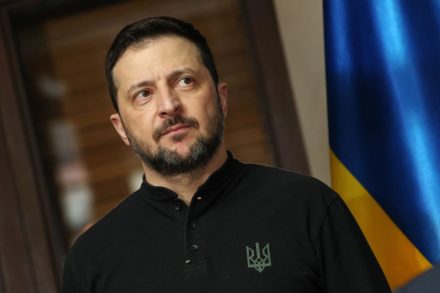
This week in New York Volodymyr Zelensky will present Joe Biden with a ‘Victory Plan’ for Ukraine. But how to define what ‘victory’ actually means? A fundamental and fast-widening distance is opening up over that question between Zelensky and his western allies – as well as inside Ukraine itself. Zelensky insists that the bottom line of a Ukrainian victory remains ‘the occupation army [being] driven out by force or diplomatically, in such a way that the country preserves its true independence and is freed from occupation’. He has also rejected the idea of a ceasefire, saying that any ‘freezing of the war or any other manipulations… will simply postpone Russian aggression to a later stage’.

How Wagner mercenaries abused HSBC and JP Morgan

From our UK edition

Whatever happened to the Wagner Group, Evgeny Prigozhin’s shadowy army of prisoners and mercenaries? In the wake of Wagner’s abortive mutiny in June 2023 – and of Prigozhin’s own not-so-mysterious death two months later in a plane crash near Moscow – most of the Russia-based units of the group were rolled into the Kremlin’s official armed forces. In Africa, however, where Wagner built an empire not only of guns-for-hire but also of murky mining and oil concessions, Prigozhin’s former henchmen continue their bloody and lucrative business.

Joan Collins, Owen Matthews, Sara Wheeler, Igor Toronyi-Lalic and Tanya Gold

From our UK edition

30 min listen

On this week’s Spectator Out Loud: Joan Collins reads an extract from her diary (1:15); Owen Matthews argues that Russia and China’s relationship is just a marriage of convenience (3:19); reviewing The White Ladder: Triumph and Tragedy at the Dawn of Mountaineering by Daniel Light, Sara Wheeler examines the epic history of the sport (13:52); Igor Toronyi-Lalic looks at the life, cinema, and many drinks, of Marguerite Duras (21:35); and Tanya Gold provides her notes on tasting menus (26:07).  Presented and produced by Patrick Gibbons.

What China wants from Russia

From our UK edition

On the face of it, the ‘no limits’ partnership between Russia and China declared weeks before Vladimir Putin invaded Ukraine in February 2022 appears to be going from strength to strength. Last week, Chinese Premier Li Qiang spent four days in Moscow and signed off on what Putin described as ‘large-scale joint plans and projects’ that would ‘continue for many years’. Russia’s trade with China has more than doubled to $240 billion since the invasion, buoying the Kremlin’s coffers with oil money and substituting goods sanctioned by the West. Moscow and Beijing have also stepped up joint military exercises.

The arrest of Pavel Durov raises awkward questions

From our UK edition

Pavel Durov, Russian-born founder of the Telegram messaging and social media app, has been arrested in France for failing to comply with official demands to regulate content posted by users on his app. According to a warrant issued by France’s Ofmin – an office tasked with preventing violence against minors – Durov’s alleged offences include abetting fraud, drug trafficking, cyberbullying, organised crime, child pornography and the promotion of terrorism. The arrest of the 39-year-old Durov – a French, Saint Kitts and Nevis and United Arab Emirates citizen – is set to become a battle royal between advocates of free speech and those who seek to regulate it. Elon Musk, owner of Twitter, has been among the first to rush to Durov’s defence, tweeting ‘Liberte. Liberte!

Why is Lukashenko pushing for an end to the Ukraine war?

From our UK edition

Could Belarus’s Aleksandr Lukashenko be the key to ending the Ukraine conflict? In a surprising intervention over the weekend, the long-time dictator and close Putin ally said in an interview on Russian state TV that ‘Nazis don’t exist on the territory of Ukraine’ – a key part of Putin’s stated war aims. He also called for negotiations to begin in order to end the conflict. Lukashenko claimed that ‘neither the Ukrainian people, nor the Russians, nor the Belarusians need [this conflict]’, adding that only the West wanted this war to continue.

Do we now have proof Ukraine blew up the Nord Stream pipelines?

From our UK edition

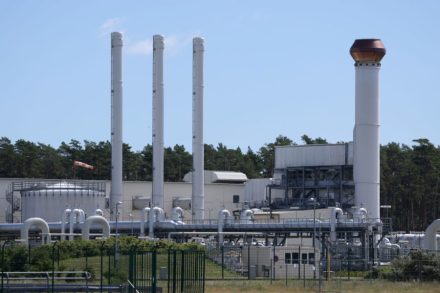
When three of the four Nord Stream gas pipelines connecting Russia to Germany were destroyed by unknown saboteurs in September 2022, Ukrainian presidential adviser Mikhailo Podolyak described the bombing as ‘a terrorist attack planned by Russia and an act of aggression towards the EU.’ The attack – which knocked out the route through which Germany had previously received 30 per cent of its gas supplies – was designed to ‘destabilise the economic situation in Europe and cause panic before winter,’ Podolyak wrote on Twitter. But there was one crucial detail that Podolyak failed to mention: compelling evidence is emerging that it was not Russia, but Ukraine that organised the ‘terrorist’ attack.

Zelensky’s new offensive could push Putin to the brink

From our UK edition

A Russian friend speaking from Kursk tells me the latest war joke. Vladimir Putin summons Stalin’s ghost. ‘Comrade Stalin!’ asks Putin. ‘German tanks are in Kursk again. I need your advice.’ Stalin’s ghost ponders before answering. ‘Do what I did. Get hold of as much American military aid as you can, and make sure to send in the Ukrainians at the vanguard of your army.’ In 1943, the battle-scarred fields of Kursk were filled with troops of the Red Army’s First Ukrainian Front, riding American-supplied aircraft and tanks as they advanced westwards towards Berlin. Today, Ukrainian troops – some in German-supplied vehicles – are fighting Russians less than 50 miles from where my friend is. He chuckles at the bitter irony of his own wisecrack.

Could the Russia prisoner swap help bring peace to Ukraine?

From our UK edition

I can well understand that joy and relief experienced by the supporters and families of the hostages released yesterday by Vladimir Putin. For I myself owe my life to a Cold War spy swap.  In October 1969, the British government exchanged Peter and Helen Kroger, two senior Soviet career spies nabbed for running a very real espionage ring, for Gerald Brooke, a British student who had served five years in a Russian jail for ‘anti-Soviet agitation'. The exchange was so unequal that Brezhnev’s Politburo agreed to throw in three Soviet citizens who wanted to marry Britons in as a makeweight. One was my mother, Lyudmila Bibikova.

Matt Ridley, William Cook, Owen Matthews and Agnes Poirier

From our UK edition

28 min listen

On this week’s Spectator Out Loud: Matt Ridley argues that whoever you vote for, the blob wins (1:02); William Cook reads his Euros notebook from Germany (12:35); Owen Matthews reports on President Zelensky’s peace summit (16:21); and, reviewing Michael Peel’s new book ‘What everyone knows about Britain’, Agnes Poirier ponders if only Britain knew how it was viewed abroad (22:28).  Presented by Patrick Gibbons.

Zelensky’s peace summit flop

From our UK edition

Volodymyr Zelensky’s Global Peace Summit in Switzerland was meant to demonstrate the world’s support for Kyiv and underscore Russia’s isolation. It did the opposite. Russia wasn’t invited. China didn’t send a delegation. Other major countries that might influence the Kremlin – including Brazil, India, Saudi Arabia, South Africa and the UAE – refused to sign the watered-down final communiqué. According to a former senior member of Zelensky’s administration, Ukraine’s leader had ‘hoped the conference would mark a new benchmark of international support… [but] it just showed how badly we have lost the support in the Global South’. Take Brazil’s President, Lula da Silva.

Distrust and resentment have plagued Anglo-Russian relations for centuries

From our UK edition

Has a book ever been more bizarrely mis-titled than this one? The First Cold War: Anglo-Russian Relations in the 19th Century has nothing whatever to do with the actual Cold War, nor is it for the most part concerned with the 19th century. Rather, Barbara Emerson has written a thorough and often diverting diplomatic history of Anglo-Russian relations from the 16th to the early 20th century. This period encompasses at least 14 wars in which British and Russian troops found themselves embroiled, sometimes on the same side, sometimes on opposite sides. None of these wars was remotely ‘cold’. Nor does Emerson attempt to make any argument that the shifting great power politics of the 19th century resembled those of the post-second-world-war nuclear age.

Putin’s purge of his top generals

From our UK edition

In the past month, Vladimir Putin has had five top generals arrested on corruption charges. More are likely to follow in what looks like a gathering purge by the Federal Security Service (FSB). ‘There is a fierce clean-up under way,’ a source close to the Kremlin told the Moscow Times last week. ‘There is still a long way to go before the purges are finished. More arrests await us.’ Without doubt, the FSB will find plenty of the corruption it’s looking for. Timur Ivanov, Russia’s deputy defence minister – the first senior general arrested – was hardly shy about flaunting his wealth.

Quentin Letts, Owen Matthews, Michael Hann, Laura Gascoigne, and Michael Simmons

From our UK edition

31 min listen

On this week’s Spectator Out Loud: Quentin Letts takes us through his diary for the week (1:12); Owen Matthews details the shadow fleet helping Russia to evade sanctions (7:15); Michael Hann reports on the country music revival (15:05); Laura Gascoigne reviews exhibitions at the Tate Britain and at Studio Voltaire (21:20); and, Michael Simmons provides his notes on the post-pub stable, the doner kebab (26:20). Produced by Patrick Gibbons and Oscar Edmondson.

The shadow fleet helping Russia to evade sanctions

From our UK edition

Economic sanctions were meant to be the West’s secret weapon against Russia, a way of crippling Vladimir Putin’s war machine and bringing his invasion of Ukraine to a halt without Nato firing a shot. Instead, Russia’s economy and military remain in rude health. After recent heavy attacks north of Kharkiv, Putin’s troops have seized more than 38 square miles of territory and stretched Kyiv’s already thinly deployed defences as they grind forward in Donbas. Putin has demoted his long-serving defence minister Sergei Shoigu, replacing him with the little-known economist Andrei Belousov. Appointing a finance specialist as military chief was a reminder that armies march on money. In Russia’s case, oil money.

The US war aid might be too little, too late for Ukraine

From our UK edition

At the last possible moment, after months of prevarication and with Russian troops on the brink of a major breakthrough in Ukraine, the US Congress last night voted to approve more than $61 billion (£50 billion) worth of military assistance for Kyiv. In a vote that a vocal minority of Republicans had desperately attempted to stop through procedural objections and threats to remove speaker Mike Johnson, 210 Democrats and 101 Republicans finally joined to support Ukraine. A majority of Republicans – 112 Congress members – voted against. The money comes at a critical moment in Ukraine’s war effort.

Will Biden support Ukraine’s attacks on Russia?

From our UK edition

46 min listen

This week: will Biden support Ukraine’s attacks on Russia? Owen Matthews writes the cover piece in light of the Zelensky drone offensive. Ukraine’s most successful strategy to date has been its ingenious use of homemade, long-range drones, which it has used to strike military targets as well as oil refineries and petrol storage facilities in Russia. The strikes are working but have alienated the US, who draw a red line when it comes to attacks on Russian soil. Owen joins the podcast alongside Svitlana Morenets, author of The Spectator’s Ukraine in Focus newsletter to debate what comes next.

Will Biden support Ukraine’s attacks on Russia?

From our UK edition

This time last year, Volodymyr Zelensky was touring western capitals, calling for weapons and money to launch a decisive summer offensive. Nato eventually provided Leopard and Challenger tanks, Bradley infantry fighting vehicles, M777 howitzers, Himars rocket artillery and Patriot air defences – but too little, too late. The much-vaunted offensive went nowhere, despite a mutiny by the Wagner Group and widespread disarray in the Russian army. Instead, Soledar, Bakhmut and Avdiivka were seized. Today, Russian missile assaults are intensifying, not receding. In March, Russia hit Ukraine with 264 missiles and 515 drones. A relentless bombardment of Kharkiv is making Ukraine’s second city uninhabitable.

The Moscow terror attack is Putin’s 9/11

From our UK edition

The Crocus City Hall attack blindsided Putin’s vast security state. Employing nearly a million policemen, 340,000 national guards and over 100,000 spies, that apparatus has proved ruthlessly efficient at terrorising babushkas bringing flowers to Aleksei Navalny’s grave, tracking down lone bloggers and persecuting homosexuals. But as the Crocus attack demonstrated, the Kremlin’s securocrats are utterly incompetent at doing their actual job, which is to protect the lives of Russian citizens. Rather than keep a relentless watch for emerging threats from all over the region, Putin’s security chiefs have instead focused on only two tasks – repressing internal dissent, and stealing money.