Owen Matthews

Owen Matthews

Owen Matthews is an Associate Editor of The Spectator and the author of Overreach: The Inside Story of Putin’s war on Ukraine.

Why Trump met Syria’s interim president

Few career arcs in modern history can be as remarkable as that of Ahmed Hussein al-Sharaa – or Abu Mohammed al-Jolani, to give him the nom de guerre under which he fought American troops in Iraq back when he was a firebrand member of al-Qaeda. Twenty years ago al-Sharaa was languishing in a US military prison in Baghdad, held on suspicion of terrorism. Today, as Syria’s new interim President, he shook hands with Donald Trump posing for photo-calls alongside the de-facto ruler of Saudi Arabia Mohammad bin Salman. Trump was evidently impressed by al-Sharaa, who has swapped the turban and dusty fatigues that he habitually wore before taking Damascus by storm last winter for a plain blue suit and purple tie. “He’s a young attractive guy.

al-sharaa

Ukraine’s Victory Day drone swarm is dangerous for Putin

From our UK edition

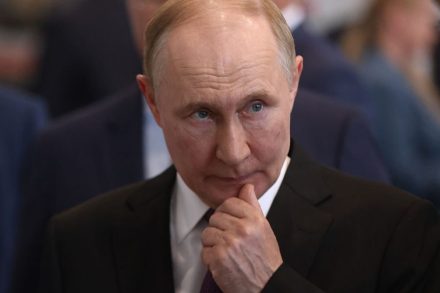
Russia’s Victory Day celebrations on 9 May should mark a triumphal double apotheosis for Vladimir Putin. Not only will it be the 25th Victory parade since the beginning of his presidency, but is also the 80th anniversary of the Soviet defeat of Nazi Germany, which Putin has appropriated as a fundamental ideological pillar of his regime. Yet instead of marking the absolute high point of Putin’s reign, the traditional military parade on Red Square will be shadowed by jeopardy and haunted by the ghosts of future failure.   The Russians are apoplectic that Zelensky has so far ignored the unilateral three day ceasefire around Victory Day that Putin proposed last week For one, many of the world leaders Putin had hoped would attend have chosen to stay away.

What does Putin want? Whatever he can get away with

From our UK edition

The US general Mark Clark knew a thing or two about dealing with Russians. In the aftermath of the defeat of Nazi Germany, Clark commanded the American occupying forces in Austria. His Soviet opposite number, and nominal ally, was Marshal Ivan Konev. The two war heroes were tasked with pacifying the conquered and divided country at the dawn of the Cold War. ‘The Russians were not interested in teamwork,’ recalled Clark in his 1950 memoir, Calculated Risk. ‘They wanted to keep things boiling… They were accustomed to the use of force. They were skilled in exploiting any sign of weakness or uncertainty or appeasement. This was their national policy.’ Two things infuriated Clark more than anything.

Owen Matthews, Matthew Parris, Marcus Nevitt, Angus Colwell and Sean Thomas

From our UK edition

31 min listen

On this week’s Spectator Out Loud: Owen Matthews reads his letter from Rome (1:21); Matthew Parris travels the Channel Islands (7:53); Reviewing Minoo Dinshaw, Marcus Nevitt looks at Bulstrode Whitelocke and Edward Hyde, once close colleagues who fell out during the English civil war (15:19); Angus Colwell discusses his Marco Pierre White obsession, aided by the chef himself (21:26); and, Sean Thomas provides his notes on boredom (26:28).  Produced and presented by Patrick Gibbons.

‘Vladimir, STOP!’ – Trump is being humiliated by Putin

From our UK edition

Theodore Roosevelt was a believer in speaking softly but carrying a big stick. But where does that leave Donald Trump, who today resorted to all-caps plea, or perhaps demand, that Putin ‘STOP!’ his offensive operations against Ukrainian cities – yet backed up his entreaty with precisely nothing?  ‘I am not happy with the Russian strikes on KYIV.’ Trump wrote in a post on Truth Social after footage emerged of civilians buried under rubble in Kyiv, Kharkiv and Odessa. ‘Not necessary, and very bad timing. Vladimir, STOP!’  The message was a rare instance of Trump directly criticising Putin.

How Rome copes with the Conclave

From our UK edition

Ordinary Romans, famous for their cheerful working-class familiarity, loved Pope Francis for his common touch. For the first time in living memory, they will have the opportunity of turning out on the streets to say their final farewells to a Pope, as Francis willed that he be buried in the papal basilica of Santa Maria Maggiore on the Esquiline hill rather than in the vaults of St Peter’s. His will be the first papal burial procession to the Basilica since Clement IX’s in 1669. Unlike his predecessors, though, Francis insisted on plainness, economy and simplicity. His first arrival in the Vatican as Pope was by public bus. His departure, in a plain wooden coffin, is likely to be equally low-key and dignified. The mortal Pope dies, but the Eternal City lives. And, indeed, is reborn.

Why London’s Russia-Ukraine ceasefire talks will fail

From our UK edition

There’s one key thing that one should know about Ukraine peace talks scheduled to begin in London today, and that is that they will fail. The reason is simple: Volodymyr Zelensky is being asked to concede Russia’s legal possession of the Crimean peninsula which Moscow annexed in 2014. And Ukraine's president has said, in the most emphatic possible terms, that he will not do it. Zelensky cannot accept it because such a concession will be political suicide That’s not because Zelensky is pig-headed, a warmonger, or refuses to accept the reality that there is no way for Ukraine ever to recover the lost peninsula. Zelensky cannot accept because such a concession will be political suicide. It runs the strong risk of triggering a civil war inside Ukraine.

Has the Kremlin talked Trump out of sanctions?

From our UK edition

After a two-hour phone call last month, Donald Trump and Vladimir Putin announced that an improved bilateral relationship between the United States and Russia ‘has huge upside’, including ‘enormous economic deals and geopolitical stability’. Days later, however, Trump said he was ‘pissed off’ with Russia over its foot-dragging on a ceasefire in Ukraine. Putin’s demand, moreover, that Ukraine’s government be replaced with a transitional one had made him ‘very angry’. Trump warned that if a deal couldn’t be struck, then the US would ‘put secondary tariffs on all oil coming out of Russia… That would be that if you buy oil from Russia, you can’t do business in the United States. There will be a 25- to 50-point tariff on all [Russian] oil.

Putin has pushed Trump too far

From our UK edition

Perhaps Donald Trump is not quite the chump the Kremlin has taken him for. Trump is ‘pissed off’ with Russia over its foot-dragging over a ceasefire in Ukraine, he told NBC’s Kristen Welker. More, Vladimir Putin’s demands that Ukraine’s government be replaced with a transitional one as the price for peace negotiations made Trump ‘very angry.’  If Putin has any sense at all, he’ll take those words very seriously. Because like an orange version of the Incredible Hulk, the Kremlin won’t like Trump when he’s angry.  Over the last month Putin has worn his trademark smirking smile at all his public appearances. And well he might, as the new US administration seemed to spontaneously have switched sides from Kyiv to Moscow.

Owen Matthews, James Heale, Francis Pike, Christian House and Mark Mason

From our UK edition

32 min listen

On this week’s Spectator Out Loud: Owen Matthews argues that Turkish President Erdogan’s position is starting to look shaky (1:19); James Heale examines the new party of the posh: the Lib Dems (7:51); Francis Pike highlights the danger Chinese hypersonic missiles pose to the US navy (13:54); Christian House highlights Norway’s occupation during the Second World War, as he reviews Robert Ferguson’s book Norway’s War (22:01); and, Mark Mason provides his notes on coins (28:18).  Produced and presented by Patrick Gibbons.

Erdogan’s latest power move could backfire

From our UK edition

Turkey’s president, Recep Tayyip Erdogan, has never been so weak – nor so strong. At home, he is facing the most potent challenge to his power since an armed coup in 2016, in the form of a serious electoral challenger whom he has just jailed, causing massive protests and unsettling the money markets. Internationally, though, he has never been stronger. Every major power bloc in the world, it seems, needs Turkey’s help, with issues ranging from immigration to peacekeeping and energy supplies. Instead of sinking his main rival’s candidacy, the Turkish president has created a martyr For Europe, Erdogan remains a major gas supplier and an essential bulwark against immigrants from Syria and Afghanistan.

The EU’s ‘re-arming’ plan is unserious

From our UK edition

Hark ye now, O despots of the world and enemies of freedom: as the American beacon of democracy fades, Europe stands ready and willing to take its place as the arsenal of democracy. ‘We have agreed on a strategy for fully re-arming and re-equipping Europe,’ tweeted French President Emmanuel Macron yesterday. ‘We will fully restore our independence in the coming five years.’ Take that, Trump and Putin! Europe is stepping up to defend Ukraine and defend itself. To that end, European Commission President Ursula von der Leyen last week announced a ReArm Europe plan that could see up to €800 billion poured into the defence sector over the next four years. Small problem: that little weasel word ‘could’ is carrying a lot of weight.

Putin has played Trump like a fiddle

From our UK edition

And so it begins. Welcome to the first episode of the latest season of Putin’s Theatre of Fugazi – the longest-running drama in global geopolitics. The first takeaway from yesterday's nearly two-hour phone call between Donald Trump and Vladimir Putin seems, at first glance, a positive one. Putin conceded, in principle, strong support for a ceasefire. And in practice, he conceded its first element: a moratorium on strikes on energy infrastructure, issuing orders immediately after the phone call to halt imminent strikes.  Fundamentally, though, Putin is merely cosplaying a willing participant in the peace process. In truth, today’s Trump-Putin phone call merely raised the curtain on what promises to be a long and masterful display of delaying tactics.

What Vladimir Putin really wants from Ukraine

Donald Trump and Vladimir Putin have very different negotiating styles. Trump lines up his offer in advance, browbeating everyone on his side into compliance before slapping his bottom line on the table. Putin, by contrast, is a haggler. He loads his proposals with excess demands that he intends to discard during the negotiation process to get to a final deal. Put simply, what Putin says he wants and what he realistically expects to get are two different things. At first glance, Russia’s initial response to US proposals for a 30-day ceasefire in Ukraine includes several major deal-breakers that Ukraine could never accept. Most notably, the Kremlin demands international recognition that Ukraine’s Crimea, Donetsk, Luhansk, Zaporizhzhia and Kherson provinces are now part of Russia.

What Vladimir Putin really wants from Ukraine

From our UK edition

Donald Trump and Vladimir Putin have very different negotiating styles. Trump lines up his offer in advance, browbeating all the parties on his own side into compliance before slapping his bottom line on the table. Putin, by contrast, is a haggler. He loads his proposals with superstructure intended to be jettisoned in the course of getting to yes. Or to put it another way, what Putin says he wants and what he realistically expects to get are two different things. On the face of it, Russia’s first response to US proposals for a 30-day ceasefire in Ukraine contain several major deal-breakers that the Ukrainians could never swallow.

Why Russia should agree to a ceasefire – and five reasons Putin might not

From our UK edition

The main achievement of the US-Ukrainian talks in Jeddah was to produce a ceasefire document that Russia might actually want to sign. A long list of Ukrainian red lines – such as a partial ceasefire in the air and sea only, and security guarantees before any ceasefire was implemented – were swept aside. What’s on the table is essentially an unconditional ceasefire on all fronts, initially limited to thirty days. Putin now needs to decide whether it’s in Russia’s interests to accept.

Russian spying has become a pathetic, amateurish business

From our UK edition

Make no mistake: whatever higher moral authority they may have invoked in their defence, Soviet and Russian spies have never been good or honourable people. Kim Philby, the suave Martini-sipping traitor sent dozens of brave anti-Communist volunteers to their deaths. Konon Molody – alias Gordon Lonsdale, Canadian vending machine salesman and kingpin of the Portland Spy Ring – did not balk at blackmailing and threatening his hapless sub-agents into doing the KGB’s dirty work. But as the sordid revelations about the latest crop of Russian spies convicted yesterday in the Old Bailey’s Courtroom Seven reveal, the major difference between Moscow’s agents of yore and those of today is how lowbrow, how pathetic, how amateurish Russian intelligence operations appear to have become.

Trump’s Ukraine strategy is mad. But it might work

From our UK edition

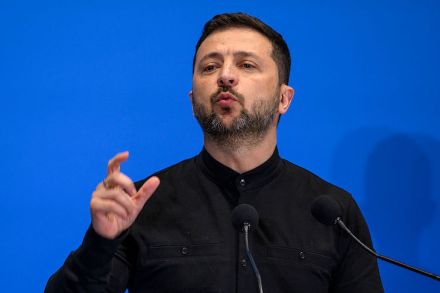
Will the real Volodymyr Zelensky please stand up? On Sunday, Ukraine’s president defiantly stated that ‘the final deal about ending the war is very, very far … nobody’s even started all those steps yet.’ But just three days later, Zelensky’s office issued a statement saying more or less the opposite. ‘None of us wants an endless war,’ read his official communiqué. ‘Ukraine is ready to come to the negotiating table as soon as possible to bring lasting peace closer … we are ready to work fast to end the war.’ So is Kyiv’s plan a quick ceasefire or a fight till victory? Zelensky’s mixed messages have left his allies confused and provided his enemies with political ammunition.

Does Zelensky have to go?

From our UK edition

31 min listen

Donald Trump announced last night he is suspending military aid to Ukraine until Zelensky is ‘ready for peace’. Following this, the Vice President JD Vance sparked further international outrage in a Fox News interview referring to Britain as ‘some random country that hasn’t fought a war in 30 or 40 years’. JD Vance has since come out saying that he was not referring to the UK or France in that interview - although critics can’t work out who else he could have been talking about.  Freddy Gray is joined by The Spectator’s Russia correspondent Owen Matthews to discuss whether the only way for there to be peace in Ukraine is for Zelensky to go, how far China and Russia’s relations have prospered since the war, and whether Trump will win a Nobel Peace Prize.

‘Europe plus’ won’t save Ukraine

From our UK edition

Days after the disastrous White House showdown between Volodymir Zelensky and Donald Trump, Sir Keir Starmer has done an undoubtedly impressive job in quickly rallying western leaders to Kyiv’s cause. The ‘Europe Plus’ partnership suggested by Starmer will be a ‘coalition of the willing’ to protect Ukraine that includes major non-European players such as Canada and, crucially, Turkey.  But make no mistake over the nature of Europe Plus’s new role. It is not, as some more excitable commentators have called it, a ‘mini-Nato.’ Europe is not taking over responsibility for its own security. A new European world order is not being built before our eyes.