Olivia Potts

Olivia Potts

Olivia Potts is the Guild of Food Writers’ Cookery Writer of the Year 2025. She hosts The Spectator’s Table Talk podcast and writes Spectator Life's The Vintage Chef column

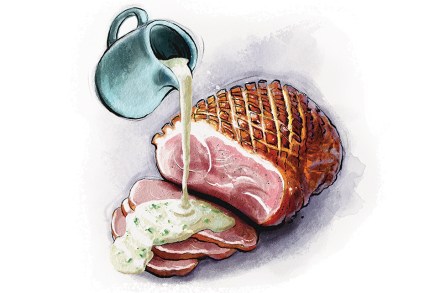
How to make ham and parsley sauce

From our UK edition

Poor old parsley sauce. As someone who writes regularly about old-fashioned food, it often feels that we are living through a golden revival of vintage dishes. You can’t move for cookbook concepts pinned on comfort and nostalgia, or restaurants attempting to take the diner on some kind of Proustian journey. Whether it’s nursery food, school dinners, classical bistro French cooking, hyper-regional food, or the polarising ‘reinvention’ of any of the above, old-fashioned ingredients are in vogue again. In trendy restaurants menus are littered with rabbit, offal, marmalade, boozy prunes; with steamed suet puddings (sweet and savoury), duck à l’orange, prawn cocktails, rice pudding, hand-raised pies… Ten years ago, devilled eggs were naff. Not now.

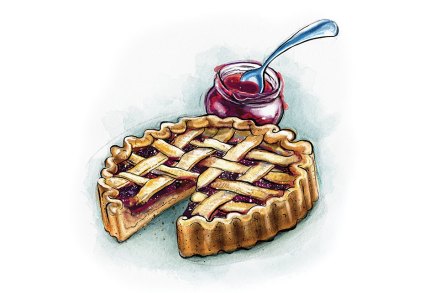
How Linzer torte stood the test of time

From our UK edition

Linzer torte has quite the claim to fame: some assert that it’s the oldest cake in the world; others that it’s the oldest to be named after a place. It feels churlish to split hairs, but those two assertions are quite different, aren’t they? In any event, it’s certainly very old. For a long time it was thought it dated back to 1696, when it was mentioned in a recipe held in the Vienna City Library. But 20 years ago, an earlier reference was found by Waltraud Faißner, a Linzer torte historian, dating it to 1653 in the snappily titled Book of All Kinds of Home-Made Things, Such as Sweet Dishes, Spices, Cakes and also Every Kind of Fruit and Other Good and Useful Things etc.

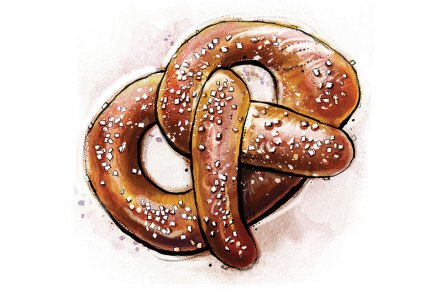
Tricky but delicious: how to make the perfect pretzels

From our UK edition

My husband is obsessed with pretzels. The joy that a slightly warm, soft baked pretzel brings him is disproportionate. And, unlike in Germany and the States, where soft pretzels are ubiquitous, they are hard to come by here. So, for a while I have been trying to perfect the pretzel. It has not been smooth sailing. Throwing your pretzels into a cauldron of water feels somewhere between heresy and madness Pretzels are tricky: as well as being made from bread dough, and therefore yeasted, they are boiled before baking, have a very distinctive flavour, and their shaping requires a certain knack. Getting them right was a labour of love. But now I’ve cracked it, which means you should be able to avoid my pitfalls.

With Gennaro Contaldo

From our UK edition

24 min listen

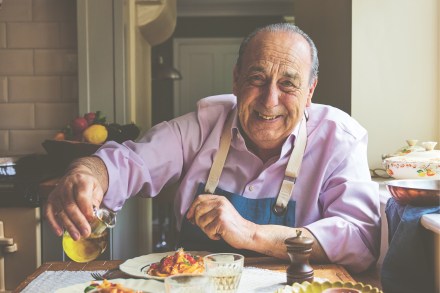
Gennaro Contaldo is an Italian chef, cookbook author and television presenter. He is also known as Jamie Oliver's mentor and Antonio Carluccio's travel partner on Two Greedy Italians. His latest cookbook Gennaro's Verdure – which celebrates seasonal vegetables – is out now.  On the podcast he tells Liv and Lara about his upbringing on the Amalfi coast, what he's learnt from Jamie Oliver and how he came to love fish and chips.

The contradictory brilliance of Boston cream pie

From our UK edition

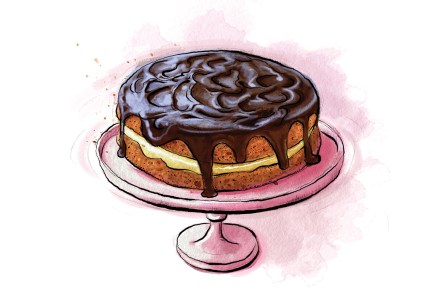
They say you can’t teach an old dog new tricks, but perhaps you can teach it old tricks. When I embarked on making a Boston cream pie, I thought I knew it all when it came to sponge cakes. I’d creamed butter and sugar, using elbow grease and a wooden spoon or employing the horsepower of a stand mixer’s whisk attachment. I’ve used the all-in-one-method; I’ve melted butter and folded it into cake batters in the pursuit of sticky denseness. And I’ve folded in egg whites, holding my breath in an attempt not to knock any air out of the mix. But I had never made a Boston cream pie, and so I had never made a hot milk sponge. Could this old dog learn something new?

You are what you don’t eat

From our UK edition

If asked to think about food preservation for a moment you might picture an aproned woman boiling oranges for marmalade in a large copper maslin pan; or vegetable scraps being turned into stock; or those recipes from wartime rationing using root veg in place of sugar; or even, with an eye to the modern, you might imagine a trendy chef preparing offal in a gleaming chrome kitchen to ensure the nose-to-tail credentials of his restaurant. Some of the attempts in the past to spin out the life of fresh produce sound positively disgusting But there is more to the history of preservation than preserves, and the obvious enemy, when we talk about preservation, is waste – the two engaged in a constant battle.

With Alex Jackson

From our UK edition

28 min listen

Alex Jackson is the founder of Sardine and currently head chef at Noble Rot, Soho. His cookbook Frontières: the food of France's borderlands is available now.  On the podcast, he tells Lara and Liv why the smell of chip fat reminds him of home, how his interest in cooking was ignited during time spent at university France, and divulges his desert island meal.

‘Delicious, not glamorous’: how to make a pot roast

From our UK edition

A pot roast is probably the antithesis of glamorous cooking. But that’s also sort of the point. For as long as we’ve been cooking meat, we’ve looked for ways to make the tougher cuts more tender and succulent. It’s the kind of cooking that every culture around the world has developed individually, a way of transforming the cheap and possibly unappetising into something delicious. The answer is simple, and relies on three elements: low heat, moisture and a lidded cooking vessel. A homely and economical way of bringing the best out of an unprepossessing joint Pot roast is the American way of slow-cooking whole joints of unforgiving meat, usually a piece of beef (although similar principles apply to pork and lamb).

With Thomas Robson-Kanu

From our UK edition

29 min listen

Thomas 'Hal' Robson-Kanu is former professional footballer who was part of the Welsh team that reached the semi finals of Euro 2016, thanks largely to a memorable goal he scored against tournament favourites Belgium. He is also the founder of The Turmeric Co. On the podcast, Thomas tells Lara and Liv how his Welsh and Nigerian heritage influenced the food he ate as a child, how turmeric was the miracle cure to an injury-ridden early career and how footballers prepare nutritionally for big games.

Chelsea buns are the best of all buns

From our UK edition

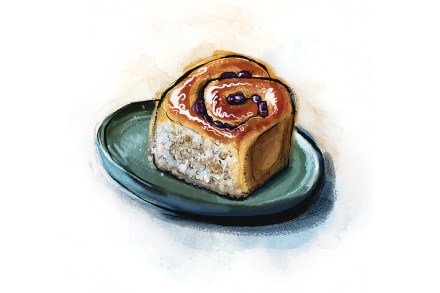
The Chelsea bun was first baked in the Bun House in Chelsea in the 18th century. It was a bakery which found particular favour with the Hanoverian royal family, as its pastries were reminiscent of those from whence they came. But these buns were for everyman: they were customarily bought by the poor on Good Friday along with hot cross buns. On these days, the demand was such that the buns were sold through an opening in the shutters, and a police presence was needed. The Bun House was headed up by Richard Hand who was known as ‘Captain Bun’; after his death, the shop passed on to one of his sons and then another. In 1839 there was no one left to take it on, and the shop closed.

With Professor Charles Spence

From our UK edition

34 min listen

Professor Charles Spence is an experimental psychologist at the University of Oxford. His research focuses on how an in-depth understanding of the human mind will lead to the better design of multi-sensory foods and products. He is the author of several books including his most recent, Sensehacking: How to Use the Power of Your Senses for Happier, Healthier Living.On this episode he talks about how he started experimenting with food and the human senses, working with Heston Blumenthal, and how he doesn't understand ice-cream.

How to (correctly) make a Cornish pasty

From our UK edition

When it comes to traditional food, there is always regional pride to contend with. Many recipes are intrinsically connected to the area from which they have sprung: Pontefract cakes, Chelsea buns, Lancashire hotpot, Welsh rarebit. They represent heritage and tradition – edible history. You must tread carefully to avoid offending regional heritage, or just making silly mistakes. I certainly feel on safer ground making pronouncements from my Salford home on Eccles cakes than I do on Ecclefechan tart. But when it comes to the Cornish pasty, the people of Cornwall have taken ownership a step further. In 2011, the Cornish pasty was granted Protected Geographical Indication by the EU, which dictates where – and how – a true classic Cornish pasty can be made.

With Edward Stourton

From our UK edition

25 min listen

Edward Stourton is a broadcaster who has worked as foreign correspondent for the BBC, Channel 4 and ITN. He is the presenter of BBC Radio 4's Sunday Program, and presented the Today Program for ten years. He has authored eight books including his most recent, Sunday: A History of Religious Affairs through 50 Years of Conversations and Controversies which is available now.  On the podcast, he recalls chocolate-stuffed baguettes on Swiss ski slopes, reveals the disappointing breakfast options in the Today Program green room, and explains why heaven is eating oysters to the sound of trumpets.

‘The perfect winter snack’: how to make flammekueche

From our UK edition

There are times in the year that call for snacks. Rather than embracing the various diets and other forms of self-flagellation that sweep over us at the start of the year, we need every joy we can get during endless January, with its dark, short days and cold nights. Right now, we are in such territory. Open those posh crisps, order the triple-cooked chips, invite joy in. I have strong ideas about the platonic snack for winter: something hot, ideally, to accompany a glass of something cold as you while away the dark evenings. The ideal contrast between crisp and yielding, sweet and salty – something that can be picked up one-handed and is substantial enough to satisfy, but still leave you wanting more. Flamme-kueche fits the bill pretty well.

With Alexandra Collier

From our UK edition

24 min listen

Alexandra Collier is a Melbourne-based writer who has written for theatre, screen and print. She is a MacDowell fellow and a recipient of the RE Ross Trust playwrites' award. Her memoir Inconceivable, about her journey to becoming a solo Mum by choice, is out now.  On the podcast she tells Lara and Liv why restaurants are inherently theatrical places, discusses her experience with IVF, and explains that it takes a village to raise a child.  Photo credit: Karin Locke.

‘Unlike anything you’ve ever eaten’: how to make lemon Shaker pie

From our UK edition

Cooking in January is a very different beast to cooking in December. I don’t just mean the flavours (the dried fruit and spice, and dark, boozy, rich flavours of the festive period are relegated to the backs of pantries and drinks cabinet) or even the sentiment, whereby many will look to lighter,simpler dishes to counteract the previous month’s excess. The process is different too. My January kitchen is quiet, the cooking or baking less frantic than that of the weeks that preceded it. It’s not performative, and there are no gargantuan grocery deliveries that require half an hour of fridge Tetris. There is no deadline and my days are less full, so baking is a pleasure which punctuates them, rather than an item on a to-do list. The baking becomes an end in itself.

With Philip Hensher

From our UK edition

31 min listen

Philip Hensher is a novelist and regular contributor to The Spectator’s books pages. His books cover a variety of subjects and often deal with important historical change, such as the fall of the Berlin wall and the war in Afghanistan. His most recent novel is To Battersea Park.  On the podcast, he discusses how he developed an affection for offal as a small child, the secret to an ‘austerely perfect’ carbonara, and why food is a such a great character device for novelists.

With Michel Roux Jr

From our UK edition

29 min listen

Michel Roux Jr. is an English-French chef and is the chef patron of Le Gavroche, the first restaurant in the UK to received one, two and then three Michelin stars. Earlier this year it was announced that Le Gavroche will close its doors in January.  On the podcast, he recalls how his father would hand churn vanilla ice cream, reveals his fondness for both traditional French custard and English packet custard, and tells Liv and Lara why Le Gavroche is closing.

‘Truly spicy and a delight to eat’: how to make Christmas gingerbread

From our UK edition

The flavours of Christmas have changed a bit lately, haven’t they? If you wander around supermarkets right now, you’ll find peach bellini panettone, tiramisu mince pies, turkey gravy-flavoured crisps and Black Forest stollen. Even the classic Terry’s Chocolate Orange comes in a mint version this year. You could argue that Walkers crisps are standing up for tradition by selling a Christmas pudding flavour, but that might be pushing it. I’m all for innovation, but it does rather make me long for the traditional tastes of Christmas. I love peach bellini, tiramisu, and Black Forest gâteau – but I can enjoy these flavours at any time. The spice and warmth and booze that are prerequisites for our usual Christmas fare are really reserved for December.

Why terrine is the perfect Christmas starter

From our UK edition

When you’re planning Christmas, the big event is the easy bit. No, hear me out. It’s obviously a production – a feast! – more of an exercise in logistics than it is complicated cooking, making sure all the many elements come together at the correct moment. I’m not trying to underplay the amount of effort that it takes, but in terms of the constituent parts, it’s relatively straightforward. Most of us are turkey families, but if you’re a goose or rib of beef or nut-roast household, chances are that you’re fully aware of this as soon as you sit down to write your Christmas grocery list.