Olivia Potts

Olivia Potts

Olivia Potts is the Guild of Food Writers’ Cookery Writer of the Year 2025. She hosts The Spectator’s Table Talk podcast and writes Spectator Life's The Vintage Chef column

How to make perfect scones

From our UK edition

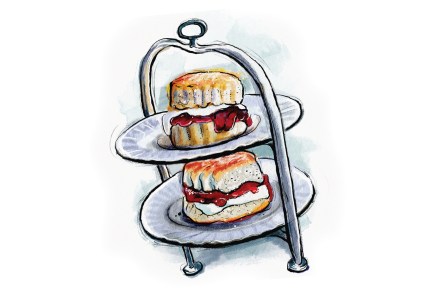
I am evangelical about scones as a gateway bake – they are the perfect entry point for the nervous baker. They don’t require any nonsense. Rubbing the butter and flour together by hand and stamping the dough out is straightforward; and as long as a scone is risen and golden-topped after baking, then you’re fine. But more than that, if you can bring a scone dough together – and you can, I promise – then you can bring any pastry dough together. I’m not suggesting you open a pâtisserie while your first batch is still in the oven, but rather that scones can be a confidence-builder for the novice baker, in a way that biscuits, cakes and brownies can be quite the opposite.

With Sir David Hempleman-Adams

From our UK edition

26 min listen

Where to begin with Sir David! An English industrialist and explorer, he was the first person to complete the ‘Explorer’s Grand Slam’. This means he has completed both North and South Poles as well as traversing the seven highest peaks across the seven continents. He has received the Polar Medal twice, from Queen Elizabeth II and now King Charles, the first person to do so under two monarchs. This June, David is attempting to cross the Atlantic by hydrogen balloon and break several more records in the meantime.  On the podcast he takes Lara and Liv through what he packs for an expedition, discusses the art of hydrogen ballooning, and explains why the best meal he has ever experienced is simple egg and chips.

You shouldn’t be afraid of steak tartare

From our UK edition

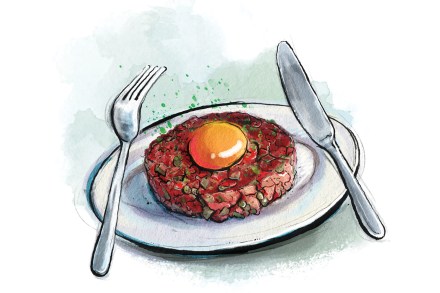
Whenever I think of steak tartare, I can’t help but remember a heartbreaking passage in Nigel Slater’s memoir Toast. Slater, working at a French restaurant in a Midlands hotel as a young man, is desperate to try the steak Diane. He books a table there for himself and a date. In a moment of madness, he accidentally orders the steak tartare instead. Expecting a rich, cream-spiked, butter-fried, brandy-flambéed steak, he is first surprised, and then horrified when a waiter begins chopping up raw meat alongside him. ‘I felt cold, then hot, then cold again. The little egg yolks seemed to be looking up at me, laughing. Then everyone was laughing.’ He goes outside and faints.

The pleasure of reliving foreign travel through food

From our UK edition

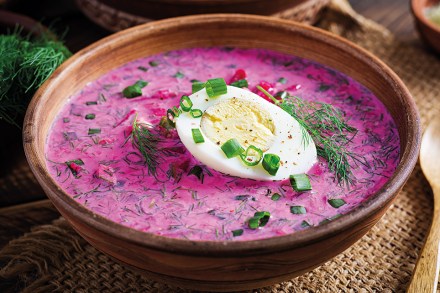
The idea of the kitchen as a space for transformation and transportation is not a new one. Many writers have explored the room’s ability to offer both domesticity and alchemy at the same time – how it allows cooks to travel vicariously through the food they make. This is the subject of Cold Kitchen, Caroline Eden’s memoir of her time spent in her kitchen in Scotland and of her travels to Eastern European and Central Asian cities – and somehow she makes it fresh and compelling. She is an author and critic who has written extensively about the food and culture of the countries of the former Soviet Union. Black Sea, in which she explored Odessa, Istanbul and Trabzon, received a clutch of prizes, and Red Sands, about Central Asia, won the prestigious André Simon food book award.

How to make elderflower cordial

From our UK edition

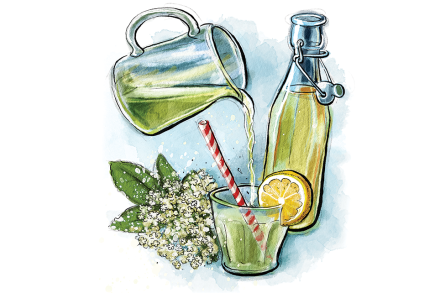
I have a complicated relationship with elderflower cordial. I love taking ingredients that have short seasons, preserving and squirrelling them away for future enjoyment. And I’m cheap, so the fact that the main component comes from the hedgerow is appealing. And it’s fun! It is a little like making a potion, dunking whole heads of flowers into an enormous pan and then leaving it to steep for days, before bottling it. Magical. But the truth is, I really don’t like drinking the cordial. It is too floral, too perfumed, too green. It’s just not for me.

With Theo Randall

From our UK edition

24 min listen

Theo Randall is a Head Chef, restaurant owner, and food writer. He's currently the Chef Patron of Theo Randall at the InterContinental, and he was famously awarded a Michelin star at The River Cafe. He specialises in Italian cuisine, and his new book Verdura: 10 Vegetables, 100 Italian Recipes, is available now.  On the podcast he tells Lara and Liv about his favourite region in Italy for food, and why he loves home cooking.

The not-so-French roots of chicken cordon bleu

From our UK edition

We all have our quirks when it comes to cooking. I have clear mental blocks over what is and is not a complicated supper, many of which do not follow any kind of logic. I wouldn’t think twice about setting a sauce or ragu going early in the day, blipping gently, returning to it every so often for a stir and a taste, knowing that it will take hours and not inconsiderable attention before it is ready. I don’t mind at all making dough which will need proving and shaping as the afternoon wanes. I even find the act of slicing or chopping various different components meditative. The result is neat little parcels of golden-brown crunchy breadcrumbs encasing chicken, cheese and ham But there are processes that set off klaxons in my head: warning, warning, avoid.

With Tim Hayward

From our UK edition

44 min listen

Tim Hayward is an award-winning food writer, a broadcaster, and proprietor of the bakery Fitzbillies in Cambridge. He writes regularly for the FT Magazine and often appears on BBC Radio 4. Following the bestsellers Food DIY, Knife, and Loaf Story, his eighth book, Steak: The Whole Story, is out on the 23rd May.  On the podcast, Tim tells Liv and Lara about his childhood concoction 'dead man's finger', the secret to great beef and the joys of a 6pm martini.

‘Terribly chic’: how to make chouquettes

From our UK edition

I have become obsessed with the French idea of goûter, the time in the afternoon when French schoolchildren have a sweet treat to tide them over from the end of the school day until dinner. It’s just teatime, really, a pause for an afternoon snack – my kid has the same, but we don’t have such an elegant word for it (and his tends to be a gobbled Babybel, and rejected cucumber sticks, which is far less fun) – but giving it its own distinct name and place in the day is charming.

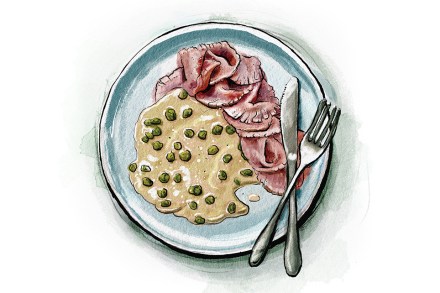
How to make ham and parsley sauce

From our UK edition

Poor old parsley sauce. As someone who writes regularly about old-fashioned food, it often feels that we are living through a golden revival of vintage dishes. You can’t move for cookbook concepts pinned on comfort and nostalgia, or restaurants attempting to take the diner on some kind of Proustian journey. Whether it’s nursery food, school dinners, classical bistro French cooking, hyper-regional food, or the polarising ‘reinvention’ of any of the above, old-fashioned ingredients are in vogue again. In trendy restaurants menus are littered with rabbit, offal, marmalade, boozy prunes; with steamed suet puddings (sweet and savoury), duck à l’orange, prawn cocktails, rice pudding, hand-raised pies… Ten years ago, devilled eggs were naff. Not now.

How Linzer torte stood the test of time

From our UK edition

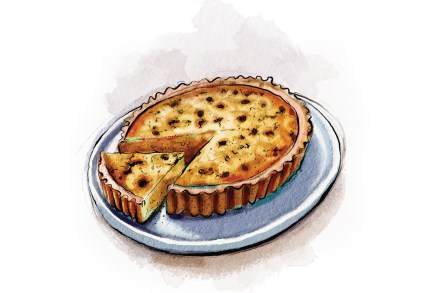
Linzer torte has quite the claim to fame: some assert that it’s the oldest cake in the world; others that it’s the oldest to be named after a place. It feels churlish to split hairs, but those two assertions are quite different, aren’t they? In any event, it’s certainly very old. For a long time it was thought it dated back to 1696, when it was mentioned in a recipe held in the Vienna City Library. But 20 years ago, an earlier reference was found by Waltraud Faißner, a Linzer torte historian, dating it to 1653 in the snappily titled Book of All Kinds of Home-Made Things, Such as Sweet Dishes, Spices, Cakes and also Every Kind of Fruit and Other Good and Useful Things etc.

Tricky but delicious: how to make the perfect pretzels

From our UK edition

My husband is obsessed with pretzels. The joy that a slightly warm, soft baked pretzel brings him is disproportionate. And, unlike in Germany and the States, where soft pretzels are ubiquitous, they are hard to come by here. So, for a while I have been trying to perfect the pretzel. It has not been smooth sailing. Throwing your pretzels into a cauldron of water feels somewhere between heresy and madness Pretzels are tricky: as well as being made from bread dough, and therefore yeasted, they are boiled before baking, have a very distinctive flavour, and their shaping requires a certain knack. Getting them right was a labour of love. But now I’ve cracked it, which means you should be able to avoid my pitfalls.

With Gennaro Contaldo

From our UK edition

24 min listen

Gennaro Contaldo is an Italian chef, cookbook author and television presenter. He is also known as Jamie Oliver's mentor and Antonio Carluccio's travel partner on Two Greedy Italians. His latest cookbook Gennaro's Verdure – which celebrates seasonal vegetables – is out now.  On the podcast he tells Liv and Lara about his upbringing on the Amalfi coast, what he's learnt from Jamie Oliver and how he came to love fish and chips.

The contradictory brilliance of Boston cream pie

From our UK edition

They say you can’t teach an old dog new tricks, but perhaps you can teach it old tricks. When I embarked on making a Boston cream pie, I thought I knew it all when it came to sponge cakes. I’d creamed butter and sugar, using elbow grease and a wooden spoon or employing the horsepower of a stand mixer’s whisk attachment. I’ve used the all-in-one-method; I’ve melted butter and folded it into cake batters in the pursuit of sticky denseness. And I’ve folded in egg whites, holding my breath in an attempt not to knock any air out of the mix. But I had never made a Boston cream pie, and so I had never made a hot milk sponge. Could this old dog learn something new?

You are what you don’t eat

From our UK edition

If asked to think about food preservation for a moment you might picture an aproned woman boiling oranges for marmalade in a large copper maslin pan; or vegetable scraps being turned into stock; or those recipes from wartime rationing using root veg in place of sugar; or even, with an eye to the modern, you might imagine a trendy chef preparing offal in a gleaming chrome kitchen to ensure the nose-to-tail credentials of his restaurant. Some of the attempts in the past to spin out the life of fresh produce sound positively disgusting But there is more to the history of preservation than preserves, and the obvious enemy, when we talk about preservation, is waste – the two engaged in a constant battle.

With Alex Jackson

From our UK edition

28 min listen

Alex Jackson is the founder of Sardine and currently head chef at Noble Rot, Soho. His cookbook Frontières: the food of France's borderlands is available now.  On the podcast, he tells Lara and Liv why the smell of chip fat reminds him of home, how his interest in cooking was ignited during time spent at university France, and divulges his desert island meal.

‘Delicious, not glamorous’: how to make a pot roast

From our UK edition

A pot roast is probably the antithesis of glamorous cooking. But that’s also sort of the point. For as long as we’ve been cooking meat, we’ve looked for ways to make the tougher cuts more tender and succulent. It’s the kind of cooking that every culture around the world has developed individually, a way of transforming the cheap and possibly unappetising into something delicious. The answer is simple, and relies on three elements: low heat, moisture and a lidded cooking vessel. A homely and economical way of bringing the best out of an unprepossessing joint Pot roast is the American way of slow-cooking whole joints of unforgiving meat, usually a piece of beef (although similar principles apply to pork and lamb).

With Thomas Robson-Kanu

From our UK edition

29 min listen

Thomas 'Hal' Robson-Kanu is former professional footballer who was part of the Welsh team that reached the semi finals of Euro 2016, thanks largely to a memorable goal he scored against tournament favourites Belgium. He is also the founder of The Turmeric Co. On the podcast, Thomas tells Lara and Liv how his Welsh and Nigerian heritage influenced the food he ate as a child, how turmeric was the miracle cure to an injury-ridden early career and how footballers prepare nutritionally for big games.

Chelsea buns are the best of all buns

From our UK edition

The Chelsea bun was first baked in the Bun House in Chelsea in the 18th century. It was a bakery which found particular favour with the Hanoverian royal family, as its pastries were reminiscent of those from whence they came. But these buns were for everyman: they were customarily bought by the poor on Good Friday along with hot cross buns. On these days, the demand was such that the buns were sold through an opening in the shutters, and a police presence was needed. The Bun House was headed up by Richard Hand who was known as ‘Captain Bun’; after his death, the shop passed on to one of his sons and then another. In 1839 there was no one left to take it on, and the shop closed.

With Professor Charles Spence

From our UK edition

34 min listen

Professor Charles Spence is an experimental psychologist at the University of Oxford. His research focuses on how an in-depth understanding of the human mind will lead to the better design of multi-sensory foods and products. He is the author of several books including his most recent, Sensehacking: How to Use the Power of Your Senses for Happier, Healthier Living.On this episode he talks about how he started experimenting with food and the human senses, working with Heston Blumenthal, and how he doesn't understand ice-cream.