Olivia Potts

Olivia Potts

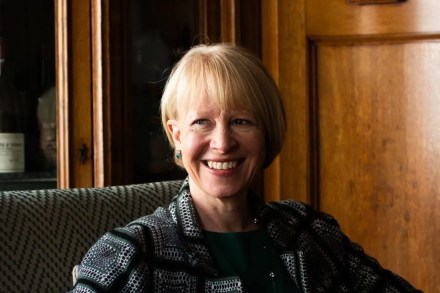
Olivia Potts is the Guild of Food Writers’ Cookery Writer of the Year 2025. She hosts The Spectator’s Table Talk podcast and writes Spectator Life's The Vintage Chef column

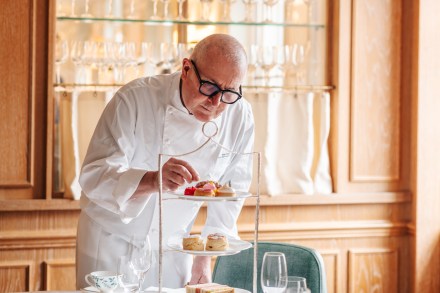
With Roger Pizey, Head of Pastry at Fortnum and Mason

From our UK edition

20 min listen

Roger Pizey is a baker, chef and one of the most influential pâtissiers in the UK. He started his culinary journey as an apprentice at La Gavroche under Albert Roux before taking on the role of head of pastry at Marco Pierre White’s Harveys, during the time it achieved three Michelin stars. He has since worked at a number of London institutions and now serves as the head of pastry at Fortnum and Mason. On the podcast he tells Liv and Lara about childhood memories of Manchester tart, what he learnt from Albert Roux and Marco Pierre White, and why Fortnum’s rose éclair is the perfect dessert.

Paul Wood, Katy Balls, Olivia Potts, Benedict Allen, Cosmo Landesman and Aidan Hartley

From our UK edition

40 min listen

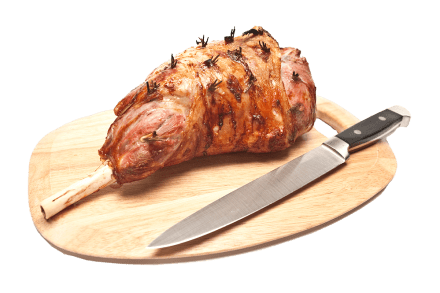
On this week’s Spectator Out Loud: Would Trump really bomb Iran, asks Paul Wood (1:38); Katy Balls interviews Health Secretary Wes Streeting on NHS reform, Blairism and Game of Thrones (8:38); Olivia Potts examines the history – and decline – of the Easter staple, roast lamb (18:25); the explorer Benedict Allen says Erling Kagge and Neil Shubin were both dicing with death, as he reviews both their books on exploration to earth’s poles (22:13); Cosmo Landesman reflects on what turning 70 has meant for his sex life (28:46); and, Aidan Hartley takes us on an anthropomorphic journey across Africa (33:55).  Produced and presented by Patrick Gibbons.

Why Easter eggs are getting more expensive

From our UK edition

While the US continues to use the price of chicken eggs as a political (American) football, closer to home our concern is with eggs of a sweeter kind. This year has seen chocolate prices rise dramatically. The price of cocoa had remained stable for decades, but in November 2023 it rocketed and has remained high ever since: it is currently almost three times what it was 18 months ago. The sudden increase came about after particularly poor harvests in West Africa, where more than 80 per cent of the world’s cocoa is grown. Extreme weather, in the form of both record-breaking high temperatures and then very heavy rains, have ravaged the cocoa plantations in Ghana and Côte d’Ivoire.

Lamb is for life, not just for Easter

From our UK edition

Roast lamb is as expected on the Easter table as turkey is at Christmas. But as a nation, we are falling out of love with lamb. Meat consumption in Britain is at its lowest level since records began, and according to the Agriculture and Horticulture Development Board (AHDB), lamb has been in particular decline for the past 20 years. We may feel we are supporting the sheep-farming industry, but the truth is a little more complicated There are a number of reasons for this: some people are trying to eat less meat for environmental or ethical reasons, while others don’t enjoy the richer taste of lamb compared with other meats. Perhaps most importantly, after a long period of rising in price more drastically than other meats, the cost of lamb reached record highs last year.

The simple elegance of fondant potatoes

From our UK edition

In 1999, a relatively unknown American chef wrote an essay in the New Yorker uncovering the secrets of restaurants. ‘Don’t Eat Before Reading This’ lifted the lid on both the underworld of professional kitchens and the mentality of chefs. In it, the writer meticulously took down ordering fish on a Monday (old), eating steak well done (for ‘philistines’), brunch as a concept (despised) and vegetarians in general (‘Enemies of everything that’s good and decent in the human spirit’). The no-punches-pulled writing, which was both lyrical and graphic as well as funny and forthright, was the first published essay by Anthony Bourdain, who would go on to become one of the most influential and beloved personalities in the food world.

The hot cross bunfight

From our UK edition

There’s a well-known clip from daytime TV show This Morning where celebrity chef Gino D’Acampo is cooking a classic Italian pasta dish. Holly Willoughby, one of the presenters, tastes it and says: ‘Do you know, if it had, like, ham in it, it’s closer to a British carbonara?’ D’Acampo, in his Italian-accented perfect English, looks at her in horror before replying: ‘If my grandmother had wheels, she would have been a bike.’ This phrase goes round and round in my head as I stand agog in my supermarket’s bakery aisles. Where once there might have been one choice of hot cross bun as we hurtle towards Easter – perhaps one ‘standard’ and one ‘luxury’ in the bigger shops – our options now extend as far as the eye can see.

Trump shock, cousin marriage & would you steal from a restaurant?

From our UK edition

39 min listen

This week: Trump’s tariffs – madness or mastermind?‘Shock tactics’ is the headline of our cover article this week, as deputy editor Freddy Gray reflects on a week that has seen the US President upend the global economic order, with back and forth announcements on reciprocal and retaliatory tariffs. At the time of writing, a baseline 10% on imports stands – with higher tariffs remaining for China, Mexico and Canada. The initial announcement last week had led to the biggest global market decline since the start of the pandemic, and left countries scrambling to react, whether through negotiation or retaliation.

Would you steal from a restaurant?

From our UK edition

‘You wouldn’t steal a car…’ began the early noughties anti-piracy video. ‘You wouldn’t steal a television… You wouldn’t steal a handbag.’ No, but it seems from reports from restaurants, you might slip some silverware into a handbag if you’re out for dinner. In February, Gordon Ramsay revealed that nearly 500 cat figurines had been stolen in one week from his latest restaurant, Lucky Cat. The maneki-neko cat models – said to bring good luck – cost £4.50 each, which makes that a loss of more than £2,000 for the restaurant in just seven days. What is it about dining out that means we think pocketing property is acceptable?

With Gok Wan

From our UK edition

25 min listen

Gok Wan is a renowned stylist and television presenter. Over the years, Gok has transformed the way we think about style and body image with his much-loved series How to Look Good Naked and Gok’s Fashion Fix – his focus on body positivity was the antidote to the crash-dieting fads which dominated the 2000s. Later in his career, Gok drew upon his Chinese heritage to author books on Chinese cooking. On the podcast he tells Liv and Lara about growing up in a Chinese restaurant, why hosting is more like ‘theatre’ and why he always abides by the five-second rule.

Golden syrup dumplings: the perfect comfort food

From our UK edition

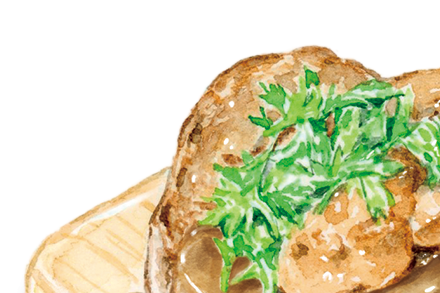
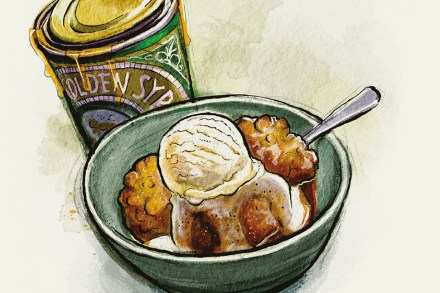
The Italians have a phrase: ‘brutti ma buoni’. It means ‘ugly but beautiful’, and it’s the name they give to their nubbly hazelnut meringue biscuits, which – as the name suggests – taste lovely but aren’t lookers. The phrase came to me the other day when I lifted the lid on my pan of golden syrup dumplings. Because they’re ugly little buggers. They look a little like soggy apple fritters, or even chicken nuggets – am I selling them to you yet? But focus on the buoni, not the brutti: they are absolutely delicious. Golden syrup dumplings sound as British as queueing.

Sole meunière: simple one-pan sophistication 

From our UK edition

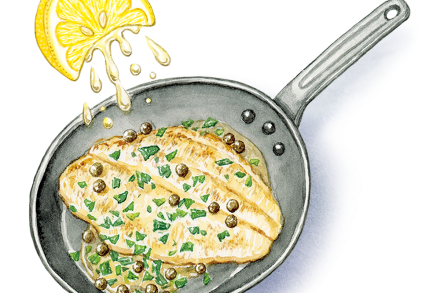
Picture the scene. The year is 2004. The setting, a British field or maybe a beach. There is a small open fire burning with a single cast-iron pan perched on it. A male TV chef – dressed in a striped shirt, open at the neck, chinos, possibly red, leather shoes – is standing over it, reverently holding a fish. ‘This is a beautiful piece of fish,’ he says, ‘and we’re not going to do anything fancy here. It doesn’t need it! We’re going to keep it simple.’ There must have been a clause in the contract of any TV cookery show in the early 2000s to say that a beautiful piece of fish should be cooked simply.

Why are we routinely buying disgusting bread in Britain?

From our UK edition

‘Bread is simple. Or is it?’ That is the question David Wright poses about a keystone food that spans the globe and the whole of history. Breaking Bread examines the science behind the ur-loaf, the development of the Chorleywood method, the economics of selling the stuff, the role that it has played in religion and politics – and what its future might look like. The author is a third-generation baker. After a childhood spent in the Suffolk bakery his father owned and ran (Wright’s birth was announced in the bakery shop window: ‘I smelled bread, played with the dough, tasted it even before I have memory’), he left it all behind for university and a career in the theatre. But he returned to the family business in 2012 to try to save it as it floundered financially.

The enduring power of school dinners

From our UK edition

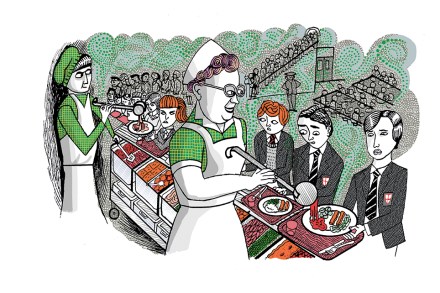
Cornflake tart. Spam fritters. Green custard. Turkey twizzlers. Chocolate concrete. These are some of the dishes that instantly transport you to the school lunch hall – and inspire either pure nostalgia or horror. Over the past five years co-hosting Table Talk, The Spectator’s food and drink podcast, I have spoken to people from all walks of life – politicians, chefs, writers, campaigners, entrepreneurs and artists – and they all have unique relationships with food. But school food defies all reason. It presents a binary, true love or hate. Some look back with delight, seeking out spotted dicks and instant mash for ever more, though none tastes as good as the dishes they had at school in Kettering in 1989. Others can barely look at a rice pudding without gagging.

With Ash Sarkar

From our UK edition

25 min listen

Ash Sarkar is a journalist, academic and political activist known for her commentary on social justice and democratic socialism. She is a senior editor at Novara Media, and her work has been published extensively. Ash’s debut book, Minority Rule: Adventures in the Culture War, examines how ruling elites exploit cultural divisions to maintain power. On the podcast, she tells Liv and Lara about early memories of her grandmother’s paratha, why she is not a vegetarian and why she prefers to think of herself as a ‘Cava communist’ as opposed to a Champagne socialist.

In defence of red velvet cake

From our UK edition

I will admit to having been dismissive of red velvet cake in the past, considering it to be bland in flavour and garish in colour. It tended to come in cupcake form with towering hats of super-sweet buttercream, which made it unpleasant and difficult to eat. The cult love for red velvet, inspiring scented candles and lip balms all smelling of synthetic vanilla, always struck me as a bit naff – the preserve of teenage girls queueing outside Instagram-bait bakeries. Why would you plump for a red velvet cupcake when you could have coffee and walnut or a lemon syrup-soaked sponge or a nobbly carrot cake? Red velvet was a cake for people who didn’t really like cake.

With Emma Fox, CEO of Berry Bros & Rudd

From our UK edition

28 min listen

Emma Fox is the chief exec of Berry Bros & Rudd, the world's oldest fine wine and spirit merchant. A retail veteran, Emma's broad experience has been shaped by a career spanning over 30 years.  On the podcast, Emma tells Liv about early memories of 'sugar butties', what's the best bottle to bring to a dinner party and what she would pair with her desert island meal.

The secrets of the perfect potato rösti

From our UK edition

You may be forgiven, if you are a regular reader of this column, for thinking that my primary motivation in cooking is showing off. I’m always banging on about lovely dishes you can serve to unsuspecting guests that will guarantee plaudits and amazement. But while there is more than a kernel of truth in this, I think that it’s actually simpler than that: what I crave from cooking is satisfaction. And I don’t mean satiation of hunger (although that too: I am greedy), but the sense of achievement that cooking – almost – invariably brings. True, this achievement can often be found in presenting a beautiful cake to an assembled group of people, or your new friend saying ‘You know, I think these are the best brownies I’ve ever tried’.

The time-poor woman’s perfect chocolate cake

From our UK edition

Isn’t it awful that the older you get, the more you know yourself? It’s supposed to be a good thing, attributed to wisdom, experience and a deeper understanding of our place in the world around us. But good lord, self-awareness can be a cruel mistress. I have realised that my greatest culinary goal is simply unachievable. You see, I long to appear effortless. This is true throughout my life, but particularly so when it comes to cooking. Every time I invite friends round for lunch or dinner, I resolve that this is the time when everything will not only be easy but, crucially, I will make it look easy. That I will simply throw something together that everyone will adore; the gathered diners will be equally impressed by the food and by the nonchalance with which I’ve assembled it.

Why are we going nuts for pistachio?

From our UK edition

You could be forgiven for thinking you’d walked into Oz: in the past couple of years, the whole world has gone green. Pale green, to be precise. Suddenly, pistachio is everywhere: it's in our pastries, our chocolate, our coffees, our puddings, and even showing up in perfumes, paint charts, scented candles and on our fashion runways. Where has this sudden lust for pistachio come from? In one way, pistachios are old news: they’re an ancient crop that has grown in the Middle East and been used as an ingredient in Middle Eastern and Mediterranean cookery for as long as can be remembered.

With Jeremy Chan

From our UK edition

19 min listen

Jeremy Chan is the head chef and owner of Ikoyi, and the author of a cookbook of the same name. On the podcast, he tells Liv and Lara about growing up with a number of different food influences – from Hong Kong to Canada – and why his two-Michelin-starred restaurant should never be pigeonholed.