Oliver Wiseman

Zelensky and the limits of American willpower

Zelensky pushes the limits of American willpower The most pointed message in Ukrainian president Volodymyr Zelensky’s address to Congress this morning was aimed not at the assembled lawmakers, but Joe Biden. “You are the leader of the nation, I wish you to be the leader of the world. Being the leader of the world means to be the leader of peace,” he said. The wartime leader received a standing ovation when he concluded his remarks. “Ukraine is grateful to the United States for its overwhelming support,” Zelensky said. “I call on you to do more.” It’s hard not to be moved by Zelensky’s appeal for more support, even if acceding to his plea for a no-fly zone over Ukraine would mean an ill-advised escalation in the confrontation between Russia and the West.

The #Resistance goes global

The #Resistance goes global The bands are getting back together. In a piece for the New York Review of Books, Spectator contributing editor Jacob Heilbrunn outlines the way in which war in Ukraine has brought with it the return of a debate between familiar factions in Washington. He quotes an anonymous Trump administration sardonically arguing that with Putin’s invasion of Ukraine, “The good old days are back in DC. Lines are being drawn.” The Republican establishment has reverted to what I’ve called “normie” Republican foreign policy, largely sticking to an all-purpose charge of weakness against Biden. Meanwhile, the usual dovish voices are making the usual dovish noises. On the right, the big-picture foreign policy debate feels no more resolved today than it did in 2016.

resistance

‘Luxury beliefs’ in the time of war

‘Luxury beliefs’ in the time of war Are defense stocks ESG, asked Financial Times columnist Merryn Somerset Webb shortly after the Russian invasion of Ukraine. It’s a cheeky but clarifying question, exposing the moral complacency of that self-satisfied corner of finance flogging “ethical” investments to the socially conscious consumer. Most ESG funds boast about not investing in arms companies. But, as Somerset Webb points out, what could be more ethical than manufacturing anti-tank weapons to stymie Russia’s conquest of Ukraine? The consequences of war in Europe for ESG investing is hardly the most important dimension of the present crisis.

Are the Dems doomed?

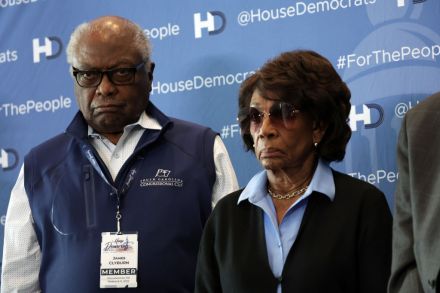
Are the Dems doomed? It sounds as though the mood at the House Democratic Caucus Issues Conference in Philadelphia is a grim mixture of sleep depravation and frustration. Lawmakers were bused into town in the dead of night, after failing to get Biden’s pandemic aid package into a must-pass spending bill. And after a short night’s sleep, they awoke to news of dauntingly steep price rises last month and a president struggling to explain how he might respond. Worried Democratic incumbents will find little comfort in a bumper Wall Street Journal poll published today. The survey finds Democrats underwater on a staggeringly wide range of issues.

Fed fight

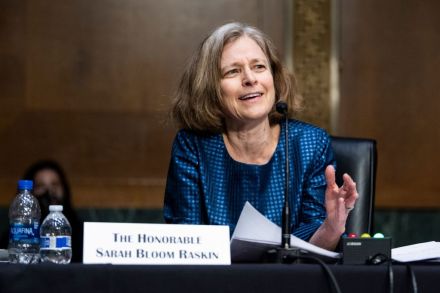
Fed fight In Biden’s laundry list of a State of the Union last week, the president made reference to a small but significant Washington stand off over economic policymaking. “Confirm my nominees for the Federal Reserve,” instructed Biden. Republicans and Democrats on the Senate Banking Committee have been in a weeks-long impasse over five Biden administration nominees for the Federal Reserve. Republicans are most firmly opposed to one of those candidates, Sarah Bloom Raskin, and have refused to proceed with nominations until she is dropped from the slate of nominees. Opposition to Raskin (the wife of Congressman Jamie Raskin) centers on her views on financial regulation and climate change.

Tom Cotton’s time for choosing

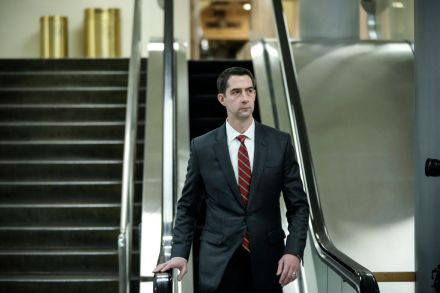
Tom Cotton’s time for choosing On Monday night, Tom Cotton made a pitch not for unity exactly, but for the intellectual coherence of modern Republicanism. The senator from Arkansas, an outside 2024 contender, used an address at the Ronald Reagan Presidential Library, part of its “Time for Choosing” series of lectures, to identify both Trump and Reagan (and, by extension, himself) with the “Jacksonian” tradition within the GOP. It’s hard to imagine Cotton — ungainly and no great orator — as the GOP’s presidential nominee.

Biden confronts the new politics of energy

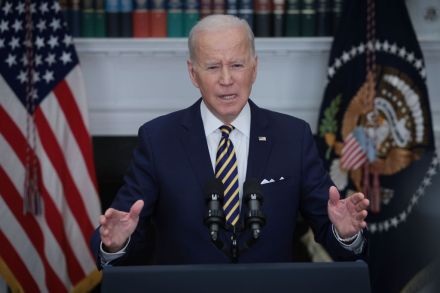
Biden confronts the new politics of energy Joe Biden upped the ante this morning. Heeding calls from lawmakers on the Hill, the president announced an import ban on Russian oil. Americans are in favor. A recent survey found that 71 percent of voters back a ban, even if it means higher gas prices, as their views on the conflict harden. But a population horrified by events in Ukraine that says it is willing to pay the price required to punish Putin is not the same thing as being forgiving to a president under whom they find themselves paying sky-high prices for gas. Biden knows that, branding the inevitable inflationary pressure as “Putin’s price hike” in his statement this morning.

Trump’s cunning plan for World War Three

Congress wants to go further and faster on Ukraine When it comes to Washington’s response to the Russian invasion of Ukraine, one dynamic has been consistent throughout the crisis: Congress has generally pushed for a more aggressive on sanctions on Russia and support for Ukraine whereas the White House has hewed to a more cautious course. Nowhere is that clearer than on the question of an embargo on Russian oil. Yesterday, Antony Blinken said the US was working with allies on an import ban. That came after days when the administration had talked down the possibility, even as voices on the Hill calling for the move grew louder. The White House might be warming to the idea, but it remains behind Congress.

No easy choices in the new world order

No easy choices in the new world order Nine days since the start of the Russian invasion and the news out of Ukraine is no less frightening. The latest alarming development: reports of fighting between Russian and Ukrainian troops at Europe’s largest nuclear power plant. Washington remains understandably fixated on the latest on-the-ground development, but, sooner or later, American policymakers must grapple with the long-term consequences of Russia’s actions. How has the world changed? And how must the United States adjust? In the Washington Examiner, Damir Marusic offers a useful sketch of the new multipolar world, full of hazards, but also opportunities.

Biden, Jackson and the meaning of a court pick

Biden, Jackson and the meaning of a Supreme Court pick With the State of the Union out of the way, the confirmation process for Biden’s Supreme Court pick Ketanji Brown Jackson has begun in earnest. Biden’s pick — and his previous promise to select a black woman to fill a vacancy on the court were one to arise — have kicked off a lively conversation about the court’s composition. In the March issue of the magazine, legal scholar Benjamin H. Barton made the case for “real diversity” on the Court. Barton’s article happened to land at Spectator HQ before Justice Stephen Breyer announced his retirement, but that development would give fresh salience to the questions with which he grapples.

Biden’s vibe shift

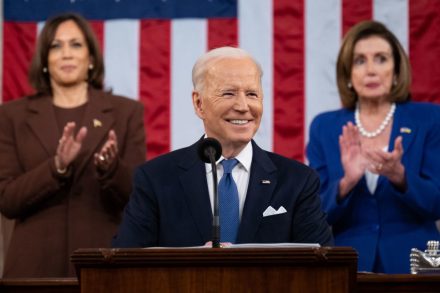
Biden’s vibe shift Ahead of last night’s State of the Union, the Biden White House had promised a reset. What he delivered certainly fell short of the full system reboot a president with such dire approval ratings needs. But there was a change in tone. A vibe shift, if you will. Out with the FDR tribute act, in with a torpid moderation. Not an enthusiastic tack to the center but a partial acknowledgment of political reality. The president may not have offered an especially energizing reboot to his presidency in his speech, but it nonetheless felt like a page was turned last night. That was most immediately obvious when it came to the pandemic. Democrats had contrived to make March 1 the day the pandemic ended: rules lifted on the Hill, in the White House and across Washington.

The myth of the Putin Party

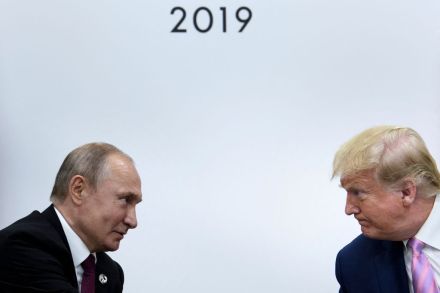
The Putin Party myth In recent weeks, the two most influential men on the American right have come under close scrutiny for their views on Russian president Vladimir Putin and his increasingly indiscriminate attack on Ukraine. The first is Donald Trump, whose repeated insistence of Vladimir Putin’s “genius” and “savvy” have earned him unflattering headlines. The former president certainly seems to have an unhealthy fascination with, and, on a certain level, admiration for, strongmen, authoritarians and dictators. Out of office, he is reportedly pen pals with Kim Jong-un, for instance. However, it’s not just a stretch but a straightforward misrepresentation to describe Trump as pro-Putin.

The West wakes up

The West wakes up As Lenin probably didn’t say, “there are decades when nothing happens and weeks when decades happen.” The last seven days have felt like such a week. Vladimir Putin’s naked aggression and Ukraine’s heroic resistance have shocked the West into action and, in doing so, transformed the world. Only a few days ago, Joe Biden was cool on some of the harsher sanctions being discussed and European leaders were squabbling over carve-outs from the package of punitive measures being prepared for Russia. But, in the last seventy-two hours, all that has changed. Galvanized by Ukrainian bravery and Russian folly, Europe and America have reached for the toughest sanctions on the table.

Biden picks Brown Jackson for the Supreme Court

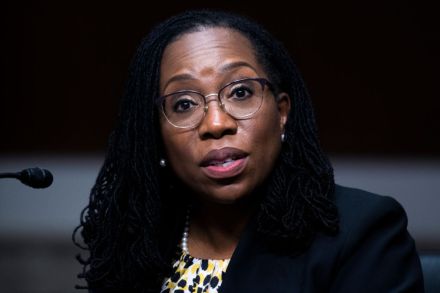
Biden picks Brown Jackson The president has chosen Ketanji Brown Jackson, a judge on the Court of Appeals for the DC Circuit, to fill the vacancy on the Supreme Court, multiple outlets have reported. Biden had interviewed two other candidates: Leandra Kruger, a judge on the California Supreme Court, and J. Michelle Childs, the South Carolina judge backed by Jim Clyburn and Lindsey Graham. With Russian troops laying siege to the Ukrainian capital, some will question the timing of this announcement. And with all eyes on Eastern Europe, the ceremony promises to be one of the most low-key in recent memory. The White House has good reason to expect a reasonably smooth nomination process.

The hard left and hard right got Putin dead wrong

War in Europe When Joe Biden addresses the American people later today, he will find himself in a changed world. His Russian counterpart Vladimir Putin outlined an imperialist vision of Russia fit for a czar on Monday. In the early hours of this morning, he backed up that nineteenth-century sentiment with nineteenth-century action: the start of a full-scale great power conquest of a sovereign neighbor. The events of the last twelve hours are something that my own end-of-history generation was brought up to believe would never happen in our lifetimes. And yet here we are. More recently, we were told that modern warfare was all cyber attacks and disinformation, deep fakes and propaganda.

West Wing life imitates art

The lesson from Biden-Trump comparisons on Ukraine Would Donald Trump have handled the Ukraine crisis better than Joe Biden? “He would have never done during the Trump administration what he is doing now,” said the former president in a radio interview yesterday. Writing for the site today, Freddy Gray thinks there is something to Trump’s claim: “Putin, as a slightly comic alpha male authoritarian, saw in Trump something he recognized — an unstable, unpredictable yet potentially decisive actor on the world stage. Rightly or wrongly, he saw in Trump strength whereas in the Democratic leadership he sees only weakness and folly.” National Review editor Rich Lowry also offered a variant of Richard Nixon’s madman theory, applied to Trump.

How will Biden respond to Putin?

How will Biden respond to Putin? “Invasion.” The Biden administration used that all-important I-word this morning to describe the actions of the Russian military in Eastern Ukraine after Vladimir Putin’s extraordinary rant justifying Russian recognition of the separatist regions of Donetsk and Luhansk as independent republics on Monday afternoon. “We think this is, yes, the beginning of an invasion, Russia’s latest invasion into Ukraine,” said deputy national security advisor Jon Finer on CNN this morning. The I-word matters because invasion has been the closest thing to a red line that the Biden administration has drawn during the crisis: the action that would trigger a harsh response from Washington.

russia

Asian Americans are leaving the Democrats

Last spring, Yiatin Chu joined a series of protests against the spike in unprovoked assaults on Asian Americans in New York City. Prominent New York Democrats, including Senate majority leader Chuck Schumer, were in attendance and spoke at the rallies. Senior party figures expressed their solidarity with the Asian community. They drew connections between the violence on New York’s streets and the xenophobic language of former president Donald Trump. And sometimes they blamed the violence on something less specific: white supremacy. After a while, Chu, a politically active Democrat, stopped going to the protests. “I was just really turned off by the messaging,” she tells me.

asian

Biden’s never-ending infrastructure week

Biden’s never-ending infrastructure week During the Trump years, “infrastructure week” became a lame Washington in-joke. “It’s infrastructure week!” someone would tweet sarcastically to underscore the administration’s ongoing failure to deliver the bipartisan infrastructure package that Trump promised early in his presidency. Biden has reversed the Beltway gag. The joke in Trump’s Washington was that it was that the president’s failure to deliver the bill meant that, Groundhog Day-style, it was always infrastructure week. In Biden’s Washington, it’s always infrastructure week because the president has failed to deliver on anything other than a bipartisan infrastructure package.

The meaning of the truckers

What Canada’s truckers reveal about America’s realignment Every now and then, you can see the political realignment happening before your eyes: impossible-to-ignore examples of shifting voter coalitions and ideological sympathies that render old rules and assumptions redundant. And so it is seems with the Canadian trucker protests — and our reaction to them south of the border. The truckers’ proximate grievance is a Canadian mandate that would mean unvaccinated truckers would have to quarantine for two weeks every time they returned from the United States. But it’s about more than that too, of course: broader frustration at a whole regime of Covid rules.