Niru Ratnam

Niru Ratnam, Gus Carter and Graeme Thomson

20 min listen

This week: Niru Ratnam argues that teachers are putting principles before children (00:59), Gus Carter discusses the curious business of fertility (08:14), and Graeme Thomson reviews Beyonce at Murrayfield Stadium (14:24).  Produced and presented by Oscar Edmondson.

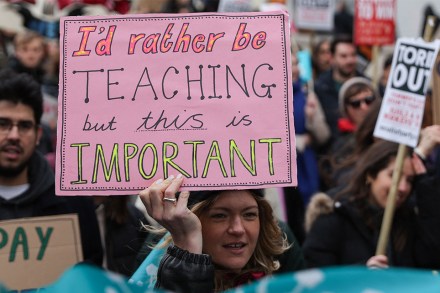
Why are my son’s teachers constantly on strike?

It is a bright Wednesday morning in May. My son, T, a Year 8 pupil, should be at school and I should be working, but instead we are playing tennis. We are also listening to ‘Romeo and Juliet’ by Dire Straits because he’s supposed to be studying the play in class so I figure I can cover both PE and English literature in the next half an hour before we head home and I start the work I’m meant to be doing. For them academies are a Tory ruse designed to hand over control of schools to nasty capitalists My son isn’t ill and isn’t playing truant. His school, along with five others in Lewisham, south London, is in the middle of 13 days of strike action called by the National Education Union (NEU).

Hepworth Wakefield’s latest show is grossly irresponsible – the museum doesn’t deserve any sort of prize

Last week the exhibition Painting India by the late Howard Hodgkin opened at the Hepworth Wakefield. Hodgkin started collecting Indian miniatures as a schoolboy at Eton and first visited the subcontinent in 1964, travelling with Robert Skelton, the then assistant keeper of the Indian collection at the V&A. Hodgkin would return there many times during his life. He would later say to David Sylvester 'I think my main reason for going back to India is because it is somewhere else.' The exhibition at the Hepworth features over 35 works by Hodgkin which take their cue from his visits. The promotional text on the museum’s website notes that the exhibition 'takes place as part of the UK-India Year of Culture', a year long initiative that features exhibitions and events throughout the UK.

March of the makers

Until earlier this year, a squat sculpture nestled rather unobtrusively outside 20 Manchester Square in Marylebone, an address once made famous by the cover of a number of albums by the Beatles. The building has since been renovated into smart, slightly anonymous offices and the sculpture suited it. Few knew that it was a work by Tony Cragg, who towards the end of the 1980s was one of Britain’s best known artists, winning the Turner Prize in 1988 and representing the country at the Venice Biennale the same year. Last winter the sculpture, titled ‘Under Circumstances’, was taken away. There was no fanfare or report as to why, or where, it had gone. It would have been easy to conclude that this was fair enough.

Chisenhale Gallery’s conceptual critique of neoliberalism is being funded by high finance

Over the next five weeks, visitors to East London’s Chisenhale Gallery will find the metal doors closed and a notice outside, in museum-style text, stating that the exhibition by Maria Eichhorn entitled 5 Weeks, 25 Days, 175 Hours consists of the staff not working and the gallery being shut. It then states that the exhibition ‘opened’ with a symposium on the first day of its run and that audio recordings of it are available on the website. Closing a gallery for the duration of an exhibition is not a new artistic strategy. Daniel Buren blocked the door to his solo exhibition at Galleria Apollinaire, Milan, in 1968 and the following year Robert Barry hung a sign on a gallery door stating ‘during the exhibition the gallery will be closed’.

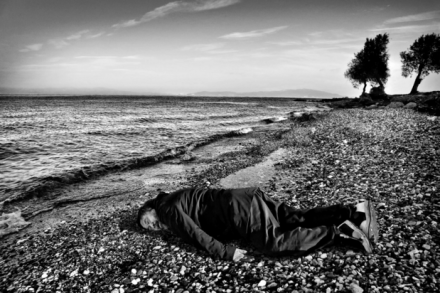
Ai Weiwei’s Aylan Kurdi image is crude, thoughtless and egotistical

Last September a photograph of three-year-old Aylan Kurdi’s lifeless body washed up on a beach near Bodrum made headlines around the world. The image had a significant effect on shifting public perception to the Syrian refugee crisis as well as sparking a debate around the ethics of the circulation of such images. Academics at the University of Sheffield have estimated that 53,000 tweets were sent per hour at the height of the image’s circulation reaching 20 million people around the world in 12 hours. Last week, over four months after the image appeared, the Chinese artist Ai Weiwei made his own contribution to the debate in a photograph which depicts the artist posing as Kurdi.

Cut funding to sport (which we’re no good at) and give it to the arts (which we are)

This morning Art Review announced its ‘Power 100’, a list of movers and shakers of the international art world. Last year the list was topped by Sir Nicholas Serota who beat off the likes of Larry Gagosian, Ai Weiwei and Jeff Koons. The reason behind Serota’s position was Tate’s considerable international influence across Europe, Asia, Latin America and the Middle East. Art Review’s editor Mark Rappolt says, 'it operates an institution as a network of patrons and interests that spread far beyond the limits of its physical building.

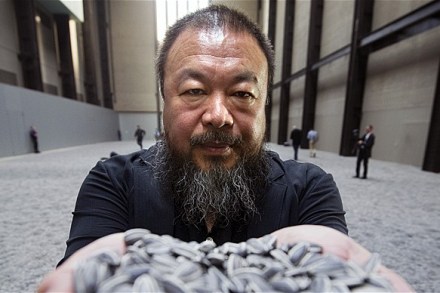
Ai Weiwei

In September, the Royal Academy of Arts will present a solo exhibition of works by the Chinese artist Ai Weiwei. This follows his installation of porcelain sunflower seeds in Tate Modern’s Turbine Hall, a solo show at Blenheim Palace and two solo exhibitions at the Lisson Gallery (which represents him). Peculiarly, the Royal Academy’s press release claims that Ai’s work has not been seen extensively in Britain, which might suggest that its press team doesn’t get out much. He has certainly been exhibited here more than other key Chinese contemporary artists such as Zeng Fanzhi, Yang Fudong or Gu Wenda. Ai transcends the art world, particularly since his arrest by the Chinese authorities in April 2011 when he was held without charge for 81 days.

‘Painting is total idiocy’ says Gerhard Richter – and he has some new paintings to prove it

Gerhard Richter has got a website. This is odd in itself – artists only usually have websites when they are young and not represented by a commercial gallery. They then proudly drop their websites when they get signed up to show that they are not in the grubby business of having to promote themselves. Gerhard Richter is 82 and arguably one of the few artists to combine huge commercial success (his 1968 work Domplatz sold for £24 million at Sotheby’s) with critical adoration. This is not the only thing that is odd about his website. The artist is known for the variety of styles he has used in painting, from smudgy photorealism to freeflowing abstraction. His website attempts to categorise this in a way that no serious museum or curator would.

‘Likes’, lacquered cherry pies and Anselm Kiefer: the weird world of post-internet art

In the mid-1990s the art world got excited about internet art (or ‘net.art’, as those involved styled it). This new way of making art would harness the world wide web, take the form of exciting online projects, bypass traditional galleries and be accessible to all with a dial-up connection. ‘Net.artists’ were self-styled radicals particularly fond of that most modernist of tropes, the manifesto, which they distributed via electronic mailing lists or electronic bulletin boards. These artists adopted funky, web-style names such as ‘Irational.org’ and ‘VNS Matrix’ and showed their work online at similarly funkily named websites like Rhizome, Suck and Echo. But there was, alas, a gap in the Matrix, to paraphrase Keanu Reeves’s finest film.

I take my kids to galleries to demonstrate my cultural superiority over the masses

Jake Chapman, one half of the YBA duo the Chapman Brothers, has been rude about taking children to art galleries. He told the Independent that 'it's as moronic as a child' to expect a child to understand complex modern artists like Jackson Pollock and Mark Rothko as 'children are not human yet'. His forthright views have elicited a predictable response. Stephen Deuchar, the director of the Art Fund (who seems to be angry on a regular basis about some latest insult to the noble visual arts), countered on the Today programme that children can indeed appreciate a work of art deeply. Anthony Gormley told the Times that art is there to be experienced not understood.

The rise of the art fair – and the death of the small gallery

In 1967, two Cologne-based gallerists came up with the Cologne Art Market — a trade fair where German galleries could set up temporary gallery-style spaces for a few days to showcase their stock. The following year, three dealers in Basel copied the idea but opened up their event to international galleries. For years these two art fairs were discrete yearly shows which were in the background to far more visible gallery exhibitions, museum shows and biennials. Today there are hundreds of art fairs, with an explosion of these in the last few years. Last December 18 different art fairs took place in the same week in Miami alone. There are nine art fairs in New York this week. Next week there are art fairs in Hong Kong, San Francisco and Athens.

When Britain’s avant-garde weren’t so shouty

When the New York art dealer David Zwirner opened his London gallery in October 2012, observers expected him to make a statement of intent. Zwirner, who the magazine Art Review placed at number two in its 2013 Art Power 100 survey, is one of the art world’s most important three gallerists (the others are Larry Gagosian and Iwan Wirth). After a year of settling in, Zwirner made a newsworthy announcement: he had signed up the 27-year-old Colombian-born, London-based artist Oscar Murillo. For a twenty-something, he had just had a remarkable set of auction results at Christie’s last June, with a work going for £253,875 against an estimate of £20,000 to £30,000.

How to fight back when ‘public art’ is not for the public

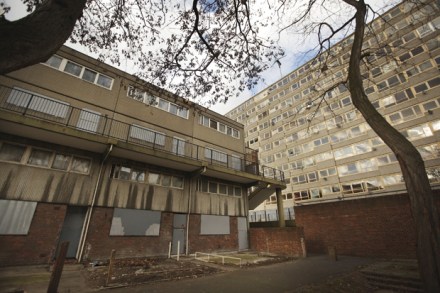
In recent years contemporary art and regeneration have gone hand in hand. Works such as Antony Gormley’s ‘Angel of the North’ have been visible and celebrated examples of regeneration. So when, last year, Southwark Council decided to sell Elephant and Castle’s seemingly unloved Heygate Estate (above) to Lend Lease for development into new homes, it seemed inevitable that public art would be utilised. Artangel, the country’s most respected public art commissioning agency, announced plans for a work by the artist Mike Nelson that would take the form of a pyramid made from the estate’s building materials as it was dismantled.

Do you think this painting is worth $48.4 million?

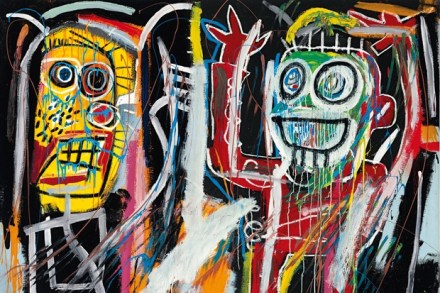
Earlier this year a painting by Jean-Michel Basquiat, depicting two figures stoned on the hallucinogenic drug PCP, was offered for sale at Christie’s in New York. ‘Dustheads’ was given an estimated sales tag of $25–35 million. In the end, the hammer came down at $48.8 million, a sum that easily broke the previous record for the artist, $26.4 million, which was achieved last November. It was the fourth time in 12 months that Basquiat’s record price had been smashed, and confirmed the artist’s dominance of the contemporary market. Such record-breaking at auction tends to elicit valedictory statements from auction houses and Christie’s Loic Gouzer duly obliged: ‘“Dustheads” is pure, concentrated energy, freedom and honesty.

The boom in private museums

In the past ten years museums of modern and contemporary art have proliferated around the world. New institutions have appeared in Los Angeles, Venice, Doha and Beijing. Even Camden has seen a burst of activity — the Dairy Art Centre opened in April of this year, spread over the 12,500 sq ft of a former milk depot, with an exhibition of the Swiss artist John Armleder. A similar size space, The David Roberts Art Foundation (Draf), opened last year in a mews near the Mornington Crescent end of Camden High Street. They joined the Zabludowicz Collection, which has been housed in a former Methodist chapel on Prince of Wales Road since 2007.

The new seekers | 14 February 2013

Over the past year or so, art world insiders have queued up to denounce the current state of the contemporary art world. Charles Saatchi started the ball rolling with a column at the end of 2011 in the Guardian. Breaking his self-imposed ban on interviews or writing, he launched a withering attack on an art world that, according to him, had descended to ‘the sport of the Eurotrashy, Hedge-fundy Hamptonites; of trendy oligarchs and oiligarchs; and of art dealers with masturbatory levels of self-regard’.

Go with the flow

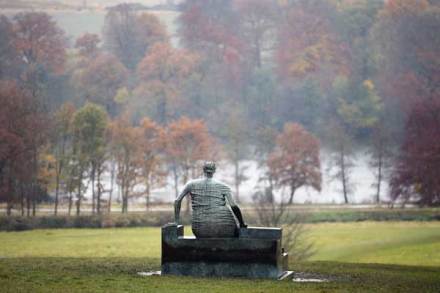
Last November Lutfur Rahman, the independent Mayor of Tower Hamlets, confirmed that the borough intended to sell a Henry Moore sculpture entitled ‘Draped Seated Woman’ (1958–9) that had been historically sited in the borough. Rahman’s reasoning was twofold: the sculpture was too expensive for the council to insure and the money raised from the work’s sale at auction, which could be up to £20 million, would ease the £100 million budget cut that Tower Hamlets is faced with over the next three years. The announcement elicited a strong protest from the arts lobby.

Revolting teenagers

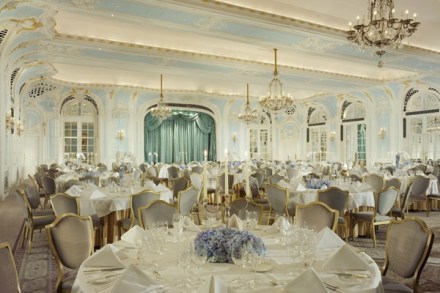
As 200 children descend on the Savoy, Niru Ratnam asks why corporations sponsor works of art In July, 200 teenagers from east London will head to the Savoy where they will take over the Lancaster Ballroom for the day. There they will be given the freedom to create a large-scale event — food and performances included. In the weeks leading up to it, they will have been prepped by Ruth Ewan, the artist behind the project, on the history of the Peasants’ Revolt in 1381. The preparation and the event itself will revolve around the teenagers’ interpretation of that historical moment when Wat Tyler led calls for the redistribution of wealth and was subsequently put to death in Smithfield by London’s mayor for his troubles.

Losing its edge

Last November the Museum of Contemporary Art in Los Angeles held its annual fund-raising gala. Previously the event had used the tried-and-tested formula of wheeling in celebrity hosts such as Lady Gaga to try to persuade the great and good of Los Angeles to part with cash to fund the museum’s programme. This time, however, the museum changed tack, and appointed the performance artist Marina Abramovic as its creative director. When the guests, who included Kirsten Dunst, Pamela Anderson and Will Ferrell, turned up, they were asked to don white lab coats. They were then led to their tables, many of which featured a live human head poking up through the middle, revolving like a Lazy Susan. Other tables had as their centrepieces naked performers lying underneath skeletons.