Niru Ratnam

Quick flip to success

Having studiously avoided the media for years, Charles Saatchi was stirred enough to write an article for the Guardian last December that opened: ‘Being an art buyer these days is comprehensively and indisputably vulgar. It is sport of the Eurotrashy, hedge-fundy, Hamptonites; of trendy oligarchs and oiligarchs.’ He has a point. A new type of collector is taking a close interest in contemporary art and elbowing old hands such as Saatchi out of the way. These new collectors are not interested in watching artists build a career through museum shows over a period of years. They’re not out to spot new movements as Saatchi tried to do with young British art.
Whose art is it anyway?

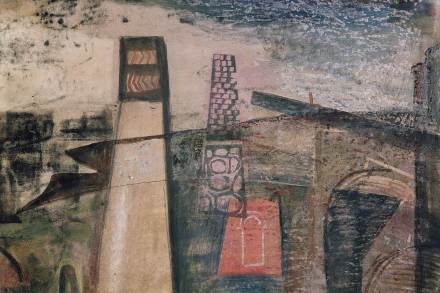
Niru Ratnam tackles the thorny question of what constitutes British — or should that be English? — art In the past few months there have been two large-scale exhibitions showcasing British art. The first was the British Art Show at the Hayward Gallery; the second Modern British Sculpture at the Royal Academy. On show at the former were an elegant suite of works by Wolfgang Tillmans (born in Germany), a tapestry by David Noonan (Australia), the much-lauded film ‘Clock’ by Christian Marclay (America) and the delicate paintings of Maaike Schoorel (Netherlands).

Aesthetic responses

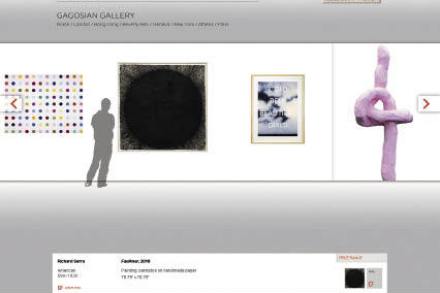
Over the past month I’ve strolled through Berlin’s Alte Nationalgalerie to examine Edouard Manet’s ‘In the Conservatory’ in close detail. Over the past month I’ve strolled through Berlin’s Alte Nationalgalerie to examine Edouard Manet’s ‘In the Conservatory’ in close detail. I’ve taken a look at what’s on offer on the stands of international art dealers including Gagosian and White Cube at the VIP art fair. I have also considered buying shares in a 1988 gouache by Sol LeWitt. And I’ve done all these things from my front room thanks to an internet revolution in the art world.

Creative protesting

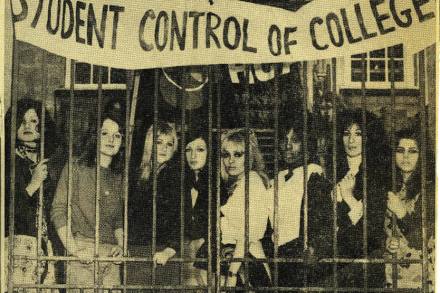
It’s time to heed the complaints and free art schools from the constraints of the university system, says Niru Ratnam The Turner Prize award ceremony always attracts protest — usually in the shape of the Stuckists, a group of bedraggled, eccentric-looking artists who gather outside Tate Britain in funny hats and bemoan the death of representational painting. But this year they were upstaged by around 200 art students, who entered the museum in the afternoon and refused to leave, staging what was described as a ‘teach-in’. In addition to wearing their own humorous hats, the students made speeches, marched round and chanted.

Come together

Niru Ratnam invites you to join in and take off your trousers in the name of art at the taxpayer’s expense — while you still can In the week before the G20 summit in early 2009, I found myself sitting at a large, round, glass-topped table in the new extension to the Whitechapel Gallery. A large tapestry copy of Picasso’s ‘Guernica’ hung on one of the walls nearby. Around the table were 30-odd people made up of students, random art folk, regulars of the Anarchist Bookshop located in the alley next to the gallery and, somewhat incongruously, the managing director of the Whitechapel Gallery looking dapper, if increasingly confused, in the chair. We had all been invited along to respond to ‘the current political and economic climate’.