Nina Power

James Heale, Andrew Kenny, Lara Prendergast, Ysenda Maxtone Graham and Nina Power

41 min listen

On this week’s Spectator Out Loud: James Heale wonders what Margaret Thatcher would make of today’s Conservatives (1:28); Andrew Kenny analyses South Africa’s expropriation act (6:13); Lara Prendergast explores the mystery behind The Spectator’s man in the Middle East, John R Bradley (13:55); Ysenda Maxtone Graham looks at how radio invaded the home (30:13); and, Nina Power reviews two exhibitions looking at different kinds of rage (35:13).  Produced and presented by Patrick Gibbons.
The art of war

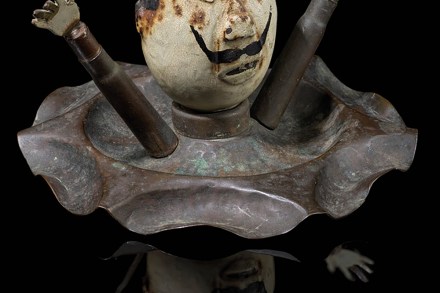
On his deathbed, the Austrian writer Karl Kraus remarked of the Japanese attack on Manchuria: ‘None of this would have happened if people had only been more strict about the use of the comma.’ The implication being that by channelling rage into the ordering of small things, we might stay away from violence on a colossal scale. Unable to restrict ourselves to matters of punctuation, alas, humanity is often at war: with itself, and others, however hallucinatory. Two current exhibitions come at rage from very different starting points. War and the Mind demonstrates the devastating psychological impact of war on those who fight it and those who have no choice but to suffer it.

How French absolutism powered a techno-progressive revolution

The Enlightenment is back. Despite the best efforts of the past decade of handwringing about cultural imperialism and wailing over machismo, money and majesty, the future keeps crashing in. The Science Museum has now laid its cards on the table with Versailles: Science and Splendour. Think gilt, not guilt. Is there anything in our lives that could compare to witnessing the first successfully grown pineapple? It’s marvellous, and unusual these days, to visit an exhibition and feel the colossal force of history without anyone bashing you over the head with infantile morality tales. Expanding on a 2010 display at the Palace itself, lead curator Anna Ferrari ought to be saluted for this unabashed celebration of genius – perhaps with a three-hour firework display.

Sad but beautiful exhibition of Afghanistan’s war rugs

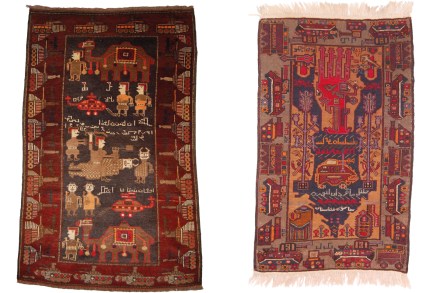
Decades after its inclusion in the Hippie Trail, Afghanistan is again open to tourism, according to the Taliban’s spokesman Zabihullah Mujahid. It is perhaps a source of regret for the group that the 6th-century Buddhas of Bamiyan are missing in action. They were blown up in 2001 either, depending on who you ask, because of Islam’s strict beliefs on anti-idolatry or to punish the West for offering money to preserve them rather than give aid to starving children. The war rugs, depicting camels and flowers alongside rocket launchers, are striking and jarring While the country continues to export fruit, nuts and insect resins – opium production was massively scaled back by the Taliban – Afghanistan is justly famous for its woven rugs.

William Cash, Marcus Nevitt, Nina Power, Christopher Howse and Olivia Potts

31 min listen

On this week’s Spectator Out Loud: William Cash reveals the dark side of Hollywood assistants (1:12); Marcus Nevitt reviews Ronald Hutton’s new book on Oliver Cromwell (7:57); Nina Power visits the Museum of Neoliberalism (13:51); Christopher Howse proves his notes on matchboxes (21:35); and, Olivia Potts finds positives in Americans’ maximalist attitudes towards salad (26:15).  Presented and produced by Patrick Gibbons.

How did we ever come to accept the inhumane excesses of capitalism?

What was neoliberalism? In its most recent iteration, we think of the market seeping into every minute corner of human existence. We think of privatisation, off-shoring and the parcelling out of services to the highest bidder. Neoliberalism takes the proud liberal individual – in pursuit of his or her happiness, rather keen on freedom – and shreds them through a mean-spirited calculator to come up with some sort of shrunken market midget, an efficient risk-evaluating robot. Neoliberalism takes the proud individual and shreds him or her through a mean-spirited calculator Yet even though the market is supposed to be the arbiter of everything, repeated state intervention appears to be necessary to sustain this otherwise perfect economic vision.

‘We’re all members of the Stasi now’: Irvine Welsh interviewed

The history of the word ‘offend’, from the Latin offendere, to hit, attack, injure, is a revealing one. From its starting point in physical violence to transgression against God in the Middle Ages, today ‘offence’, understood as displeasure or upset, is seemingly everywhere. The word may no longer refer to direct physical harm, but culture of all kinds, from artworks to comedy to literature to music, seems to have an upsetting quality to some. Words, we are told, are ‘violence’, images are hurtful, differing opinions are dangerous and must be suppressed. Even silence is ‘violence’, as this year’s Black Lives Matter protests reminded us.

The art of the incel

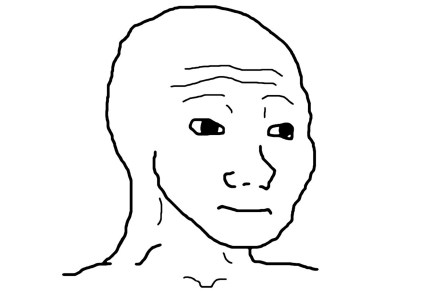
Let’s say you have a diagnosis of autism, depression or anxiety. You sleep too much or too little. You masturbate too often. You play computer games and don’t open the curtains. You have no money and you are often profoundly lonely and frequently bored. From this unedifying starting point, can you, let’s say, weightlift your way out of misery? Can you trick yourself into being sociable? Can you ultimately get beyond your fantasy that a woman will save you (she won’t) and learn to live with everyday misery? Alex Lee Moyer’s documentary TFW NO GF, internet-speak for ‘that feel(ing) when no girlfriend’, is the first attempt to make cinema out of incel subculture (and perhaps thereby also signalling its end).

Oracles, perverts and the Dirtbag Left

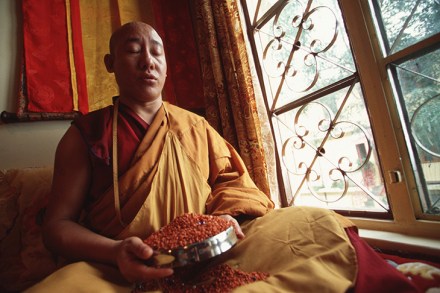
For 500 years the State Oracle of Tibet has worked as a kind of angry immortal advisor to the Dalai Lama, a Tibetan hybrid of Dominic Cummings and John Dee. The current incumbent, like all previous ones, alternates between his human incarnation and his spirit version. ‘In Tibetan Buddhism, the unseen parallel world of spirits is not to be taken lightly,’ explains anthropologist David Sneath on Heart and Soul (BBC World Service). ‘There are so many other living species,’ the Minister of Religion and Culture tells Sneath, ‘many of which we don’t even see.